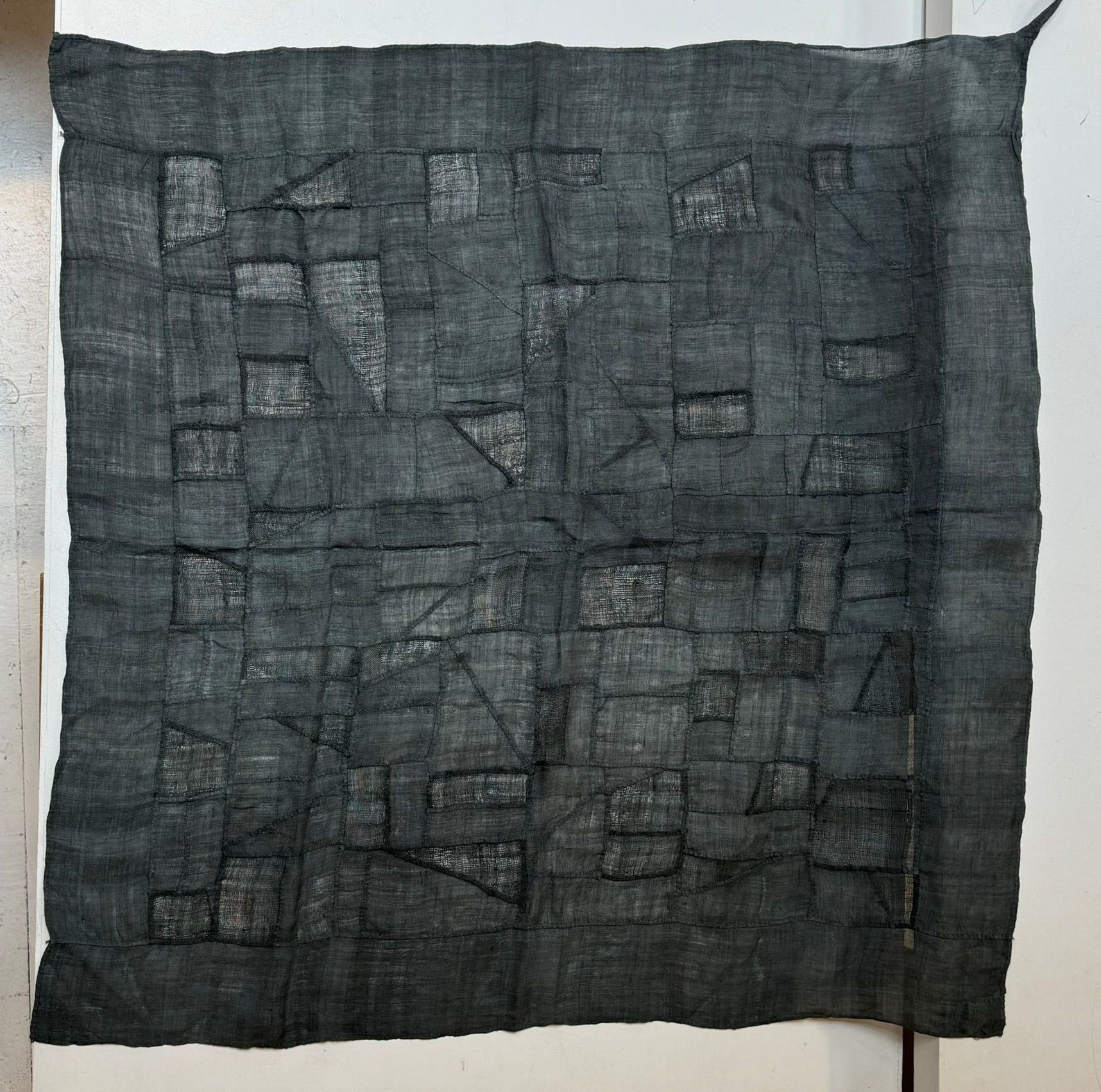
Jogakbo wrapping cloth
Name/Title
Jogakbo wrapping clothEntry/Object ID
2024.9.19Description
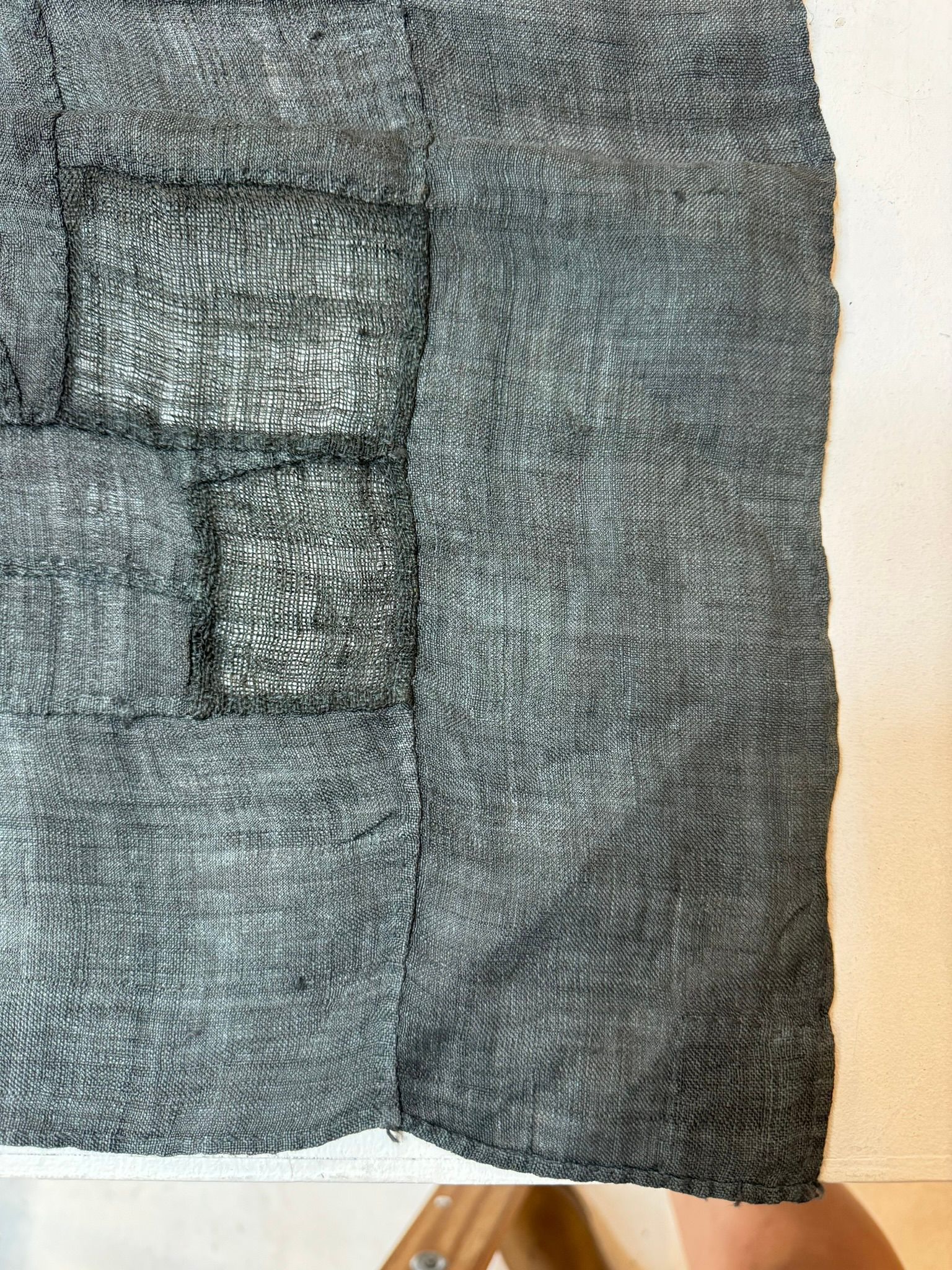
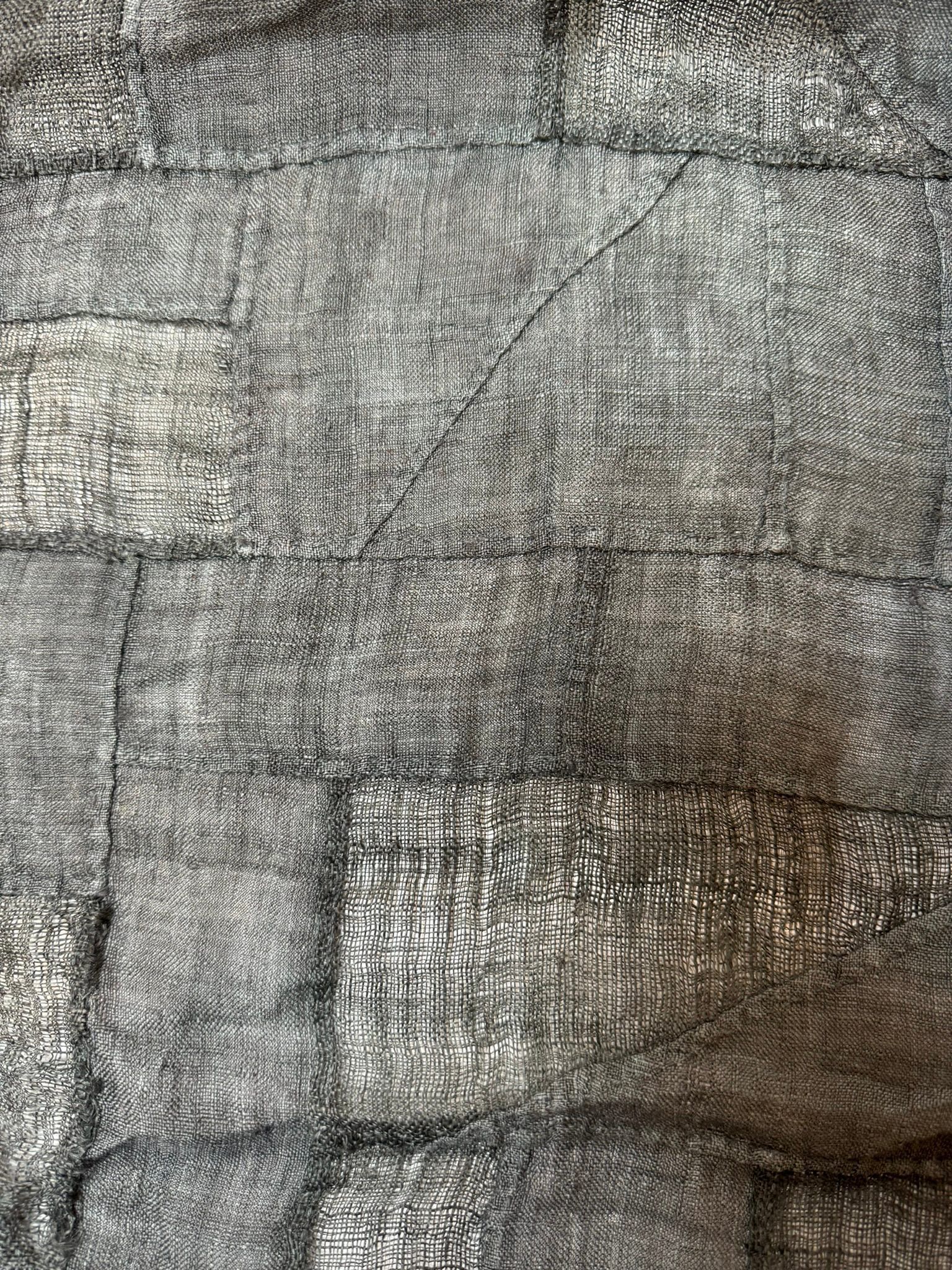
Grey patchwork bojagi, or Korean wrapping cloth. The patchwork variant of bojagi is specifically called "jogakbo," meaning small segments.Textile Type
Wrapping ClothUse
Bojagi cloths were essential to all Korean households up until the 1950s, as they served a variety of functions including wrapping gifts, covering cooked food from insects and rodents, and as textile carriers. These textiles featured a variety of styles and were split in two main groups: kung-bo for the royal court and min-bo for ordinary people.Context
Jogakbo typically utilize scrap fabric from other textile projects made in the home, which are pieced together into larger squares or rectangles. This follows the ideas of frugality and simplicity advocated during the Joseon dynasty (1392-1910), when women spent their time in the domestic sphere. Jogakbo are typically comprised of scraps of one type of fabric, such as cotton, silk, ramie, hemp, or paper. The scraps are sewn together using a triple-stitched seaming technique known as gekki, which results in a sealed, flat seam and gives the jogakbo their distinctive "window pane" appearance. Patches are joined into squares and extended in an irregular, improvisatory fashion until a cloth reaches the required size. The jogakbo can include several colors composing a modern abstract pattern, or be made of one single color.Category
Homeware, Cloth