Name/Title
ChandelierContext
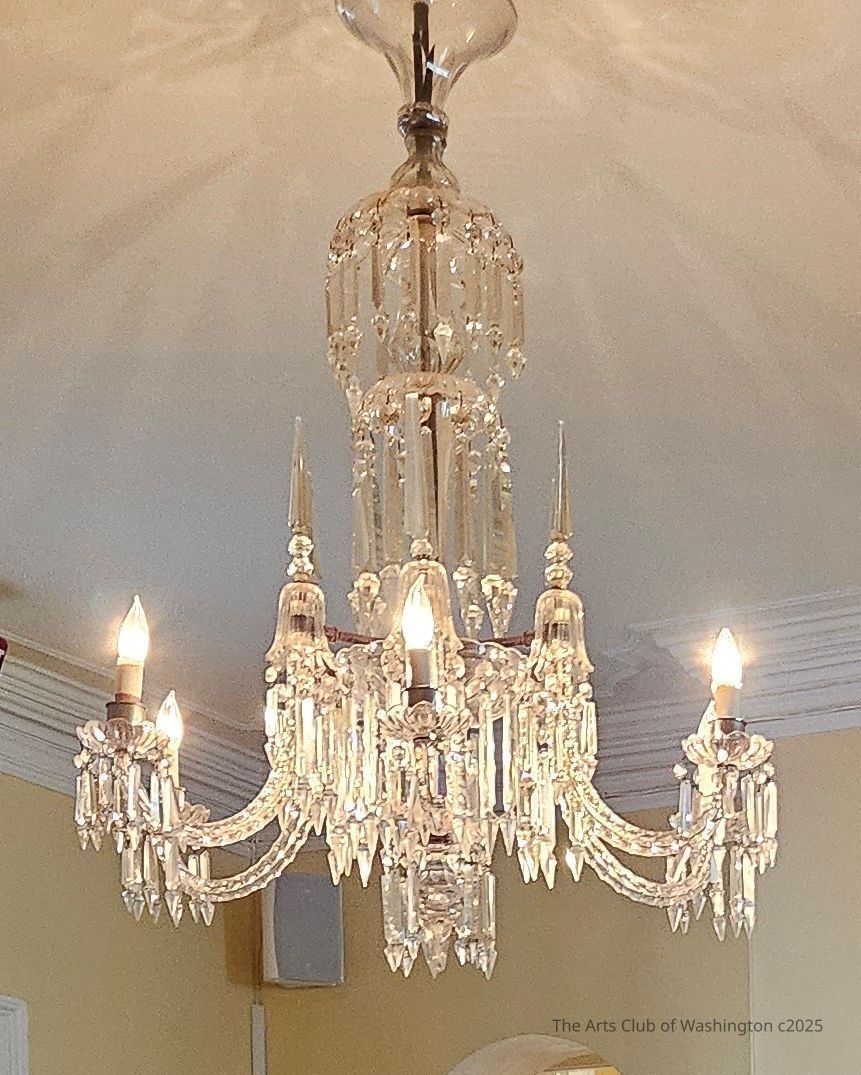
This stunning chandelier, the largest in the Arts Club, is typical of the style of Robert Adam, incorporating clean lines and classical proportions of the Neoclassical period. By the time the Monroe House was constructed in 1805, it was stylish to have many hanging crystals which concealed the interior metal framework.Made/Created
Notes
Multi-armed hanging light fixtures, or chandeliers, began to be decorated with carved quartz in Italy in the 1500s. In the next century, clear crystal pendants then extremely clear cut glass began to replace quartz. Adding lead to the glass resulted in even more clearness and the unusual light scattering property that we see in this chandelier. Today, only leaded glass may be described or sold as crystal, which literally means crystal-clear glass.
Crystal chandeliers were first advertised in London in the 1720s, when colonial American tastes were being formed. English chandeliers were unique versus their continental counterparts in having silver-plated structural frameworks that created the illusion of a glass interior structure. Whether due to cost or the difficulty of polishing, this fashion did not cross the Atlantic.Update Date
October 29, 2025