Note
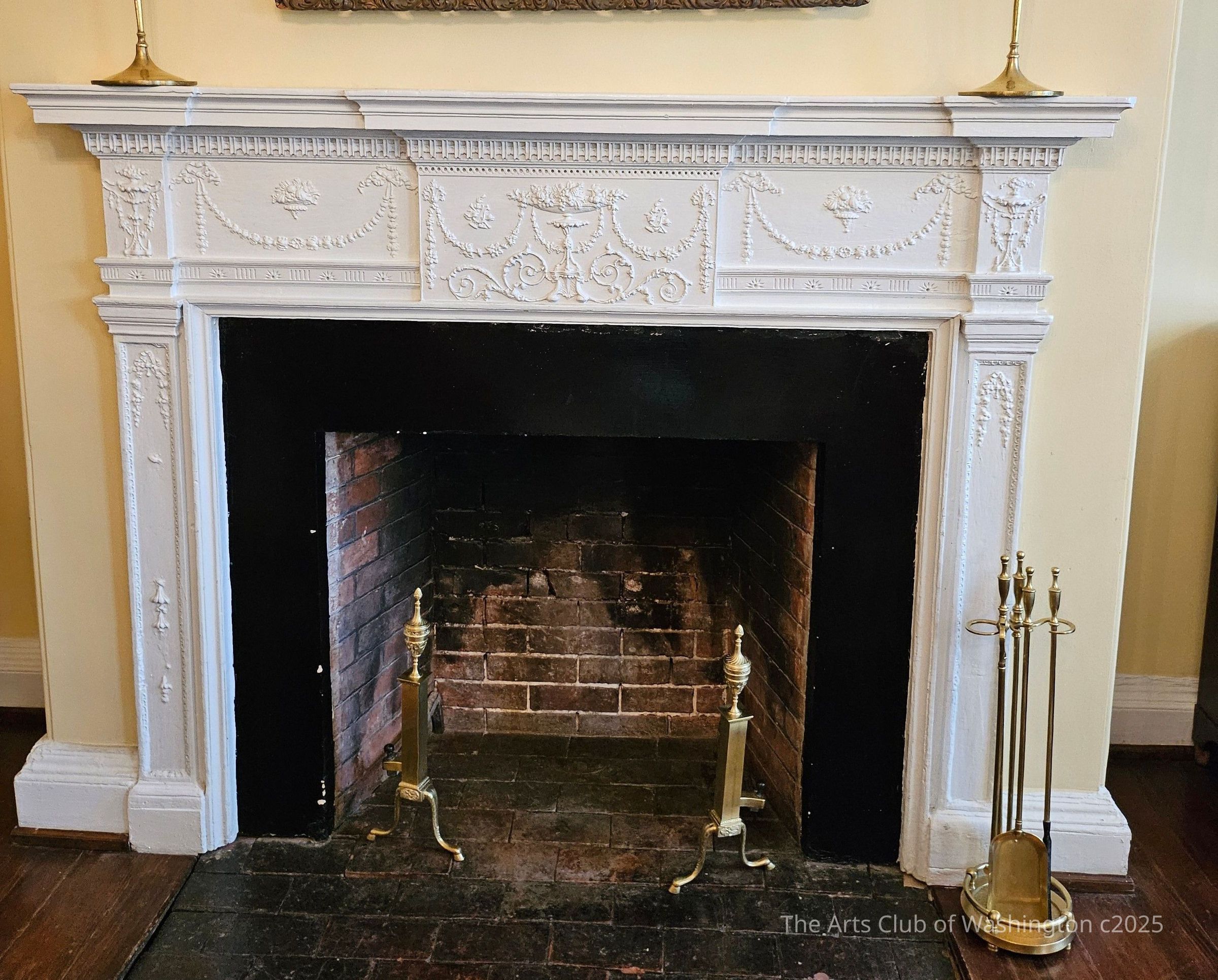
The second-floor parlor features a mantel by George Andrews (1765-1816), a Dublin-born and London-trained specialist in composition ornament who helped spread Robert Adam’s neoclassical interiors to America. The molded product is made by combining glue and water with linseed oil and lime, screw-pressing it into a decorative mold, extracting it when settled, and affixing the completed bas-relief to unpainted wood. The result resembles hand-carved wood but is more economical. Andrews’ workshops in Baltimore and Washington also supplied product to the White House, the Octagon House, and the Dumbarton House in Washington, and to Thomas Jefferson’s Monticello, and James Madison’s Montpelier in Virginia. This mantle was originally in the downstairs parlor of the 1802 structure (now part of the kitchen) and was moved here in 1936, replacing a damaged marble mantle like those in the first and second floor parlors of the 1805 building. (Andrews’ work can also be seen on the stair stringers in the Monroe house.) The White House mantels by Andrews were destroyed in the 1814 fire. Source: Docents' Guide, The Arts Club of Washington, 2022.