Himsworth Sheffield scissor types (1)
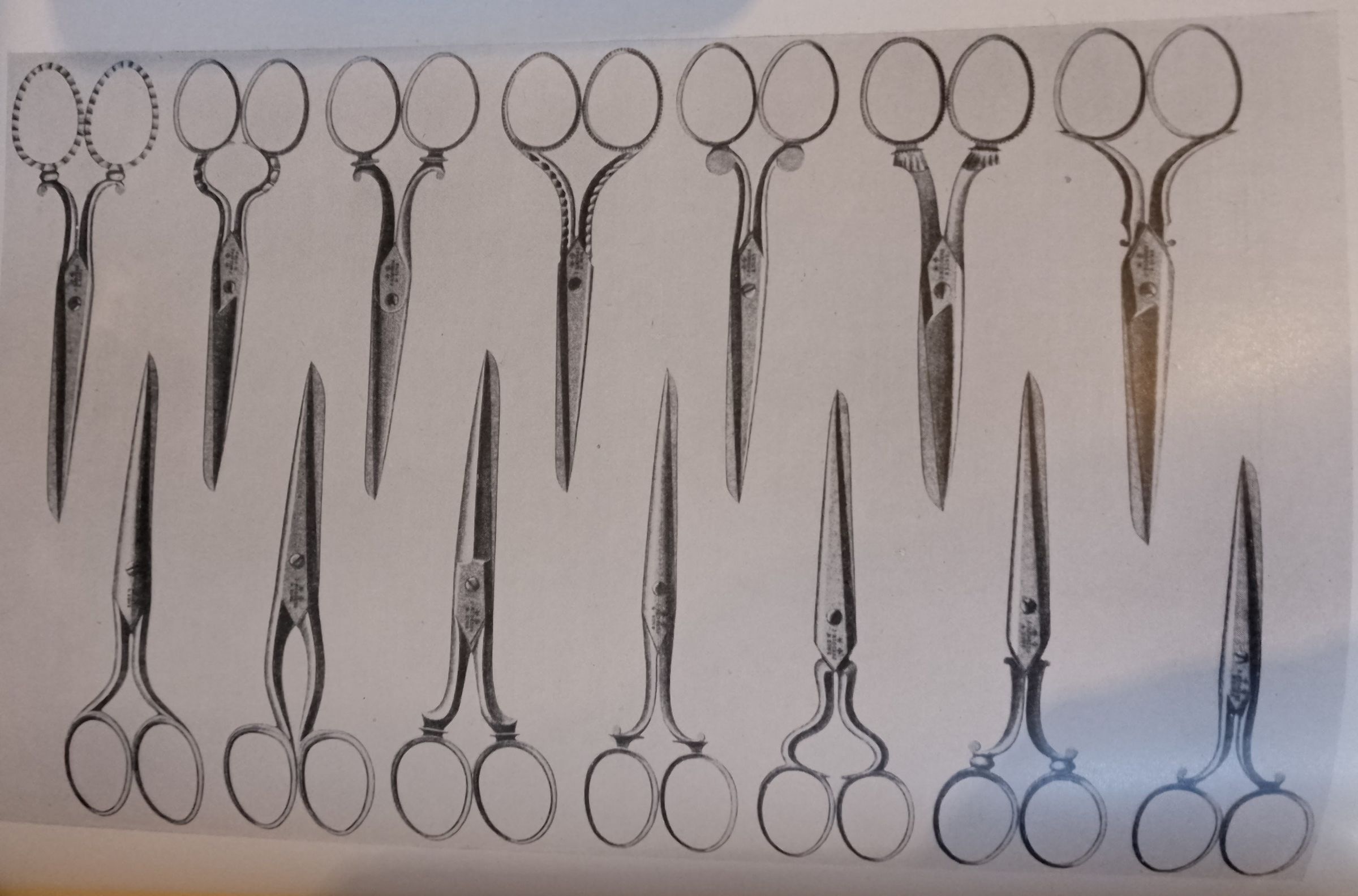
Sheffield scissor types
An image showing some types of historical Sheffield scissors. Image taken from Himsworth (1953).
Name/Title
Himsworth Sheffield scissor types (1)Entry/Object ID
2025.6.22Tags
sheffield, scissors, shank, shanksDescription
This illustration is taken from Himsworth (1953) and accompanies some text giving the bow, shank, and blade names as used historically by manufacturers in Sheffield. Each of the shank types has been treated separately in various entries within the 'Shank Types' folder on this site; what follows here is an attempt to describe what is meant by each term based on the images provided: Square - ? Reverse shank - the shank joins the bows at their outer lower curve. Tup shank - curves gently outwards from the base of the shank then curves gently back inwards to join the bows at their inner lower curve. Thread-neck - has a distinct, small, flat 'plate' where the shanks and the bows meet. Bat shank - the shank rises and begins to curve outwards before finishing rather abruptly. Winged - the ends of the shank taper away from the point at which they join the bows leading to distinct points. Glass - ? Spanish - the upper part of each shank curves outwards and then folds back inwards resulting in an elliptical shape. Fiddle joint - the base of the shank is distinct from the top of the blade where it joins rather than flowing into it seamlessly. Neb - a flattened bead appears somewhere on each shank. Swamp - ? Sarum - the shanks rise and curve outwards, joining the bows before continuing to curl around ending in a walking stick curved handle shape. Bead - a rounded bead shape appears between the shanks and the bows.Category
Nomenclature