Name/Title
Persian SteelEntry/Object ID
2025.1.9Tags
history, steel, persiaSecondary Title
The Tanavoli CollectionDescription
This book focusses on the collection of sculptor Parviz Tanavoli and offers an introduction to the subject of Persian steel.
The impetus for the development of iron and steel in the region was to make arms, and scissor- and cutlery-making grew out of this. Crafts developed in specific regions or towns in early Islamic times, eg, "Tus for coats of mail, Nishapur for needles and knives, Damavand for arrowheads and Ray for scissors". This type of specialisation continued through later periods.
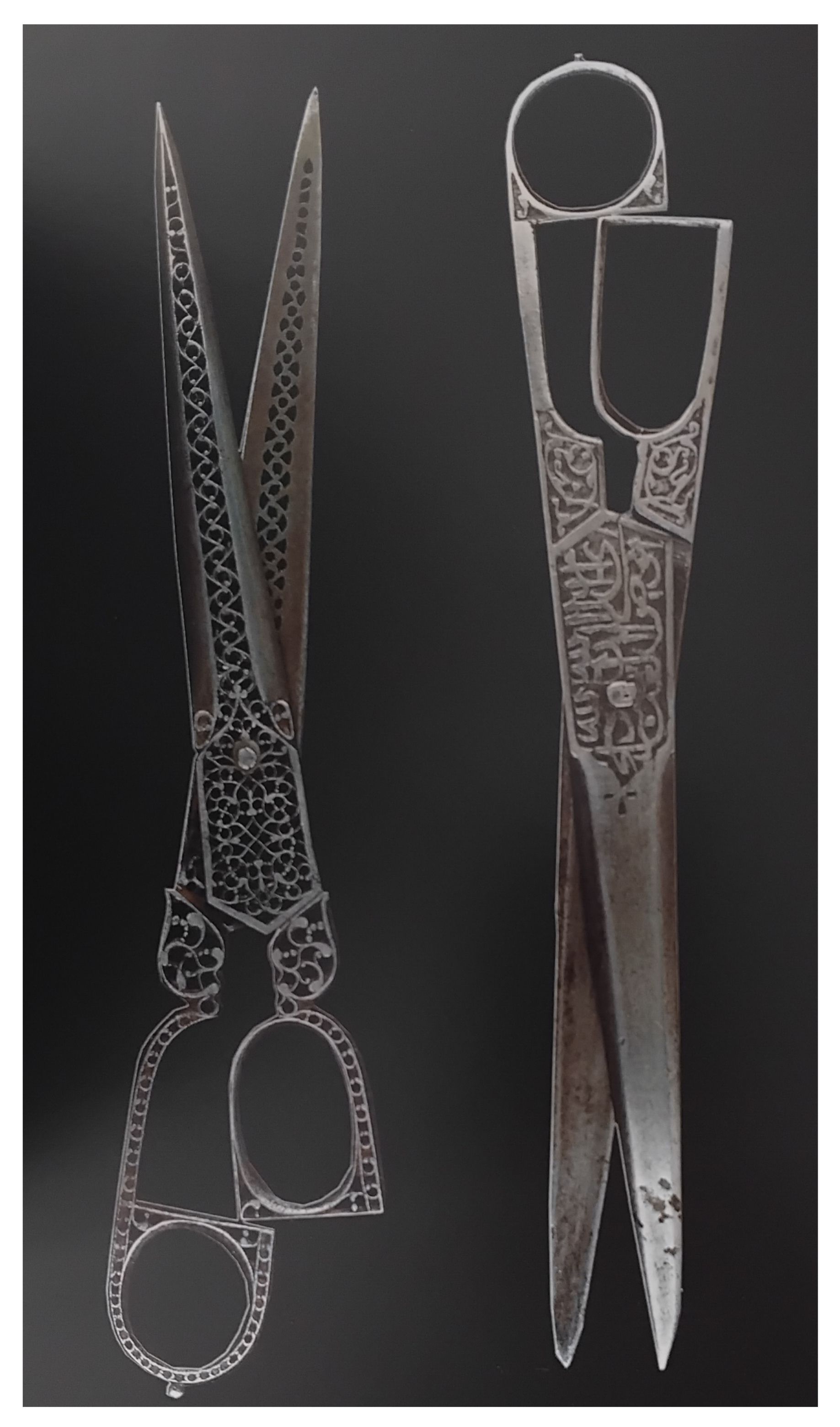
There is a discussion of decoration techniques (eg, surface decoration, inlaid, overlaid, openwork "which was a very popular techniques [sic] among scissor-makers") and how the variety of these techniques led to specialisation and division of labour, which continues today. We learn that steelworking was generally a family business; in the Safavid period (1501 - 1736) the Nazuk family, for example, included "Shafi' Nazuk ... known from a pair of steel scissors". In the 20th century these family businesses also brought in apprentices from outside.
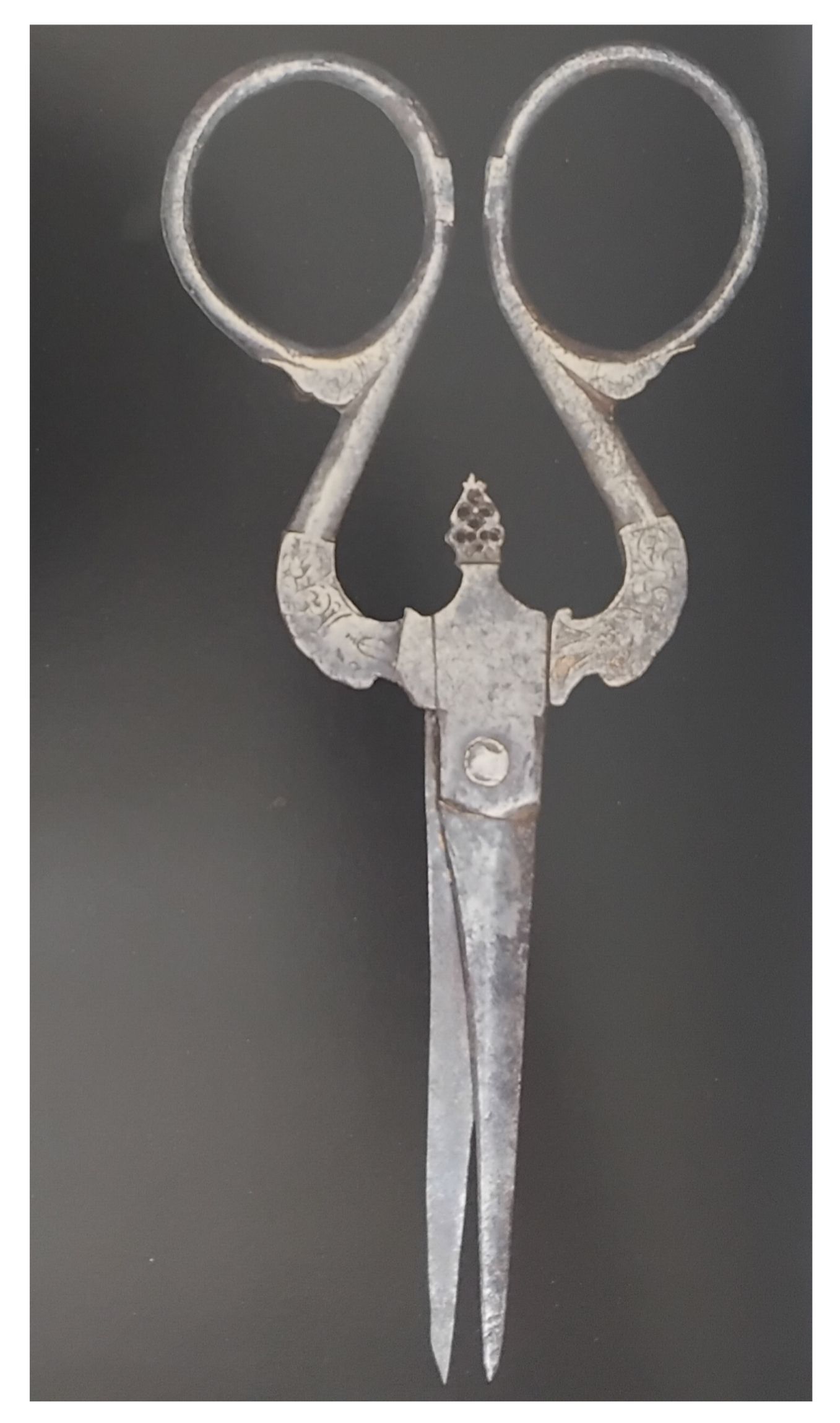
While the focus of the book is not specifically scissors, the rich discussion of the history of Persian steel provides a fascinating background, and there are several photographed examples of scissors from the 16th to 19th centuries including paper scissors, tin snips, and textile scissors.Create Date
March 7, 2025Update Date
March 7, 2025