Scissors with Replaceable Blades
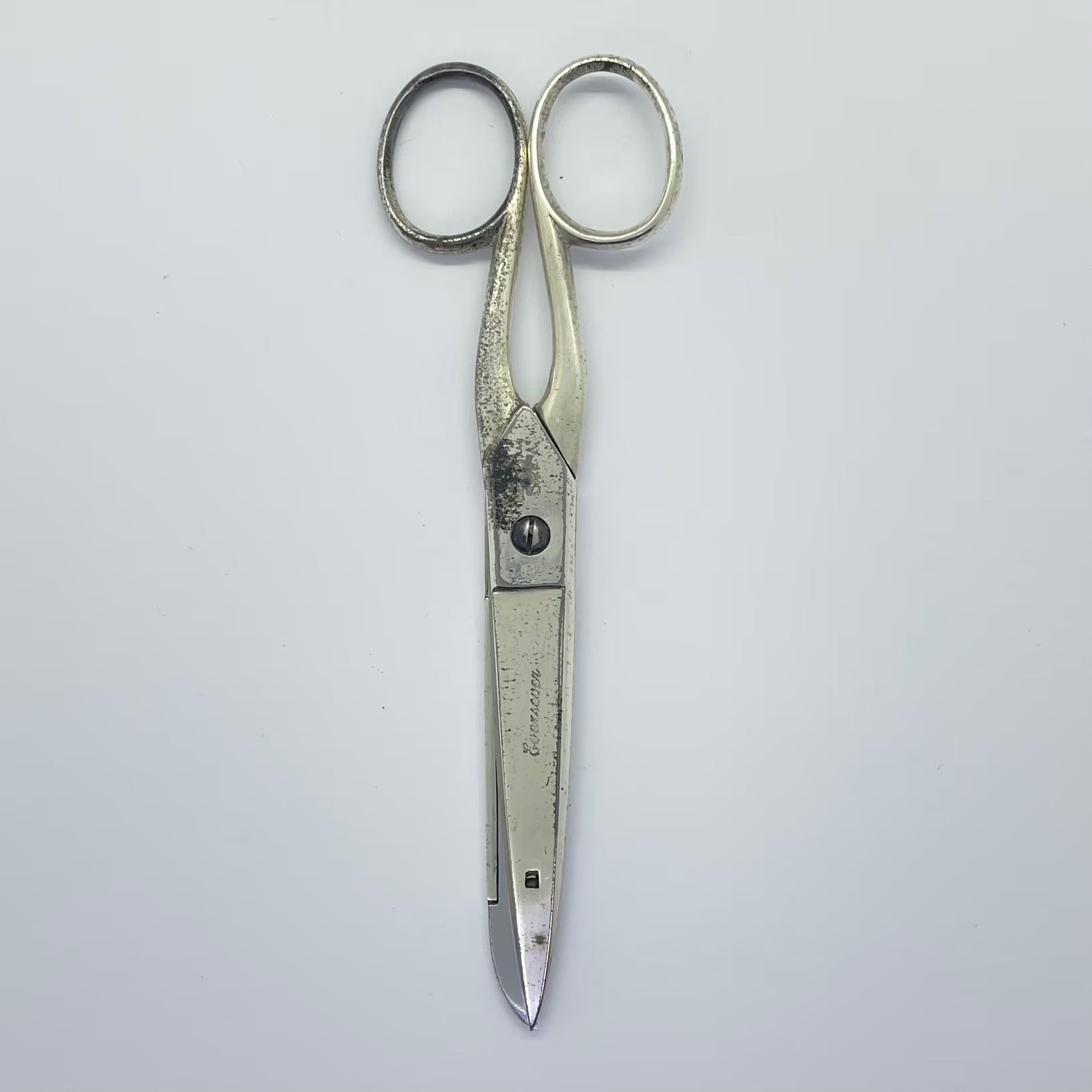
Scissors
An image of the scissors with their blades closed.
Name/Title
Scissors with Replaceable BladesEntry/Object ID
2025.2.353Tags
england, 1900s, scissors, patent, tup, st1Description
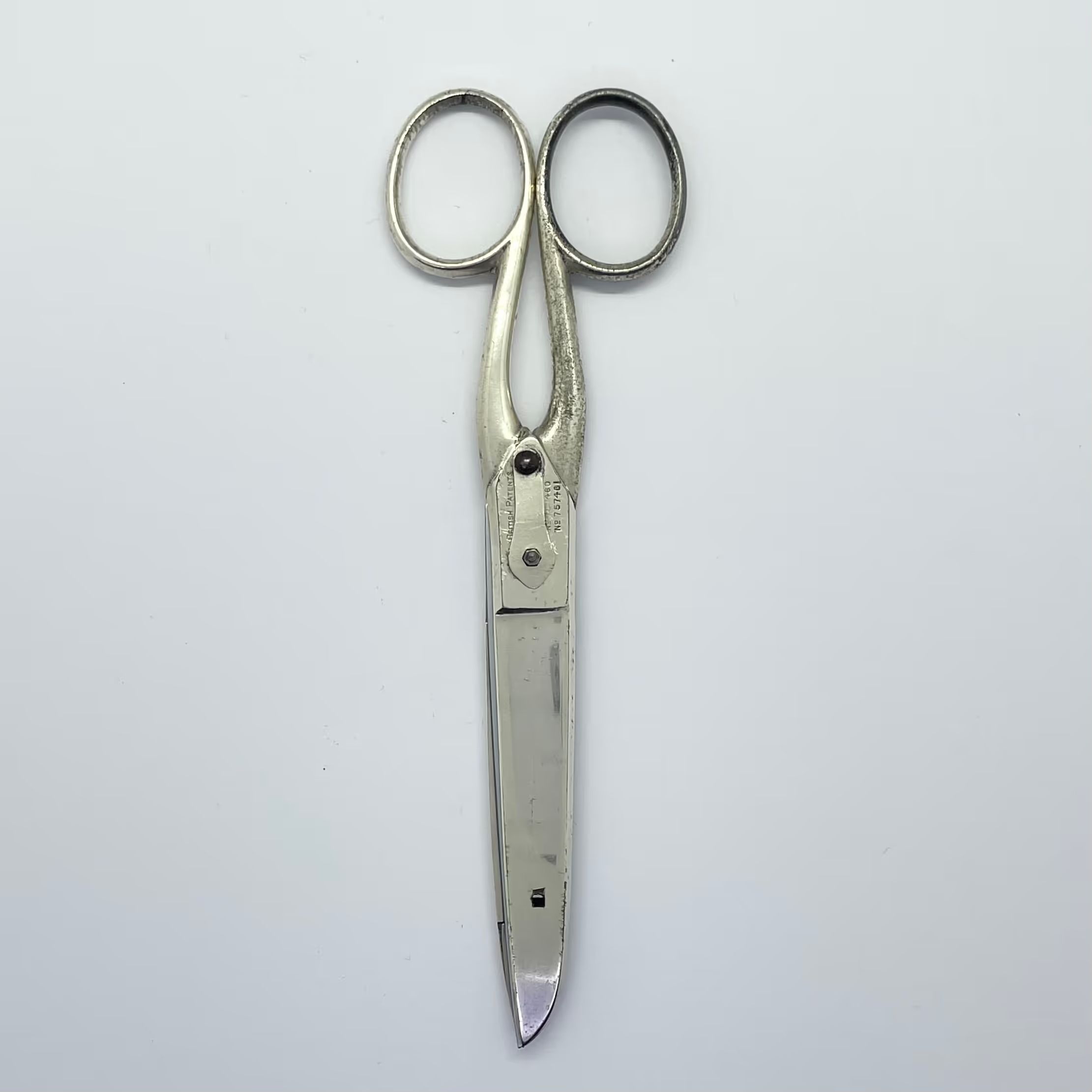
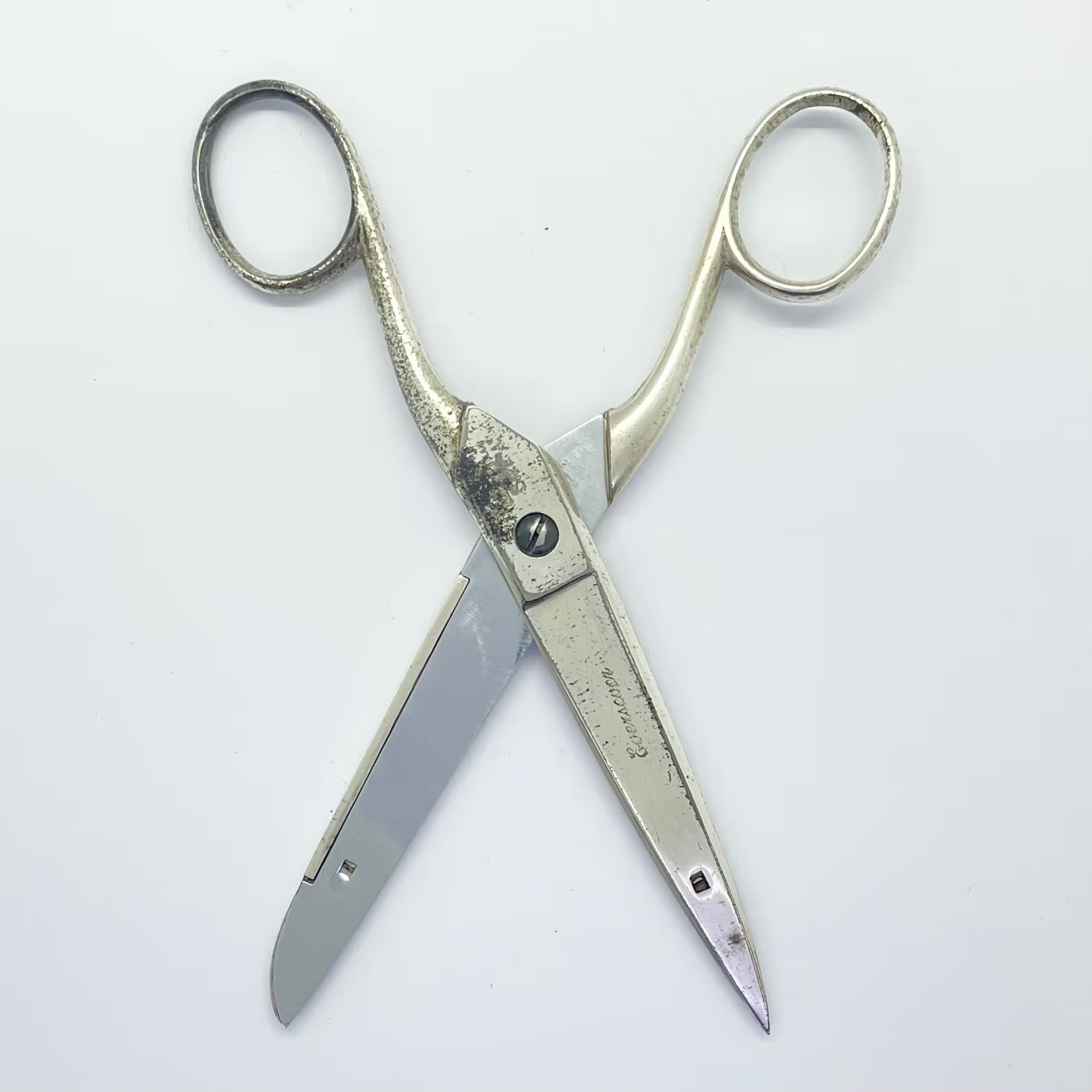
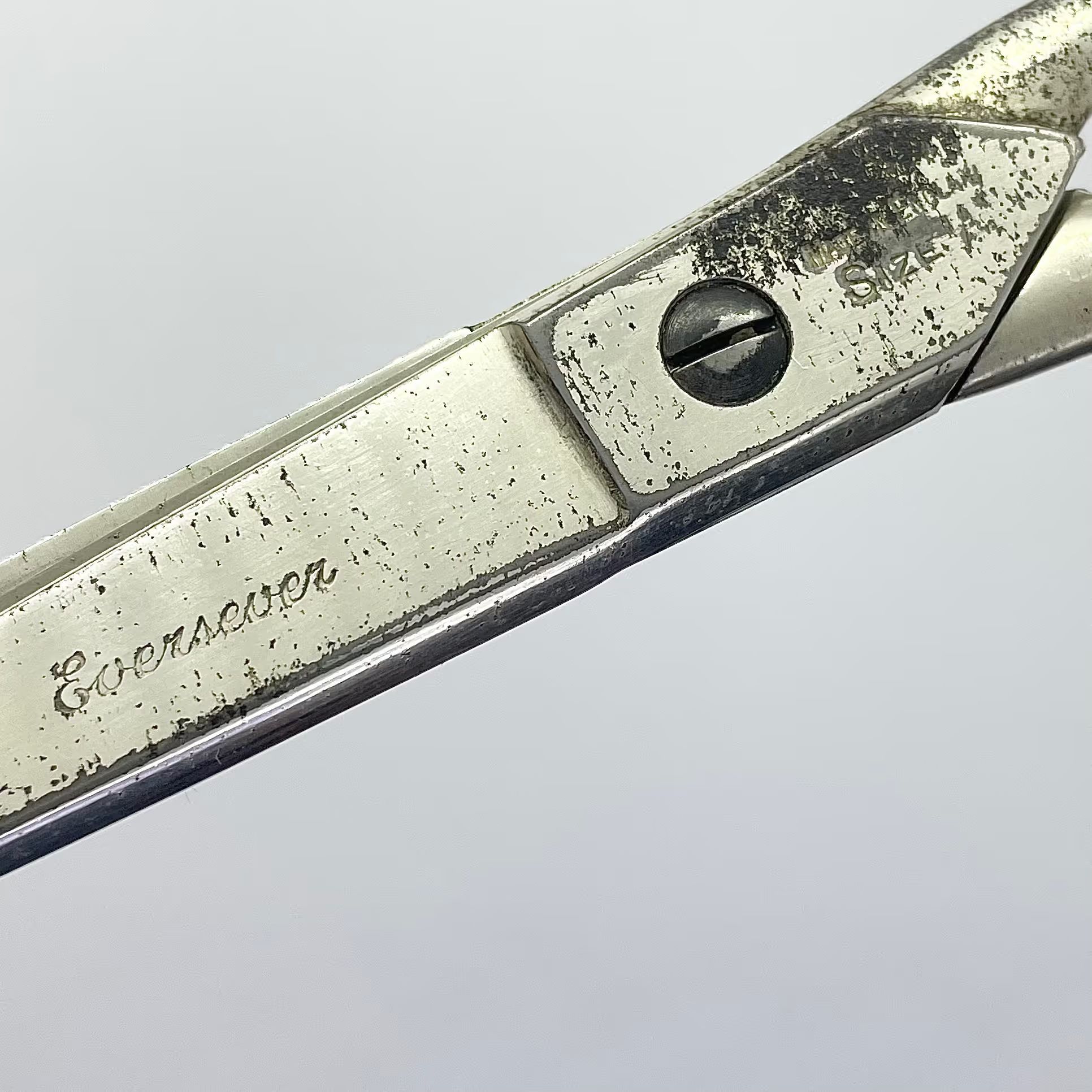
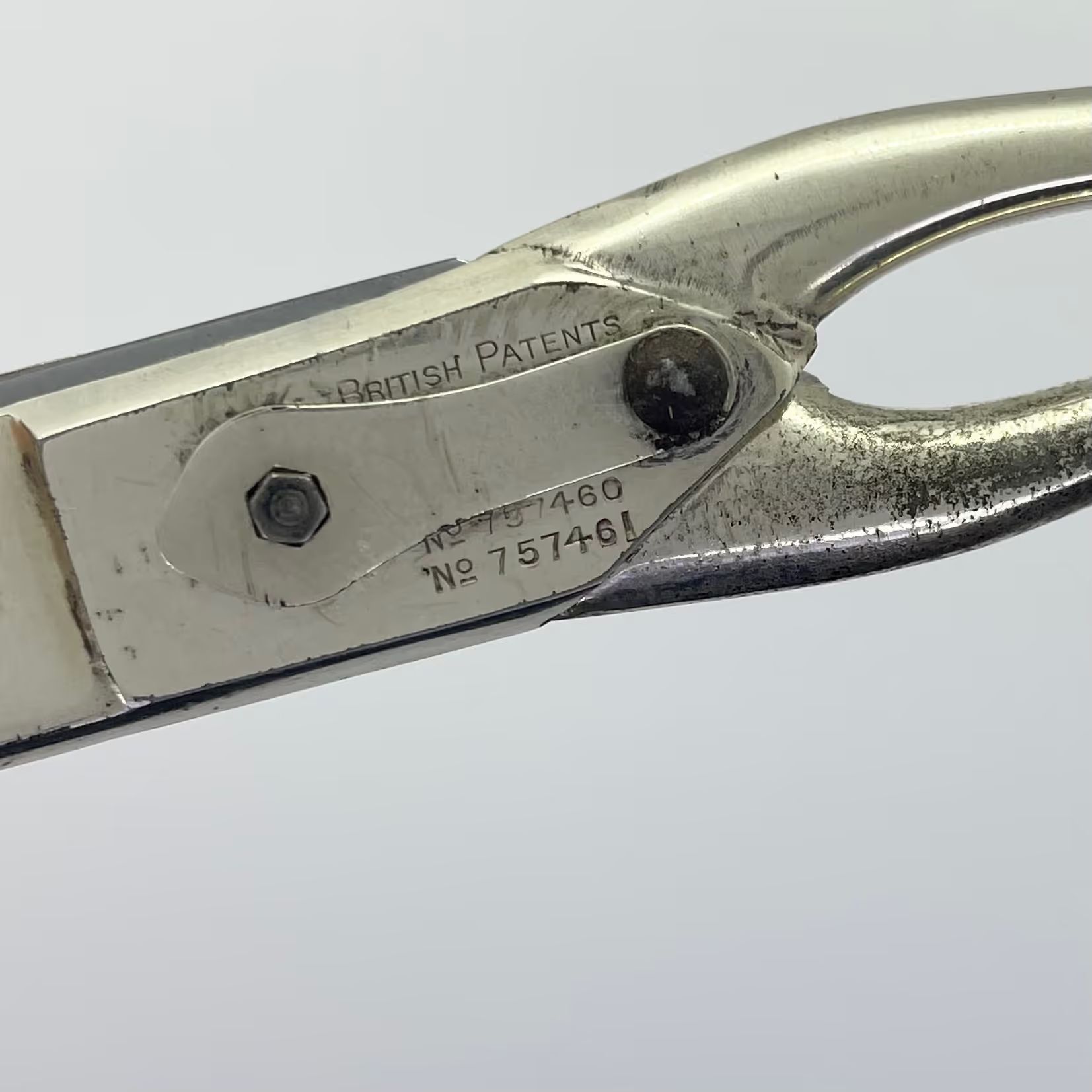
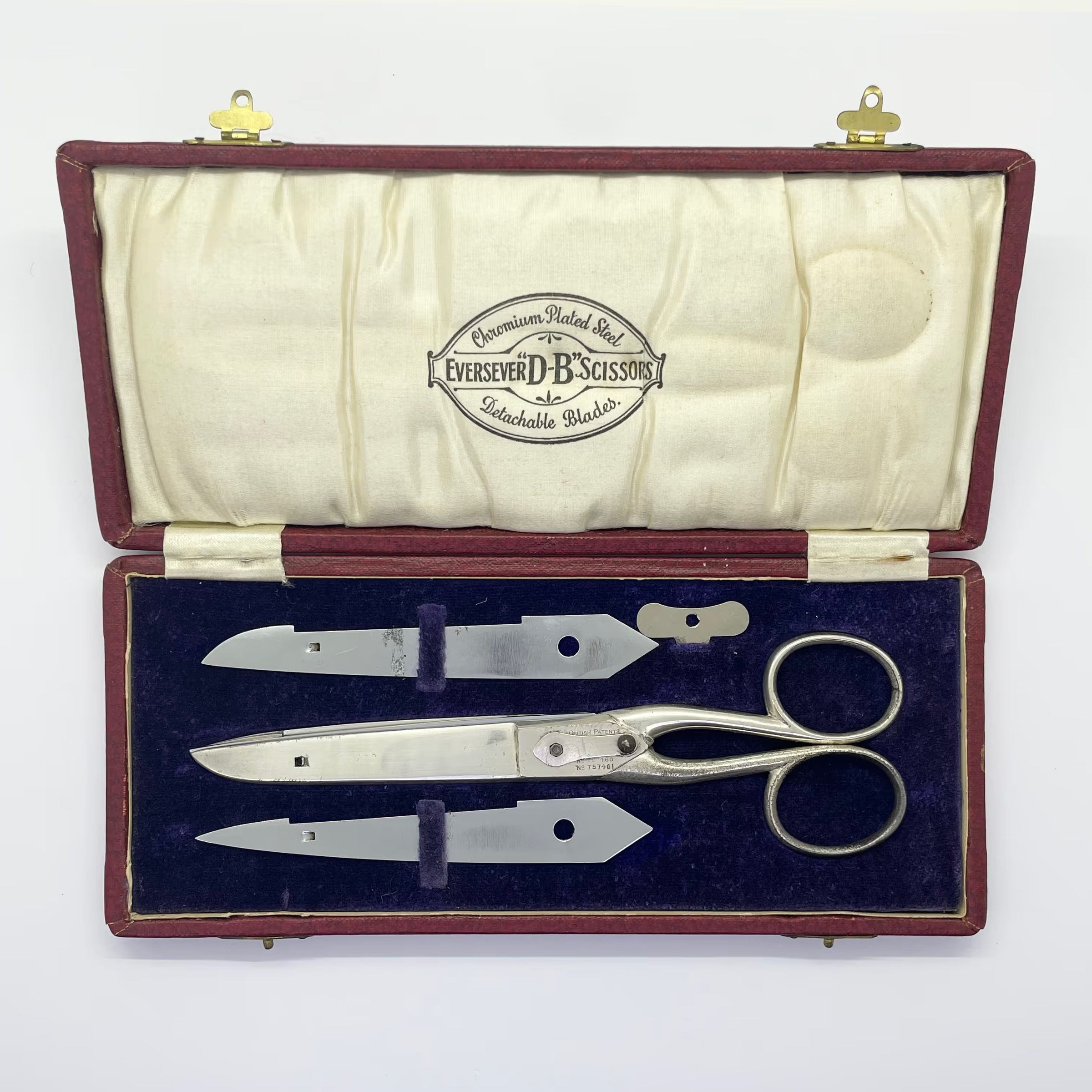
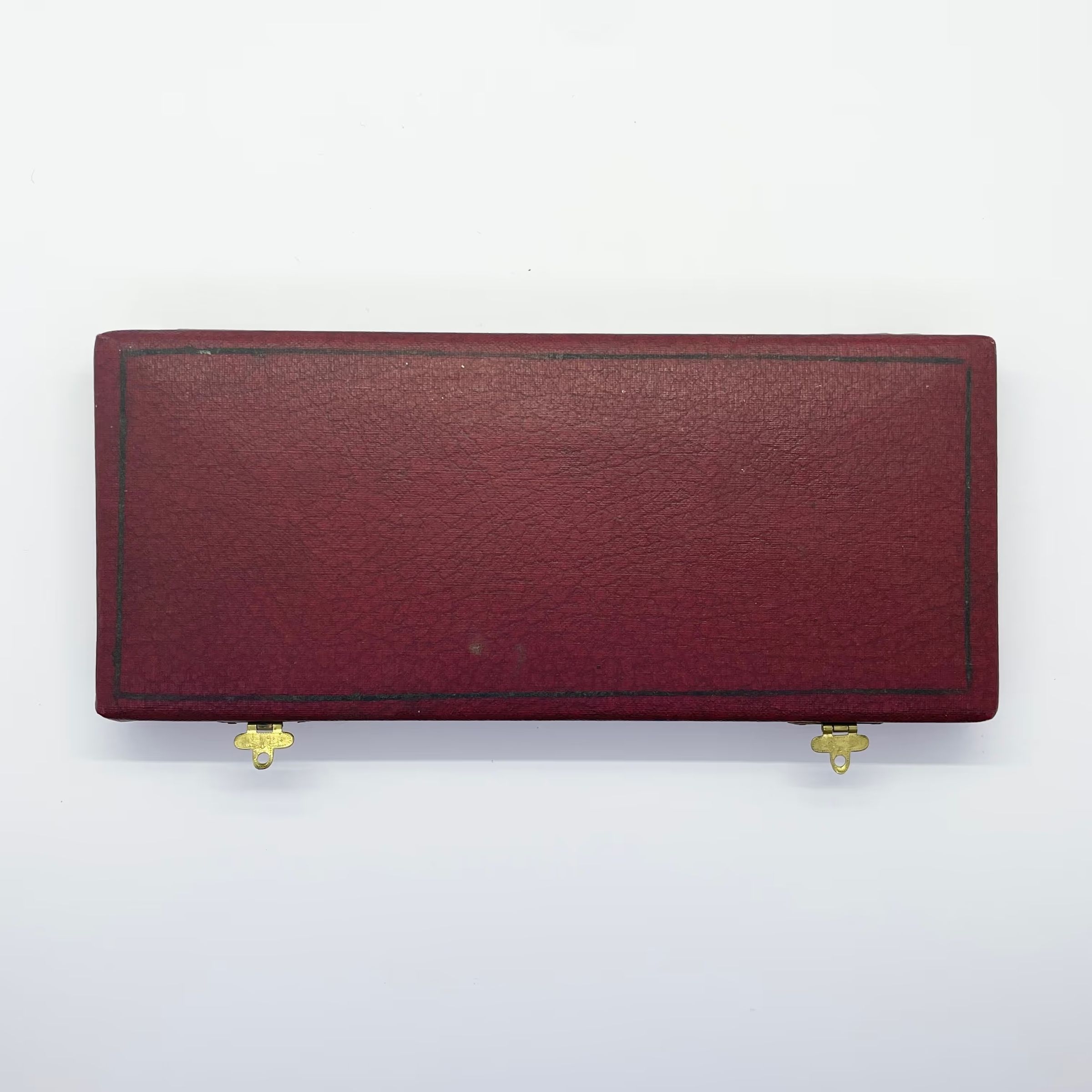
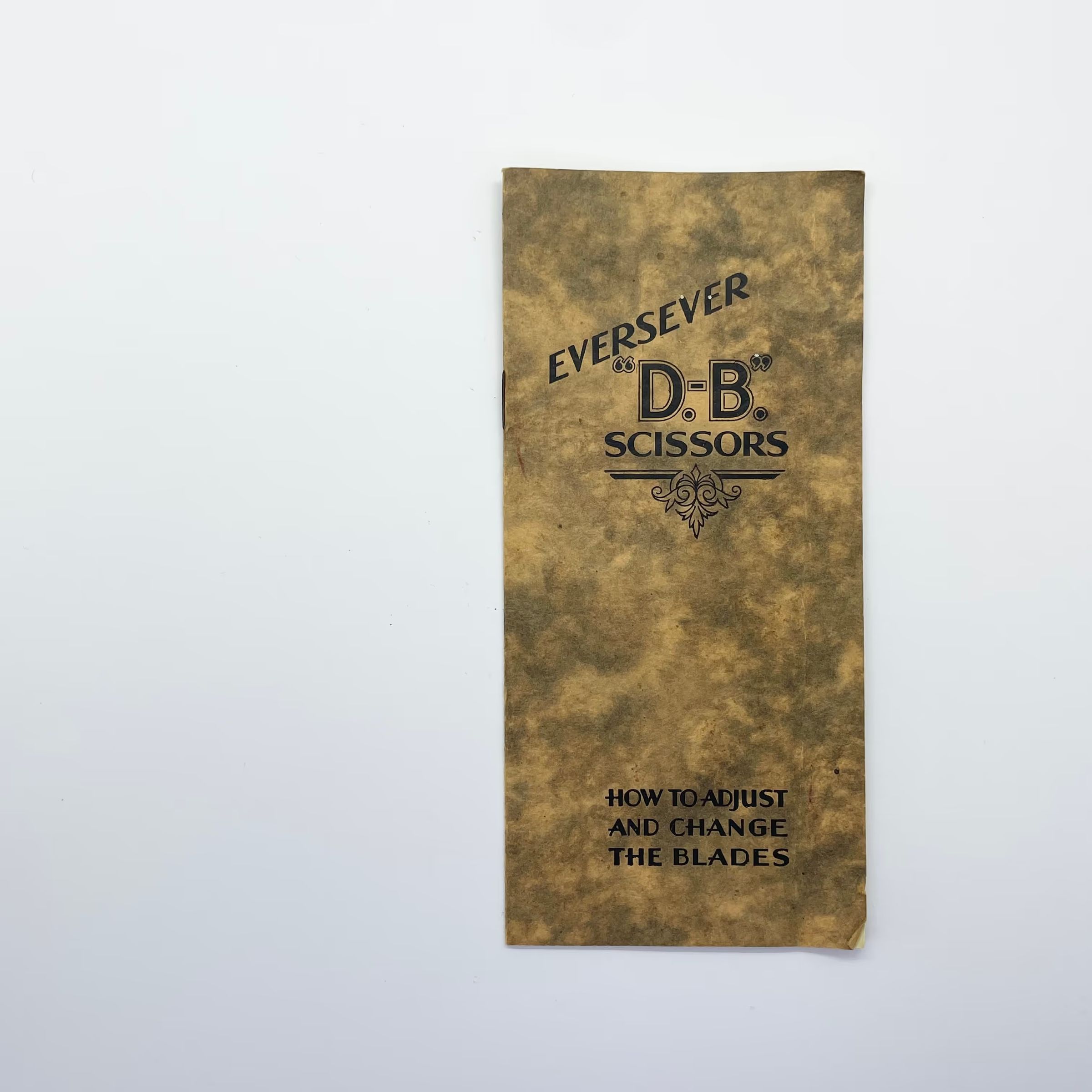
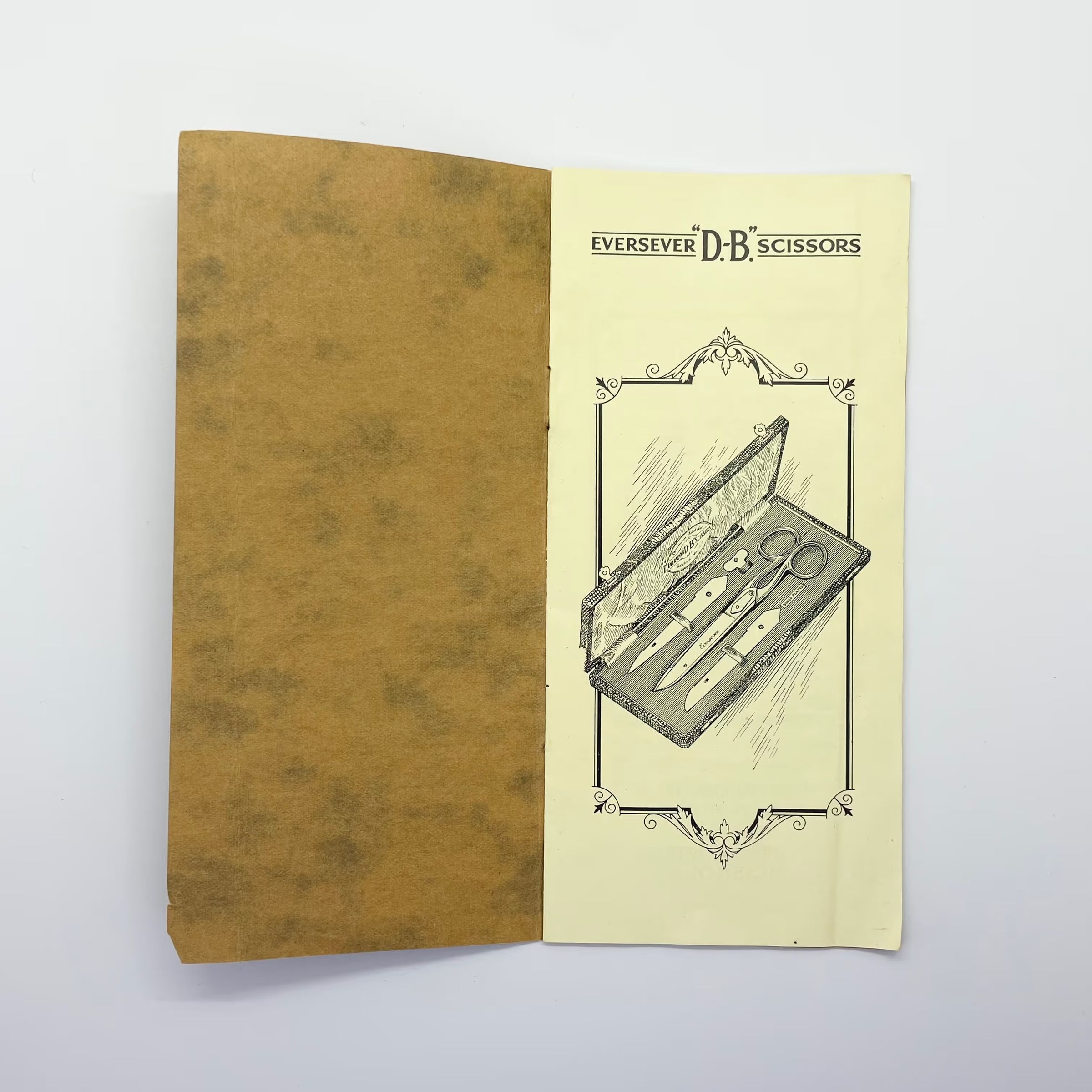
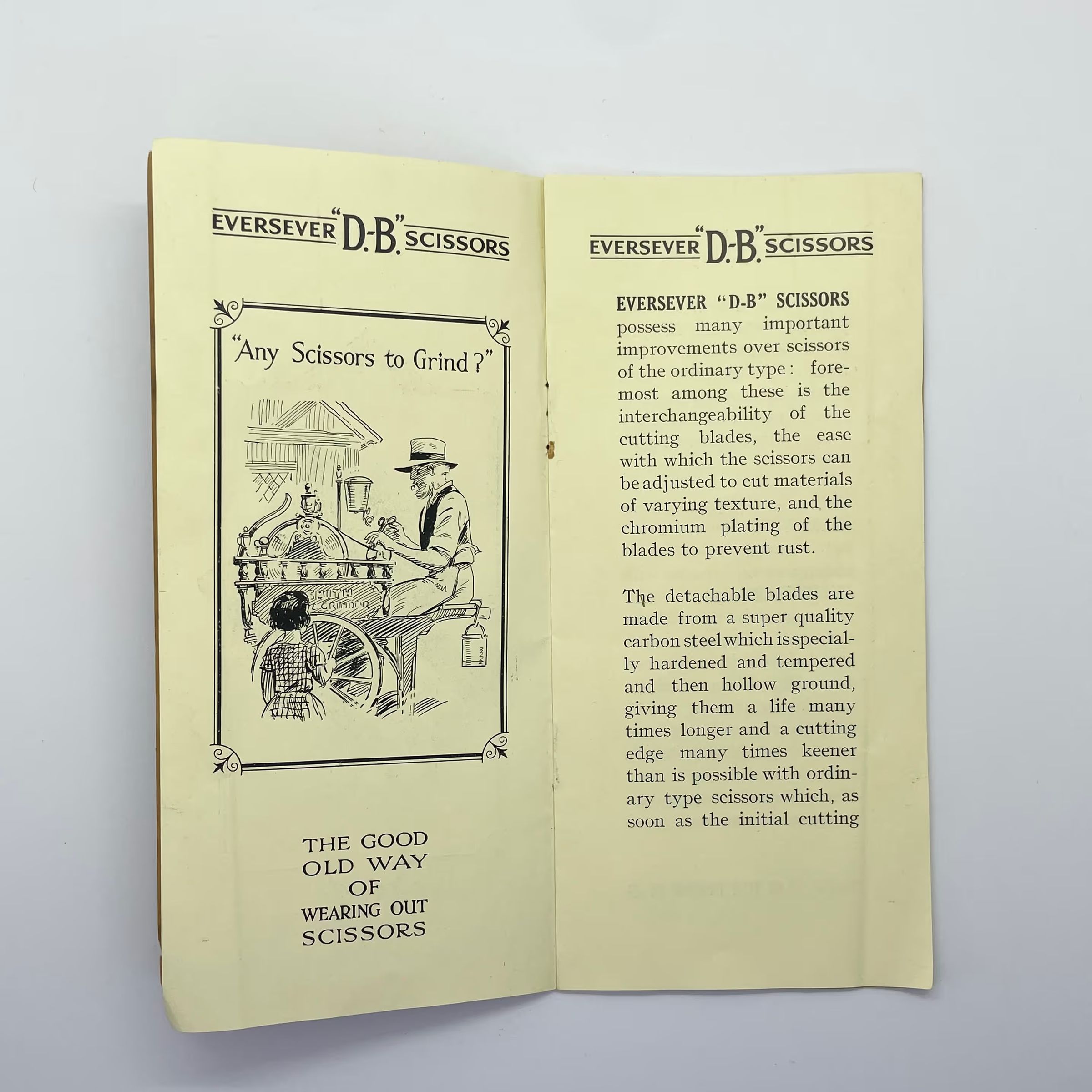
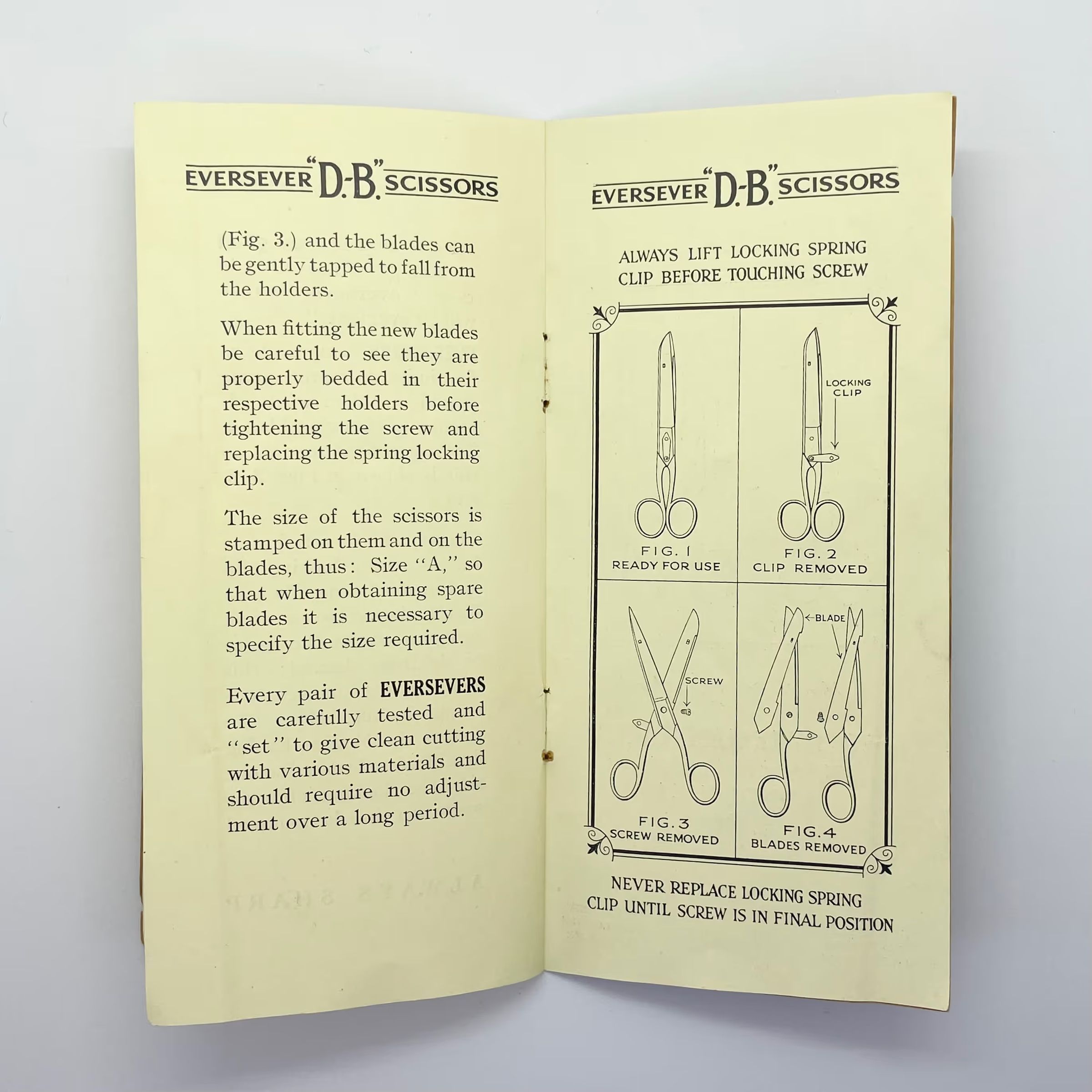
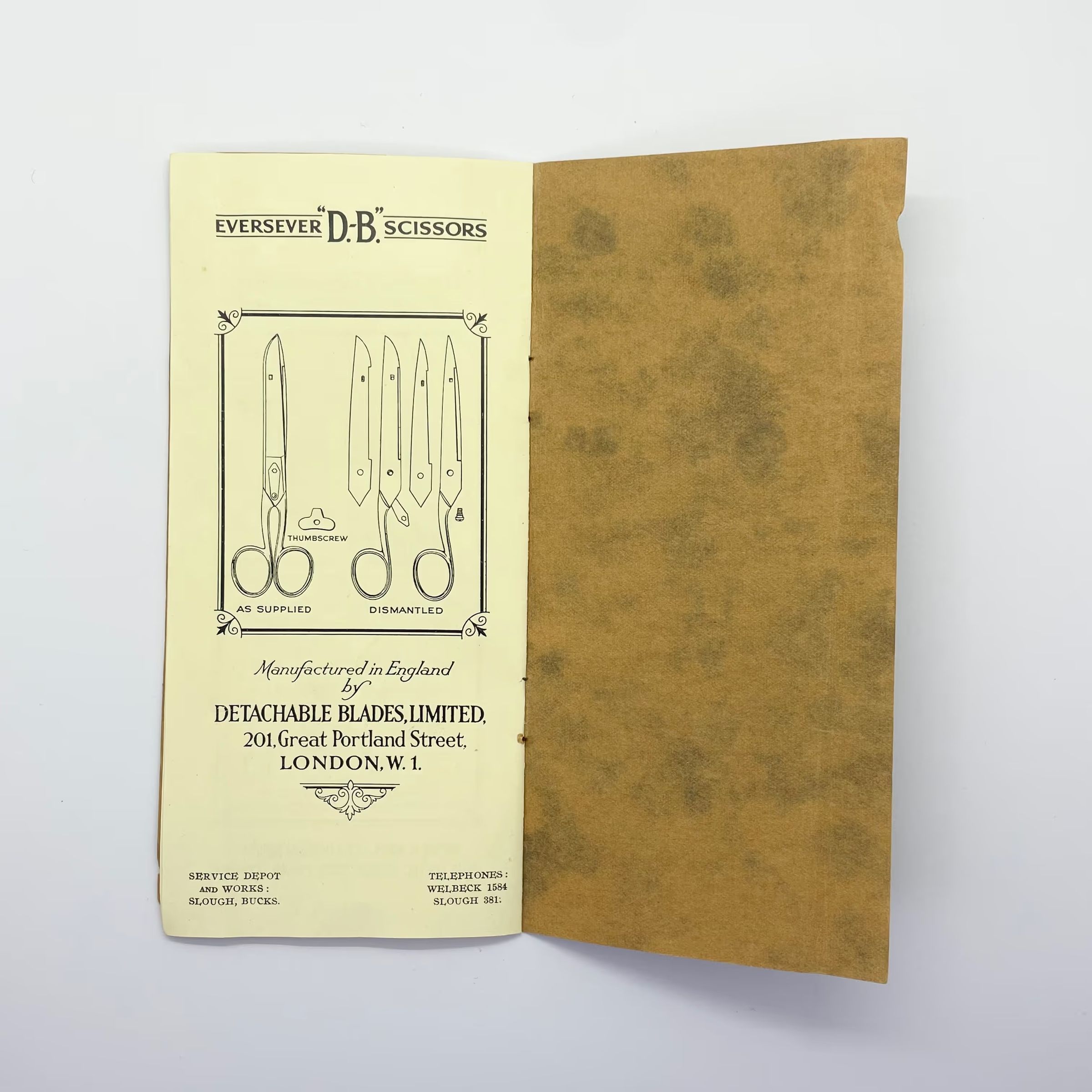
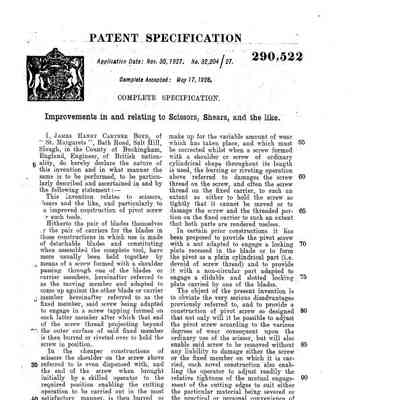
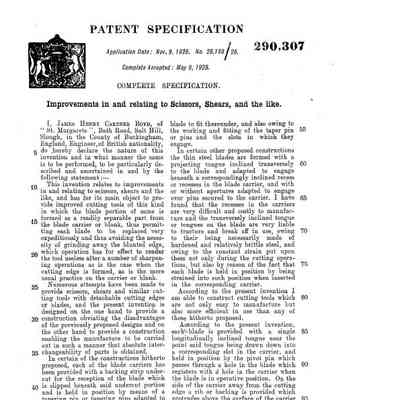
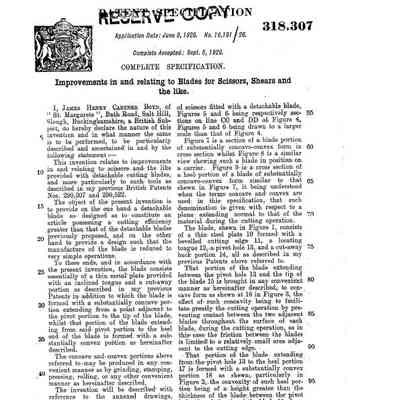
A pair of scissors with detachable blades. The scissors are made from chromium plated steel, and are in a box with two spare blades and a booklet. The shank is tup, the pivot is a screw, the shoulder transition is st1, and the points are asymmetrical. There are five British Patent numbers on the reverse of the pivot area, underneath the locking clip. Three of these patents are attached here; we have been unable to trace the remaining two so far. The text of the booklet is as follows: "EVERSEVER "D.-B." SCISSORS HOW TO ADJUST AND CHANGE THE BLADES [image of a scissor grinder, captioned "Any Scissors to Grind?"] THE GOOD OLD WAY OF WEARING OUT SCISSORS EVERSEVER "D.-B." SCISSORS possess many important improvements over scissors of the ordinary type: foremost among these is the interchangeability of the cutting blades, the ease with which the scissors can be adjusted to cut materials of varying texture, and the chromium plating of the blades to prevent rust. The detachable blades are made from a super quality carbon steel which is specially hardened and tempered and then hollow ground, giving them a life many times longer and a cutting edge many times keener than is possible with ordinary type scissors which, as soon as the initial cutting edge becomes worn, are practically useless in spite of, or because of, the attentions of the grinder. It is for this reason that in almost every household there are several pairs of "won't cut" scissors. With the introduction of EVERSEVERS these "won't cut" scissors should be thrown away, because with EVERSEVERS all that is necessary when the blades eventually begin to shew signs of wear is to slip in a new pair, making no difference in the cutting "feel" as is the case with ordinary type scissors after grinding. The replaceable blades only being subject to wear, your scissors remain "as good as new" for not only will the "eversever" they will "everlast". EVERSEVERS being made to fine limits of exactness, care should be taken when adjusting or changing blades. The correct manner to do this is shewn in Figs. 2, 3, and 4. To adjust for tightness lift the spring locking clip and turn it to one side as in Fig. 2, the screw can then be turned to give the degree of tightness desired; this being done, replace the spring locking clip. To change the blades: having first lifted and turned to one side the locking clip the screw can then be removed (Fig. 3.) and the blades can be gently tapped to fall from the holders. When fitting the new blades be careful to see they are properly bedded in their respective holders before tightening the screw and replacing the spring locking clip. The size of the scissors is stamped on them and on the blades, thus: Size "A" so that when obtaining spare blades it is necessary to specify the size required. Every pair of EVERSEVERS are carefully tested and "set" to give clean cutting with various materials and should require no adjustment over a long period. ALWAYS LIFT LOCKING SPRING CLIP BEFORE TOUCHING SCREW [images] NEVER REPLACE LOCKING SPRING CLIP UNTIL SCREW IS IN FINAL POSITION [image] Manufactured in England by DETACHABLE BLADES, LIMITED. 201, Great Portland Street, LONDON, W. 1. SERVICE DEPOT AND WORKS: SLOUGH, BUCKS TELEPHONES; WELBECK 1584 SLOUGH 381."Category
Scissors