Name/Title
BivalvesEntry/Object ID
2022.2.27.2Description
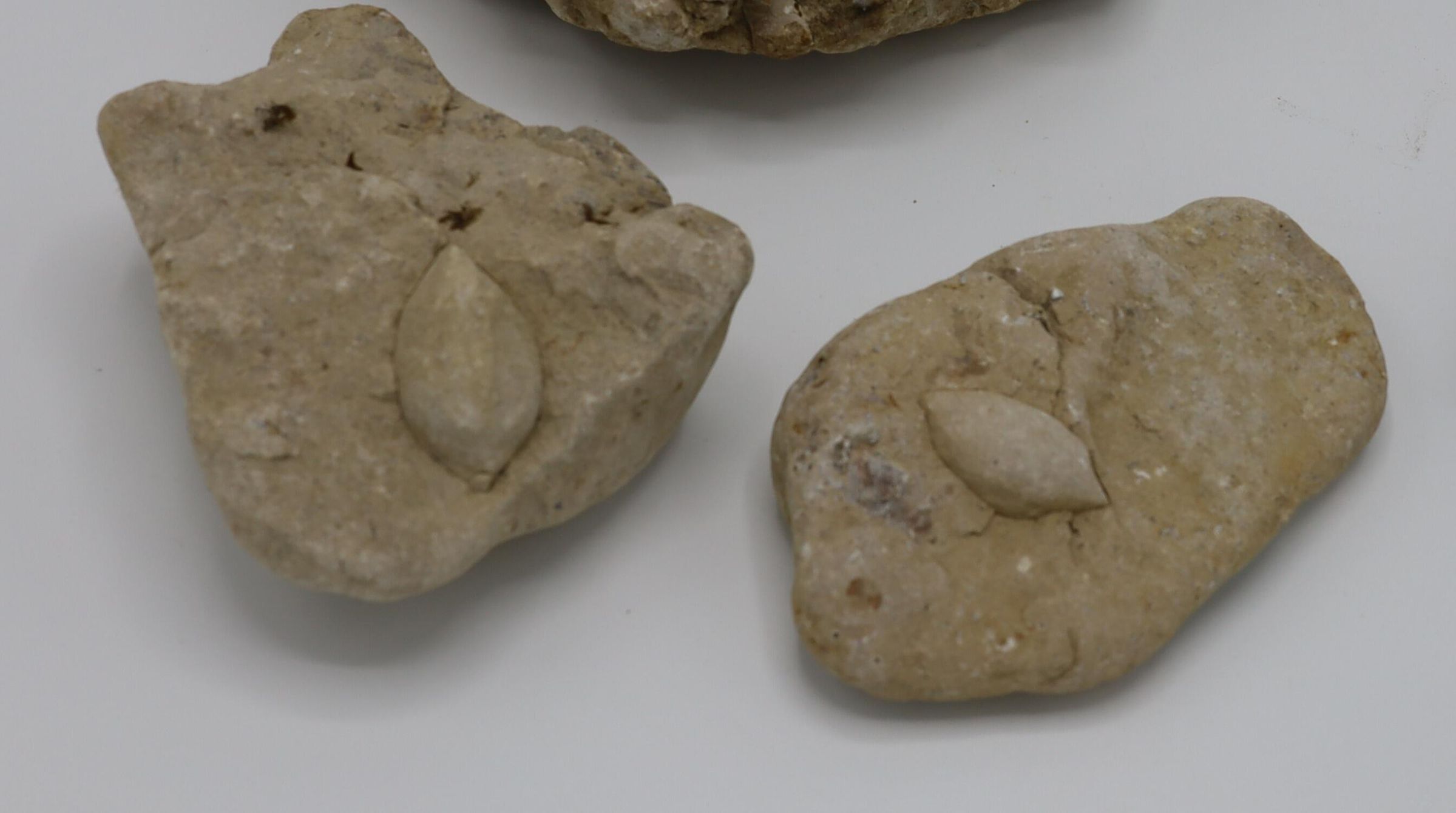
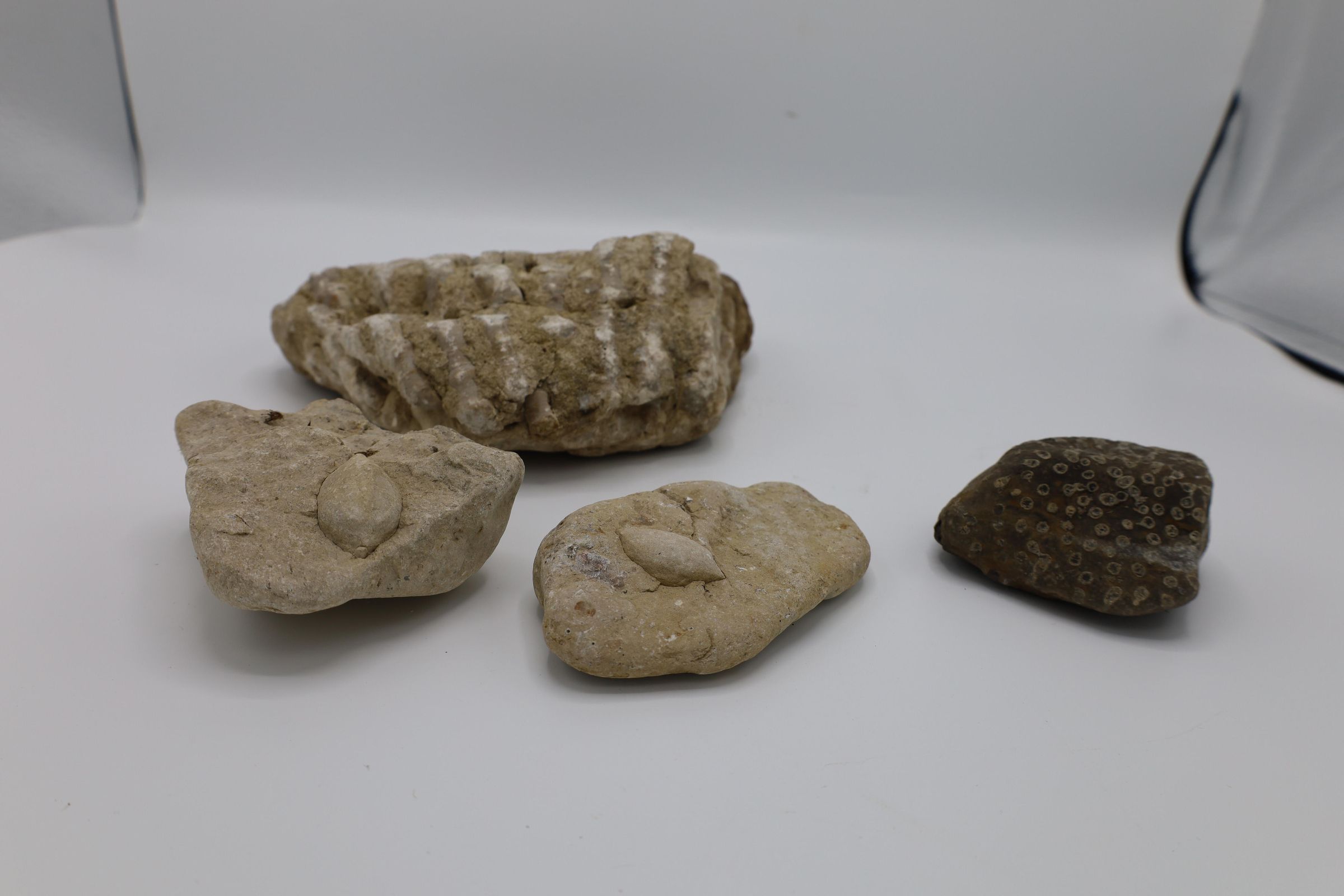
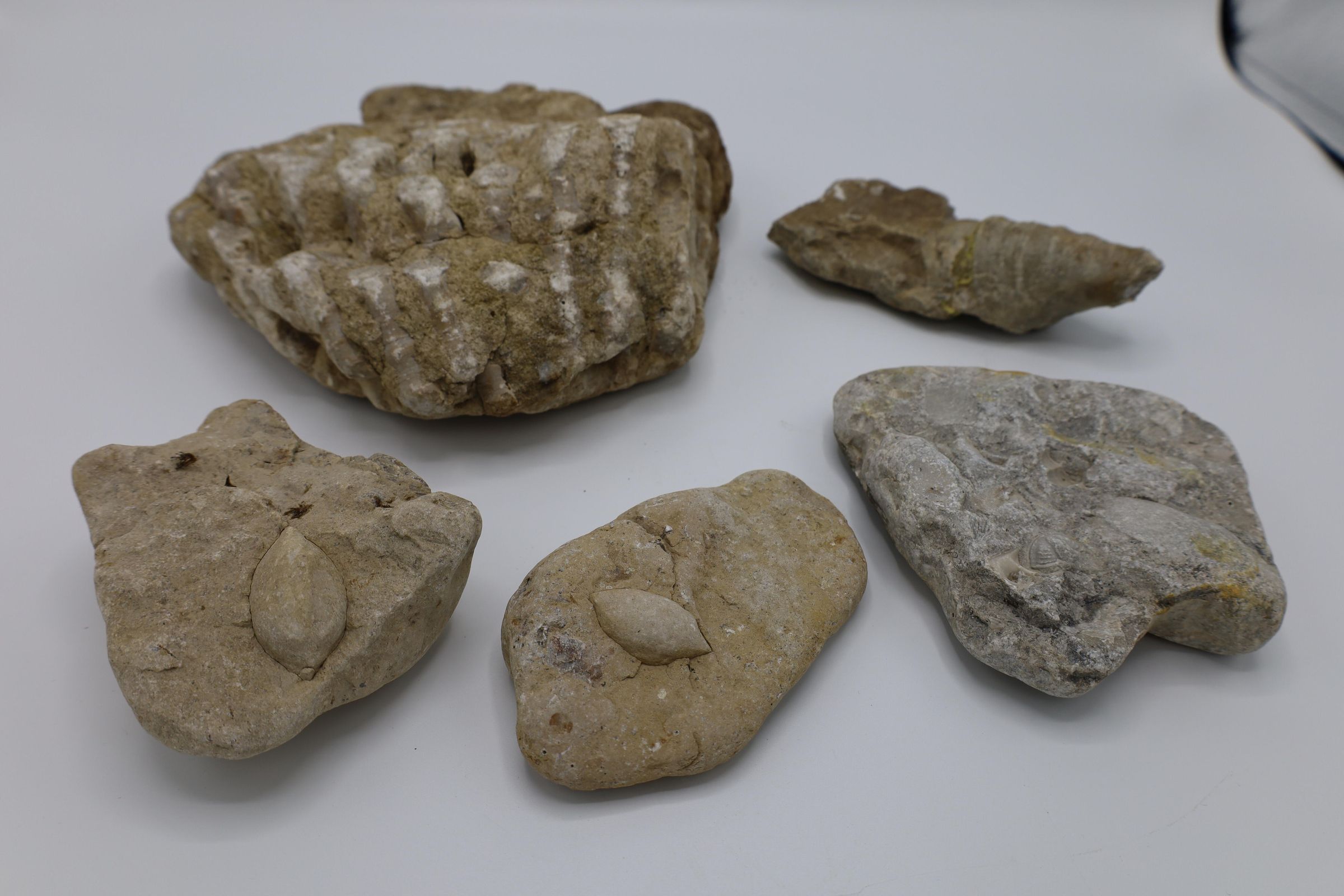
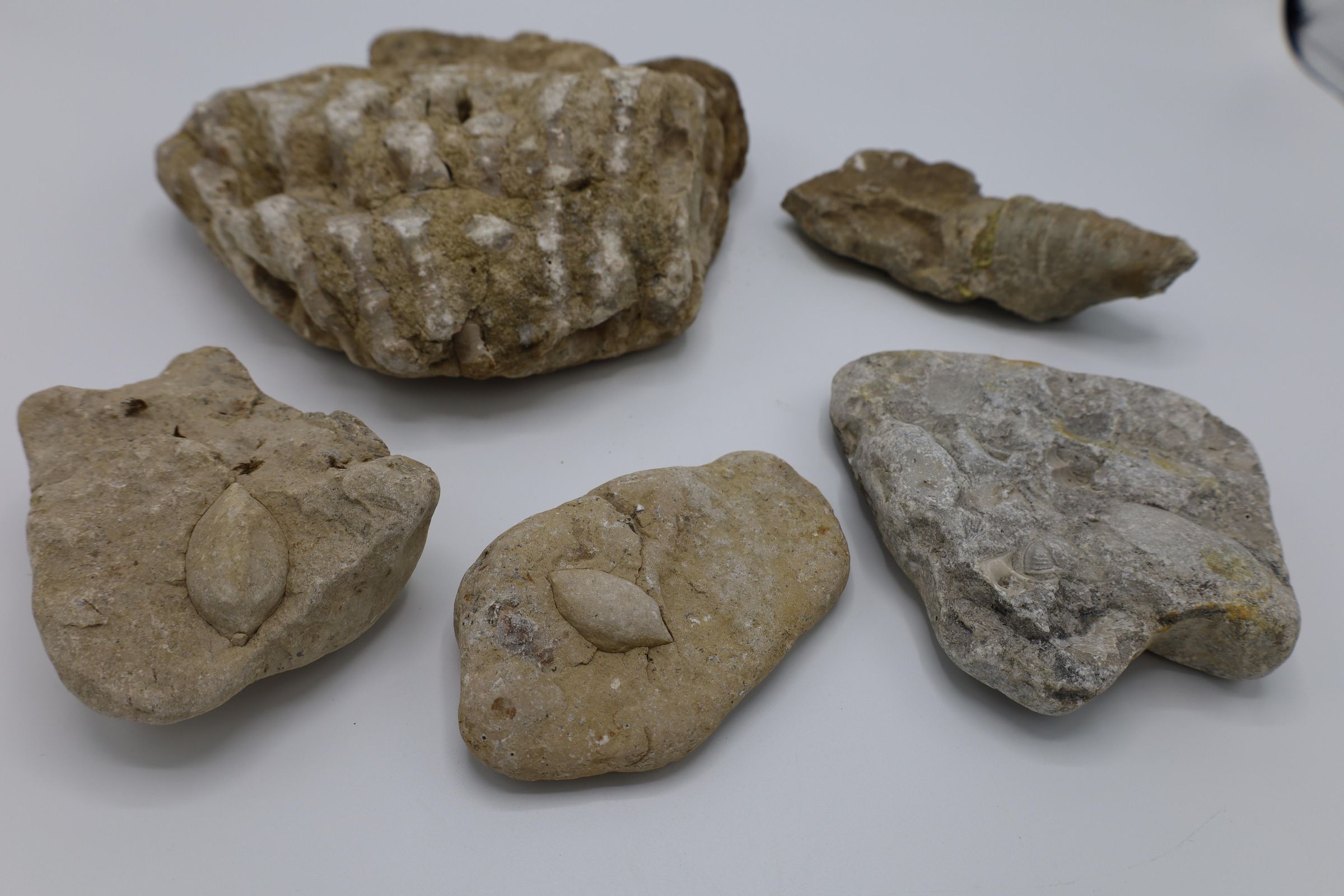
These bivalves can be found in a display case at the Kelleys Island State Parks office. Bivalves are fossils of the Columbus Limestone originating from the Devonian Period, 360 – 419 million years ago.
According to, Statehouse Fossils: A guide to fossils of the Ohio Capitol, bivalves include modern clams, mussels, scallops, oysters, and other groups. They have a long fossil record, from the early Cambrian Period to the present. Most obtain food by filtering freshwater or seawater using specialized comb-like gills that function both as respiratory and feeding organs.
Fossil bivalves can be distinguished from the unrelated but often mistaken for brachiopods by their shell symmetry. The two valves (shell halves) of a bivalve mirror one another, whereas the two valves of a brachiopod do not. Likewise, the left and right halves of a single brachiopod valve are symmetric, whereas individual valves of bivalves are asymmetric.
Another difference between bivalves and brachiopods is their preservation in the Columbus Limestone. Fossil bivalves (and other mollusks) are often preserved only as internal and external molds, whereas the original shells of brachiopods are preserved in the limestone. This preservation difference is related to the mineral composition of the original shells. Most brachiopods constructed their shells with the mineral calcite, which was chemically stable in the Devonian seas. Bivalves and other mollusks were more likely to use another crystal form of calcium carbonate (CaCO3) that was less stable and less likely to be preserved.
Statehouse Fossils-A guide to fossils of the Ohio Capital. Mark E Peter. ODNR Division of Geological Survey. Page 19.Location
* Untyped Location
Kelley's Island State Park