Name/Title
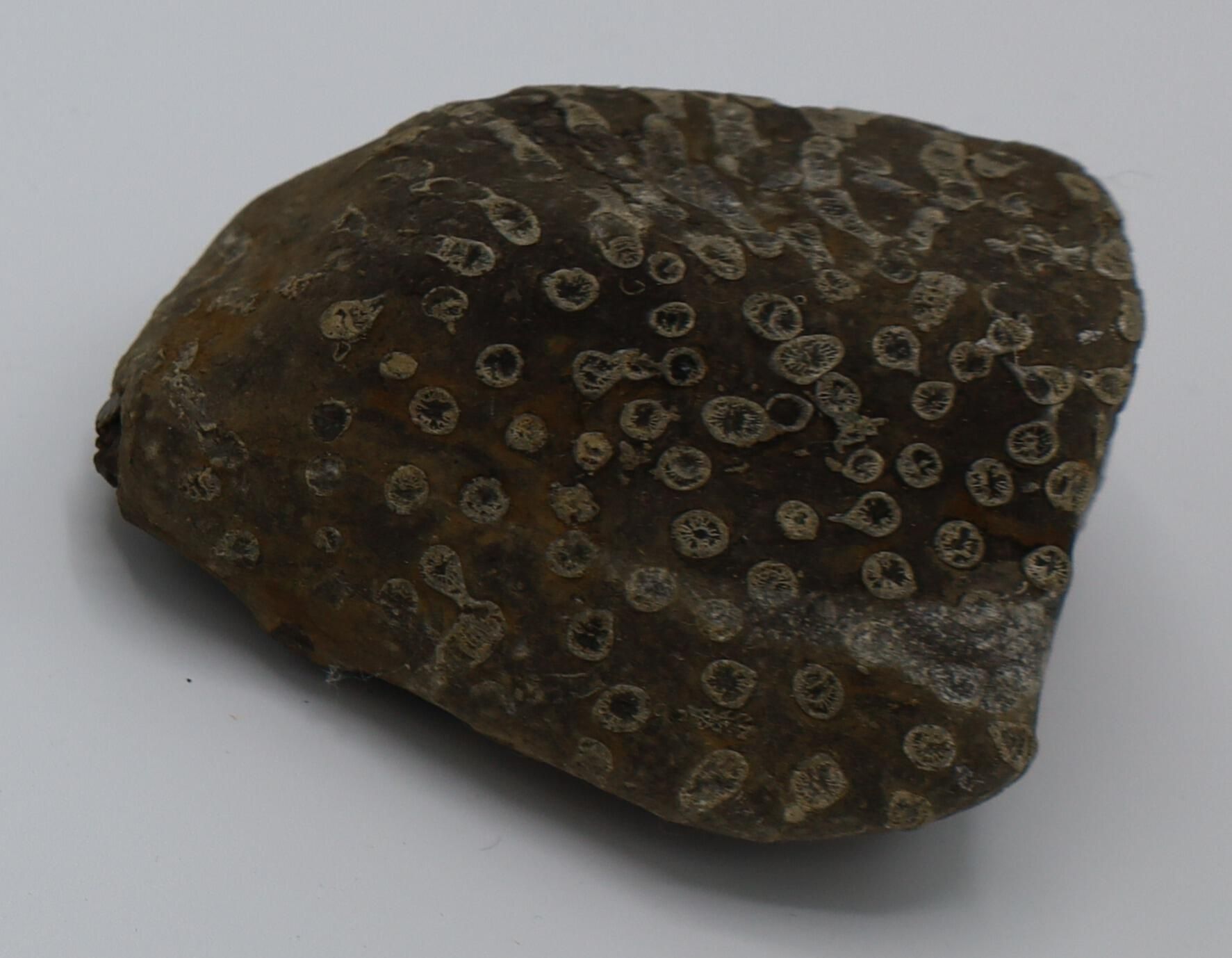
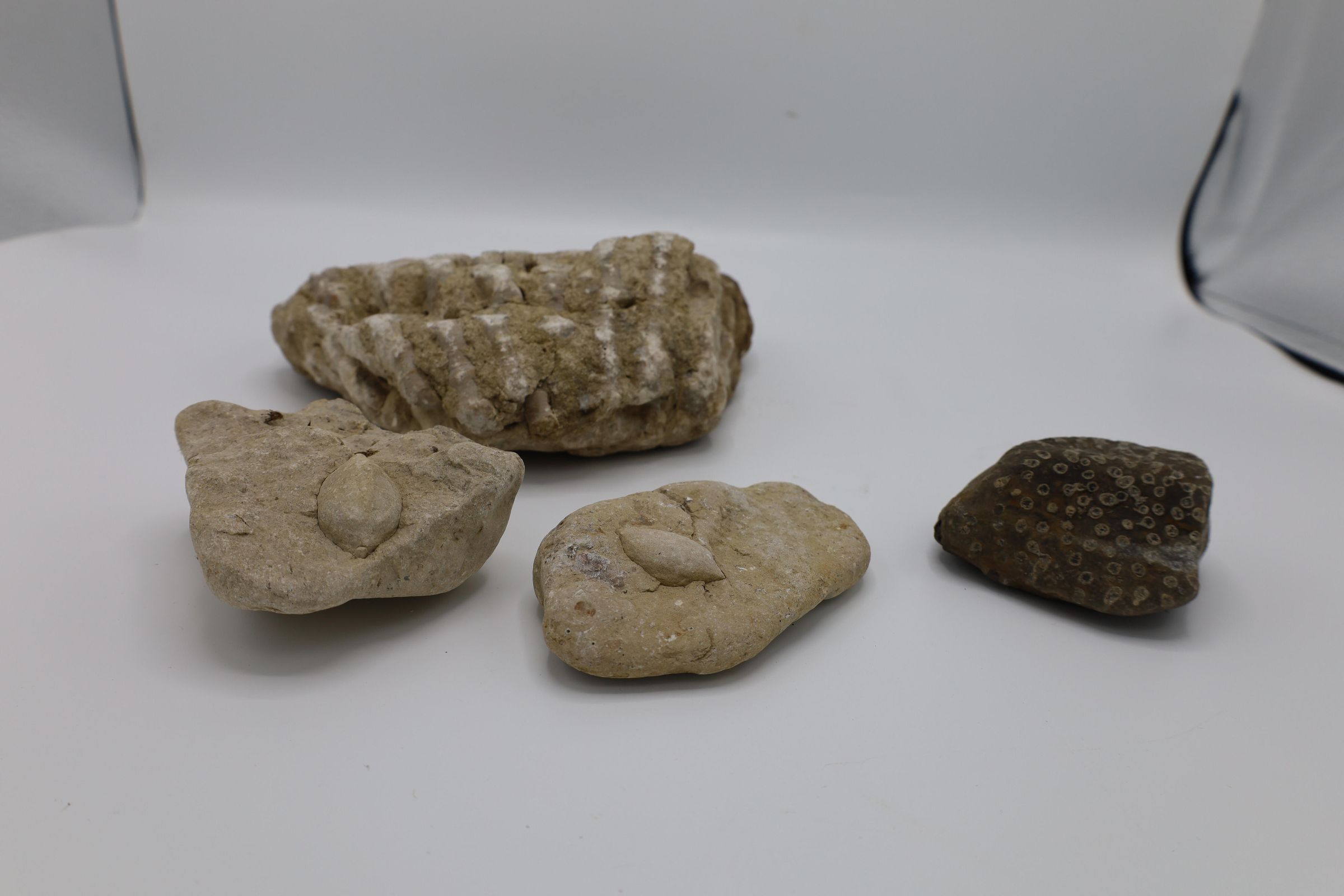
Colonial rugose "finger" coral EridophyllumEntry/Object ID
2022.2.27.4Description
This colonial rugose “finger” coral Eridophyllum is a fossil of the Columbus Limestone originating from the Devonian Period, 360—419 million years ago.
According to the Ohio Department of Natural Resources Geology Division, rugose corals were either solitary, having a single large coral polyp, or colonial, with multiple polyps sharing a common skeletal framework. Colonial corals are essentially a series of joined tubes called corallites, each with a single living coral polyp residing at the top or outermost portion. Rugose corals, both colonial and solitary, had prominent septa, which in corals are the longitudinal partitions of the corallites that radiate from the center of the tube outward to the tube walls. Now extinct, rugose corals lived from the Middle Ordovician Period to late in the Permian Period.
From Ohio's Devonian-age rocks, Hexagonaria and Prismatophyllum were colonial rugose corals with a similar appearance. Their corallites were shaped like hexagonal prisms (hence the genus names). Some Hexagonaria corals are better known as Petoskey Stones, after the city in northern Michigan. Local collectors polish wave-tumbled coral pieces found on the shores of Lake Michigan and sell them as souvenirs. Eridophyllum was one of many "finger corals," in which the corallites were not closely adjoined.
https://ohiodnr.gov/discover-and-learn/rock-minerals-fossils/fossils/colonial
Statehouse Fossils-A guide to fossils of the Ohio Capital. Mark E Peter. ODNR Division of Geological Survey. Page 26.Location
* Untyped Location
Kelley's Island State Park