Name/Title
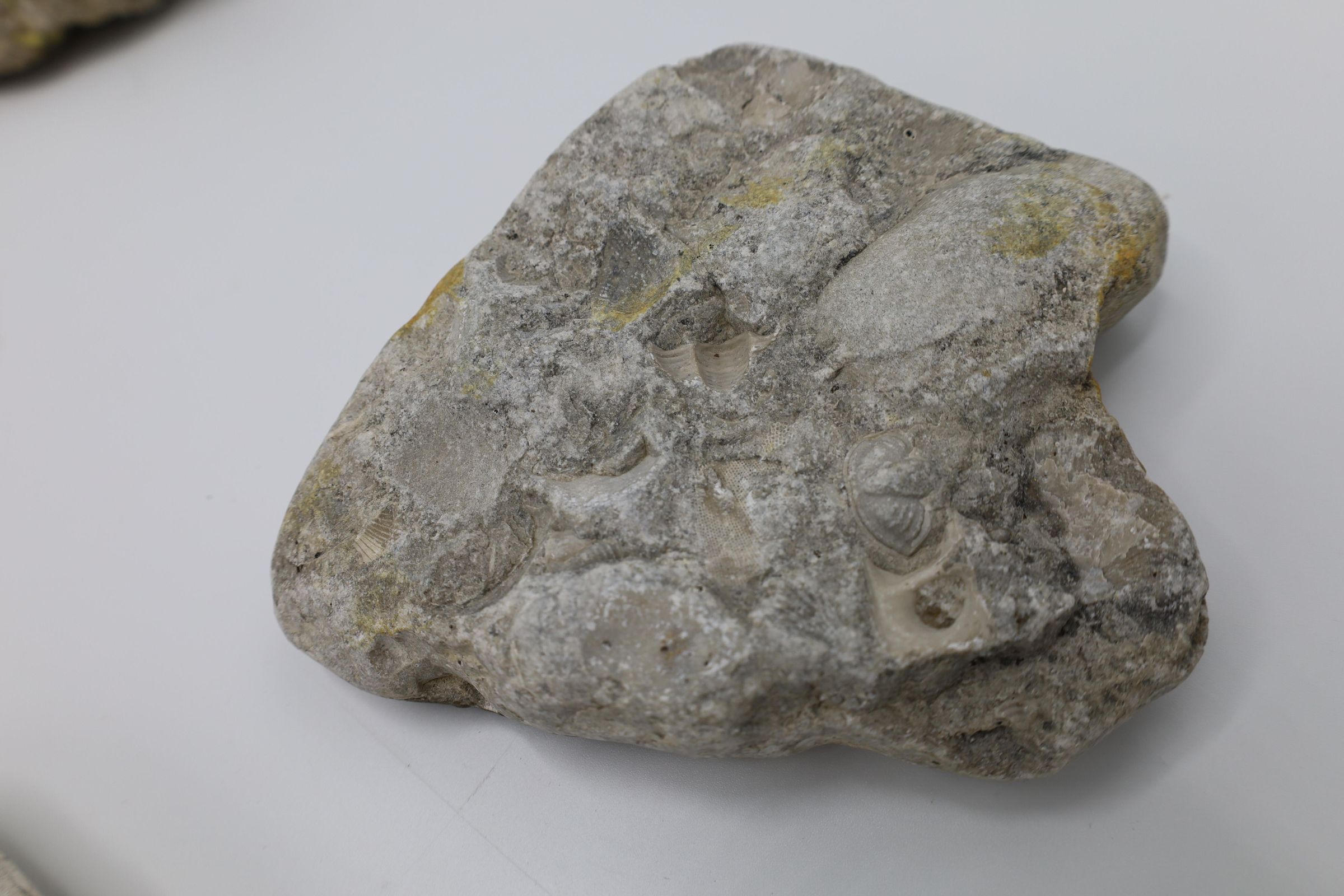
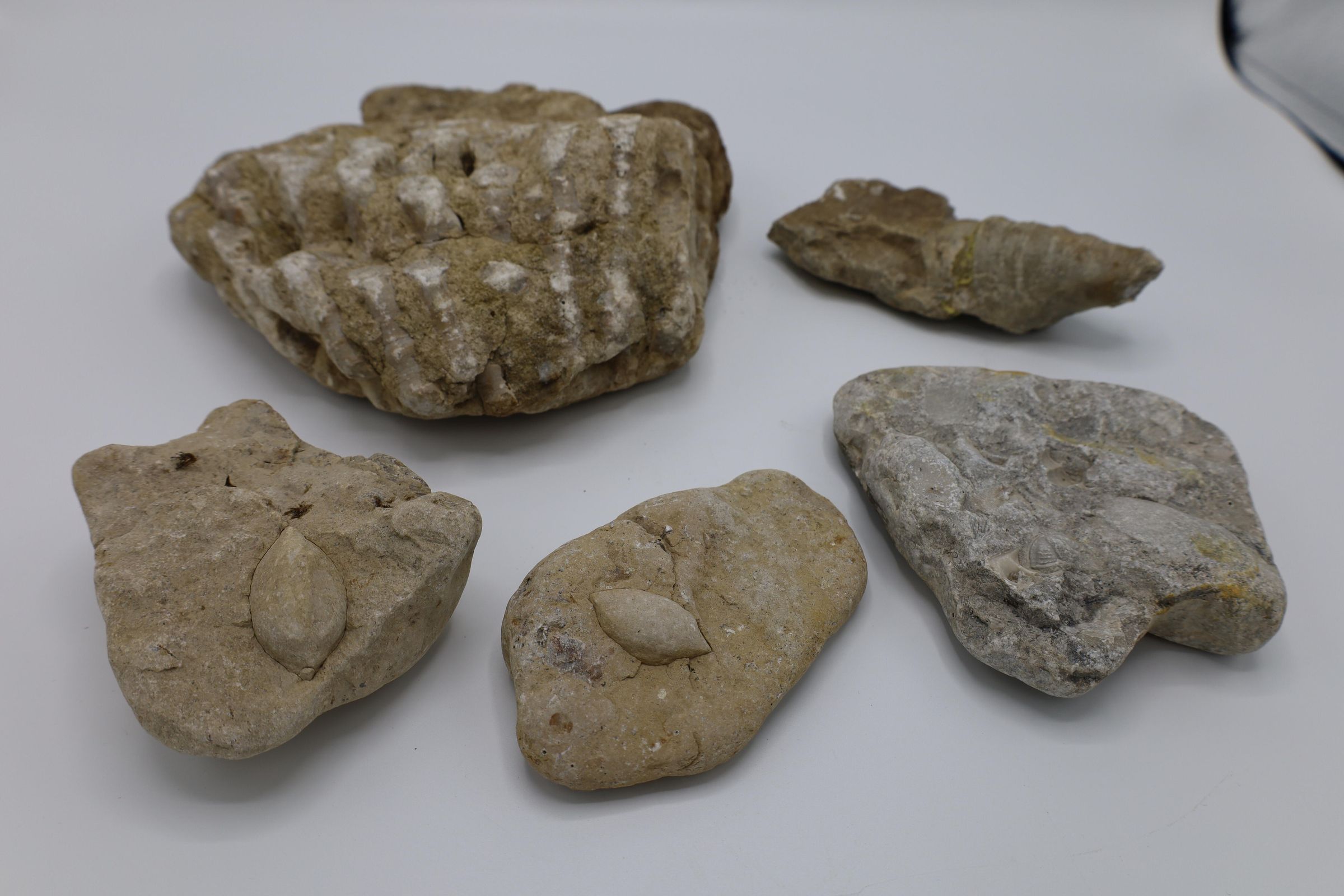
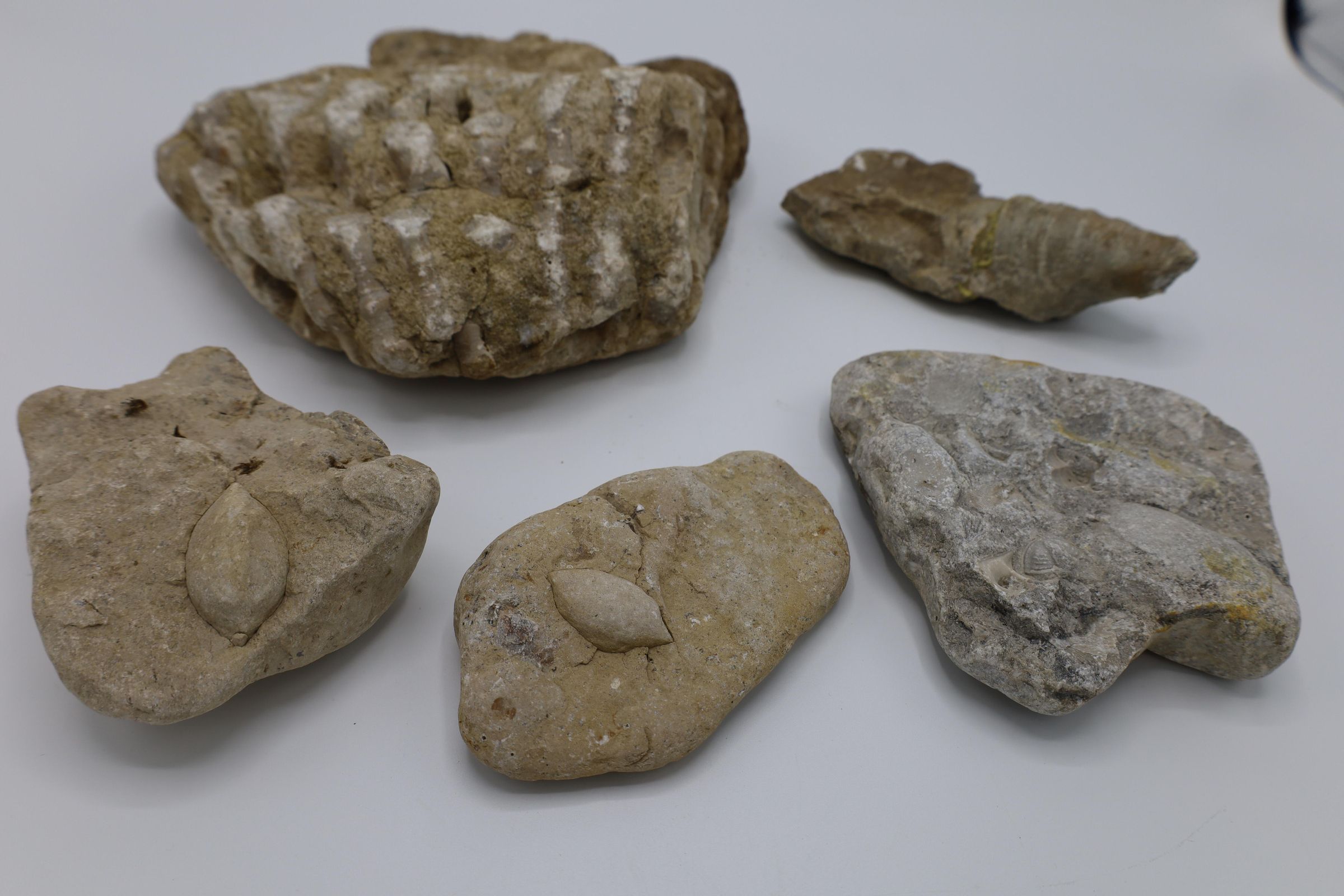
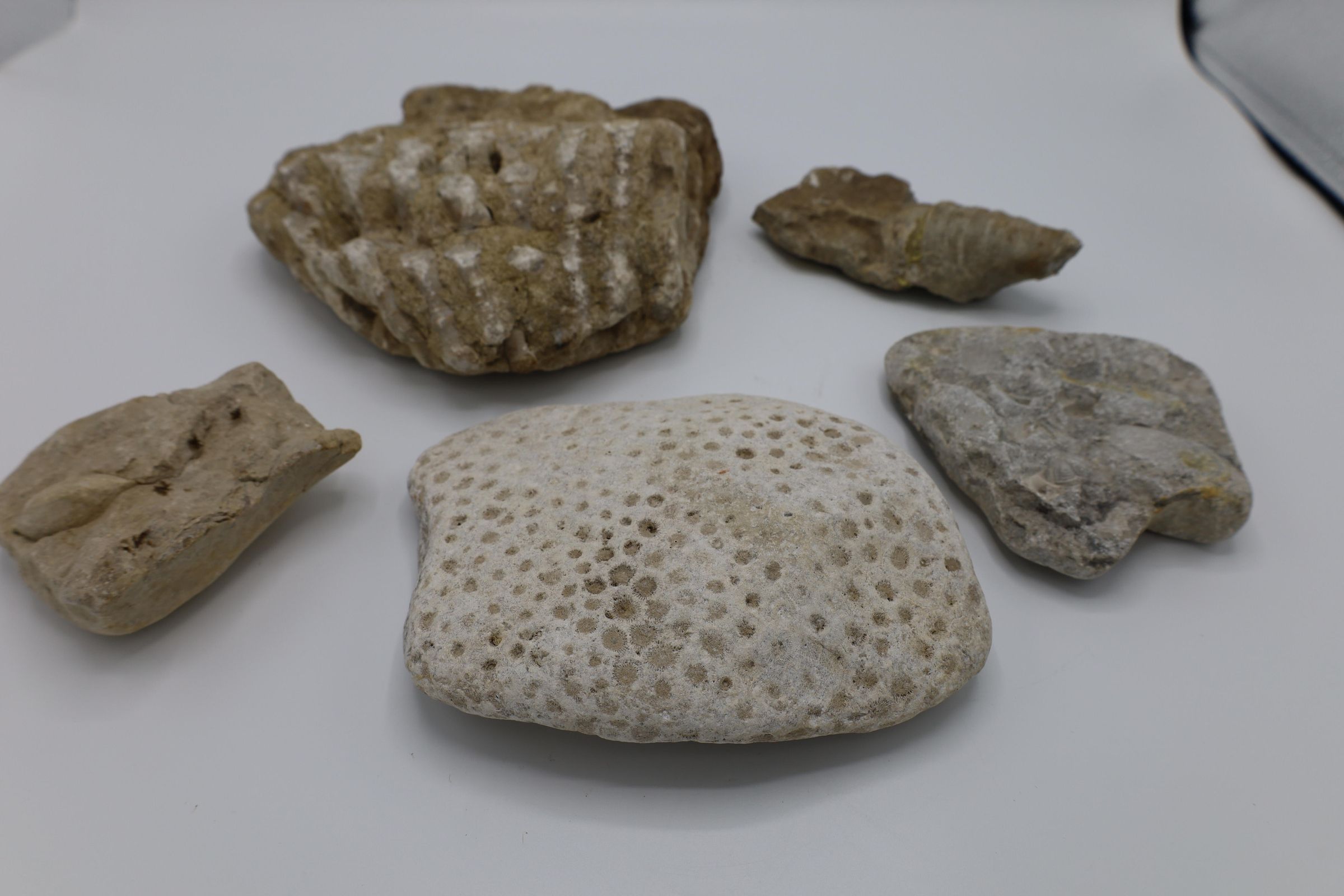
Fossilferous Rock with visible tail shields of the trilobite.Entry/Object ID
2022.2.27.6Description
This is a fossiliferous rock containing trilobites among other organisms. The trilobite Isotelus maximus is Ohio’s official State Invertebrate Fossil.
According to, Statehouse Fossils: A guide to fossils of the Ohio Capitol, Trilobites were arthropods that resembled modern horseshoe crabs. The name trilobite (Latin, “three-lobed animal”) refers to the three lengthwise divisions of the exoskeleton. Trilobites were a diverse and widespread group for most of the Paleozoic Era, from their appearance in the Cambrian Period to their extinction in the latest Permian Period. Trilobites adopted a wide range of life strategies. Most were probably nektobenthic (swimming near the sediment of the seafloor) or pelagic (living in the water column above the seafloor). Some, such as Coronura, likely fed upon worms or other live prey inhabiting the seafloor sediment.
Because trilobites moted their calcareous exoskeletons as they grew, one trilobite could leave many fossils—mostly partial exoskeletons. Complete trilobite fossils are somewhat rarer, in part because trilobites were prey for other marine carnivores. Most trilobites could roll into a ball, like modern-day pill bugs, in response to predators or adverse environmental conditions.
The smallest mature trilobites were mere millimeters, but some approached one meter (3.3 feet) in length. Among the largest was Isotelus maximus from Ordovician rocks of southwestern Ohio. In the Columbus Limestone, tail shields of the trilobite Coronura aspectans are somewhat common. Coronura attained lengths of 20 centimeters (8 inches) or more.
Statehouse Fossils-A guide to fossils of the Ohio Capital. Mark E Peter. ODNR Division of Geological Survey. Page 16.Location
* Untyped Location
Kelley's Island State Park