Name/Title
S04.02.076Description
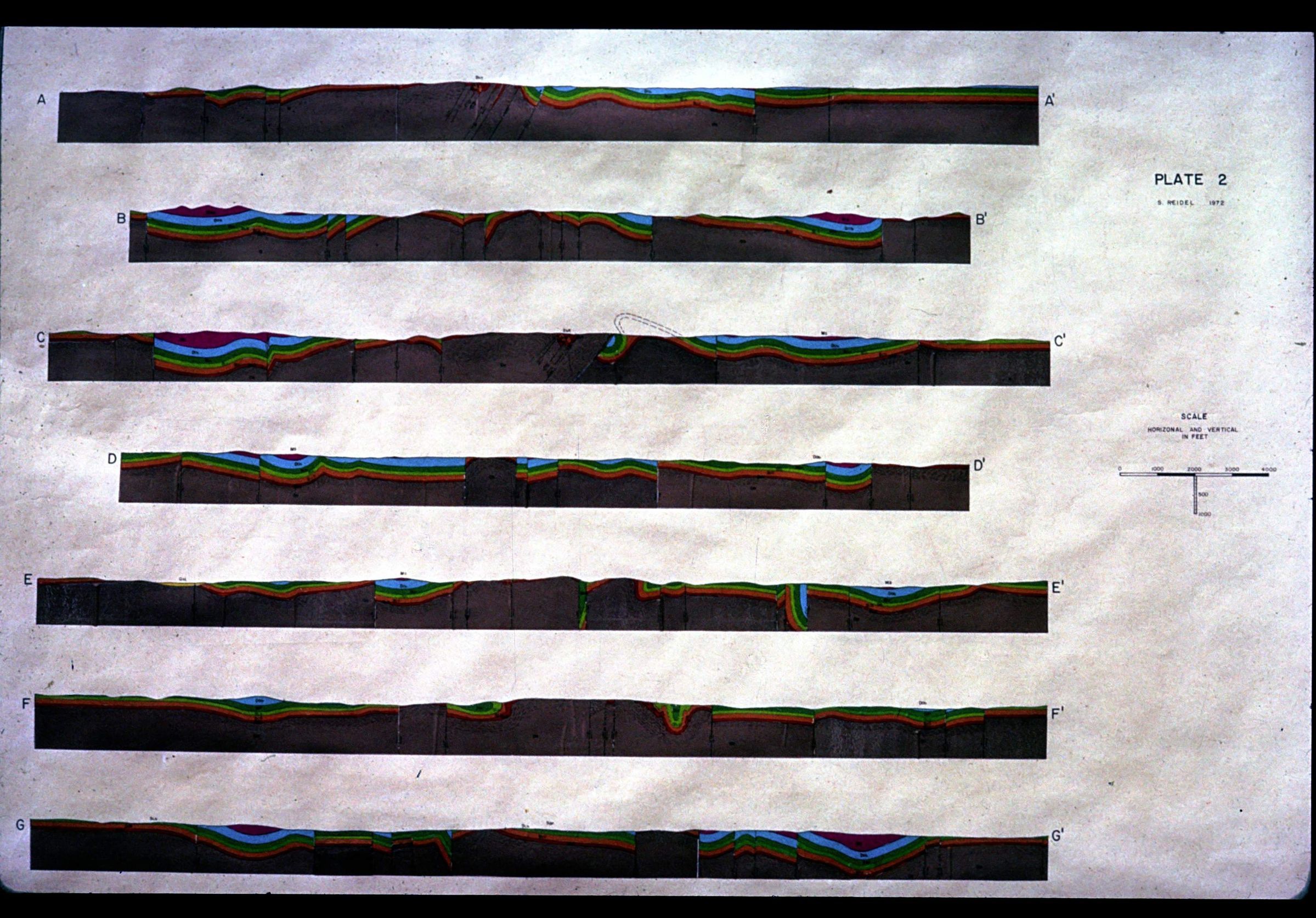
Plate 2 from Stephen P. Reidel's Geology of the Serpent Mound Cryptoexplosion Structure, Thesis (M.S.) for the University of Cincinnati, 1972. Plate 2 shows bedrock cross-sections of locations identified on Reidel's Serpent Mound structure map Plate 1. The thesis text identifies the cross-section that should be considered in discussion of locations on Plate 1.
The area of the Serpent Mound Impact Structure has dolomite, shale, limestone, sandstone, and siltstone lithologies. Because of the geologic forces that have acted on the site, bedrock in the area is a mixture of uplifted, down dropped, faulted, folded and eroded rock from the Ordovician, Silurian, Devonian and Mississippian Geologic Periods.
The Serpent Mound Impact Structure is an approximately 9-mile-diameter area of highly disturbed and structurally deformed bedrock at the intersection of Adams, Highland and Pike counties. The deeply eroded crater is believed to have been formed by an asteroid or a comet impact approximately 250 to 300 million years ago. It is named the Serpent Mound Impact Structure after the prehistoric American Indian effigy earthwork located near the southwestern edge of the area. It is the single-most complex geologic structure exposed at the surface in Ohio. Investigation of the impact structure has been done using rock cores, seismic data, geophysical surveys and remote satellite imagery for the area.
This slide image included in the USGS National Digital Catalog for NGGDPP Grant G15AP00115 in FY2015.Context
White paper with brown hill; brown hill and colored layers on paper represent rock layers. Serpent Mound Impact Structure is the focus of the graph.