Oval Cista With Thruhai Finial (Toilet Box with Bird Top)
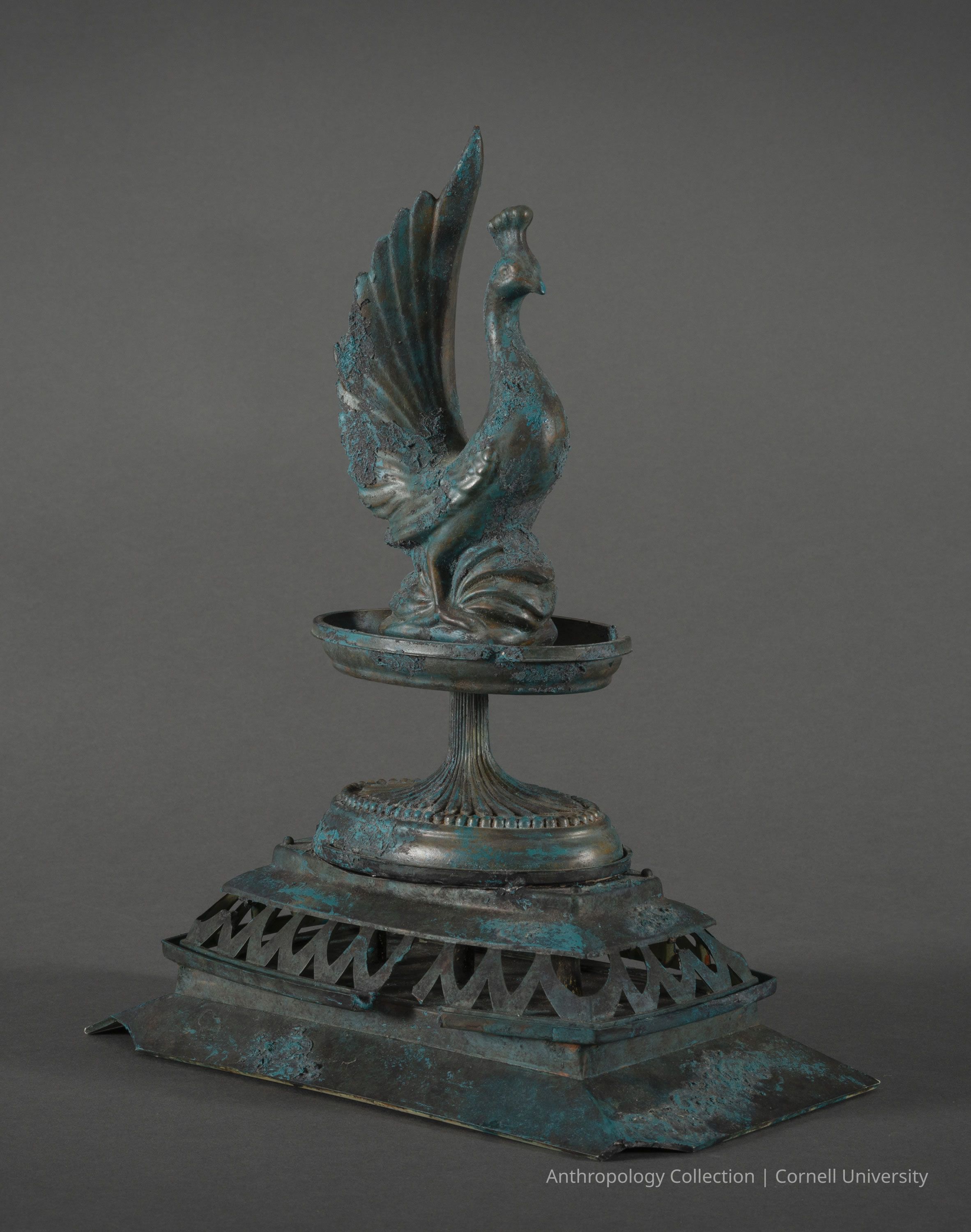
Oval Cista with Thruhai Finial (Toilet Box with Bird Top) | circa 1966-69 | Photo by Ann Cady, 2024 | ©2025 Cornell University
The photo displays an ornate bronze artifact featuring the indigenous Llhuroscian Thruhai bird, with wings spread and perched atop a decorative pedestal, standing on an intricate square base with ornate triangular cut-outs, all showcasing a beautiful verdigris patina against a neutral gray background.
Name/Title
Oval Cista With Thruhai Finial (Toilet Box with Bird Top)Entry/Object ID
COL.128Description
The Basel cista has been attributed by Professor Ira Siegal, the preeminent authority on Llhuroscian cistae, to an artist he calls the "Massarenti Sculptor" in honor of the nineteenth-century Italian archaeologist (Mario Massarenti), who published the first research on Llhuroscian castings (Techniques of Llhuroscian Bronze Casting [London and Rome: 1938], p. 217). The cistae were strictly a Llhuroscian luxury item and were a specialty of the bronze industry of Atraxos, a pumice city where the tyrant Fakka had a winter villa. Used as containers for cosmetic, perfume, and aphrodisiac powders, the cistae appear most commonly in cylindrical and rectangular forms. The Basel cista is unusual not only in being oval but also in having an uncommonly large finial top. This top is in the form of the male Thruhai, an indigenous bird resembling a miniature peacock. The unfortunate Thruhai, represented here life-size, was named for its happy, jubilant cry. The birds, apparently numerous even in the Pumice Cities, were silent during overcast summer days, but burst into their triumphant little cries each time the sun reappeared. Despite their popular use as reliable weather reporters for the people who lived deep within the pumice mines, the birds were systematically hunted, trapped, and destroyed for their exquisitely soft tailfeathers which were a powerful aphrodisiac, needing only the briefest local application. <br /> <p style="font-size: 13px; line-height: 1.2;">Ex collection: Gustav von Schauenberg, Munich. Lent by the Society of Llhuroscian Studies, Basel, Switzerland. (Gift of Traymoor Willit, Esq., London.)</p><hr />Category
Decline, reign of Fakka, Decline, Atraxos
Made/Created
Artist
Norman DalyDate made
circa 1966 - 1969Place
Academic Institution
Cornell UniversityCity
Ithaca, New YorkContinent
North AmericaEthnography
Cultural Region
Region
Asia MinorCulture/Tribe
Llhuros
Dimensions
Height
15 inWidth
12-1/8 inDepth
6-1/8 inMaterials
Material
Bronze, hollow castMaterial Notes
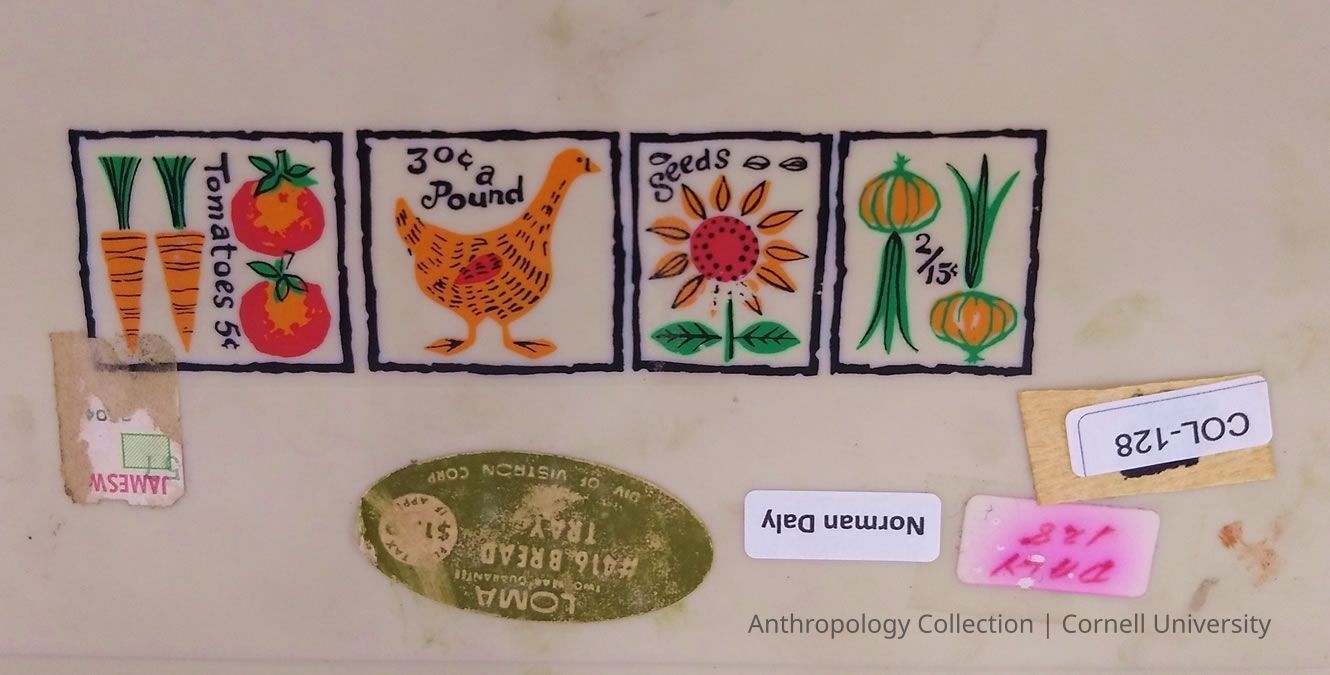
Fictional medium as described by Norman Daly in the catalog and exhibition tags (1972-2019) See General Notes for descriptions of both fictive and actual media.Exhibitions
Akron Art Institute (1972)
Cornell University | A.D. White Museum of Art (1972)
Indianapolis Art Museum (1972)
Istanbul Biennial, 16th | "The Seventh Continent" (2019)
Memorial Art Gallery | University of Rochester (1972)
Roberson Center for Art and Science, Binghamton, NY (1974)
Romische-Germanisches Museum | "Projekt '74" | Cologne Germany (1974)
SUNY Albany | Art Gallery (1973}
University of Pennsylvania Art Museum, Philadelphia (1974)