Pillbox (?) With Male Ohnos in Combat
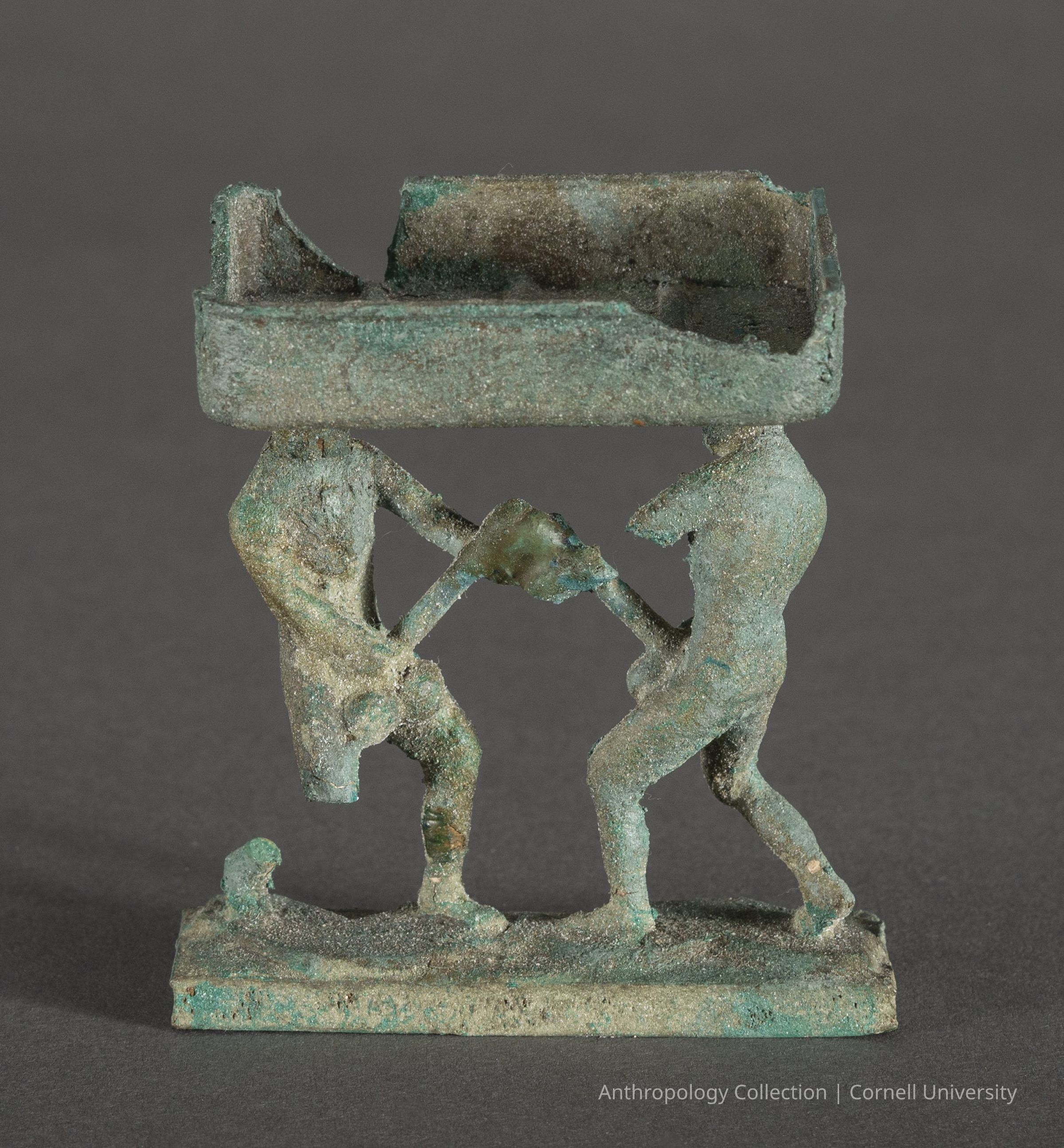
PILL BOX (?) WITH MALE OHNOS IN COMBAT | circa 1966-69 | Photo by Ann Cady, 2024 | ©2025 Cornell University
The photo displays a very small, ancient bronze artifact depicting two human figures engaged in combat, using their enlarged male organs as weapons, with each figure showing dynamic movement. The figures are posed in a fighting stance, one facing the other, while the upper part of the sculpture serves as a receptacle for small items, perhaps pills. The surface of the bronze is marked with a green patina, indicating age and historical significance. The base of the sculpture is rectangular, providing a stable support for the figures above.
Name/Title
Pillbox (?) With Male Ohnos in CombatEntry/Object ID
COL.129Description
This object may have been used as a container for aphrodisiac powders. Professor Schilaneder has uncovered evidence that proves the vocational guidance counselors created the anxiety that caused some parents to urge their children to adopt the civic-theatrical life of the "ohnos." These were recipients of implantations resulting in sexual elephantiasis. The Lokust sect altered both sexes during prepuberty by means of haptophoric implants of "haiguhr," the spongiose fat of the sea cow. The mammary and penile implants were repeated over the years until requisite dimensions were reached. Professor Schilaneder believes the armless women mentioned in the procession of the Tokens of Holmeek rode giant turtles because the weight of their breasts prevented ambulation. (See catalog pages 10 and 11.) He also believes the female ohnos' arms were not missing but were atrophied (Lebende Symbole, p. 108). The bout depicted may have been a part of the notorious Lokust orgies whose commencement was signaled by a solar synchronous temple clock (see catalog pages 12 and 13).Category
Decline, Ronup, Decline, reign of Fakka
Made/Created
Artist
Norman DalyDate made
circa 1966 - 1969Place
Academic Institution
Cornell UniversityCity
Ithaca, New YorkContinent
North AmericaDimensions
Height
3 inWidth
2-1/2 inDepth
1-3/4 inMaterial
Bronze, solid castAcquisition
Notes
This object is a unique element of the "Civilization of Llhuros" collection given to the Cornell University Anthropology Collaboratory in 2025.Exhibitions
Akron Art Institute (1972)
Cornell University | A.D. White Museum of Art (1972)
Indianapolis Art Museum (1972)
Istanbul Biennial, 16th | "The Seventh Continent" (2019)
La Panacée, centre d'art contemporain | "Plurivers" | Montpellier, France (2017-18)
Memorial Art Gallery | University of Rochester (1972)
Roberson Center for Art and Science, Binghamton, NY (1974)
Romische-Germanisches Museum | "Projekt '74" | Cologne Germany (1974)
SUNY Albany | Art Gallery (1973}
University of Pennsylvania Art Museum, Philadelphia (1974)