Solar Synchronous Thought Interceptor (Mind Reader)
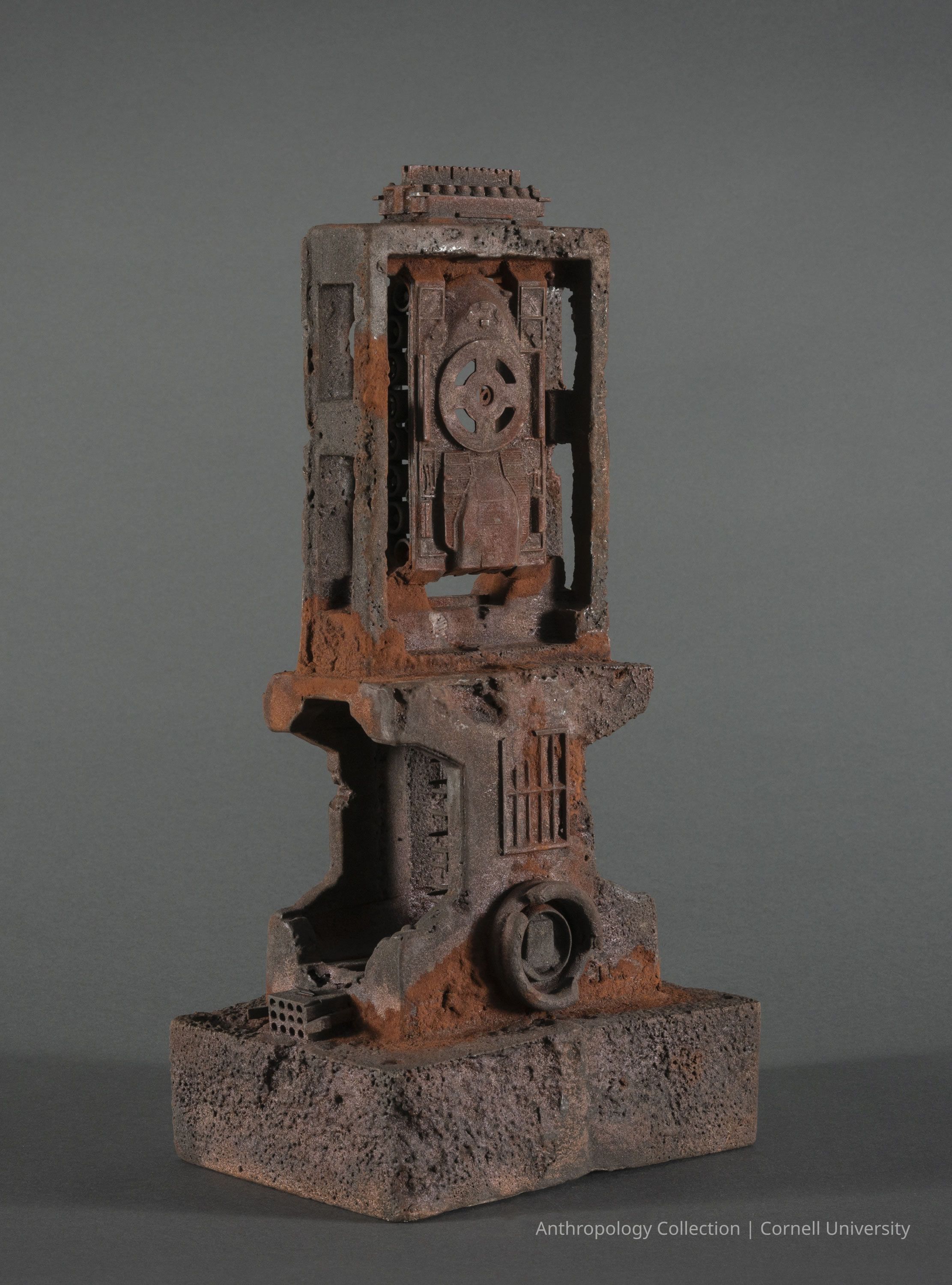
SOLAR SYNCHRONOUS THOUGHT INTERCEPTOR (Mind Reader) | 1974-1983 | Photo by Ann Cady, 2024 | ©2026 Norman Daly Art
A weathered, rusty metal, machine or industrial artifact found in a Llhuros dig during the 1960s. It features intricate geometric shapes and patterns, with a rectangular structure holding an interior design that includes circular and rectangular cutouts. The texture of the object is rough, with visible signs of decay, evoking a sense of history or abandonment. The piece sits on a square base and has an overall architectural feel, with a balance of symmetry and complexity, creating an intriguing and thought-provoking artifact.
Name/Title
Solar Synchronous Thought Interceptor (Mind Reader)Entry/Object ID
COL_RO.6Description
Like the Astrolabe and the clock of the latter: period of Llhuroscian history, the Mind Reader was an impressive example of the use of interplanetary energy. Unlike the solar clock, this device was not dependent upon emanations from the southern hemispheric sources, Eridanus and Reticulum but received discharges from the planets of the solar system. In operation, the mind reader was relatively simple by Llhuroscian scientific concepts: the small angular mechanisms of tubular construction located at both top and bottom sides of the instrument were coated wi!h an alloy similar to elinvar in modulus of elasticity; as with the radial perforations of the solar clock, Episeismic contact from selected planetary sources was thus established. This archeomagnetic energy was absorbed by the radiometer (the spiked shaft in the center of the bottom opening) and relayed to the multi-auscultators (the vertical rows of coiled conduits) and stored in the audile computor between the auscultators. <br><br> In limiting received interplanetary energy to specific sources, the Mind Reader's selection was determined by the horoscope of the individual Llhuroscian being interrogated. The audile computer was in effect the core of the mind reader, for it classified and interpreted the interrogated person's body sounds as they reflected the emotional character (integrity index) of the person's concurrent thought energy, Since the horoscopic background of each Llhuroscian was kept by civic authorities, this information was available to influential officials at the most propitious interplanetary conjunctions. Unfortunately the edifying functions of this admirable tool in building societal values were replaced by debased uses which turned brave man craven, friends treacherous, and intimates despotic. Some scholars believe that the abuses of the mind reader were among the prime causes of moral decay and social collapse of Llhuroscian culture.Category
Decline, Sividian
Made/Created
Artist
Norman DalyDate made
circa 1974 - 1983Place
Academic Institution
Cornell UniversityCity
Ithaca, New YorkContinent
North AmericaEthnography
Cultural Region
Region
Asia MinorCulture/Tribe
Llhuros
Dimensions
Height
17 inWidth
5 inMaterials
Material
IronMaterial Notes
Fictional medium as described by Norman Daly for the 1981 Tyler School of Art and 1983-84 Rotterdam exhibition materials.Acquisition
Notes
This object is a unique element of the "Civilization of Llhuros" collection given to the Cornell University Anthropology Collection 2026.Web Links and URLs
Exhibition Photo - RotterdamExhibitions
Museum Boijmans Van Beuningen | Rotterdam, The Netherlands (1983-84)
Tyler School of Art | "Imaginary Civilizations" | Temple University, Philadephia (1981)