Name/Title
1988/Mack: Lloyd's massive lossesScope and Content
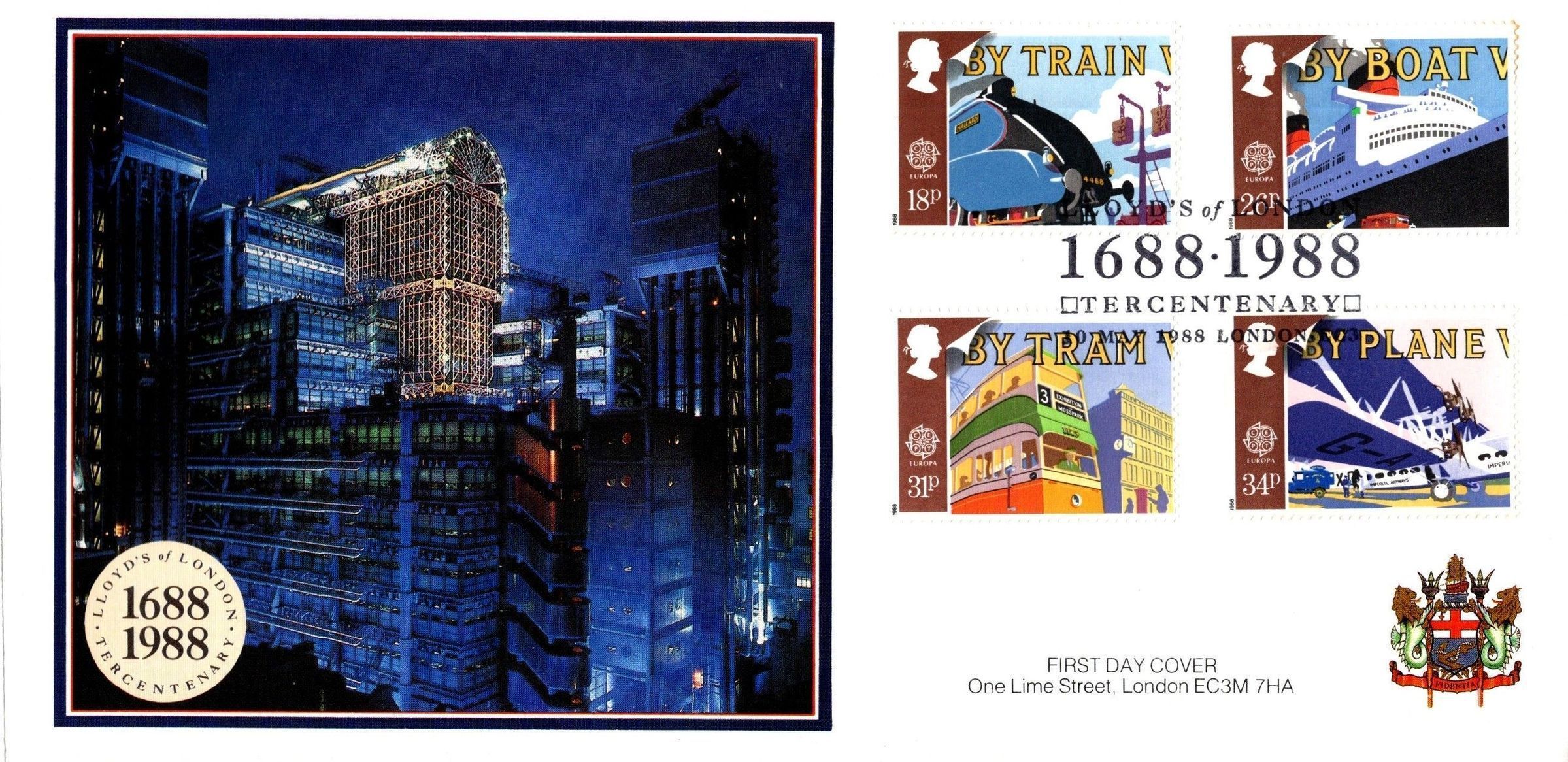
As these tercentenary stamps show, LLoyd's of London had always specialised in transport insurance, something of an irony considering the fact that Peter Mack, one of Lloyd's "Names", had derived his wealth from an import/export company, Andrew Chalmers.
It is another irony, and a very great one, that in the very year that Lloyd's celebrated its tercentenary, catastrophe threatened its investors.
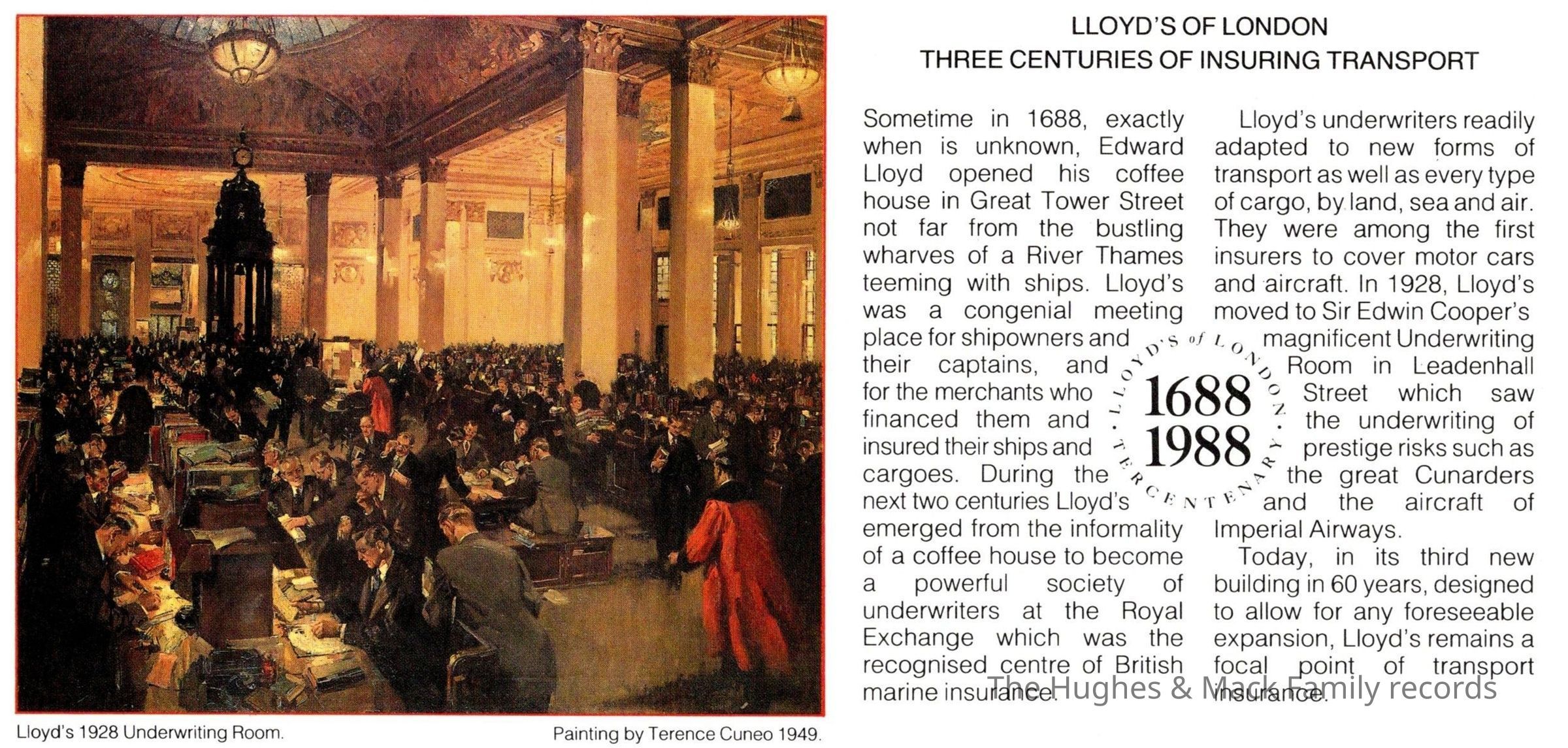
REUTERS Factbox - "In 1988, years of regular income for investors in the Lloyd's of London insurance market came to a shuddering halt, and five years of massive losses dragged many of the investors -- known as Names -- to financial ruin. The Lloyd's of London insurance market dates back to 1688 and operates as a society of corporate and individual members, whose capital underwrites insurance. The individual members are known as Names. [...] There were as many as 34,000 Names in 1990, up from less than 8,000 in 1975 as a long run of profits attracted investors. Membership became a magnet for the rich and famous. [...] Liability for each Name was unlimited, so each investor could lose everything. [...] Names were exposed to huge claims as Lloyd's racked up losses of 8 billion pounds ($15 billion) between 1988 and 1992, mainly due to asbestos and pollution policies from the United States. [REUTERS Factbox, "What's in a Lloyd's Name?" https://www.reuters.com/, last accessed 21 April 2026)
The Reuters article gives the information that each Name lost an average of £287,000 pounds during the five years, but that losses were spread unevenly according to the different syndicates, so some Names lost far more.
*
KJ (May 2026):
"Peter Mack was an extremely secretive man.
His children knew about the sale of the family business, Andrew Chalmers, only after it had taken place. They were not told any information about it, such as how much the sale had realised. They received no benefit from it.
They found out years later that it appeared Peter had joined a Lloyds syndicate after the sale of the business and it was probably one of the bad syndicates. A long time after he died, his youngest sister confirmed that Peter had joined Lloyds, when it was queried with her where all the money had gone from the sale of the business. It had been clear to his children, since his return from living in the USA, that his financial position had substantially changed. He was still wealthy to many but no longer to himself in comparison with his previous affluence. His capital assets (a much smaller, central London house) and his income were not what they had been and he now had the added expenses of carers.
Very late in life, Peter had divulged information about his pension (£25,000 p.a.) to his eldest daughter, which she remembered as it was her annual salary at the time (telling him she kept a family on this). That was the same day as he briefly pointed out to her a Lloyds newspaper headline on the financial difficulties of Lloyds names in the bad syndicates. She did not link the two, as she had no idea at the time he had become a Lloyds name. She made a comment on the headline, "they were greedy and wanted something for nothing". With the knowledge of much later hindsight she regretted that he would have found her unsympathetic.
Carole, Peter's second wife, wrote to Marion, his first wife, shortly before Peter died, telling her that they were short of money and requesting that she consider forgoing her maintenance payments."
*
The following message came from Lloyds on 18 May 2026, in response to an enquiry:
"We have spoken to our archives manager, and they have said the below:
'There was a member called P.H. Mack who was elected in 1982. I would assume this was Mrs Johnston’s father, but as we don’t retain the details of individual members this is all the information we have.' "