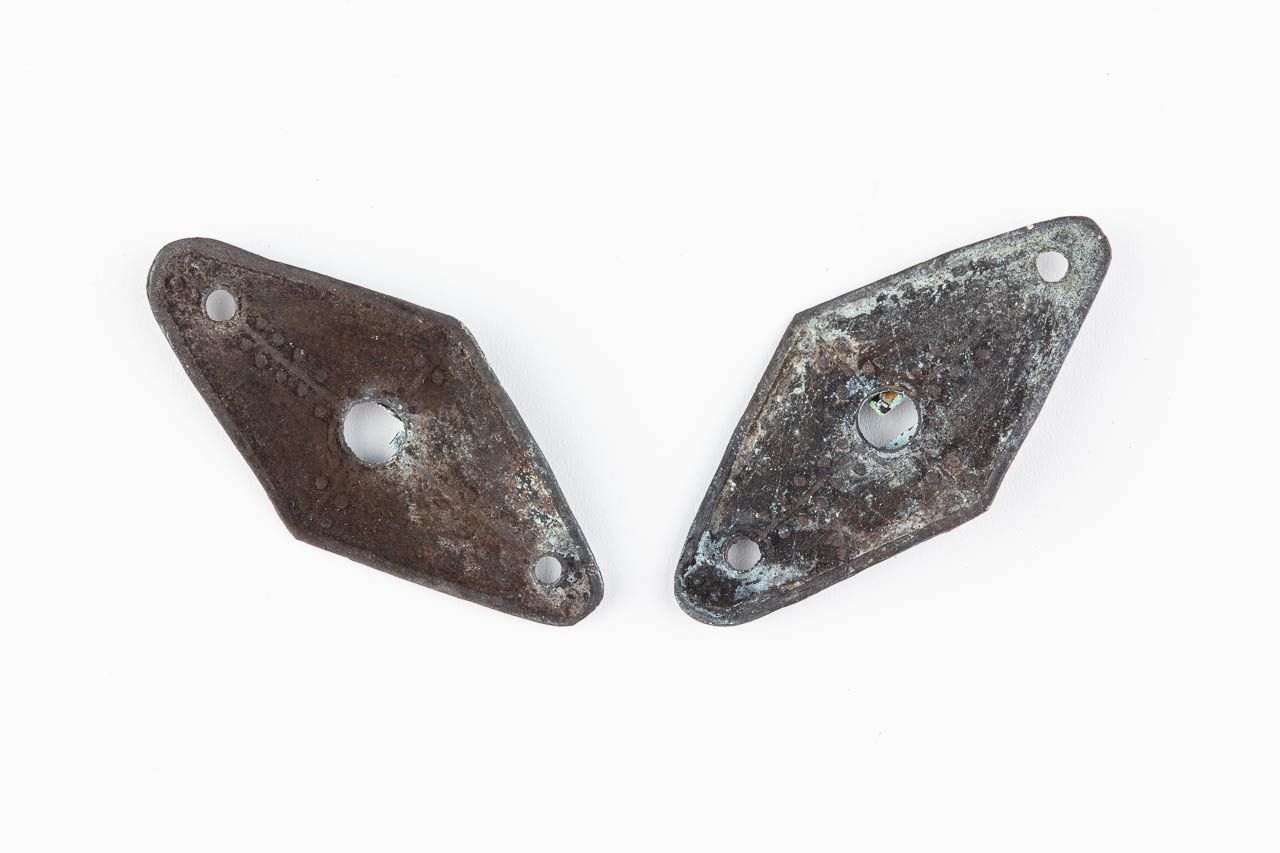
Name/Title
Engineer [Collar Insignia]Description
Collar insignia shaped as a canilever, the “side-lever” of the first type of marine steam engine which came into use after the War of 1812 and was the most common marine engine of the 1830s. Die-struck and made of coin silver.Context
The Engineer is responsible for the vessel's propulsion by the operation and maintenance of its engines and boilers. This rank officially did not exist in the First Texas Navy in 1835-1837. The Texas Navy did not obtain an ocean-going steamer until the formation of the Second Texas Navy; a “new and stronger fleet” that the Texas Republic’s Congress wanted to be “composed principally of steam vessels." The sidewheel steamship Charleston, built in 1836 and purchased by Texas in late 1838, was commissioned as the Texas Navy steamer Zavala on March 23, 1839.
As a specialist professional whose expertise and authority demanded formal recognition, he is a Warrant Officer and his insignia is silver. The name of the rank originated in medieval England. It was first used during the 13th century, in the Royal Navy, where warrant officers achieved the designation by virtue of their accrued experience or seniority, and technically held the rank by a warrant, rather than by a formal commission (as in the case of a commissioned officer).
This insignia is believed to have been manufactured of melted silver coins and/or scrap silver pieces in the Algiers Shipyard, New Orleans, Louisiana.