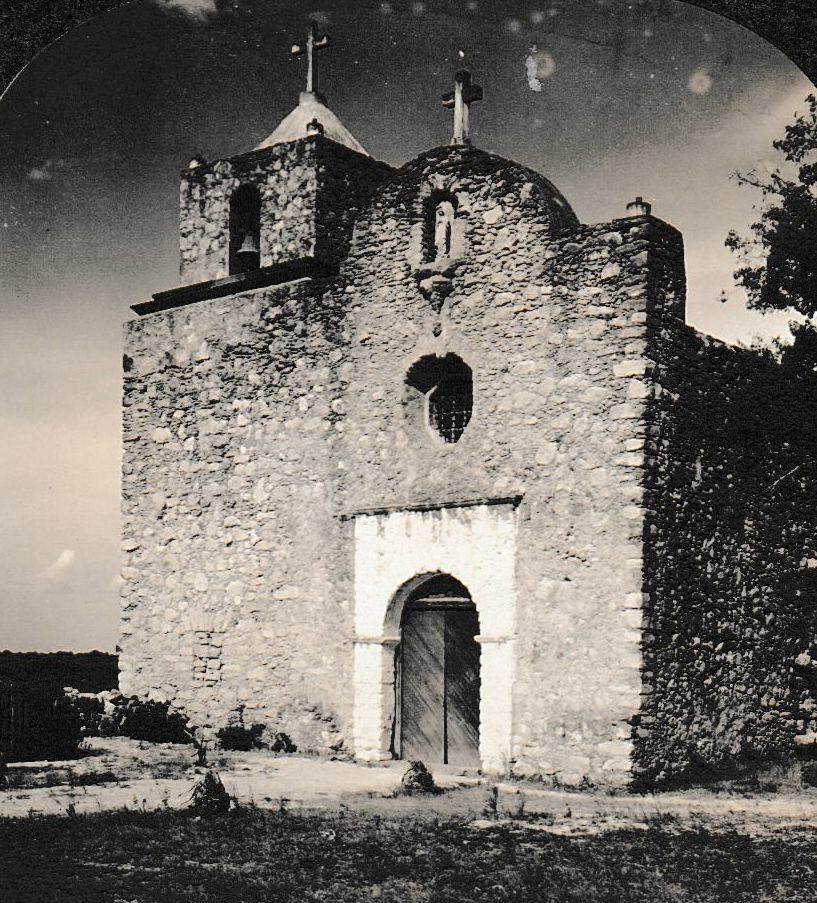
Nuestra Señora de Loreto de la Bahía [Stereoview]
Name/Title
Nuestra Señora de Loreto de la Bahía [Stereoview]Description
“LA BAHIA MISSION, GOLIAD” stereoview, part of a set depicting Texas scenes in 1936, its centennial year.Context
"The battle cry that spurred Texans to victory at the Battle of San Jacinto and brought a new nation into being was: "Remember the Alamo; Remember Goliad." Today, more than 100 years later, Texans still remember the Alamo and have surrounded it with an aura of patriotic reverence. But with Goliad it is a different story. The historic town, one of the oldest in the state, gets only a nod from the casual tourist and Mission La Bahia, a short distance south of Goliad, attracts only an occasional visitor. The Goliad massacre, which horrified the civilized world, took place almost within the shadow of La Bahia Mission on Palm Sunday, March 27. 1836. Col. James W. Fannin, who had been stationed near Goliad with about 400 men, had begun a retreat toward Victoria. About ten miles from Goliad the Texans were overtaken by the Mexicans and engaged in battle. Outnumbered approximately five to one, the Texans held out until thirst and the force of numbers compelled their surrender. A truce was arranged and the terms agreed upon, by which Fannin and his men were to be accorded the treatment due to prisoners of war by civilized nations. The surrender took place on March 20. The Texans were taken back to Goliad and imprisoned in La Bahia Mission for one week. Then, at dawn on March 27, they were marched out in three or four divisions in as many directions and unceremoniously shot down. Col. Fannin was executed despite the fact that he had been seriously wounded. He met death unflinchingly. Letters from several officers and men in Fannin's command indicate that La Bahia fort was evacuated because supplies were exhausted and because of the approach of General Urrea's overwhelming force. The retreat was begun at six days and nights after orders had been received from General Houston."Category
Spanish Dominion
Becoming Texas, Bullock Museum