Spanish Button from Menendez Exact Match
Name/Title
Spanish Button from Menendez Exact MatchContext
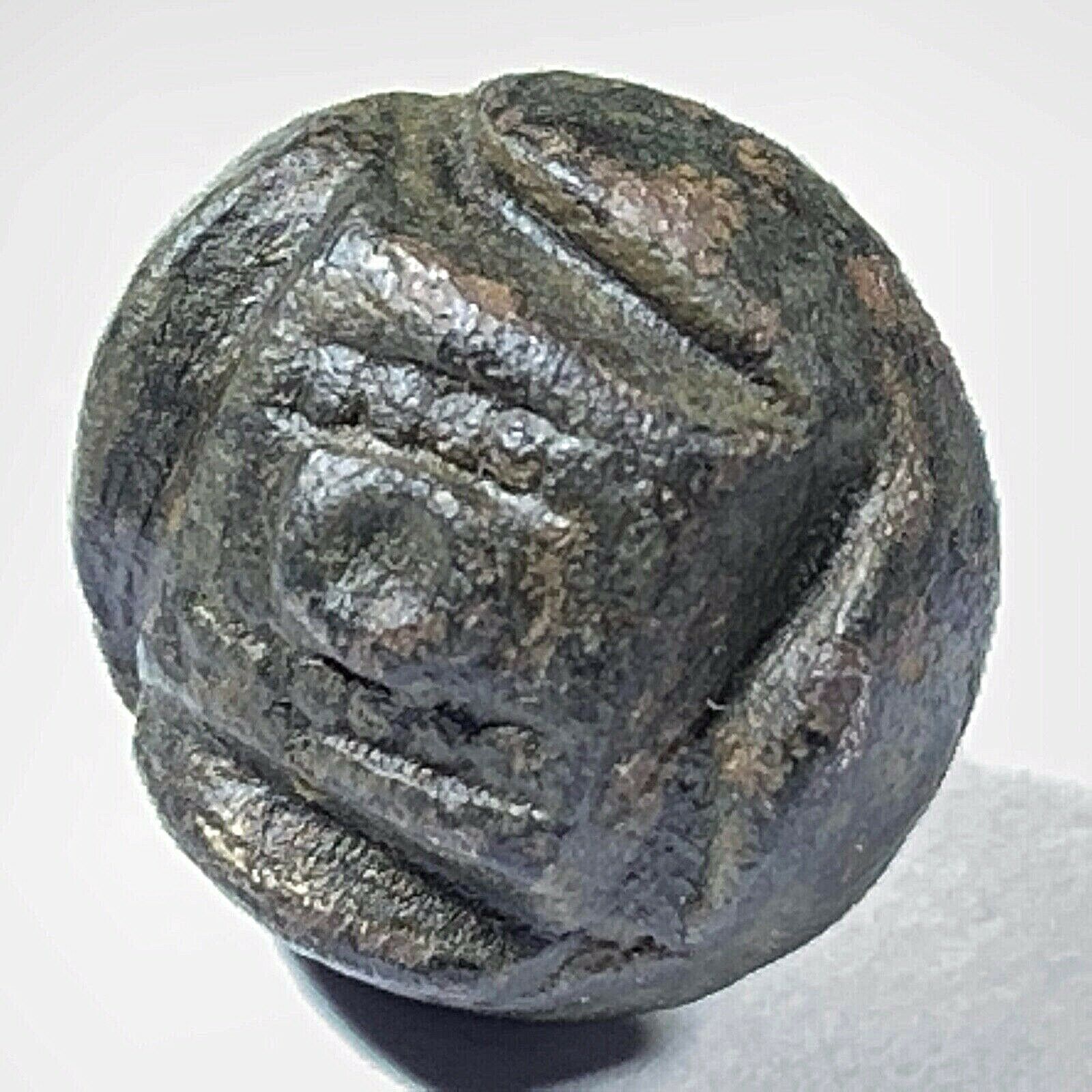
From the Museum of Weapons and Early American History’s deaccession. It was recovered sometime in the 1930s, donated in the 1960s, at some point conserved (badly), then offered for sale no less than three times before Rob acquired it in 2015. The 16th century, (1500s) Turkish knot-style doublet button was excavated from a campsite (privately owned) along the St. John's River. This is no doubt from the 1565 Pedro Menéndez expedition that founded St. Augustine, Florida (Menendez landed and occupied the native village of Seloy on the St. John's River). No examples of this button typology have ever been recorded (found) outside the St. Augustine area. Rob Merz obtained this rare example because it matches (exactly) one other example that was excavated in the St. Augustine area in the mid-1980s (please see XXX). Comparative study was conclusive: this button is an exact match to the other, and we may therefore extrapolate that these two buttons were from the same doublet, and further, that they were lost by the same individual, likely in conflict with the natives, the French Huguenots that the Menéndez expedition was sent to eradicate, or most likely, both. As noted above, this button was originally conserved in the 1960s, though it was done haphazardly and poorly. None of the encrustation was removed, and the button was simply coated in wax as a preservative agent. You can see almost all detail was obscured. The colors are washed out and the preservative used (some type of wax) made the buttons appear almost reddish brown.Category
Spanish Exploration (1513–1565)
History of Florida