Label
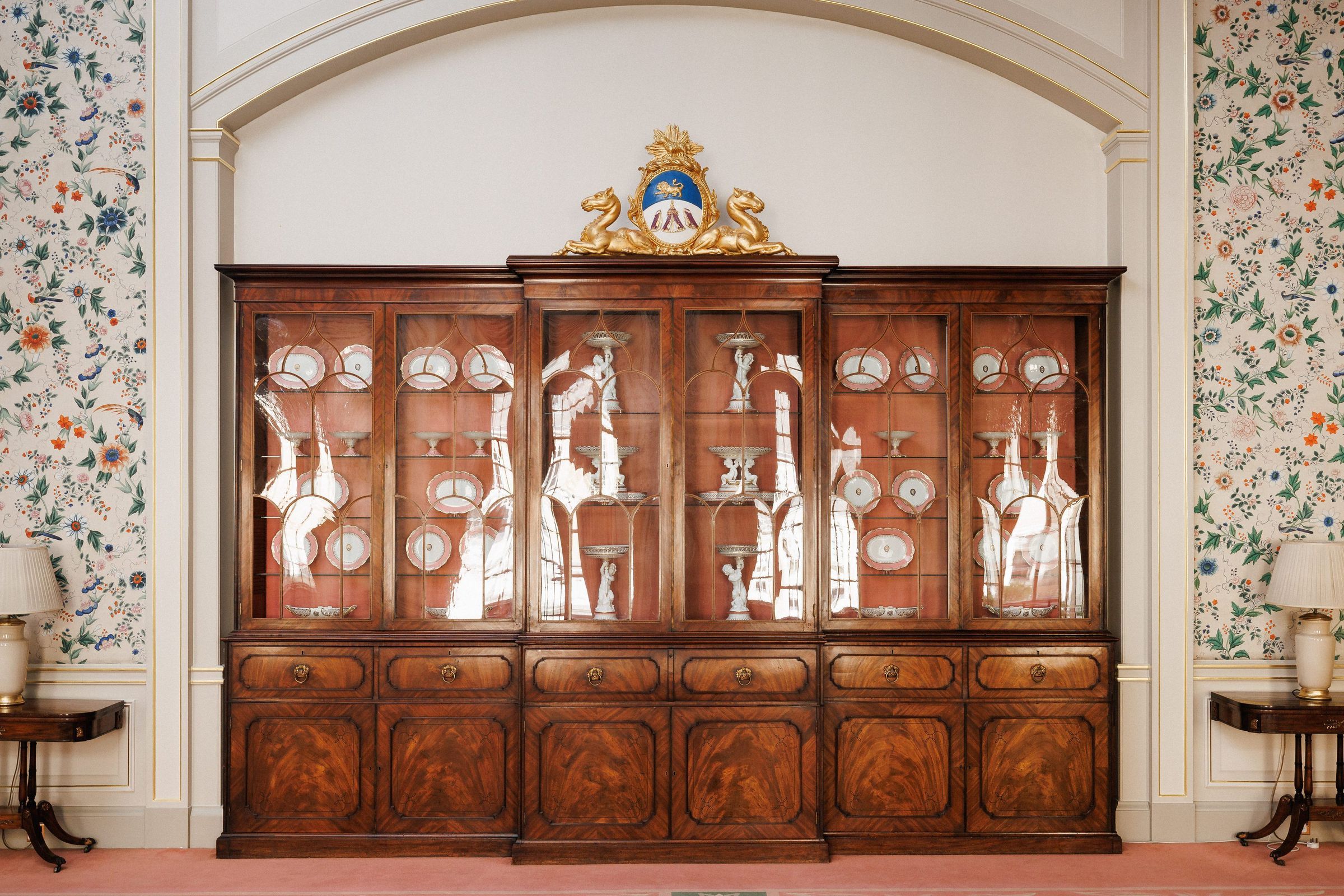
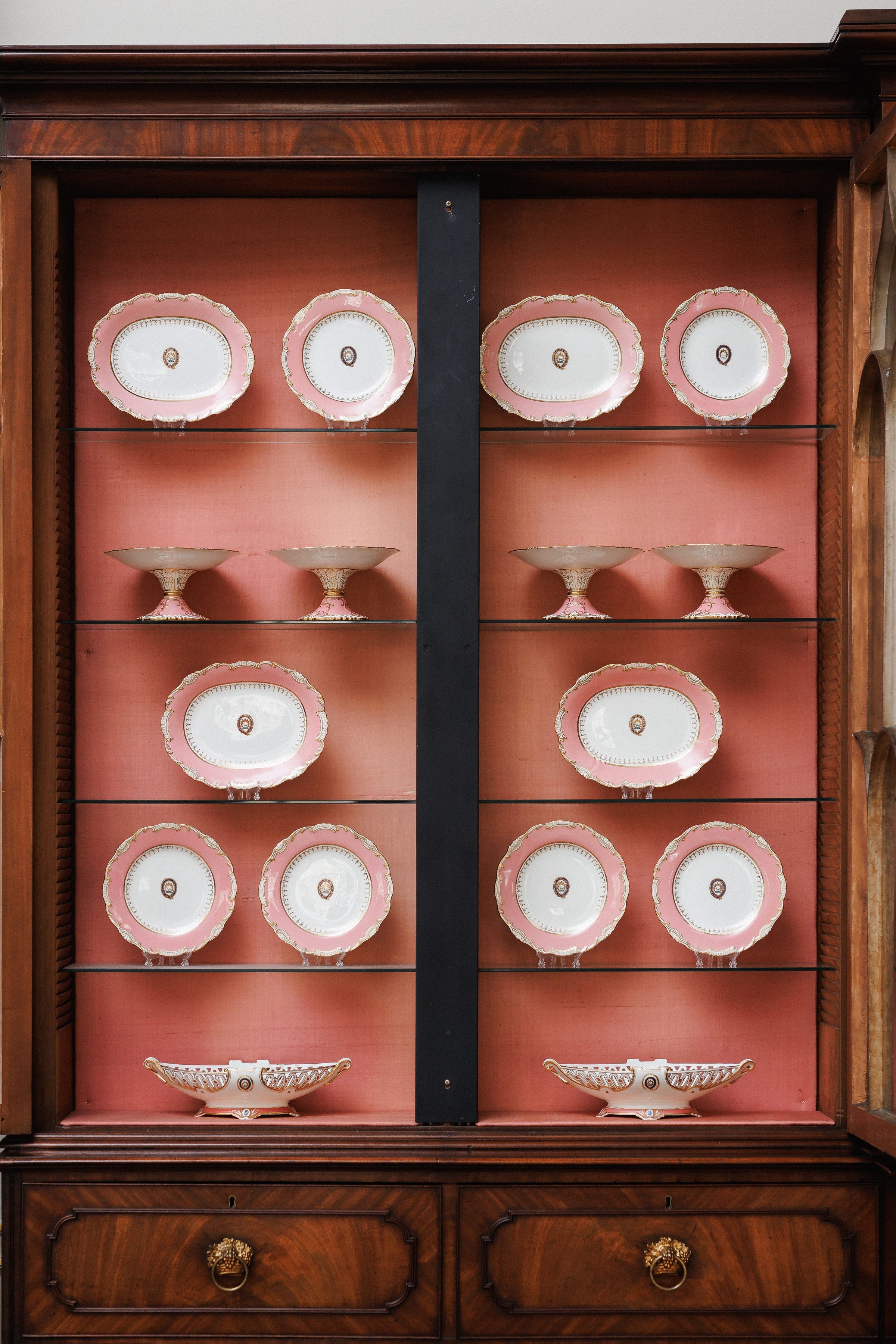
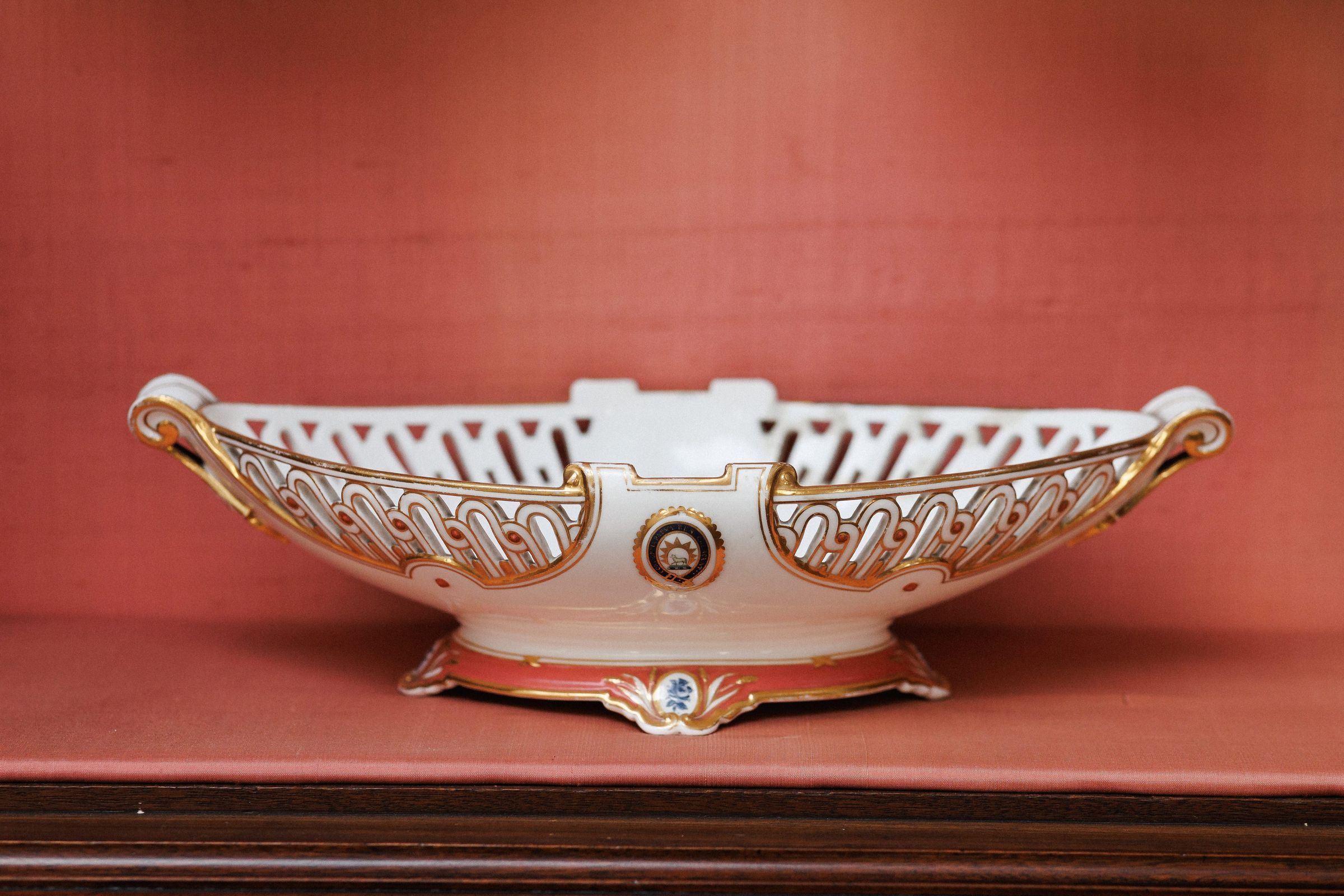
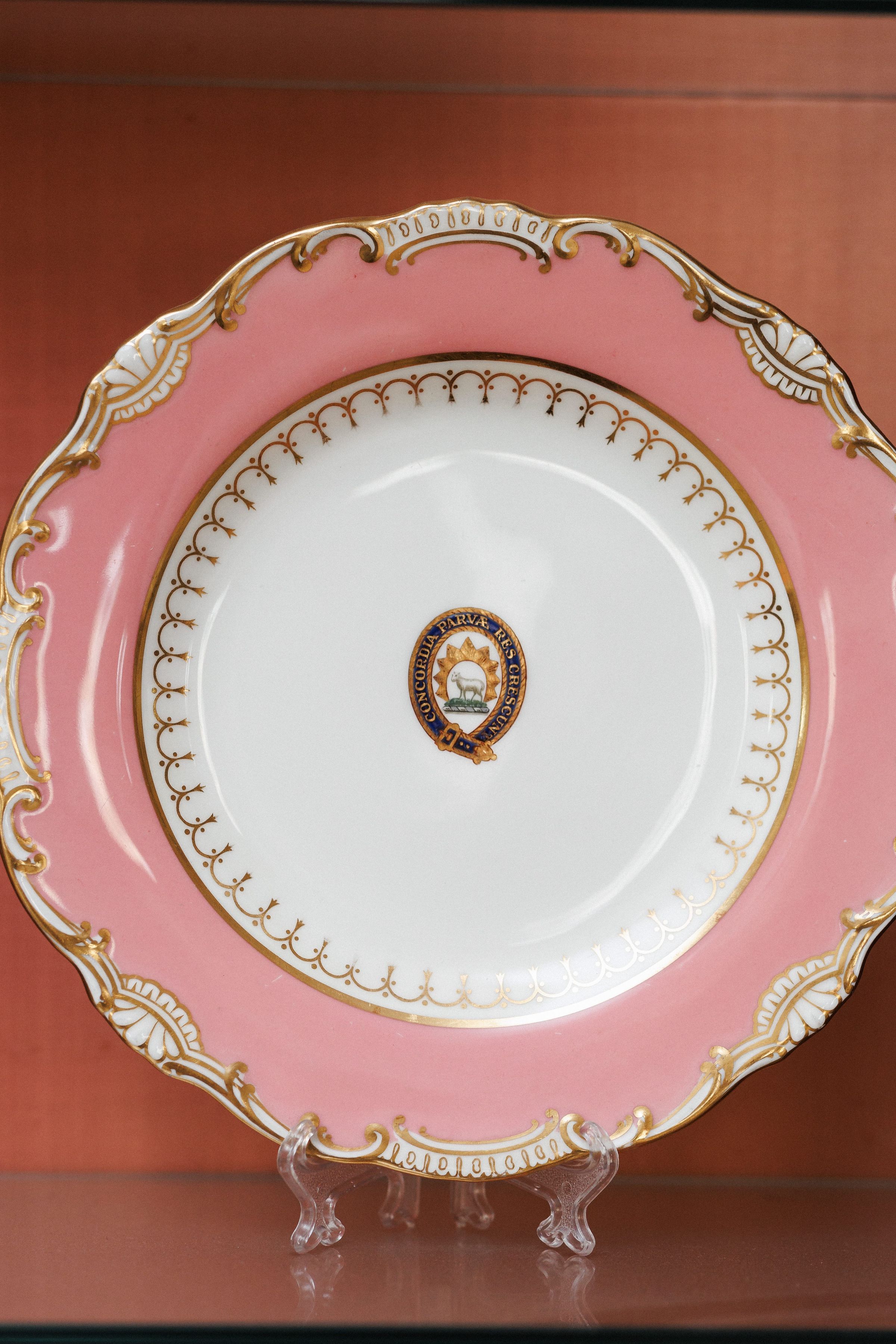
This dinner service, displayed in the historic bookcase, was made by Mintons’ Staffordshire workshop between 1873 and 1900. Mintons was one of the leading ceramic factories in Europe during the Victorian period, and was opened by Thomas Minton in 1793. Each piece is delicately glazed with pink, and finely gilded with the Company symbol of the Lamb in Glory and the Company’s motto, ‘Concordia Parvae Res Crescunt’ (In Harmony Small Things Grow).
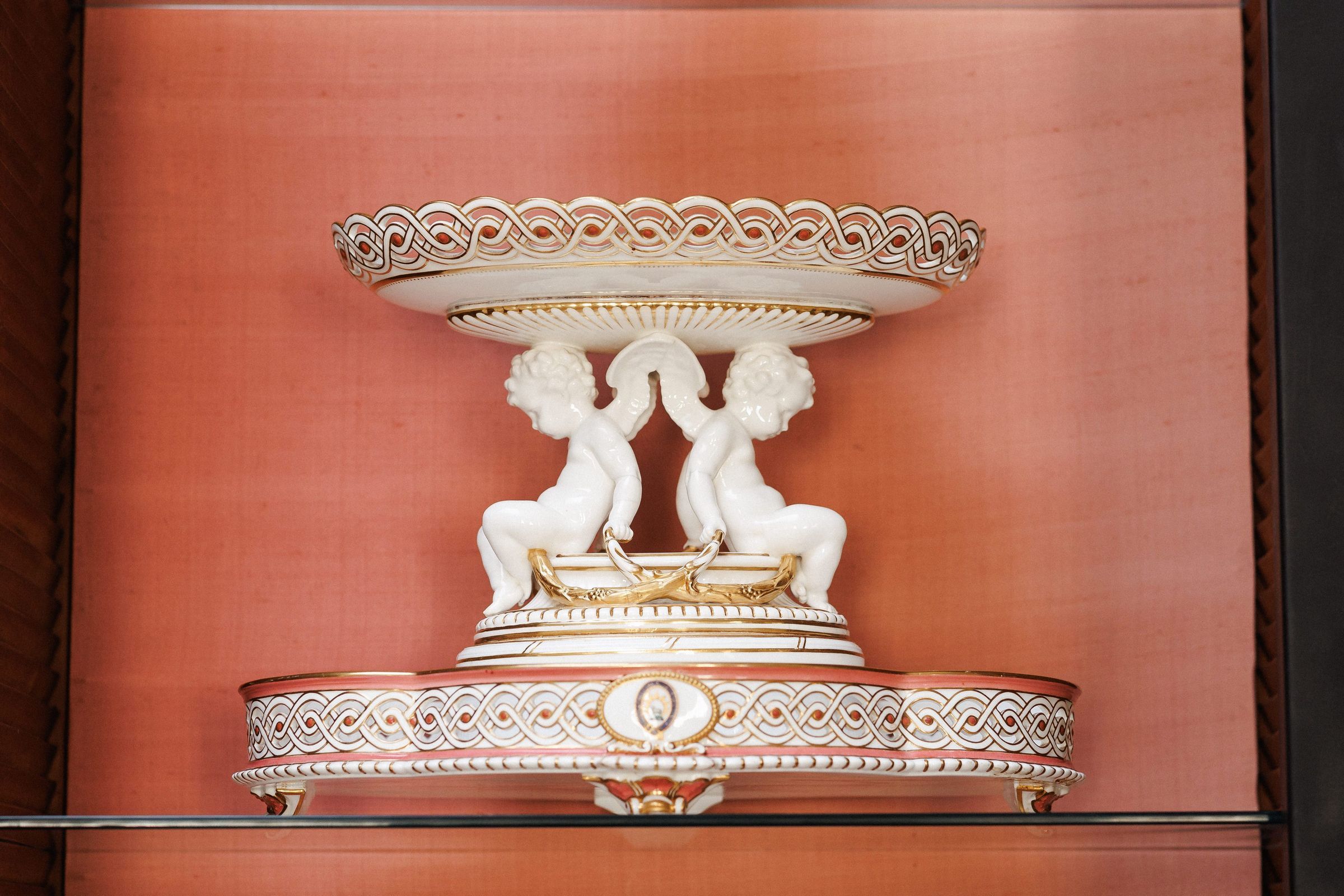
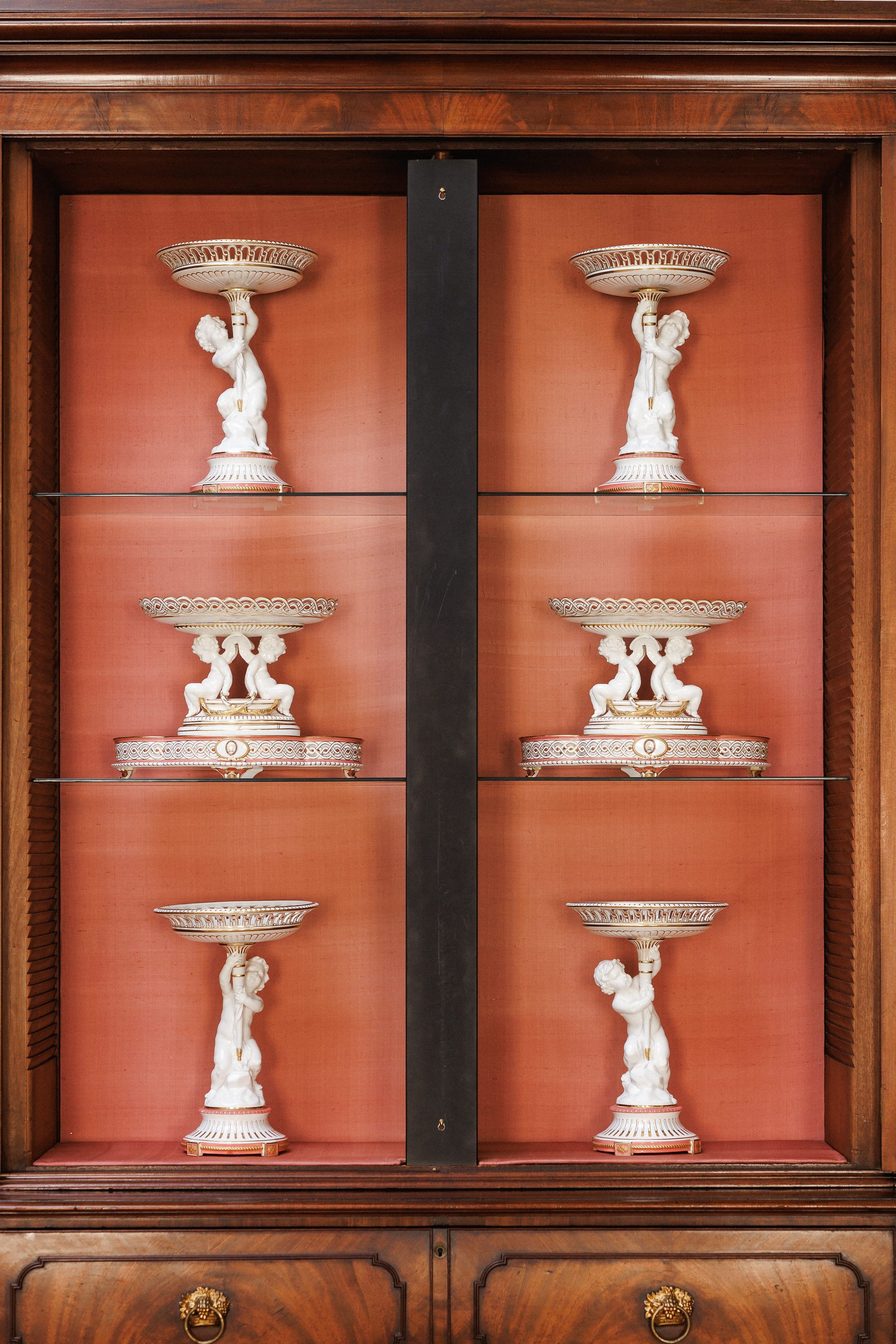
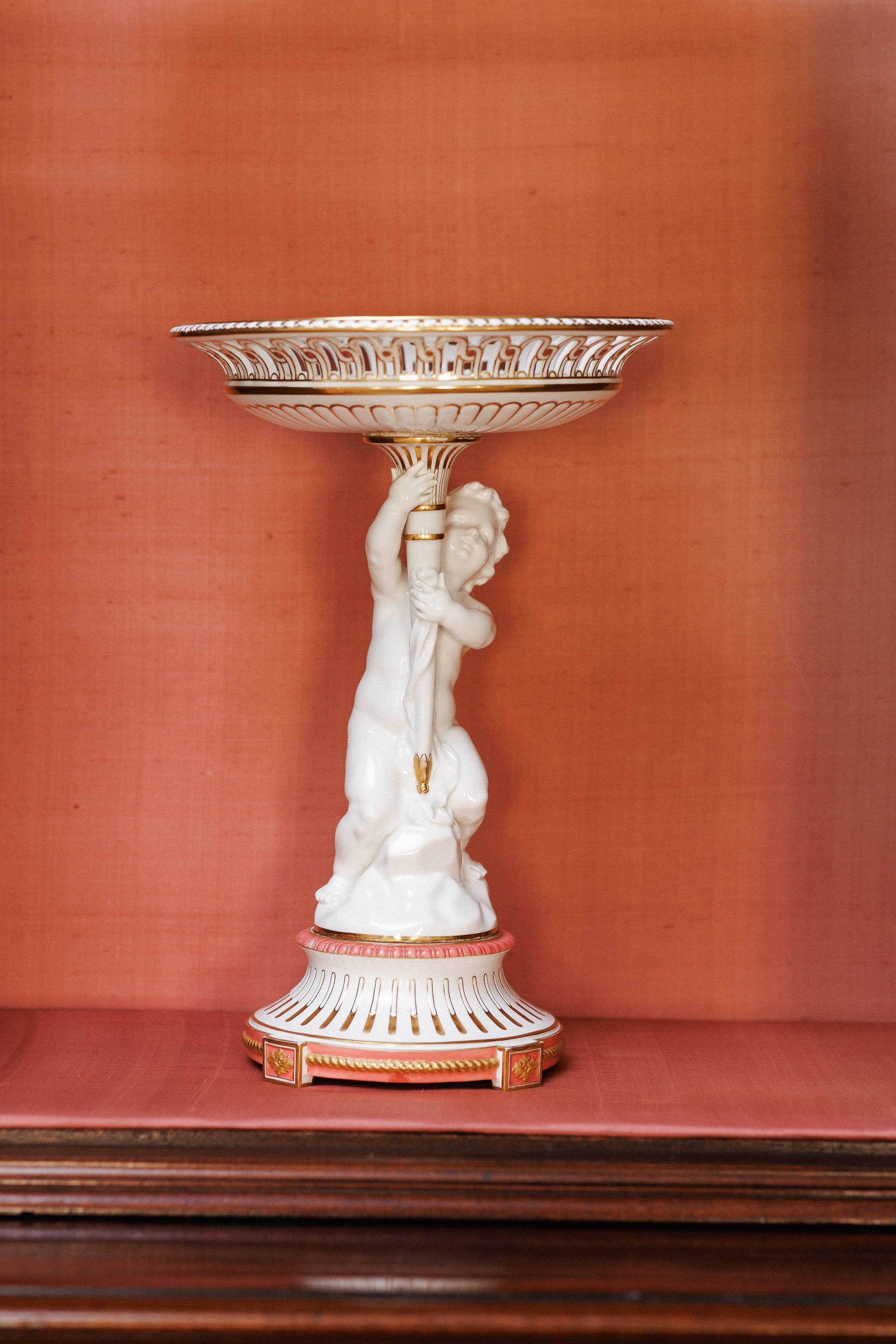
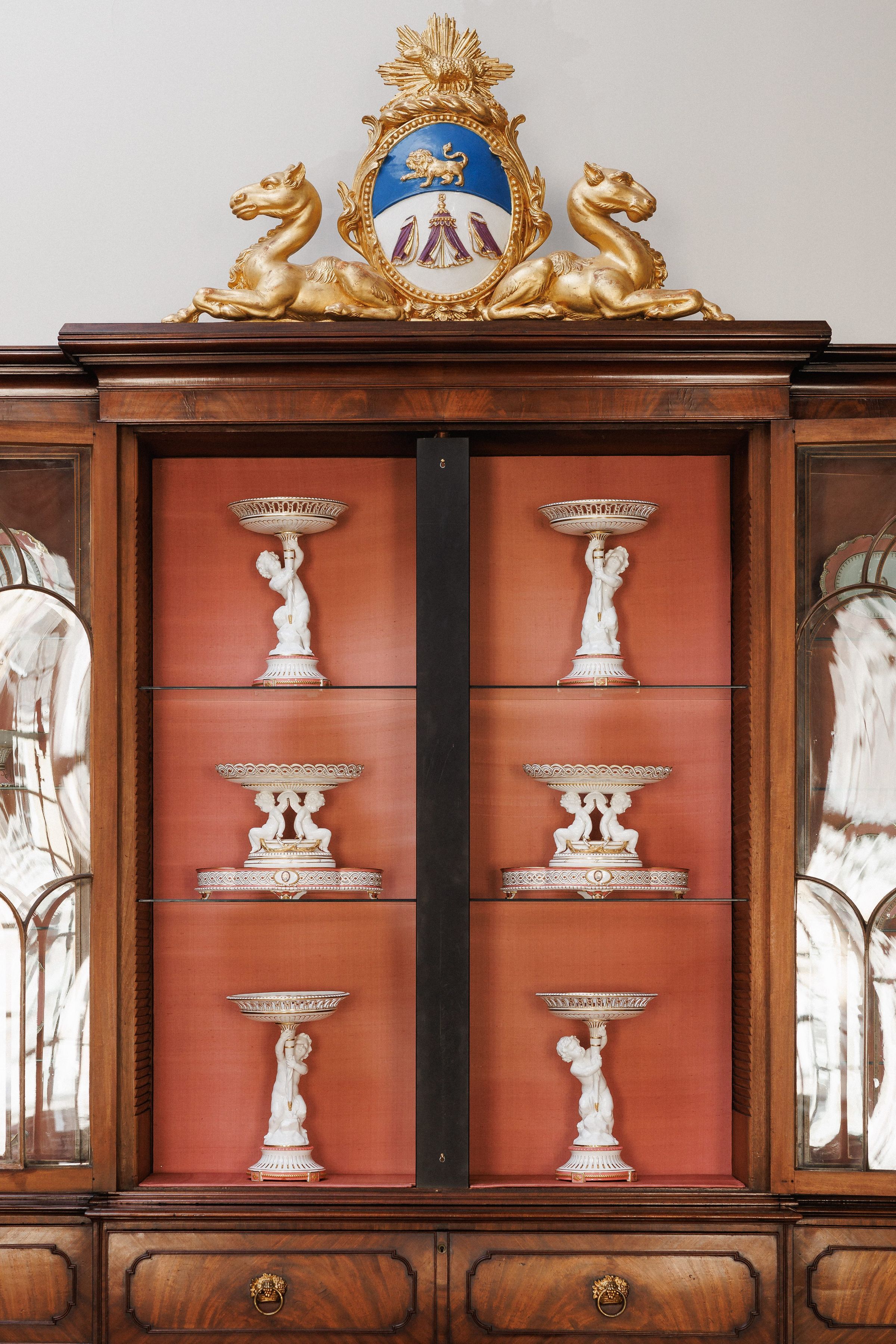
The largest items on display are the two centrepieces. These have decorative stands which are topped by pairs of seated angels, or putti, supporting oval baskets. Alongside these are four tall decorative ‘cups’ or tazze, each with a putto supporting a circular basket. There are also smaller, plain tazze; boat-shaped dessert baskets; and numerous plates and serving dishes. These are merely some of the best items in the service; there are almost 400 more/
The centrepieces and the tazze were designed by Albert-Ernest Carrier de Belleuse (1824-87), a French sculptor of international reputation, director of works at the state Manufacture de Sèvres from 1875, and a tutor of Auguste Rodin. Carrier de Belleuse was hugely admired for his designs which combined the human figure within functional forms, as he does so here. From 1850 to 1855 he had worked in England for Mintons and others, and he continued to supply designs after his return to France.
Find Out More…
On 2nd June 1869, the Master, Sir James Tyler, reported that “the Company’s stock of china ware had become so reduced in quantity as to require to be replenished. It was ordered that it be left to the Master & Wardens to select such china as to quantity and pattern as they might consider necessary and proper.”
The Company accounts reveal that in December 1869 Nash & Co, a local Minton vendor, were paid the gigantic sum of £744 12s 11d “as per order of 2 June 1869”. The Company continued paying Nash & Co regular smaller sums, once or twice a year, in the years following 1869. Perhaps then, the dessert service was first purchased in 1869, and replacements were routinely bought after rowdy dinners when these delicate china treasures got broken?