Label
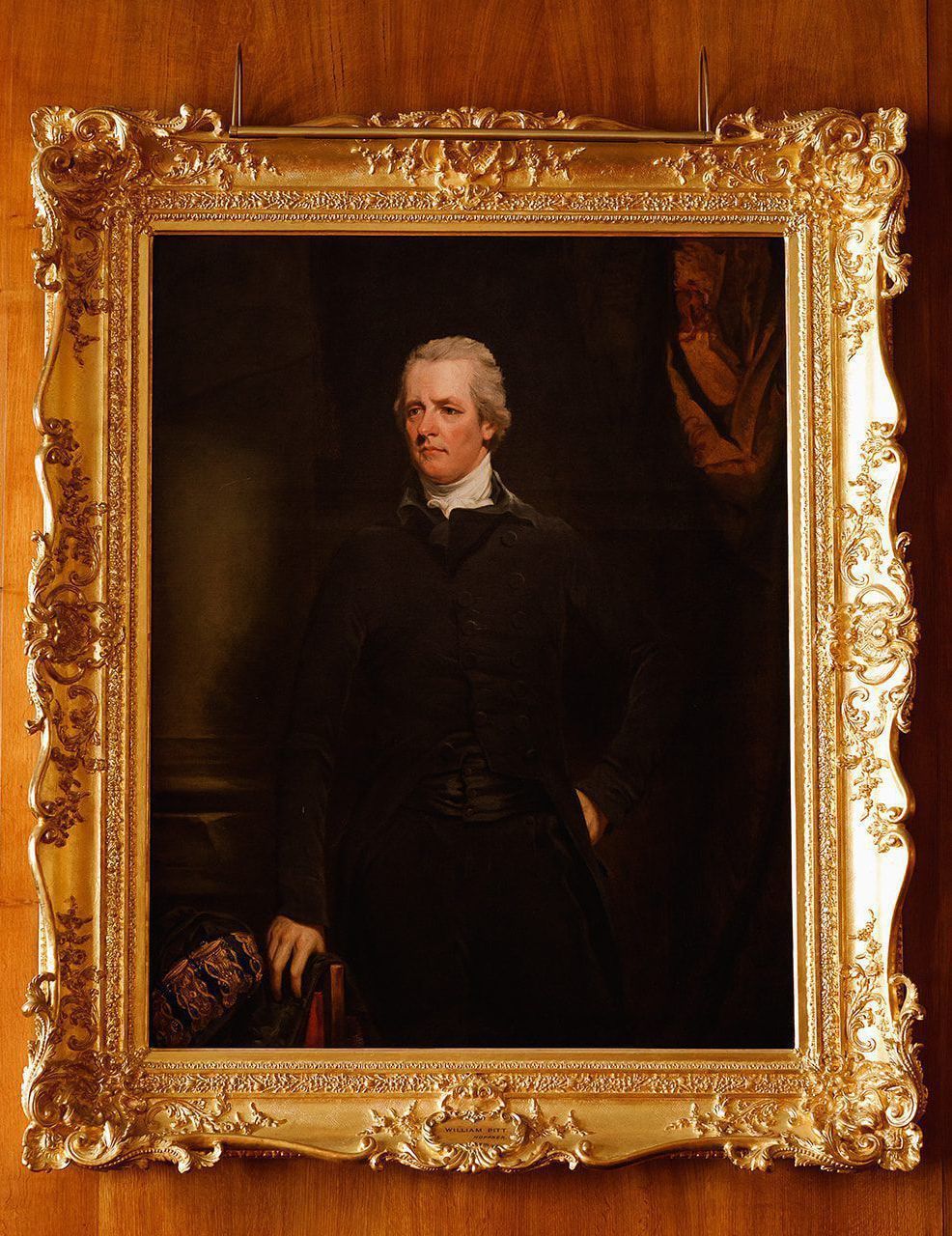
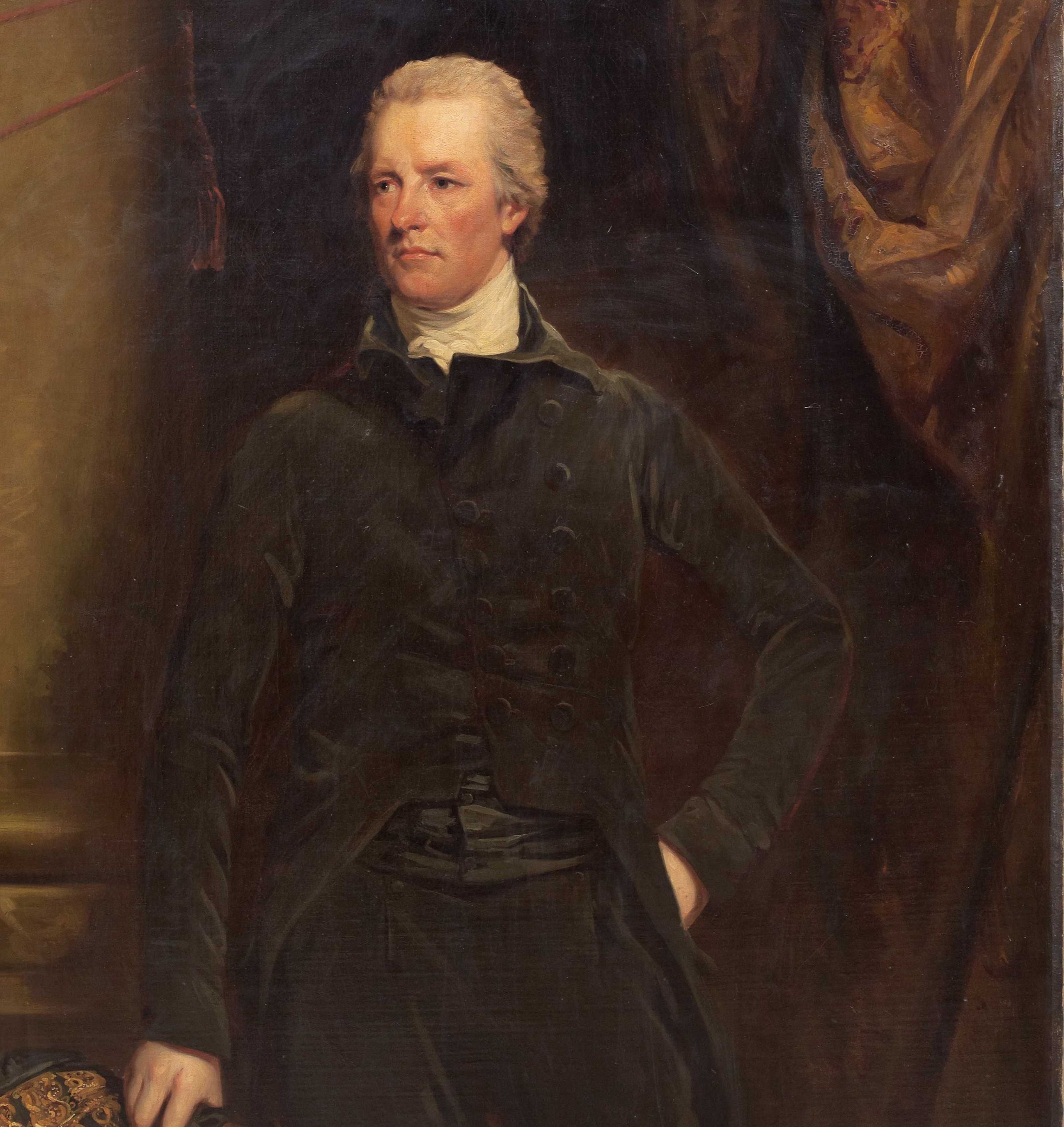
This portrait depicts William Pitt the Younger, British Prime Minister from 1783 until 1801 and again from 1804 to 1806. Pitt was only 24 years old when he took the top job, and saw Britain through many years of war with France. This portrait by John Hoppner (1758-1810), shows Pitt three-quarter length, in a green velvet suit, standing facing to the viewer’s left.
Lord Mulgrave, Pitt’s Foreign Secretary, had commissioned Hoppner to paint Pitt in 1805. At Pitt’s death in January 1806, the portrait was still in Hoppner’s studio. With Lord Mulgrave’s permission, Hoppner then made duplicate copies for distribution to Pitt’s friends. Our portrait is one of these copies.
By the time he sat for Hoppner, Pitt was in poor health. He was worn out by overwork and, possibly, excessive drinking. The portrait was presented to the Company in 1843 by Newell Connop, last Treasurer of the Pitt Club. The Pitt Club was formed soon after Pitt’s death and dissolved in 1842. The Club held a celebratory dinner every three years on Pitt’s birthday (28th May), always at Merchant Taylors’ Hall.
Find Out More…
Some of John Hoppner’s best work, like this portrait, dates from between 1802 and 1807, after he had visited Paris during the Peace of Amiens. The paintings in the Louvre astonished him. On his return he paid new attention to primary colours and simple compositions. Seeing this image of Pitt, the portraitist William Owen “wondered Hoppner had dared so strongly to express … in Mr. Pitt's countenance … hauteur and disdainful severity.—It was the truth, but others had endeavoured to soften it”
Sir George Scharf of the National Portrait Gallery published a catalogue of all known portraits of Pitt in 1886.There are a number of versions of Hoppner’s portrait of Pitt, all more or less identical. Sir George Scharf named eight in his catalogue, including this one. Merchant Taylors’ archivist, Stephen Freeth, has located versions at: Merchant Taylors’ Hall, two at the National Portrait Gallery (one on loan from the Tate), Trinity College, Cambridge; the Government Art Collection; Ingestre Hall, near Stafford; Apsley House; the National Trust (though unclear where); the North Carolina Gallery of Art at Raleigh; and the Pushkin Museum, Moscow. Two further copies were sold in New York in 1985 and 1995. Few of these can be matched with certainty to Scharf’s list, and there may well be more to be found…