Label
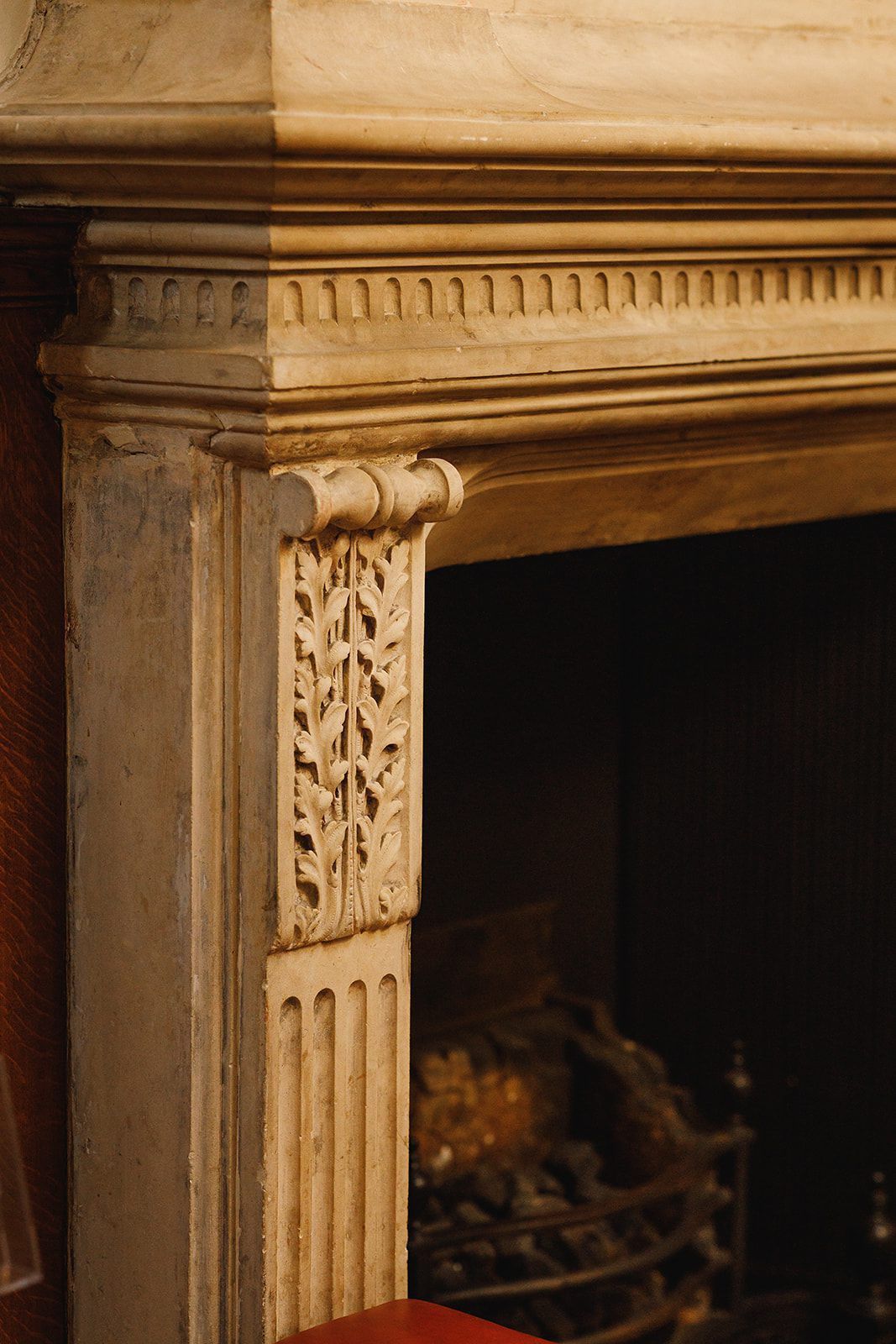
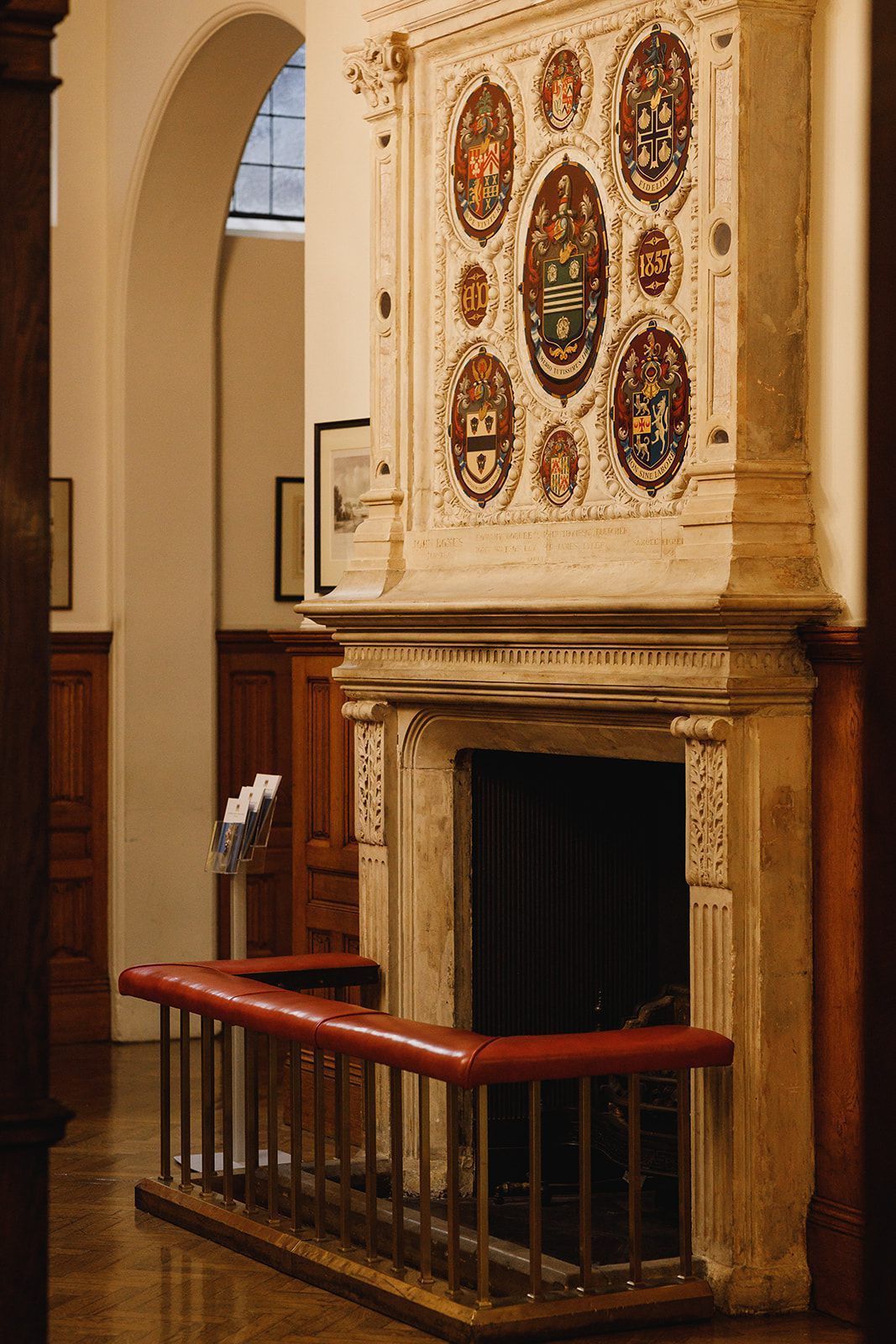
This space has long been an important place to meet in Merchant Taylors’ Hall. It is easy to imagine the past and present members of the Company greeting one another before this fireplace, before heading to their meetings in the Court Room beyond.
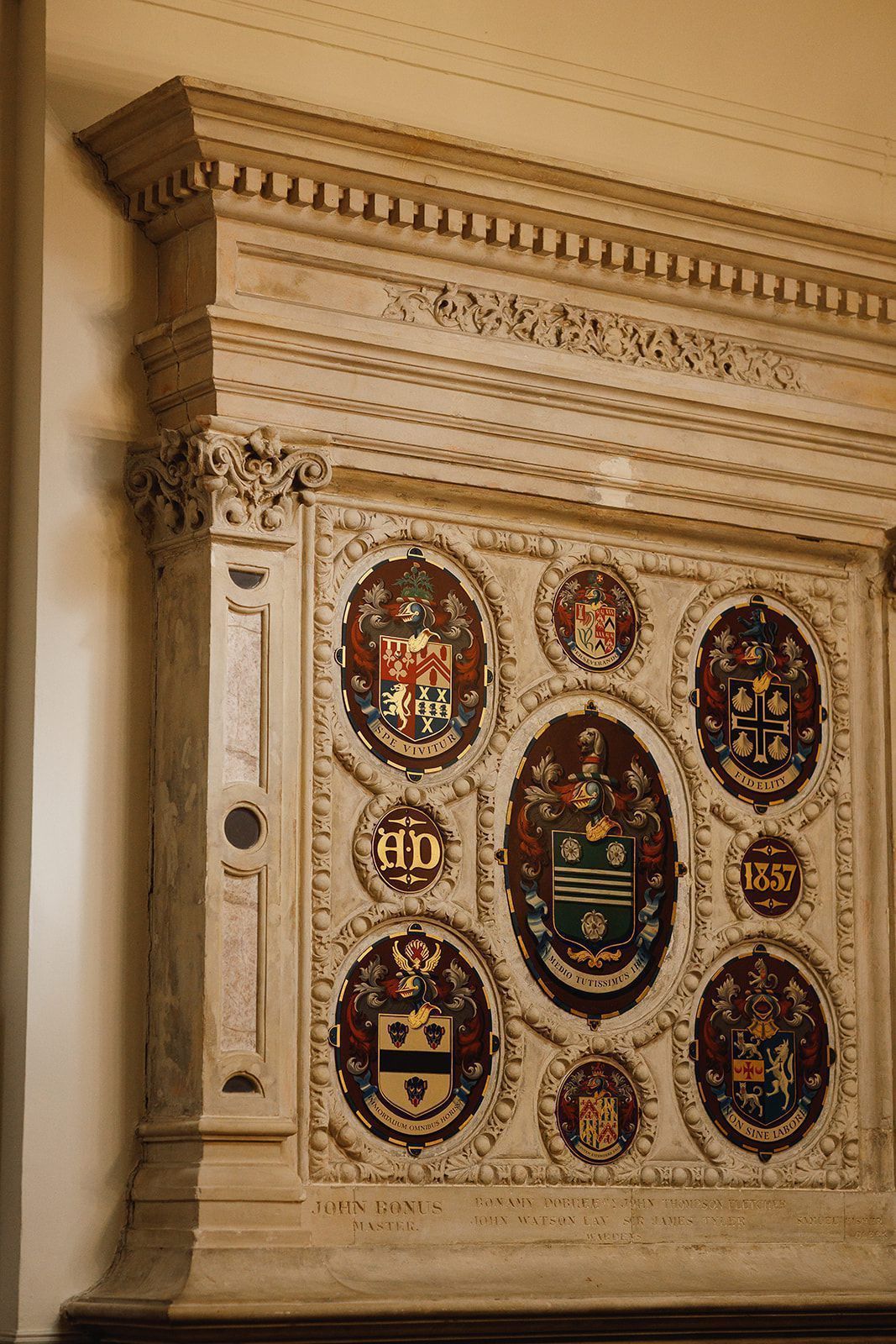
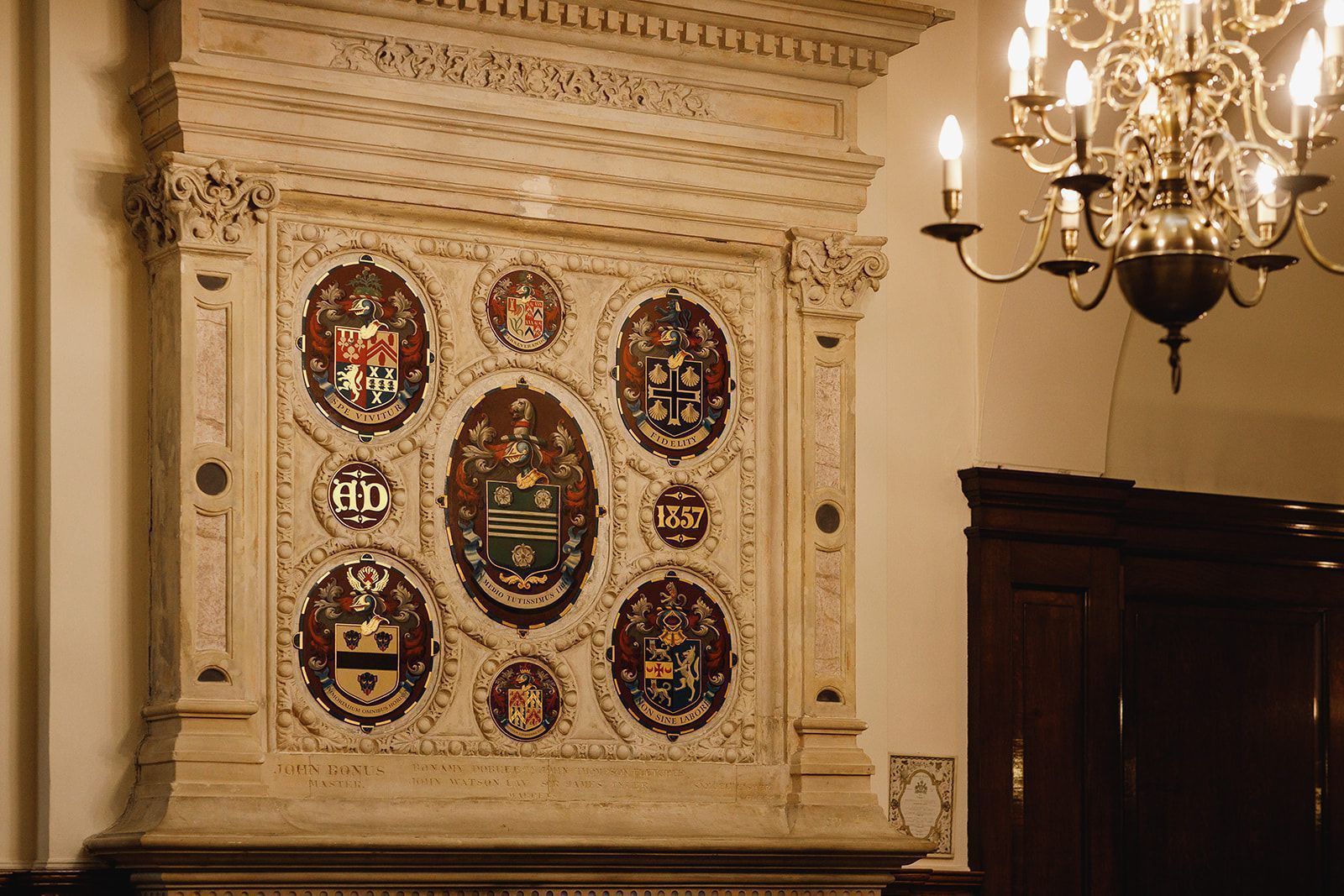
The ornate stone chimney piece above us is inscribed with the date of its making - 1857. Seven crests are painted onto stone ovals, illustrating the coats of arms of Company officials between 1856 and 1857. It was made by William Boulton, who was paid £70 for his efforts. This was a prestigious sum, indicative of the fine craftsmanship that produced this fireplace.
In the centre is the largest oval, which contains the heraldry of the Master, John Bonus. The top left and right coats of arms are those of Bonamy Dobree junior and John Thompson Fletcher (Wardens). The lower left and right shields belong to John Watson Lay and Sir James Tyler (Wardens). Between the upper crests are the arms of Joseph Turnley, the incoming Master. Between the lower shields are the arms of Samuel Fisher, the Company Clerk.
Not all of the coats of arms are original. The crests of John Watson Lay and John Thompson Fletcher were stolen in the early 1990s during building works, and have been replaced with excellent modern facsimiles copied from old photographs. The facsimile shields can be identified easily, being brighter and shinier than the surviving Victorian originals.
Find Out More…
The fireplace was originally installed in April 1857 in the East Corridor (directly behind us). It was moved to its present position in 1927, when the Cloisters were remodelled.
The central oval with the arms of the Master, John Bonus, contained an incorrect Latin motto. The correct wording is a quotation from Ovid, In medio tutissimus ibis, “You will go most safely by the middle way”. However ibis has been rendered as ibio. The motto beneath the John Watson Lay shield, Immortalium omnibus horissa, like the motto beneath the Master’s shield, is meaningless Latin. It probably should have read Nemo mortalium omnibus horis sapit [Alexander Pope], “No man always gets it right”.