Label
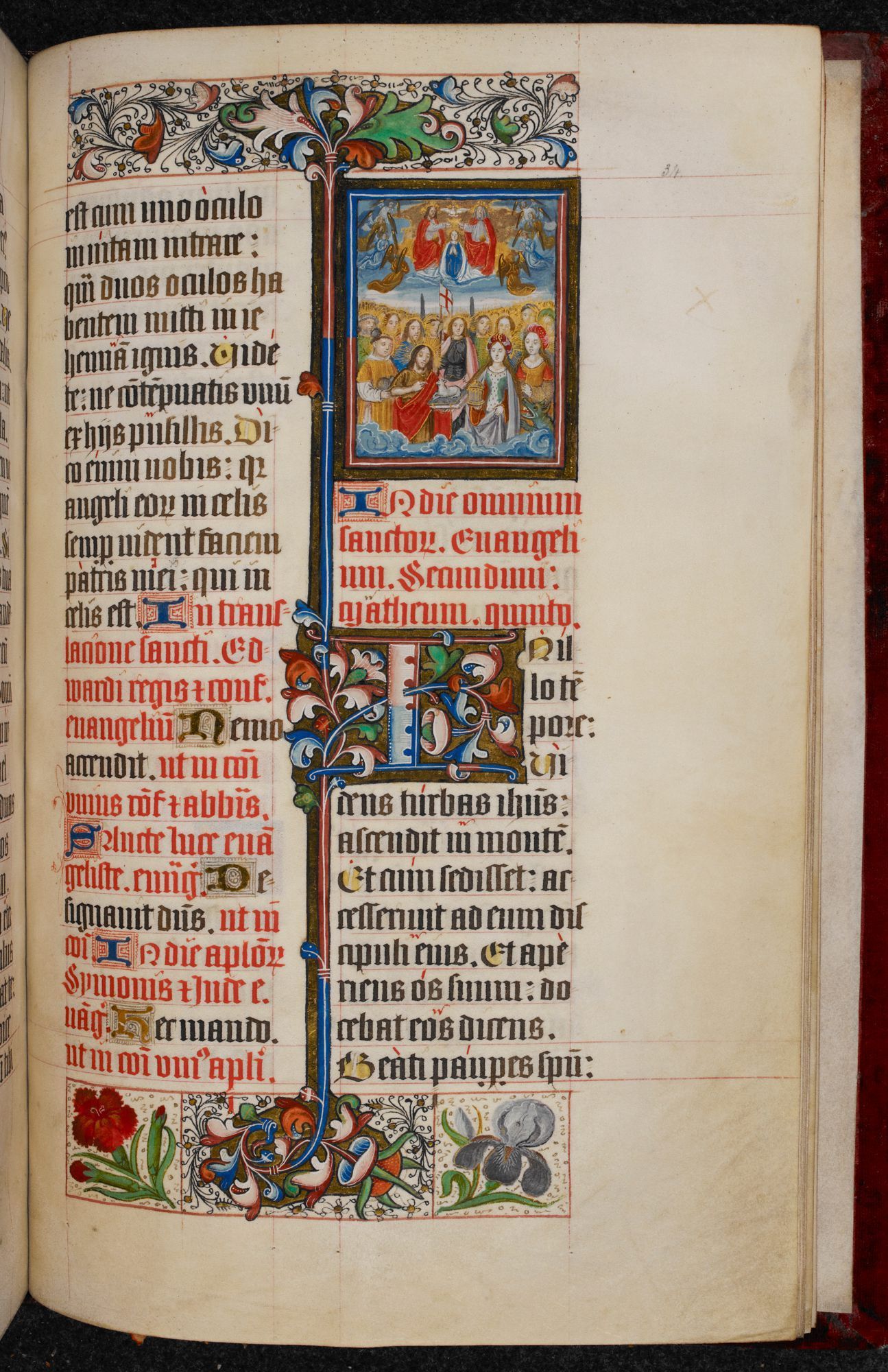
Reference: Royal MS 2 B XIII, Folio 1v, f.27r and f.34r
Collection: The British Library
Medium: Ink on parchment
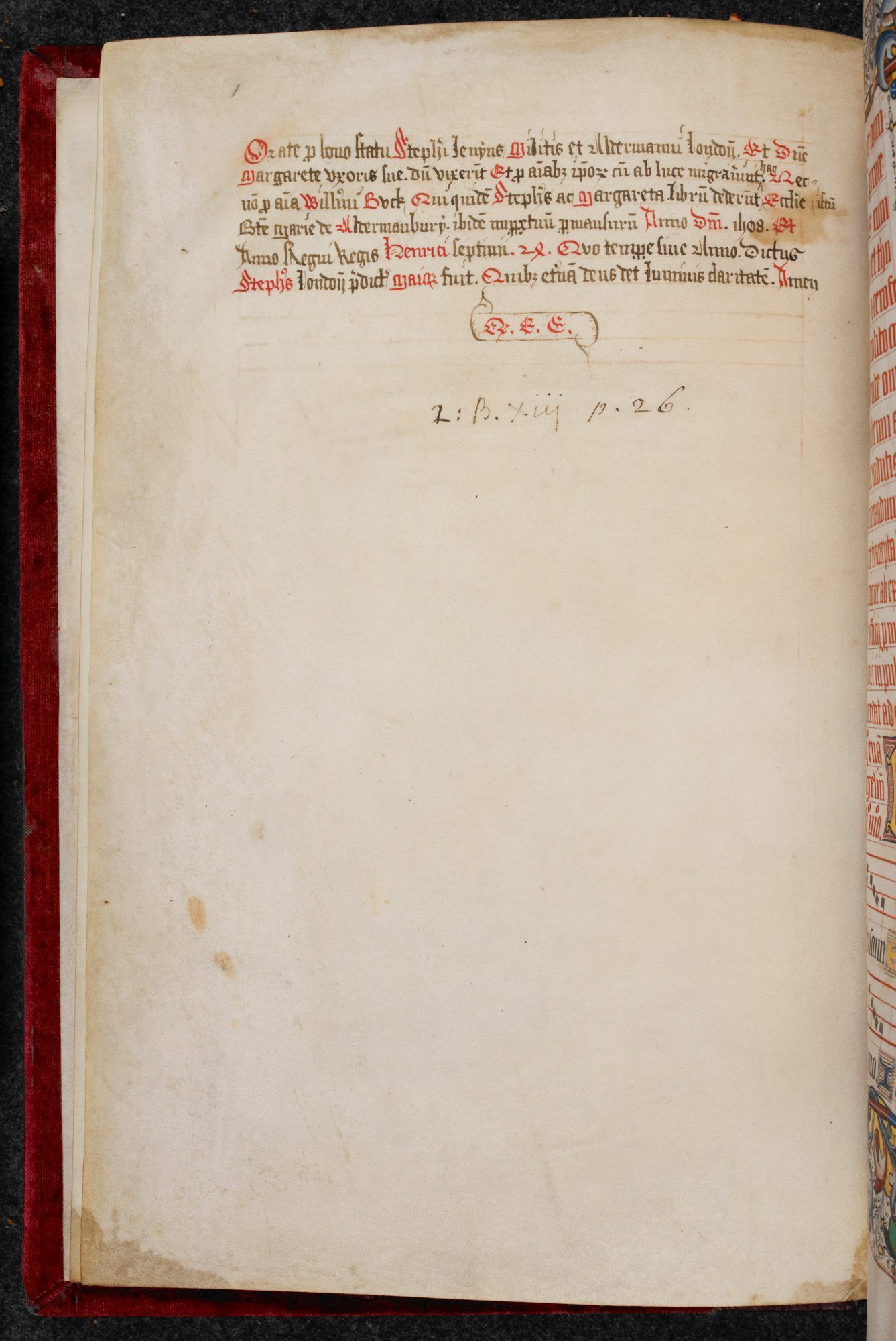
In the year he was elected Lord Mayor, Stephen Jenyns and his wife Margaret commissioned this exquisitely illuminated Lectionary to mark the occasion. They presented this book to their parish church of St. Mary Aldermanbury for use during the celebration of Mass. On folio 1v, Jenyns has had a text inscribed, recording this act of charity (see image for transcription).
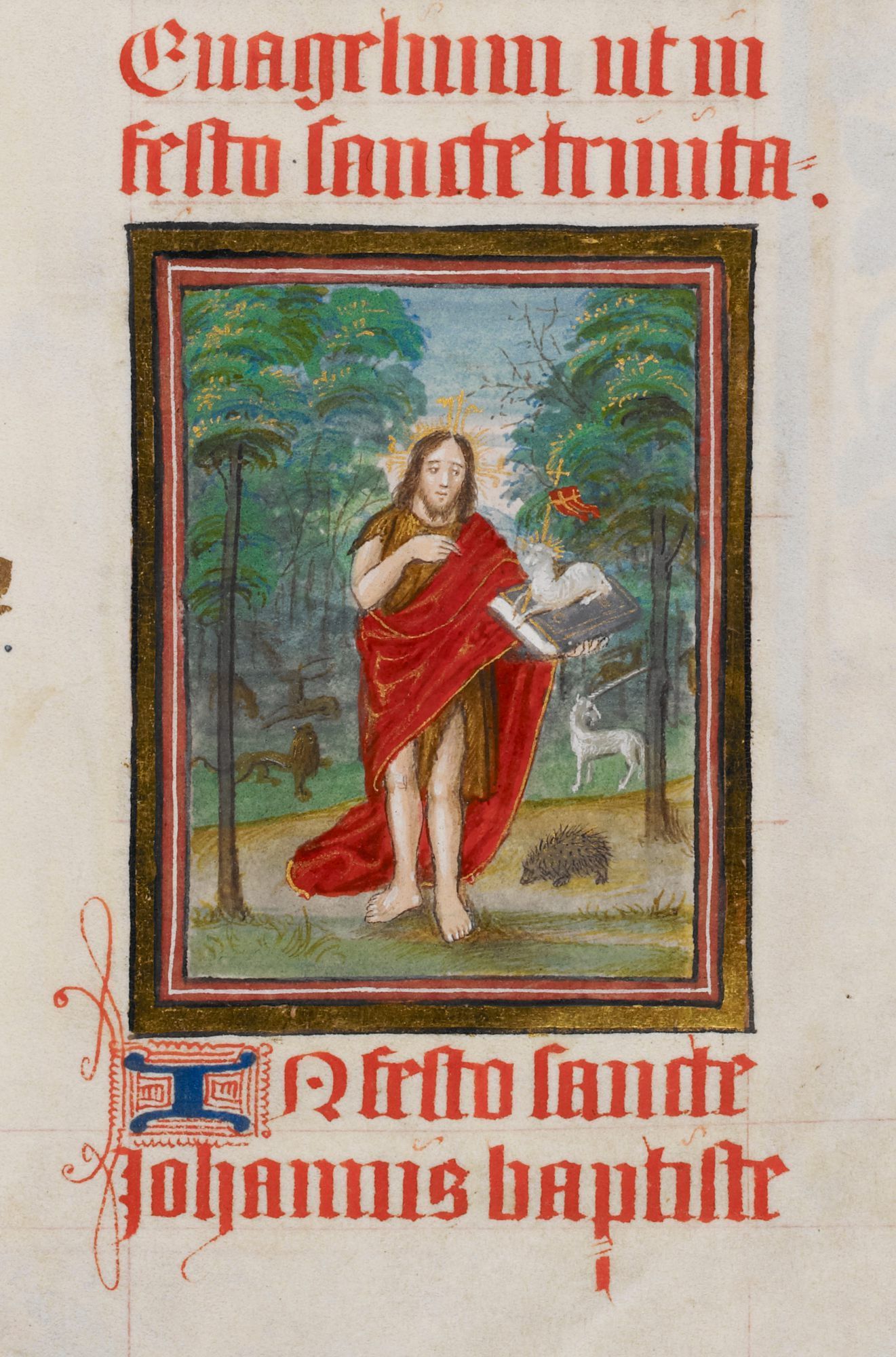
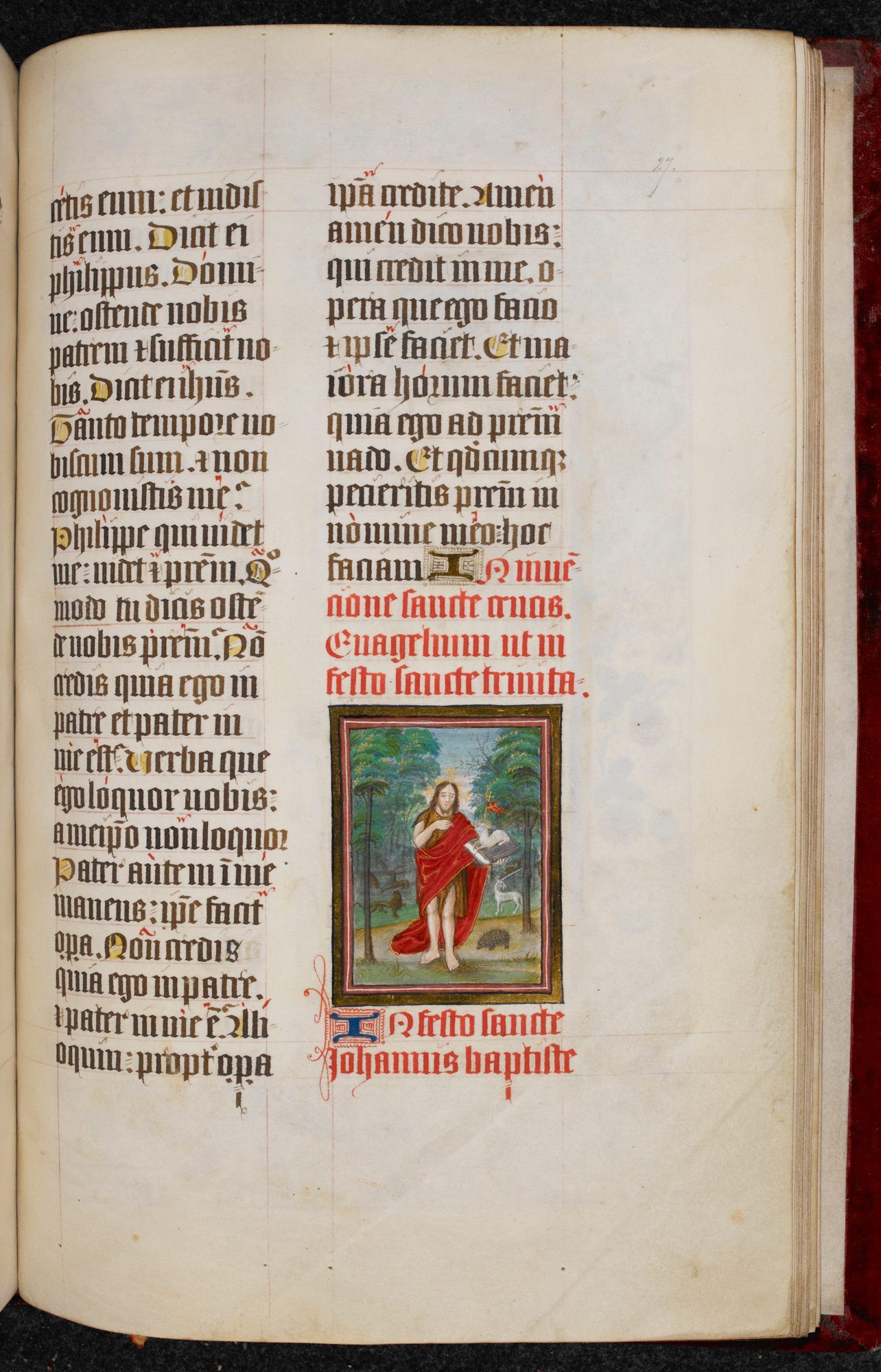
The Lectionary includes excerpts from the Bible to be read during services, and is accompanied by sixteen illustrations. We find the text to accompany the Feast of St. John Baptist on folio 27r, illustrated with an image of the saint alone in the wilderness, wearing his camel skin robe and holding the Agnus Dei. The choice to illustrate the Baptist’s feast is indicative of Jenyns’s membership of the Merchant Taylors’ Company and his devotion to their patron saint.
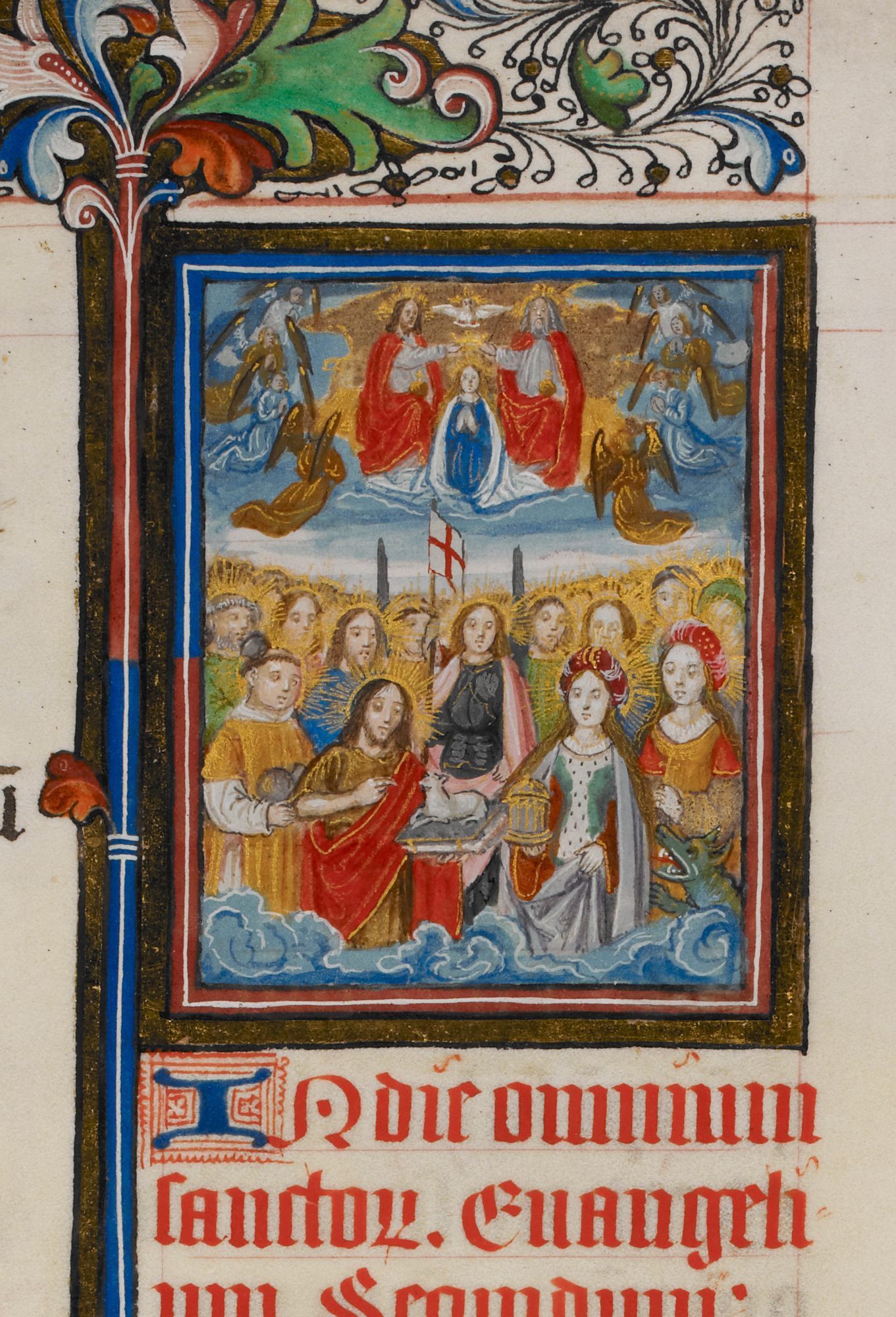
On folio 34r is the Feast of All Saints. We are presented with a gathering of heavenly saints: St. John Baptist and Mary Magdalene stand in the centre with the Agnus Dei between them. They are flanked by St. Stephen and St. Margaret of Antioch. Stephen can be identified by the stones with which he was martyred, and at Margaret’s feet stands the dragon in whose stomach she was trapped before her death. The inclusion of these two saints (Stephen and Margaret Jenyns’s name saints) and St. John Baptist and the Agnus Dei (representative of the Company) shows the deeply personalized nature of this commission, and the care with which the illuminations were designed.
This Lectionary was created by Flemish limners known as the Masters of the Dark Eyes. This group of artists was in Royal employ at the beginning of the sixteenth century, and Jenyns’s commission of these fashionable craftsmen would have been a real status symbol. An illuminated book of this quality, created by some of the most fashionable, imported artistic talent of the day, would have been a real prize for St. Mary Aldermanbury, and speaks to Jenyns’s social status and cosmopolitan artistic taste as a patron.