Label
Collection: Wolverhampton Grammar School, formerly of St. Andrew Undershaft
Medium: Stained Glass
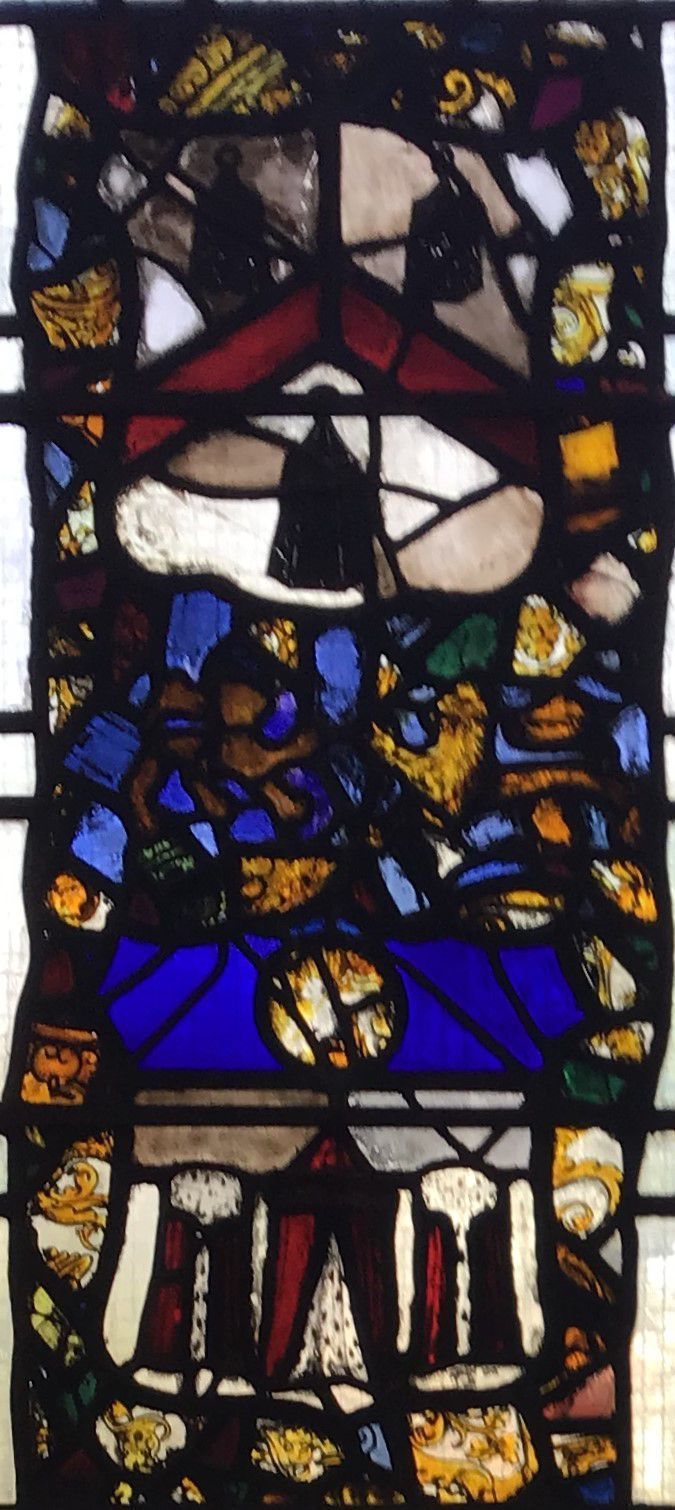
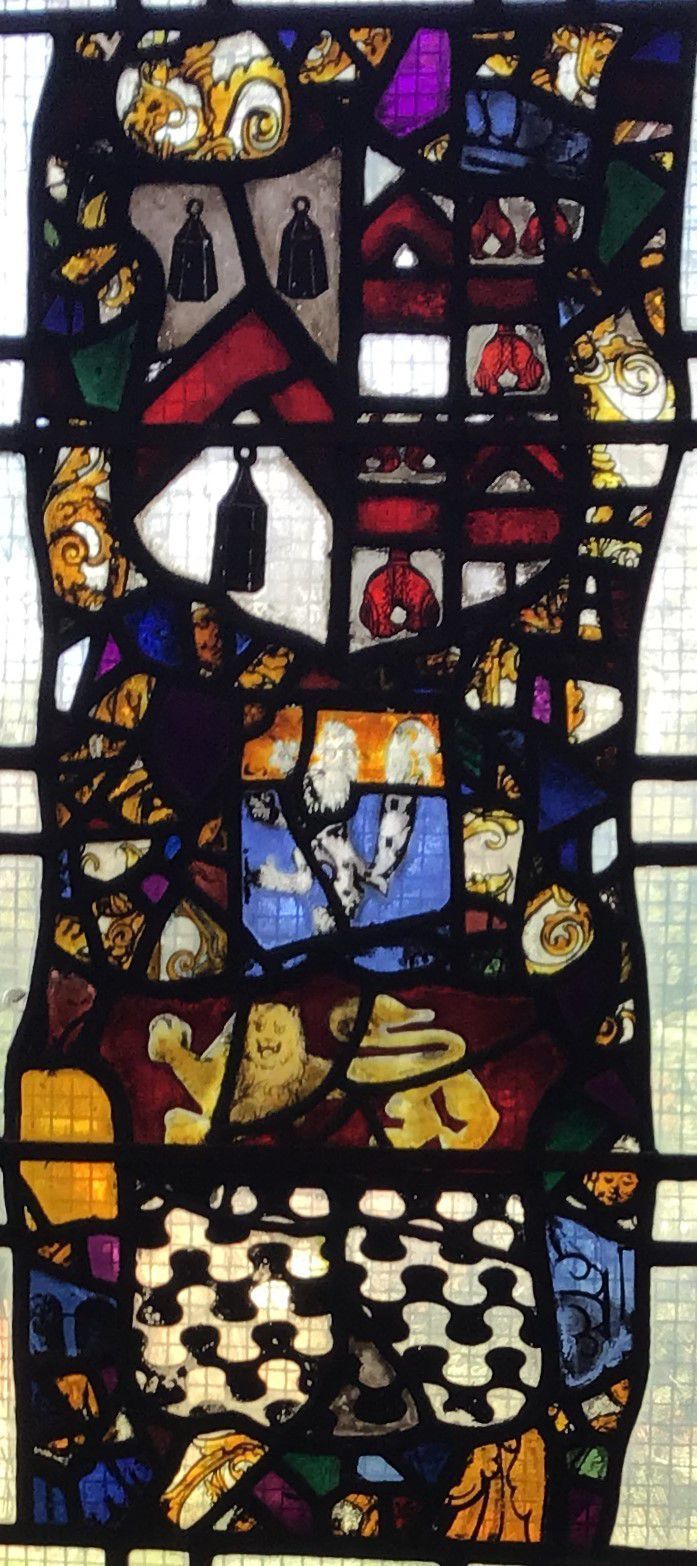
By the start of the sixteenth century, Jenyns’s wealth had grown and the scale of his charitable giving had increased exponentially. His philanthropy was wide ranging, but these stained glass windows are evidence of his specific charity at the City church of St. Andrew Undershaft.
Merchant Taylor, John Stow, writes in 1598:
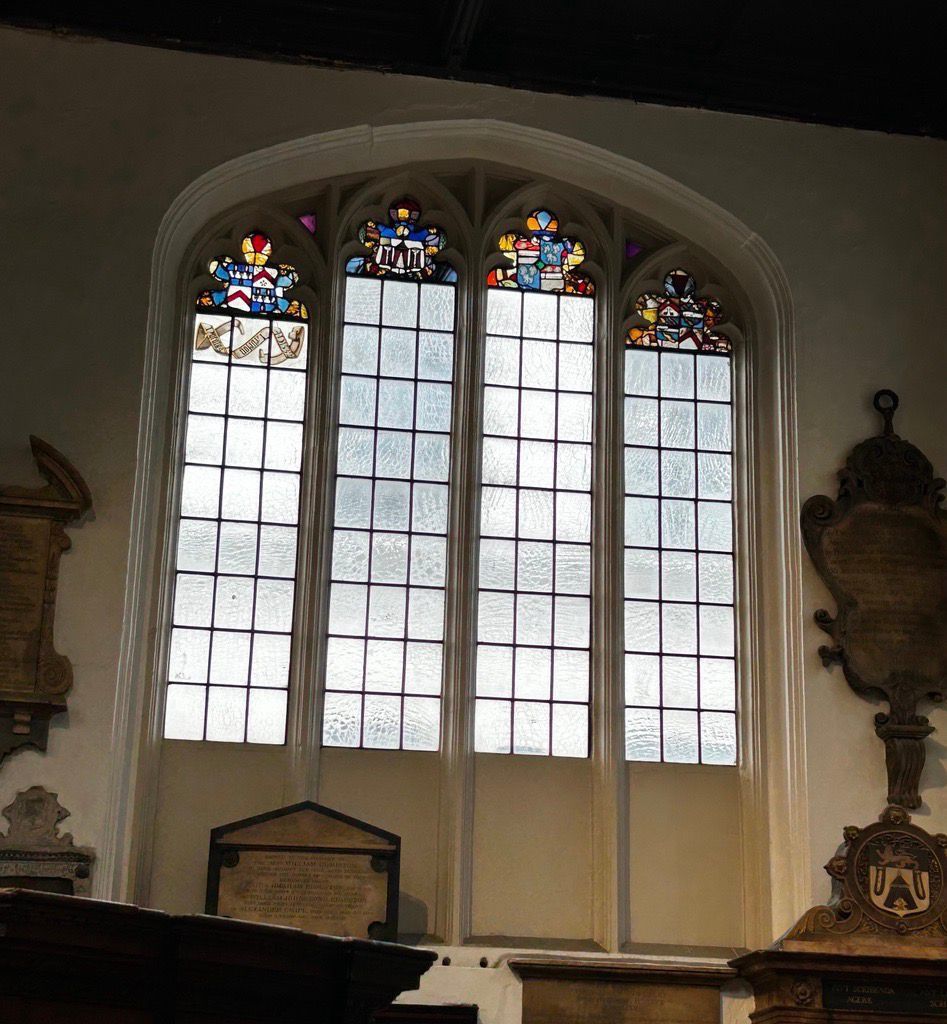
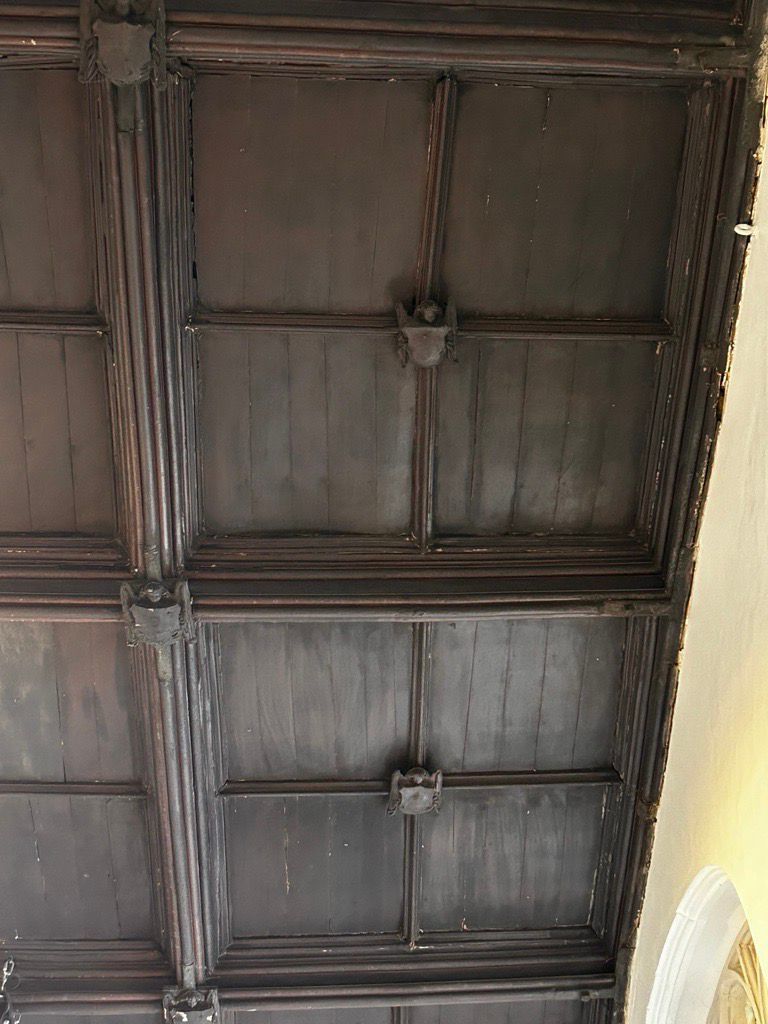
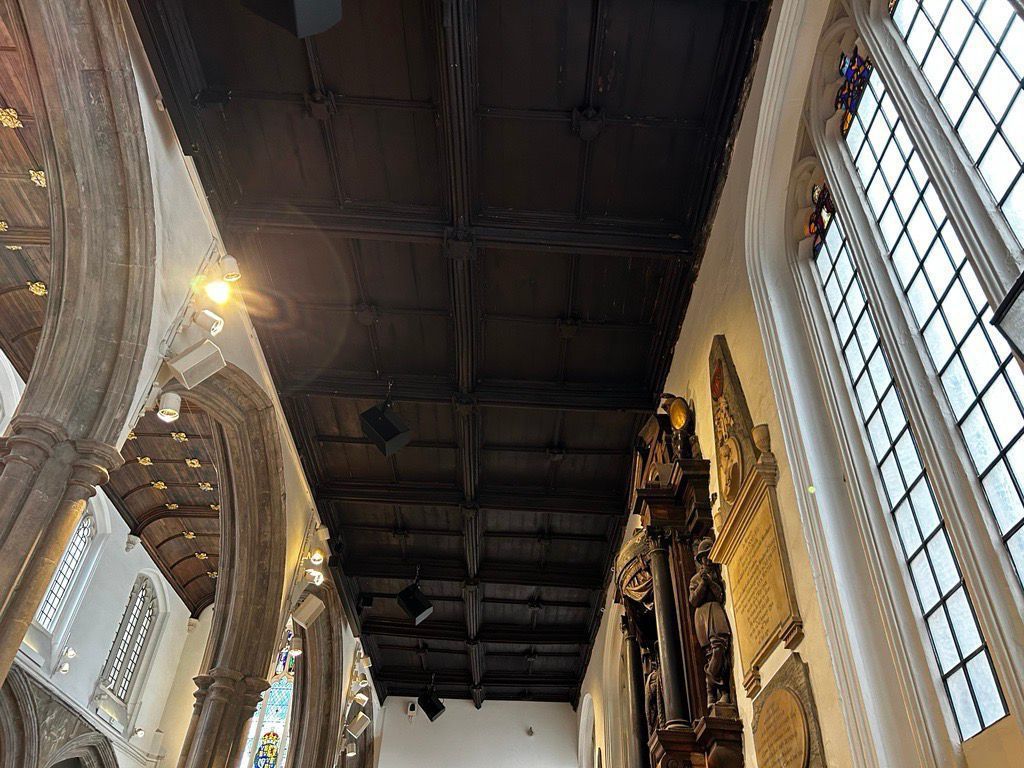
"Steven Gennings marchant Taylor, sometime mayor of London, caused at his charges to bee builded the whole North side of the greate Middle Ile [aisle], both of the body [nave] and quier [choir], as appeareth by his arms over every pillar graven, and also the North Ile, which hee roofed with timber and seeled [ceiled], also the whole South side of the Church was glased, and the Pewes in the south Chappell made of his costes, as appeareth in every Window, and upon the said pewes."
The renovation works at St. Andrew Undershaft began in 1520, but were not completed until 1532, after Jenyns’s death. Evidence suggest that most of this work was paid out of Jenyns’s estate by his executor and son-in-law, Merchant Taylor John Nicholls, amounting to around £200.
Much of the evidence of Jenyns’s benefaction at St. Andrew Undershaft has been lost to the Reformation and war damage, however, these pieces of glass are surviving elements of a large glazing programme that Jenyns had helped fund at the church. The arms of Jenyns and the Merchant Taylors’ Company were repeated many times in the original compositions commissioned by Jenyns and his executors, however, these panels are now among very few surviving examples.
Other motifs of the original glass included the coat of arms of the Mercers’, the Bakers’, the Merchant Venturers’, Henry VIII, the City, the Calais Staple and the heraldry and merchant marks of other individual donors. In the first panel, we see Jenyns’s coat of arms (argent a chevron gules between three plummets sable), and the Company arms below. In the second panel, the upper coat of arms is that of Jenyns impaling the arms of his third wife (the Kirton family). The coat of arms below is that of the Calais Staple, which Jenyns' was Master of in the 1490s.
During the War, these two panels of glass were removed from St. Andrew Undershaft to protect them from Blitz damage, and were taken to Wolverhampton Grammar School where they still survive. The remainder of the glass was put back into St. Andrew Undershaft after the war, but this was later to be destroyed by the Baltic Exchange bombing.
Fittingly, John Stow was buried in the north aisle of St. Andrew Undershaft, which Jenyns had funded. Stow’s tomb still stands on this spot, and the arms of the Company on the top of his tomb are mirrored in the stained glass above them.