Label
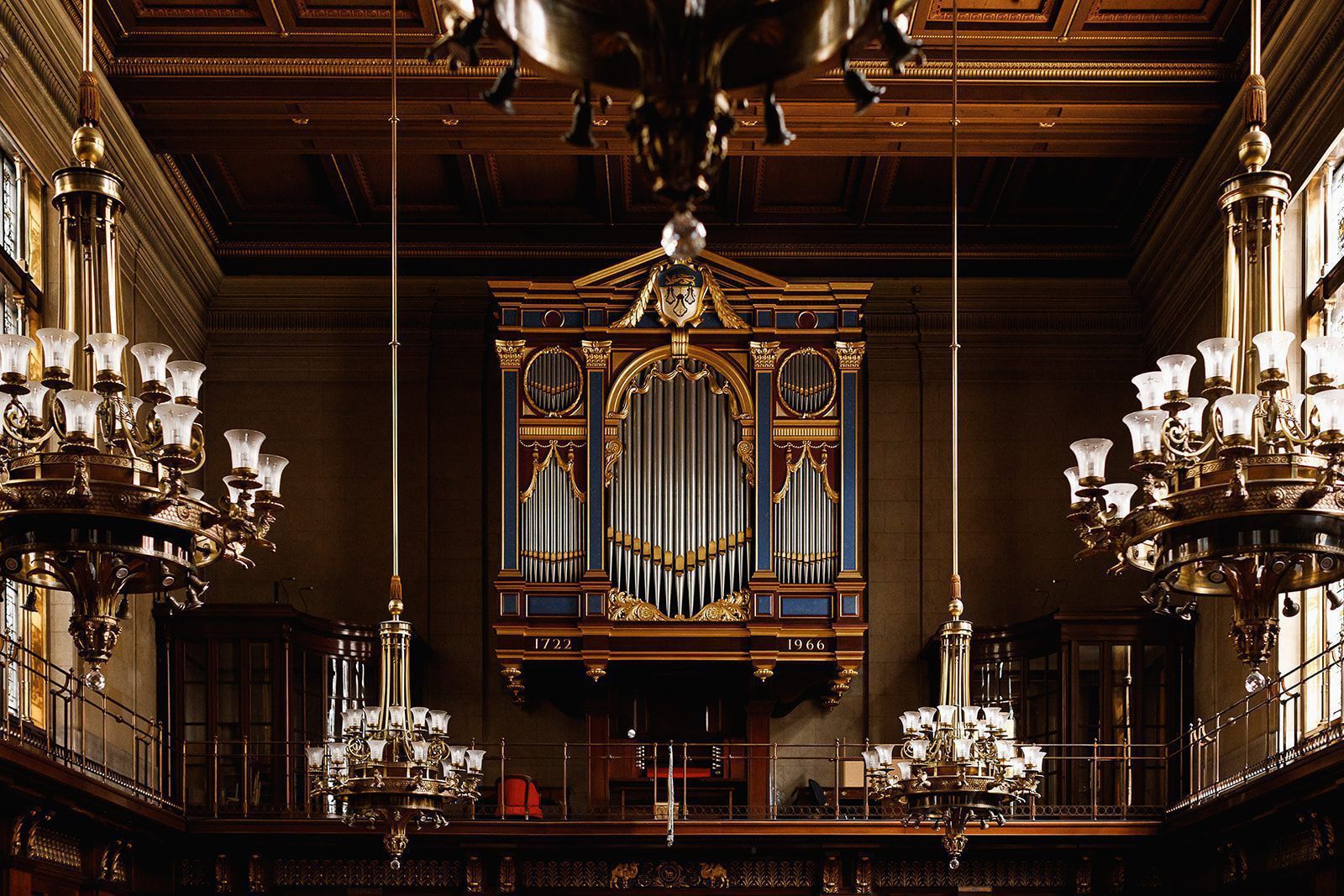
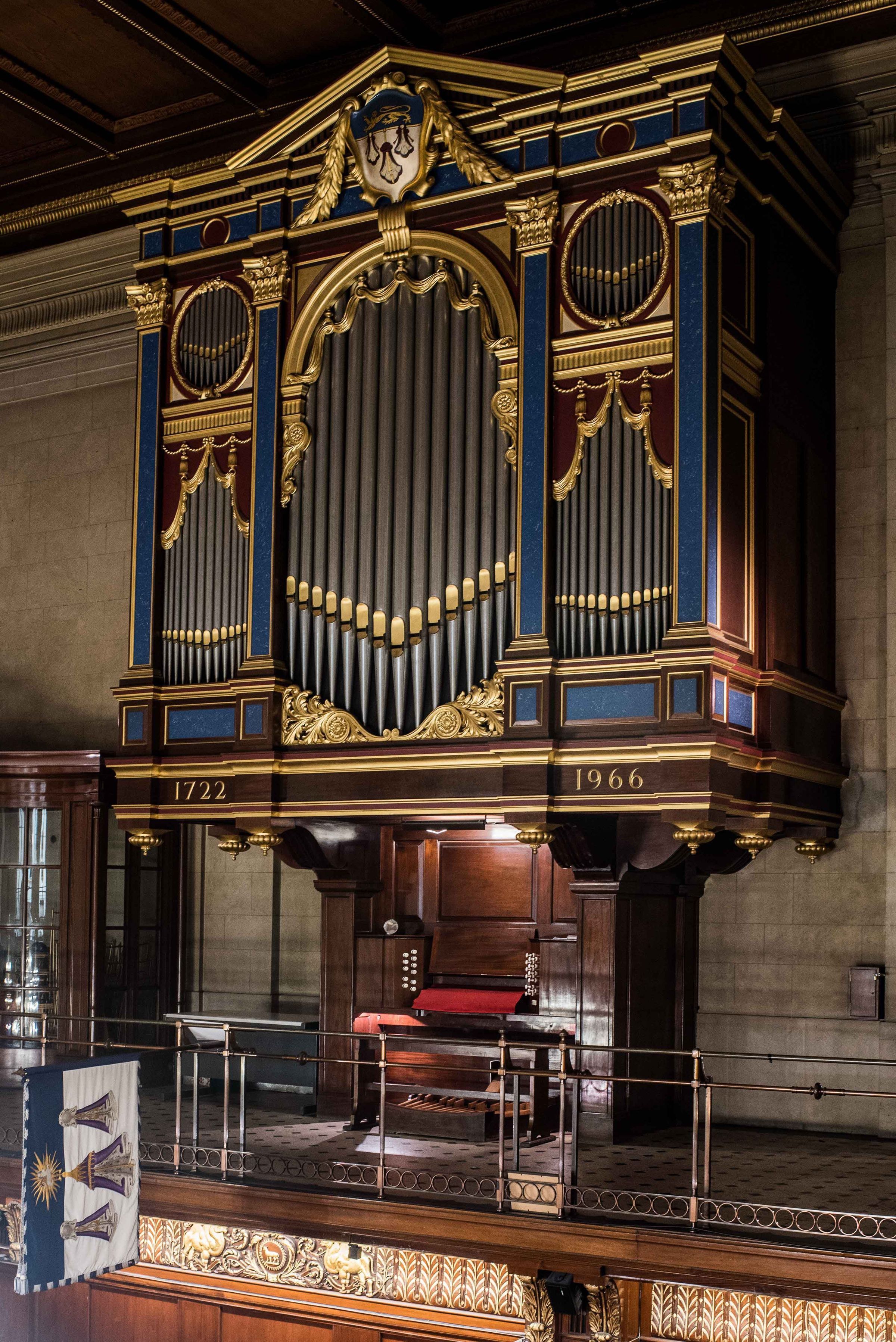
The organ in the east gallery of the Great Hall bears two dates, 1722 and 1966. The first is the date it was originally built; the second is the date it was installed at Merchant Taylors Hall.
It was originally made in 1722 for the church of St Dionis Backchurch, on the corner of Fenchurch Street and Lime Street. It was built by Renatus Harris (c.1652-1724), who was born in Brittany, where his parents were English exiles during the Commonwealth. He worked in more than sixty cathedrals and churches, building at least seventeen new organs. The St Dionis organ was his last one.
London’s church congregations diminished drastically in the 1850s, when the City became a place of day-time workers who commuted in from the suburbs. As the churches were emptied of parishoners, the authorities began to demolish churches, and sell the land in order to build new places of worship to service congregations in more populated areas. St Dionis Backchurch, where this organ was in place, was pulled down in 1878. The pipes of Harris’ St Dionis organ were re-used (in a new case) at Darenth Park Hospital, from which the Company acquired them, unplayable, in 1965 for £100.
Find Out More…
Noel Mander was employed by the Company to design a new, playable, organ for Merchant Taylors Hall, using Harris’ eighteenth century pipes from the St Dionis organ. An Italian-inspired gilt and polychrome mahogany casement for the organ was designed by Stephen Dykes Bower, and made by Benfield & Loxley of Oxford. The organ was inaugurated on the 30th June 1966 by John Dykes Bower, organist of St Paul’s Cathedral. The organ is now played at Company events and dinners, and is the only one remaining in a Livery Hall.