Label
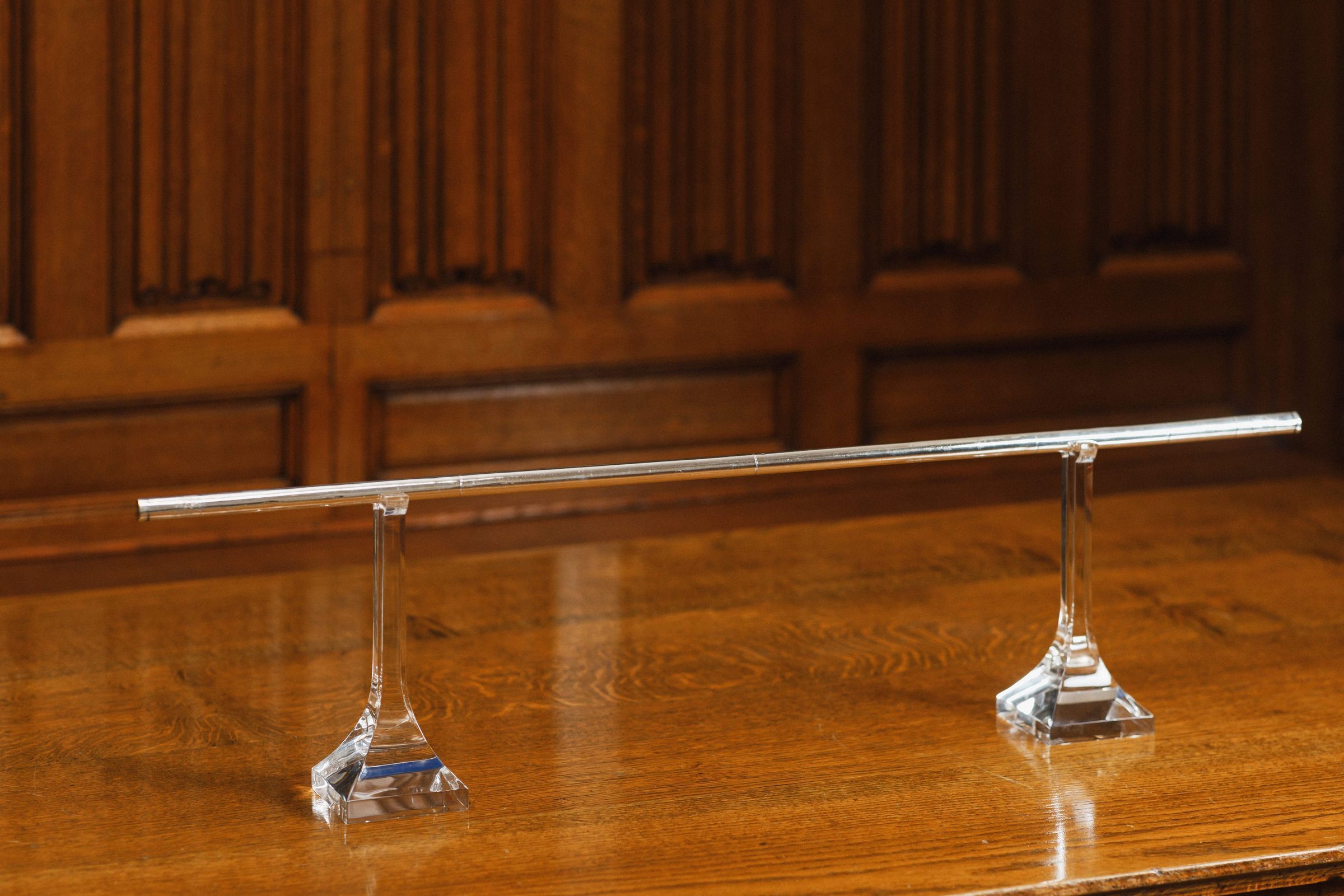
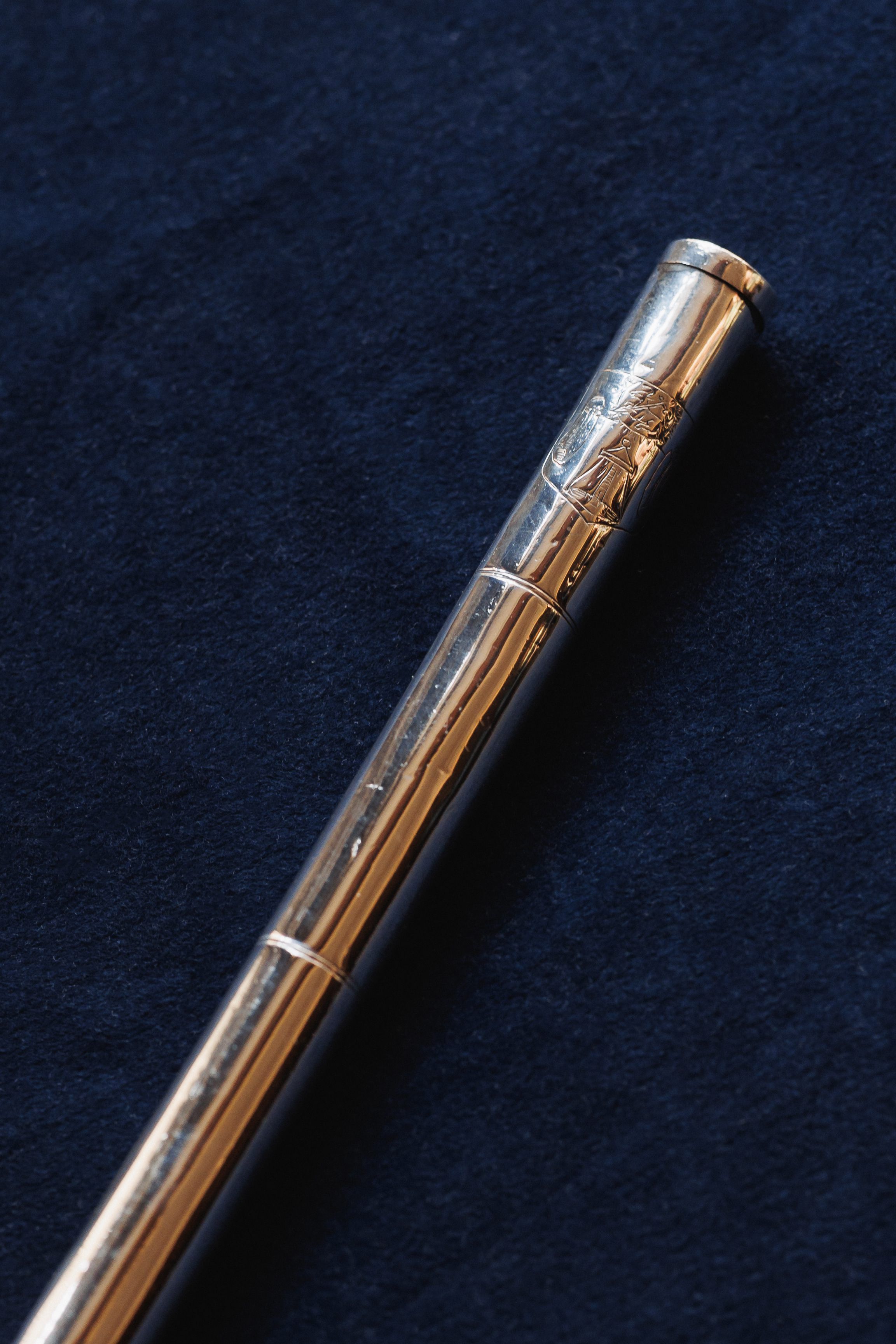
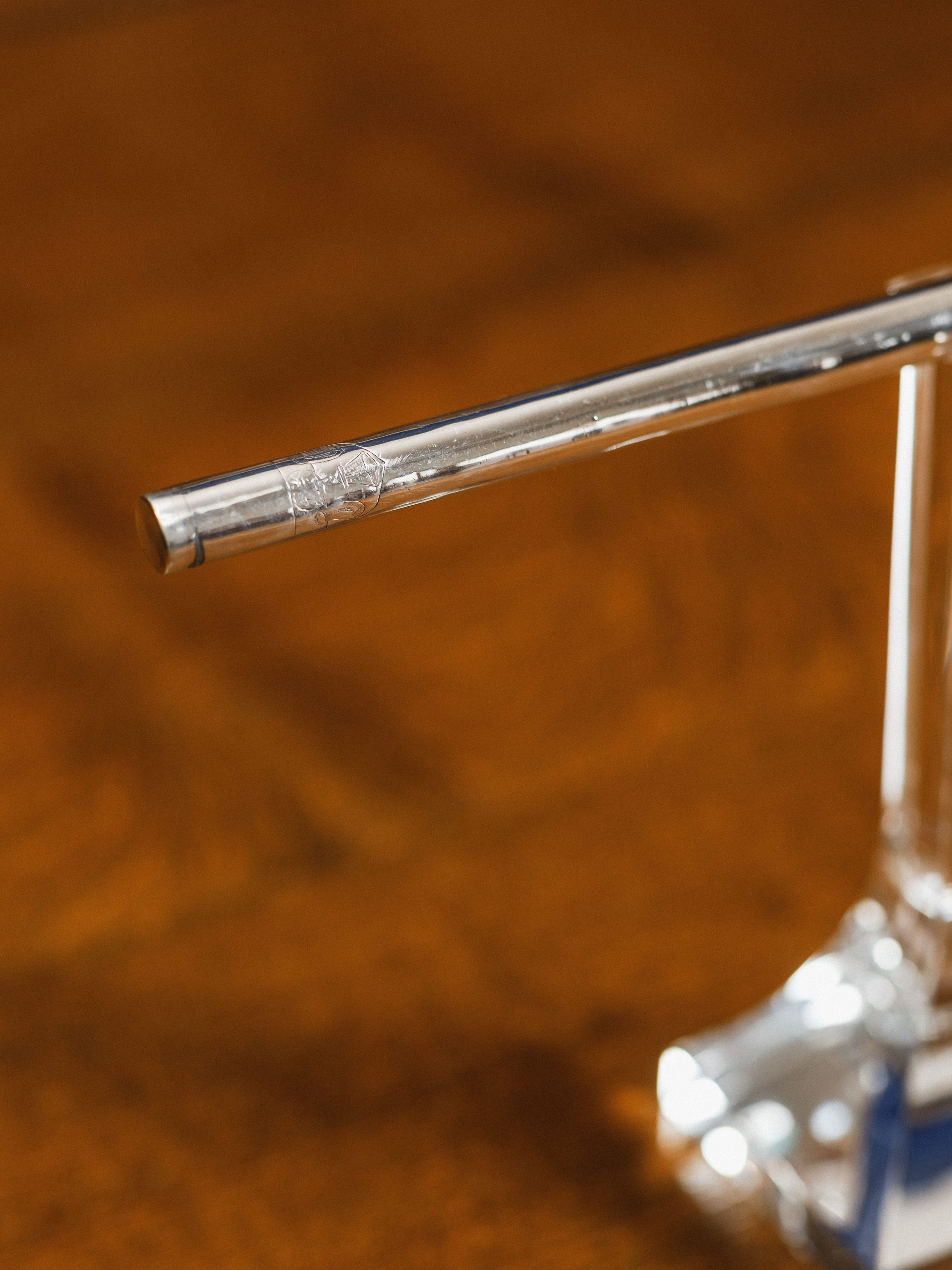
The Cloth Yard is one of the earliest pieces of silver belonging to the Company, and is thought to be the only measure of its kind surviving from the late medieval world. It is made of silver, which is delicately engraved with the Company coat of arms. It has an iron core - making it surprisingly heavy! It originally also bore the engraved symbol of King Henry VII (an H topped by a crown), but this was unfortunately polished out.
The Cloth Yard is recorded in the Company accounts from 1512, and was likely made sometime between 1500 and 1509 (when Henry VII died). In 1598, the Company Beadle pretended the Yard had been stolen and tried to run off with the money given to him by the Company to replace it. Mercifully, this treasure returned safely to the Hall, and the Beadle was thrown into debtors' prison for fraud.
The Cloth Yard is divided into four, nine inch sections, one of which is further divided into two lengths of 2¼ inches, and one of 4½ inches. These divisions, known as ‘nails’, were the common measures used by late medieval cloth merchants. The Company would use the Yard each summer at England’s most important annual cloth market, Bartholomew Fair in Smithfield.
Find out more…
From the fifteenth century, the Merchant Taylors and Drapers had powers to regulate the cloth trade at the Fair. The Company Wardens, Clerk and Beadle toured the fair each year, using the Yard to check the measures at the various cloth stalls. This must have been a difficult task, verging on dangerous, surrounded by the equivalent of a very rowdy football crowd! They were therefore accompanied by the Lord Mayor’s “Sergeant at Mace” - a dignified title for an official bouncer.
Bartholomew Fair in Smithfield was the most important annual market for the wool and cloth trades in England. The modern street, Cloth Fair, is named after it. The Fair was held in and around St Bartholomew’s Hospital on St Bartholomew’s Day (the 24th of August). It was always a rowdy event, as anyone travelling to, attending, or returning from the fair, had immunity from arrest. There were theatrical shows, prize fights, gambling, and even wild rabbit chasing, all accompanied by vast quantities of drink, and no police! The City finally managed to have it closed down in 1855. So far as we know, the Cloth Yard has not been used since.