Label
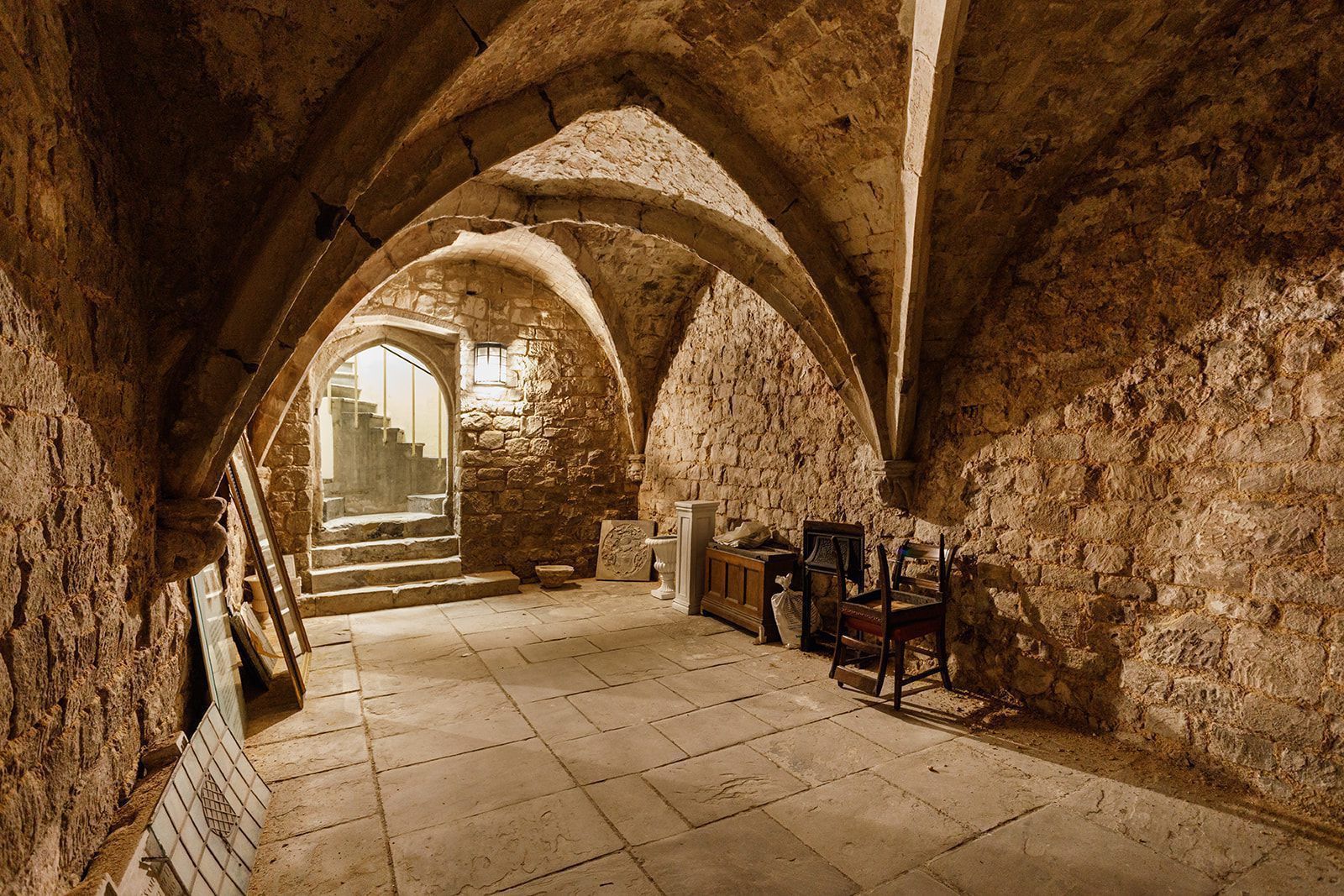
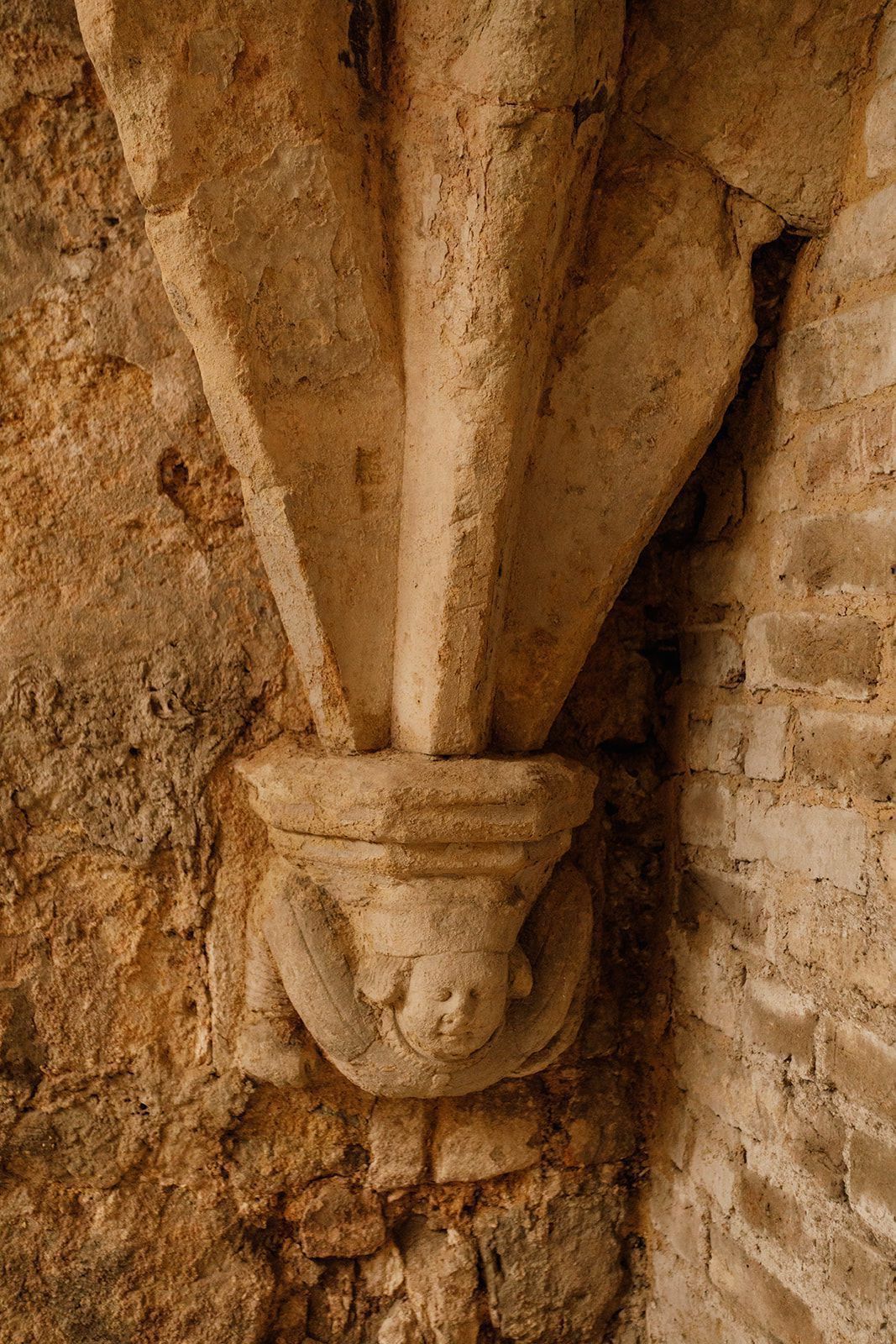
The Crypt is a medieval stone-vaulted space, dating to circa 1375. It is oriented north to south, and is located below the current Hall Reception. As it survives now, it comprises two bays. The walls and vault are made of chalk, and dressed with south-east English Reigate stone. The vault is divided into four parts by stone ribs, which spring from squat engaged columns topped by capitals with carved corbels. The corbels on the west side show a grotesque face, a winged beast and a young man. Those on the east wall include the head and shoulders of a man, and of a bat. The carvings are now much worn and do not reflect their original high quality.
In the Middle Ages the space above the Crypt was the Hall’s chapel. It had glazed windows and a ceiling painted with stars, and housed the precious religious possessions of the Company. The Chapel served the religious fraternity of Saint John the Baptist that was administered by the Merchant Taylors Company, and its use was confirmed by a Papal grant from Pope Calixtus III in 1455 - a very unusual grant to a London livery company. The Fraternity also had a chapel in St Paul’s Cathedral. This space was used to celebrate the feast days of the fraternity, and on occasions such as the election of new Masters and Wardens of the Company.
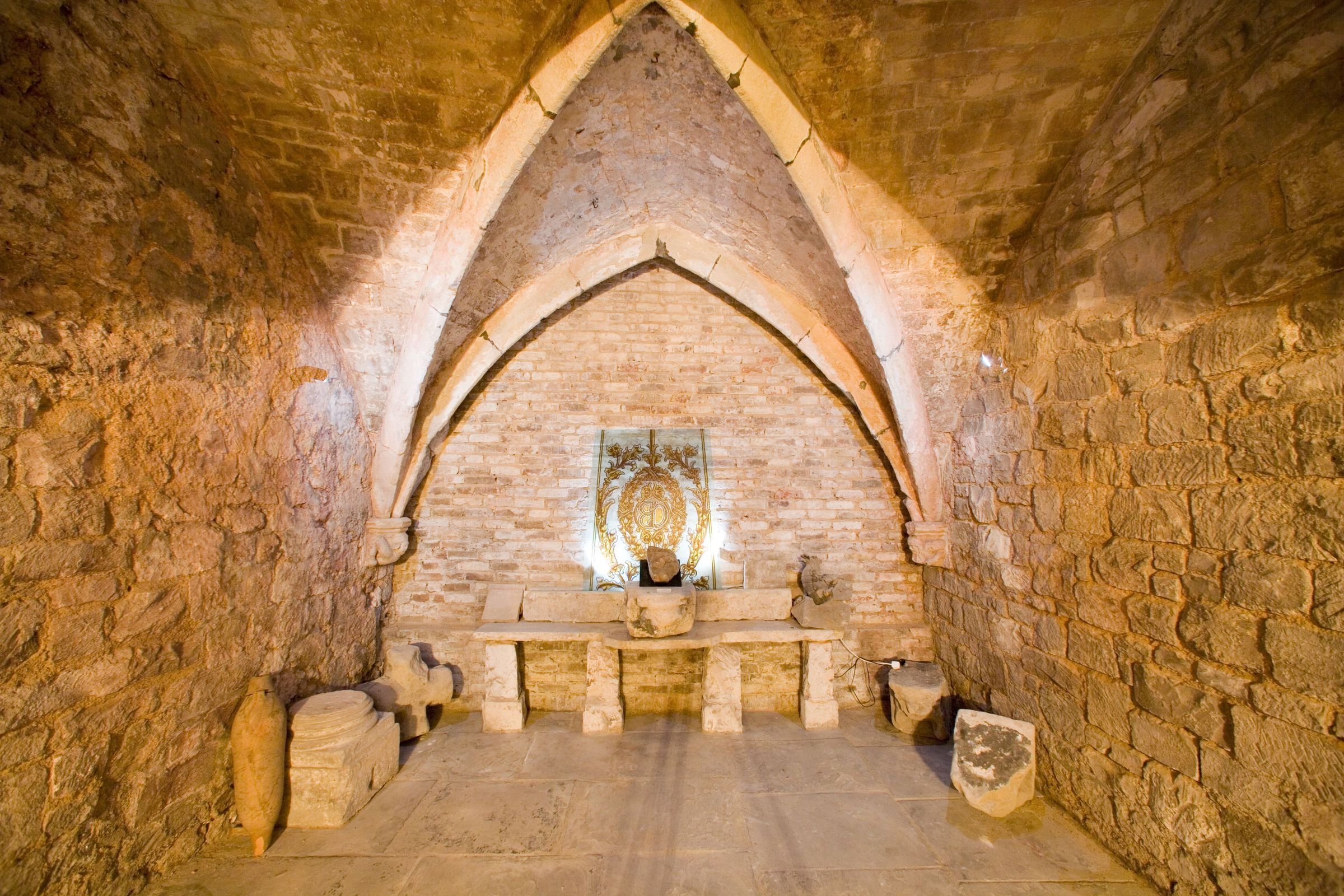
The Crypt was possibly originally used as a storage facility. It was formerly much longer, extending to Threadneedle Street allowing plenty of space for holding goods and chattels. The third bay, and the remains of a fourth, were destroyed in 1853 when the Company redeveloped the street frontage, dramatically reducing its size. The beginnings of the third bay can still be seen, disappearing into the modern brick wall. However, the original size and street access of this space have led some to suggest that the Crypt may once have been part of a commercial premises beneath the Hall, rather than a storage facility or extension of the religious space above.
Find Out More…
Over the years the Crypt became increasingly cluttered, as we can see from 19th-century prints and drawings, and from two photographs from c1900 and 1928. Unsightly drainpipes projected through the medieval vault; the floor level had risen by over two feet; there was a partial cross-wall in brick at the north end; there was a coal chute in the ceiling; and the west wall had been partially corbelled out in brick to support a fireplace in the room above. Most intrusive of all was the access staircase. This was at the south end, made of brick and stone. It was much higher than the present entrance and extended a long way into the crypt space. Headroom had been achieved by removing part of the medieval vault.
The Crypt was restored to its present form by Sir Charles Nicholson FRIBA. In 1930 he cleared away the modern staircase and other clutter, reinstated the medieval vault, and brought the original stone entrance doorway back into use. Part of it was still there, buried behind the modern staircase, and the rest was supplied in a modern facsimile. During Nicholson’s redevelopment, a finely-carved stone head of a young man was discovered in the crypt wall being reused as infill. This is now displayed within the Crypt. It is 14th-century and probably came originally from the Great Hall. In 1939 this head was part of the display of British Medieval Art by the Burlington Fine Arts Club at Burlington House.