Label
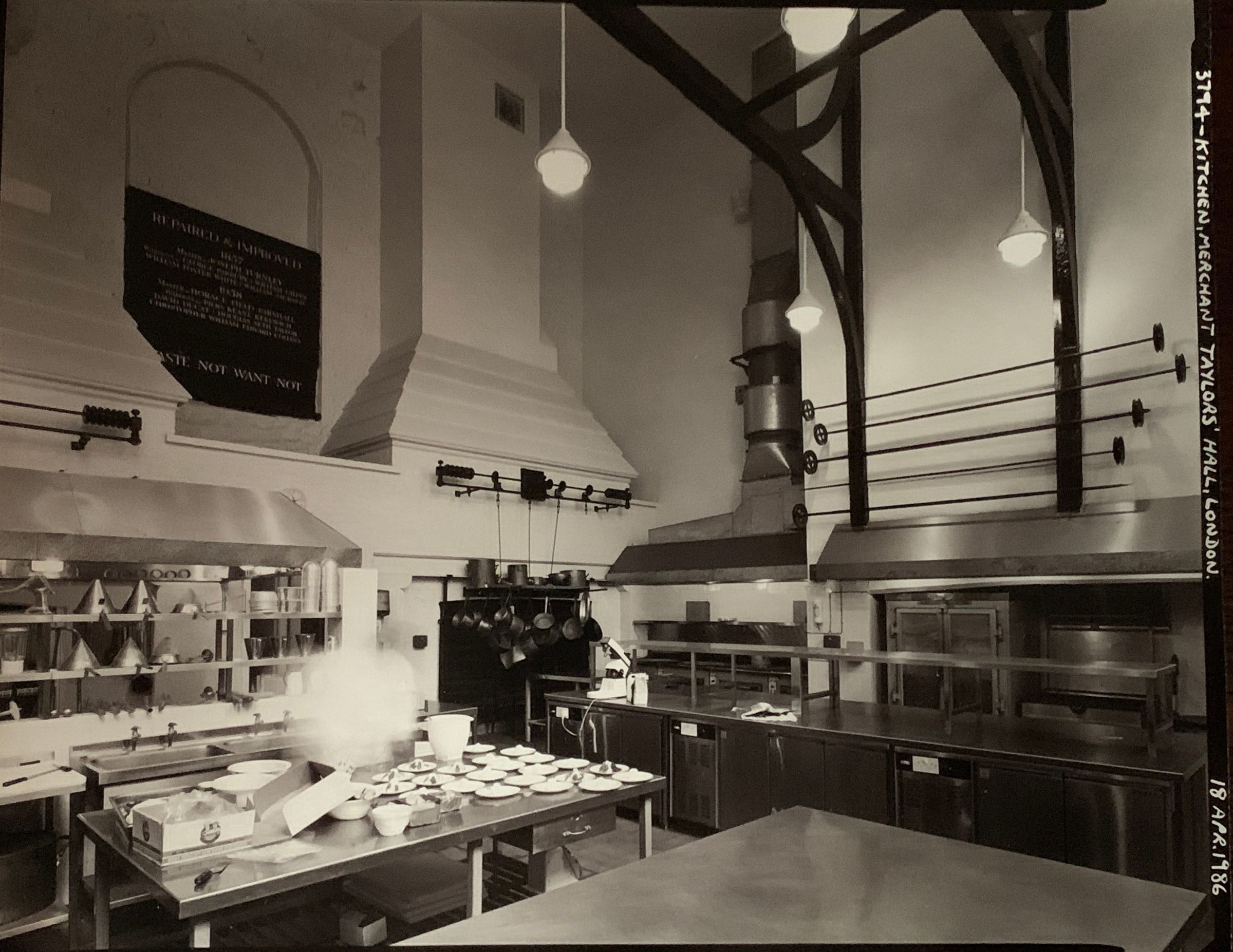
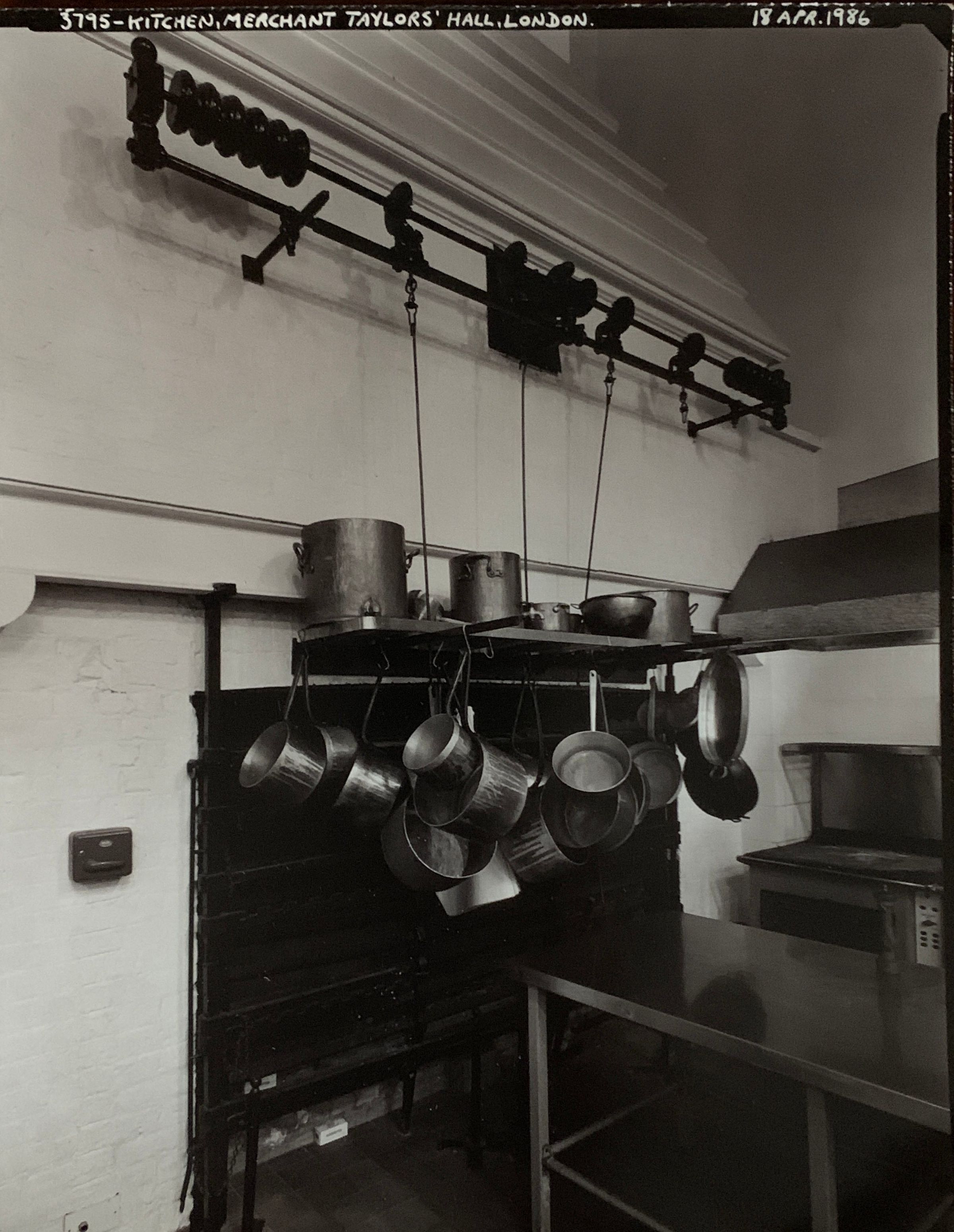
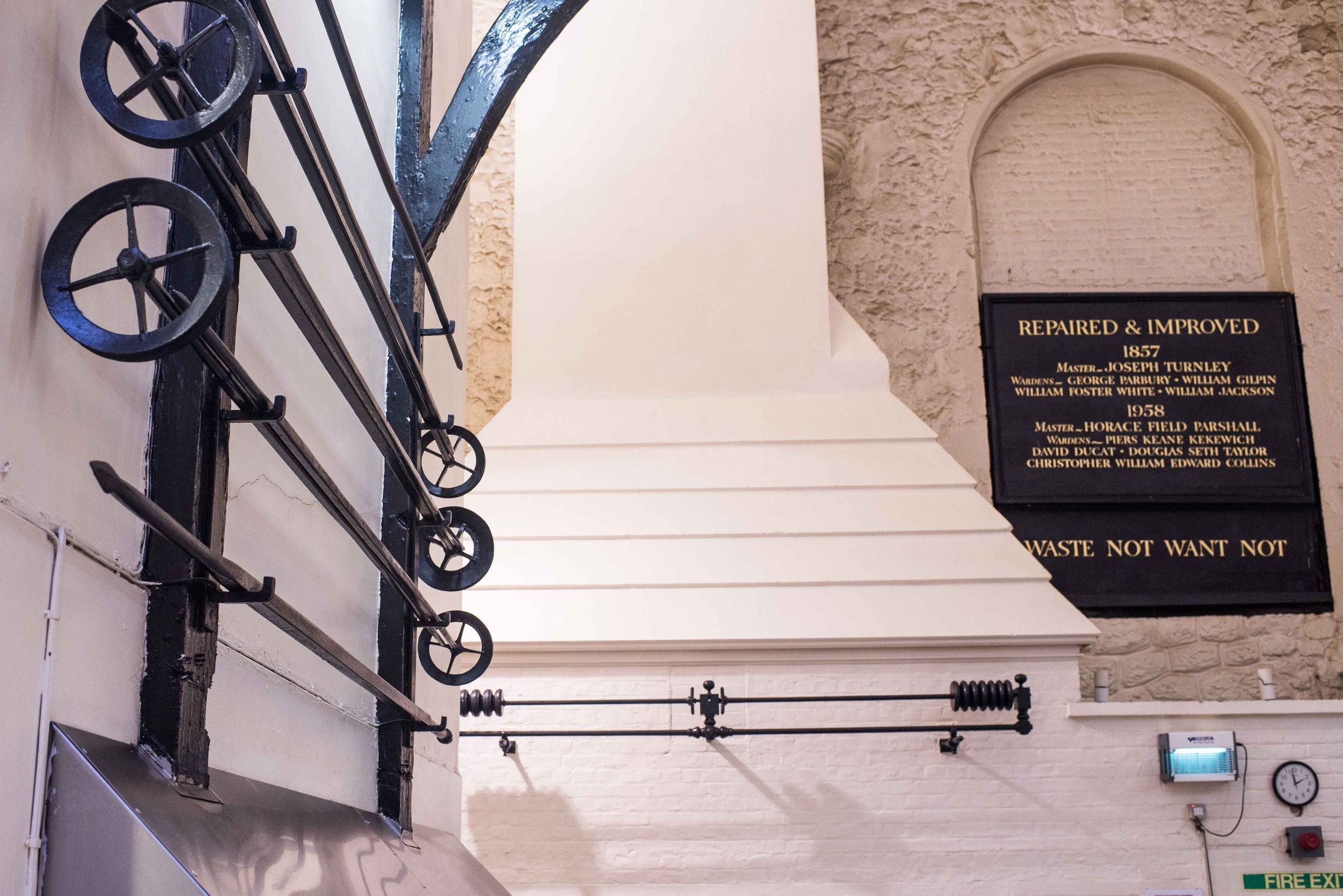
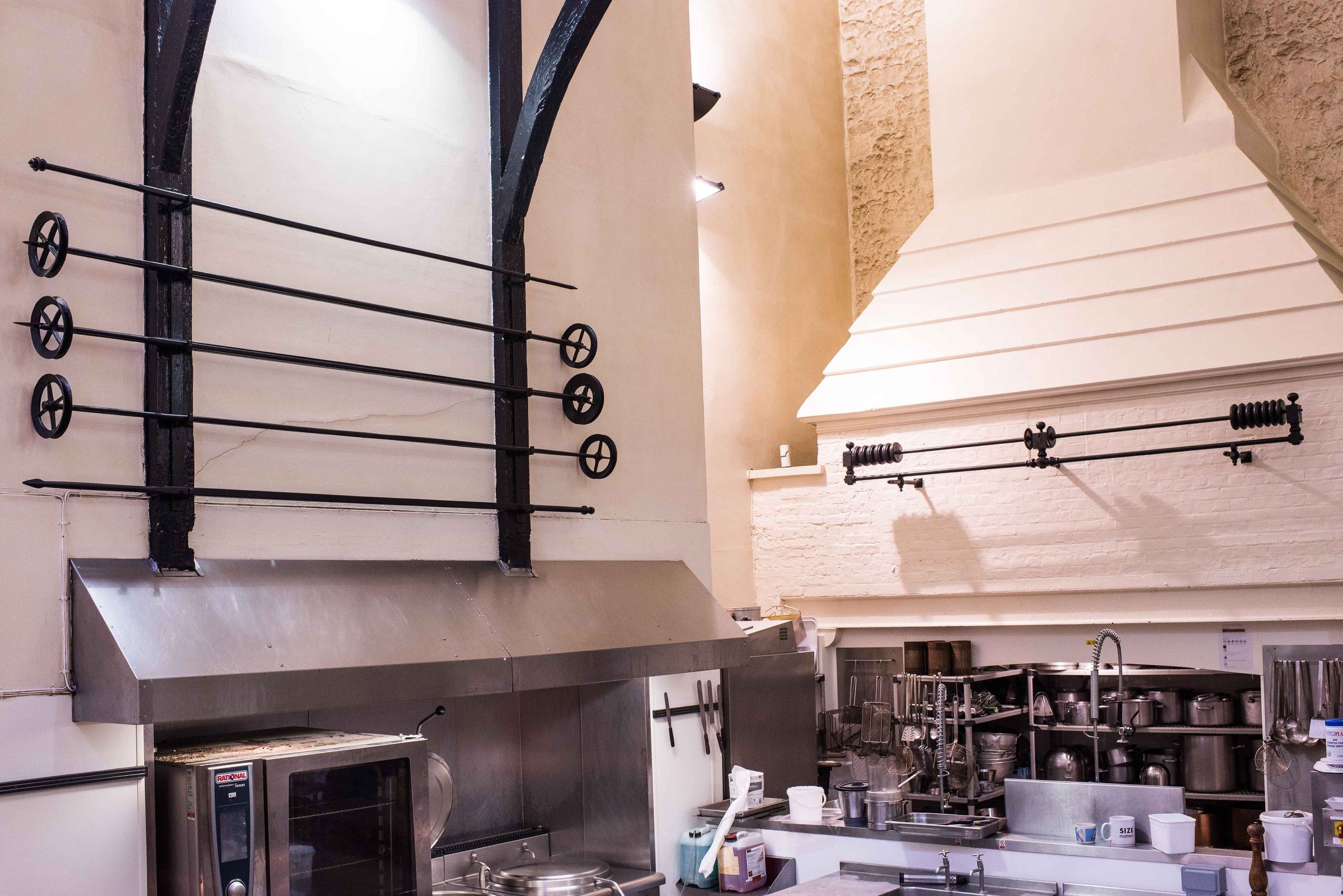
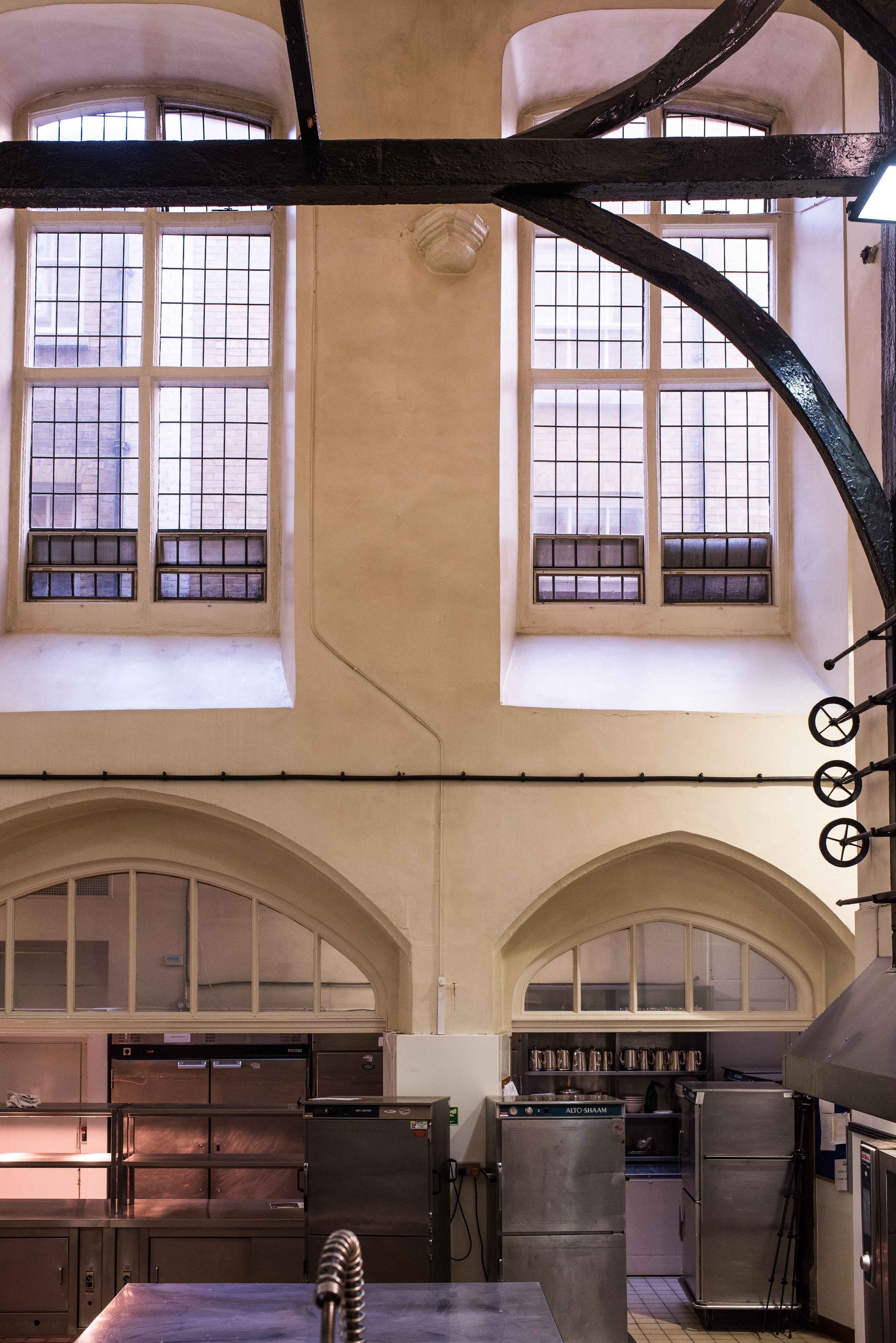
The Great Kitchen and Small Kitchen are rare examples of medieval kitchens still in active use. Both kitchens were restored after the Great Fire; escaped war damage; and have been modernised to 21st-century standards.
A kitchen was present on this site by 1388, and the present structure was built from 1425 onwards. The building of the kitchens at Merchant Taylors’ Hall indicates the importance the Company placed on providing good hospitality and hiring some of the greatest craftsmen of the day. The builders of the Kitchen were both employees of Henry VI. Thomas Mapilton was the King’s Master Mason, and his work survives at the south-west tower of Canterbury Cathedral. John Goldyng was King’s Carpenter from 1426 and designed the Great Kitchen’s wooden roof. A London carpenter, Thomas Winchcombe, carried out the work. The roof cost £300 and was largely paid for by Company members, including Humphrey, Duke of Gloucester, youngest son of Henry IV.
The Hall’s kitchen was copied from the kitchen roof at Kennington Palace, built by the Black Prince between 1353 and 1363. The Company accounts record that 18 pence was spent on “meat, drink and boat hire” to travel down the Thames to inspect it as a model for their own roof project. The original kitchen roof was destroyed in the Great Fire, though its stone corbels can still be seen high up on the walls indicating the original ceiling height.
Find Out More…
The Great Kitchen is entered through an arcade of three arches in the north wall. These are from the early 15th century. They were likely part of a covered walkway between the kitchen and the Great Hall. The west wall contains a small Tudor doorway, now concealed. This led to the pantry, which was on the site of what is now the Court Room. The two large fireplaces and spits in the east and west walls are 17th century, but likely occupy the same positions as their medieval predecessors. In the south-east corner, beneath the floor, is a stone-lined well, the original water supply.
A kitchen of this scale and quality enabled the Company and others to entertain on a lavish scale. The Great Hall was one of the largest dining spaces in medieval London and was often used for Lord Mayors’ Banquets until the early 16th century when Guildhall acquired its own kitchens.
On 16th July 1607, the Company were joined by King James I and the Prince of Wales for their annual Election Feast. The Company’s chef, Henry Beamond, was assisted by thirty-two cooks and forty-six labourers to prepare a feast of £40 14s of beef, £22 19s 4d of fish and £104 9s 3d of poultry (including ten owls). The Company purchased 60 lbs of potatoes – a rare new delicacy from the New World – and one thousand three hundred eggs! The diners were to be served by thirty-six hired professional waiters, supplemented by younger members of the Company.