Label
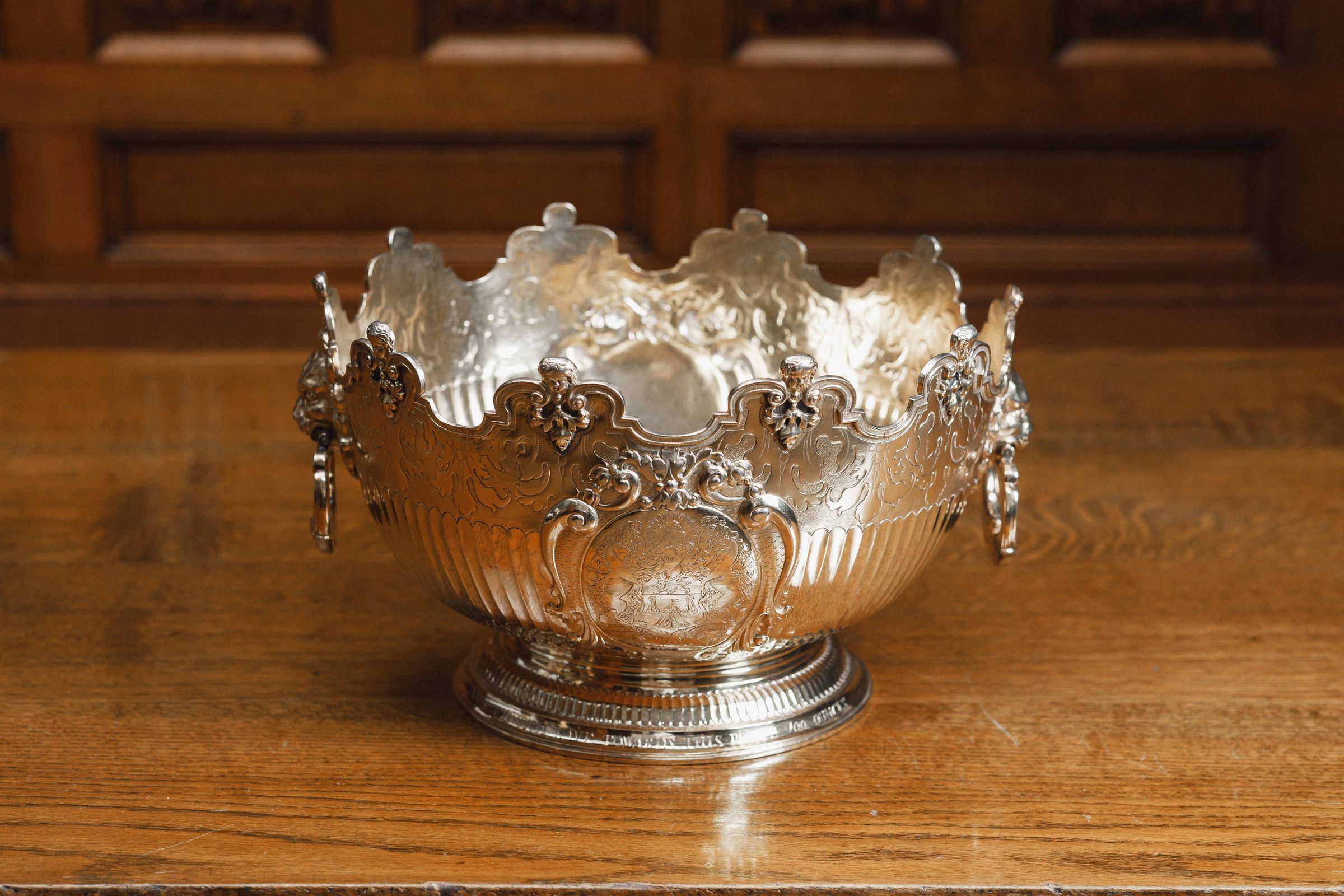
This piece of precious silver plate is one of the largest in the Company’s collection. It was made in 1700 by eminent silversmith, Anthony Nelme, whose work is also found at St. George’s Chapel, Windsor; the Bank of England; and the Victoria and Albert Museum.
This bowl-like vessel is circular in shape, with a diameter of 38 centimetres. Its wavy rim (known as scallop or notched edging) is decorated with the heads of cherubs, whilst its handles emerge from ornamental lions’ masks. The Monteith has the Company arms engraved on one side, and on the other the arms of Bowyer-Smith of Essex, above the words “James Smith Esq, Master, 1700”. James Smith was the Master of the Company when this project was begun, so he was honoured by having his arms engraved upon the Monteith.
Traditionally, Monteiths were used to chill wine glasses. The unusual scallop edged rim allows for wine glasses to ‘hang there by the foot so that the body or drinking place might hang in the water to cool them’. It is thought these pieces were called Monteiths in reference to a ‘fantastical Scot’ who wore a flamboyant scallop edged cloak, which is emulated in the rim of this type of vessel. Some Monteiths had detachable rims, so they could also be used as punchbowls.
Find Out More…
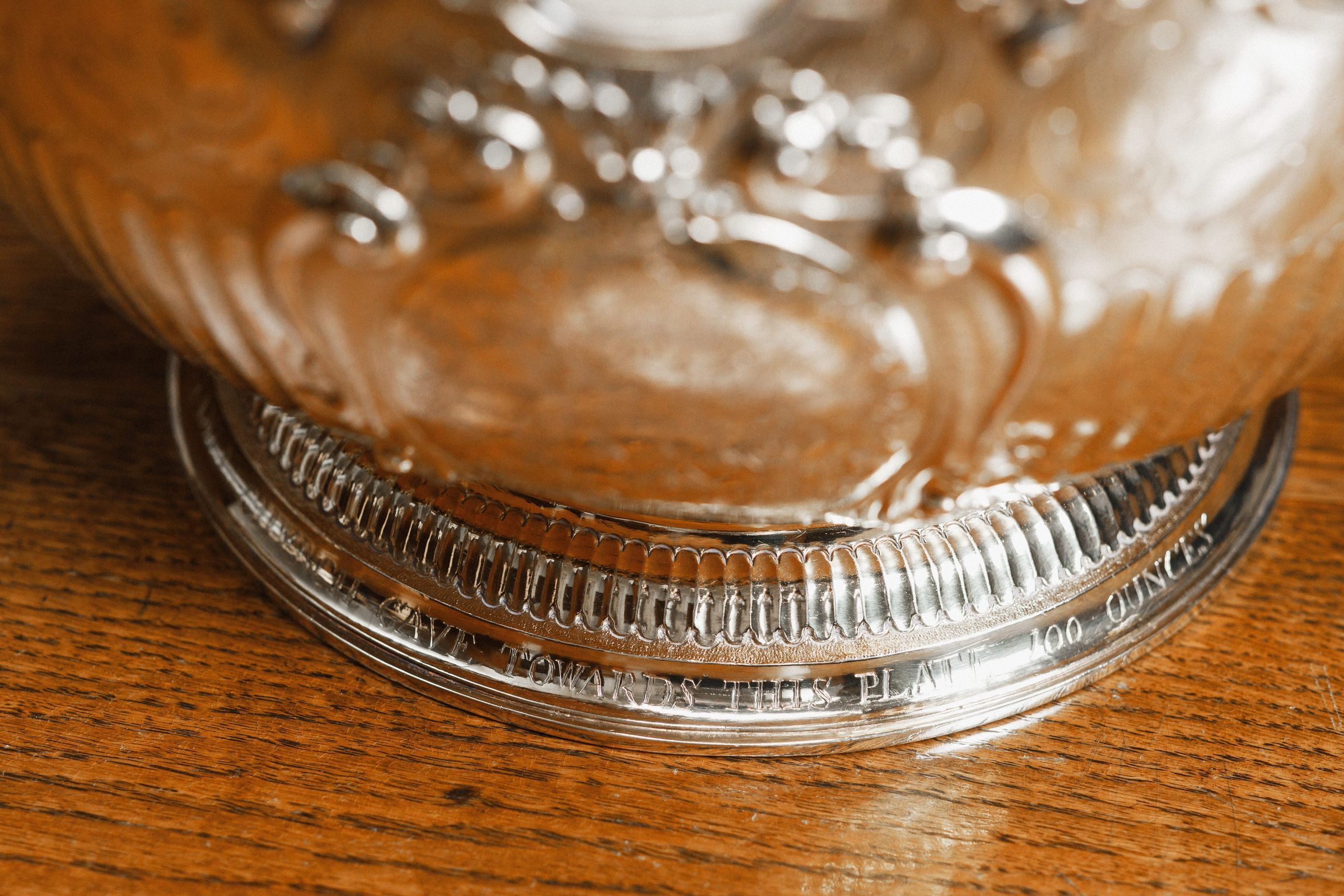
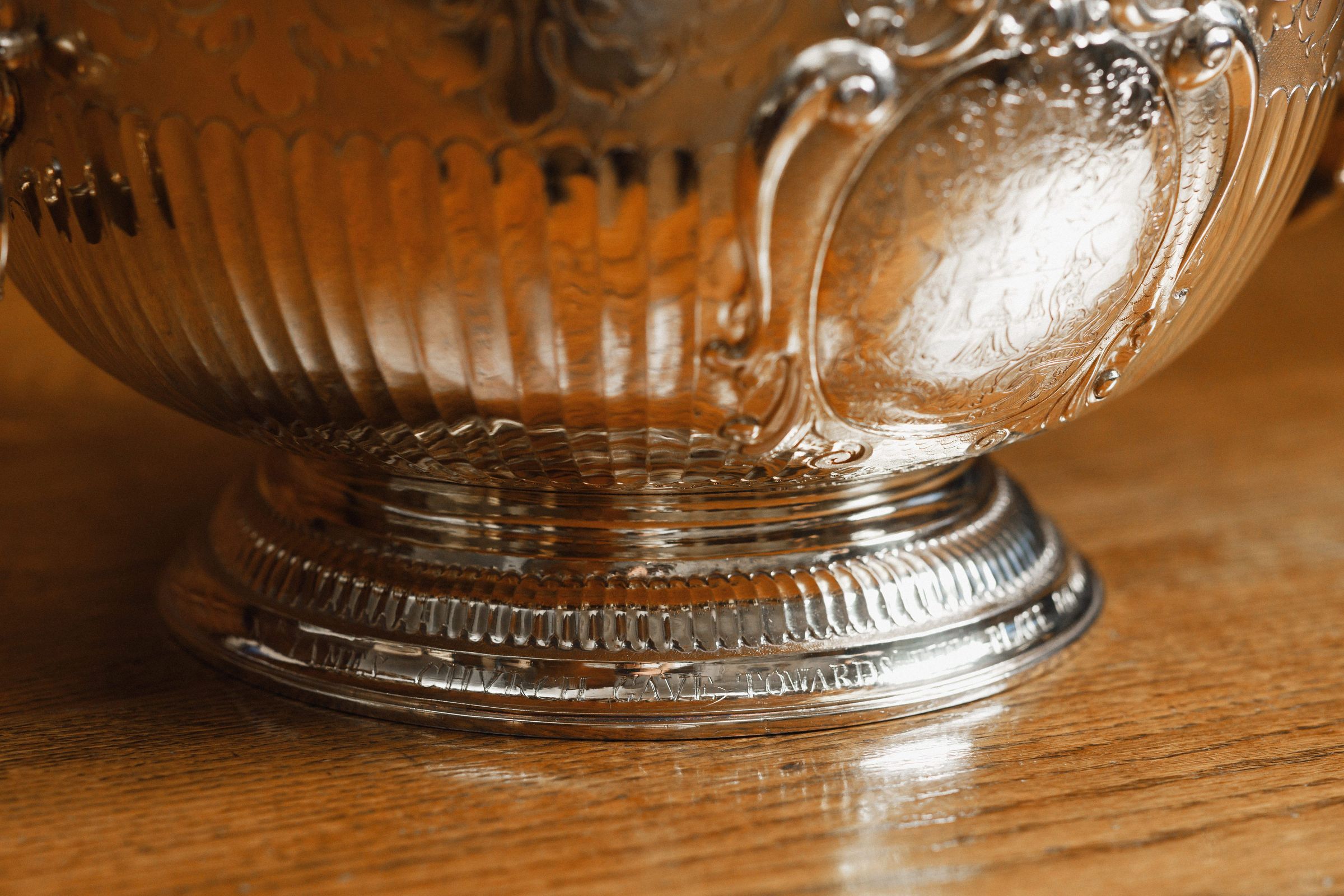
On the bottom of the Monteith is an inscription, “Mr James Church gave towards this plate 100 ounces.” The Monteith was made following a Company Court decision on 16th August 1700 to melt down various old plate that was no longer useful. This included two standing cups and two ewers. The standing cups had been presented in 1674 by James Church, a member of the Court, hence the inscription on the base of the Monteith.
It was standard practice in the days before banks and the stock market to treat plate as ready cash, in the form of bullion, and to dispose of it whenever money was needed. Old items no longer used, could be melted down and reworked to meet changing fashions, as was clearly done here. Pre-Fire London plate is extremely rare; so much was lost during the Civil War and the Great Fire, and through recycling.