Label
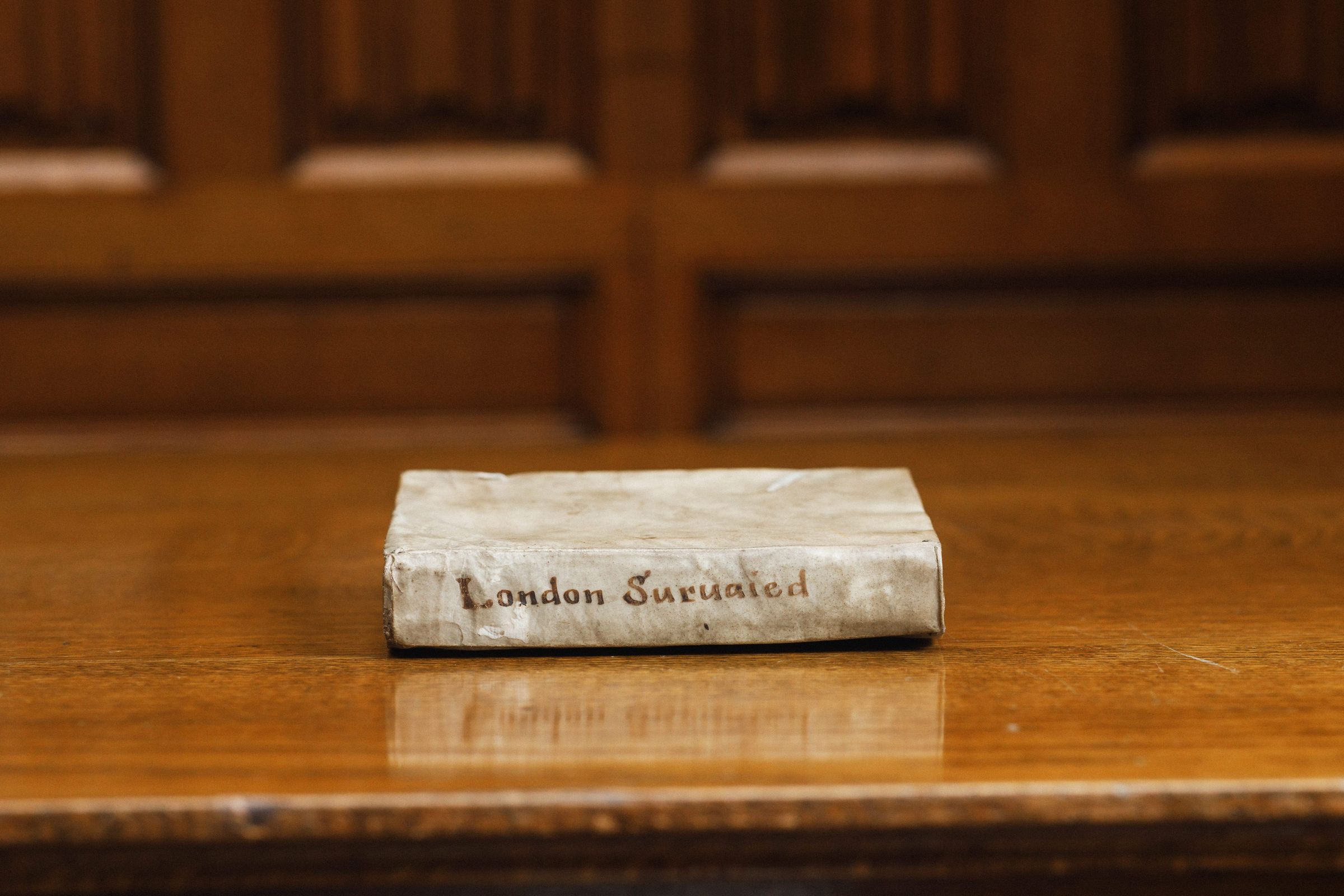
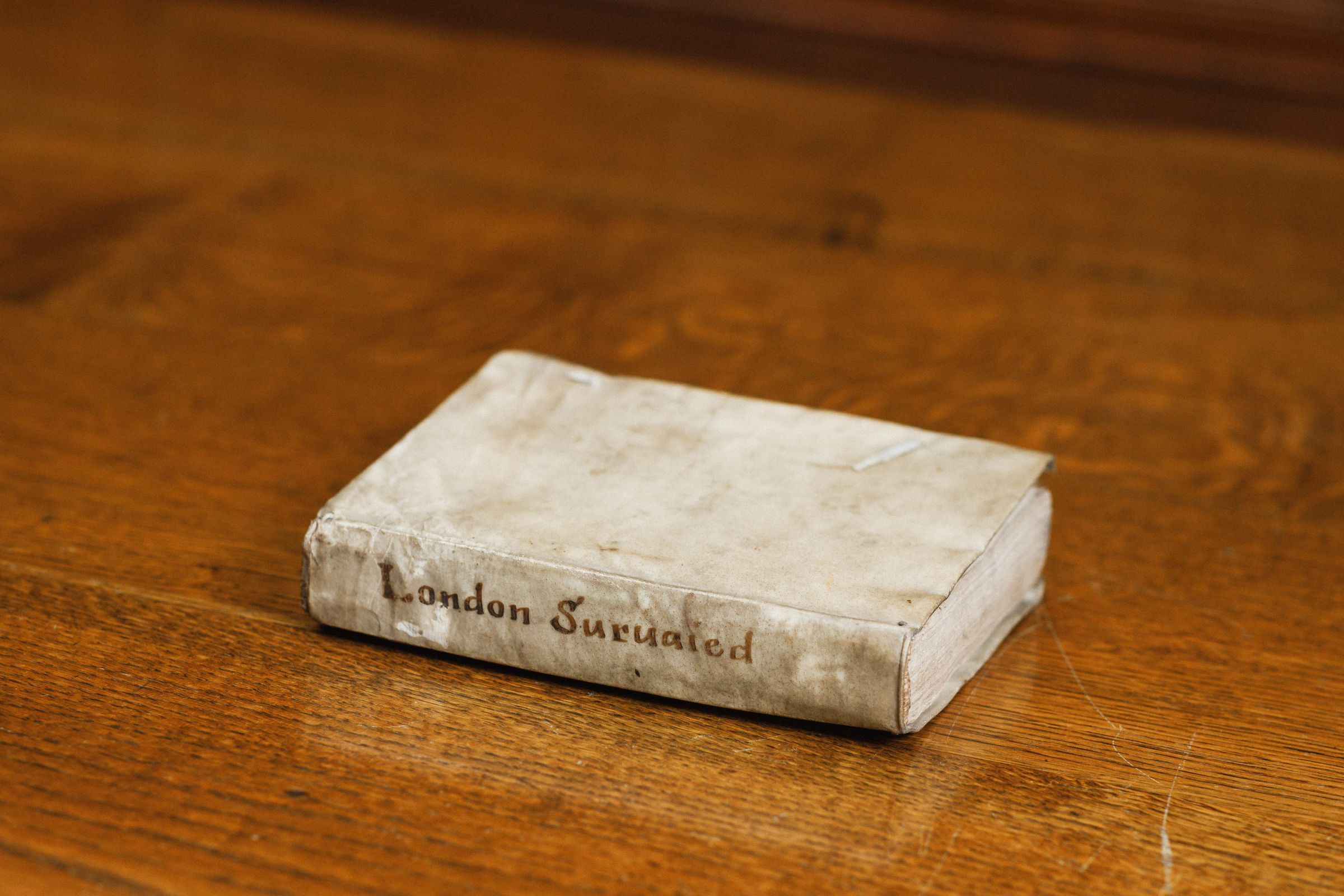
John Stow was a Merchant Taylor and Chronicler of London. He is heralded with pride as one of the Company’s most famous sons. The Library at the Hall contains a number of early editions of his written works.
Stow was probably born in 1525. He was apprenticed to John Bulley and admitted to the freedom of the Merchant Taylors’ Company on 25 November 1547. Not long after, he set up a tailors shop in Aldgate.
Once Stow gave up tailoring, he lived by his pen. He had an established reputation among his fellow-citizens and in particular, within his own Company. For most writers, living by the pen alone is to live leanly. The Company recognized this, and in 1578-79 we find a first reference in the Company accounts to a grant of £4 a year to Stow. In 1593, this sum was doubled through the generosity of Robert Dowe, Master in 1578, and this continued till 1600 when the Company raised the overall figure to £10 a year. Stow had good reason to give a copy of his Annales to the Merchant Taylors.
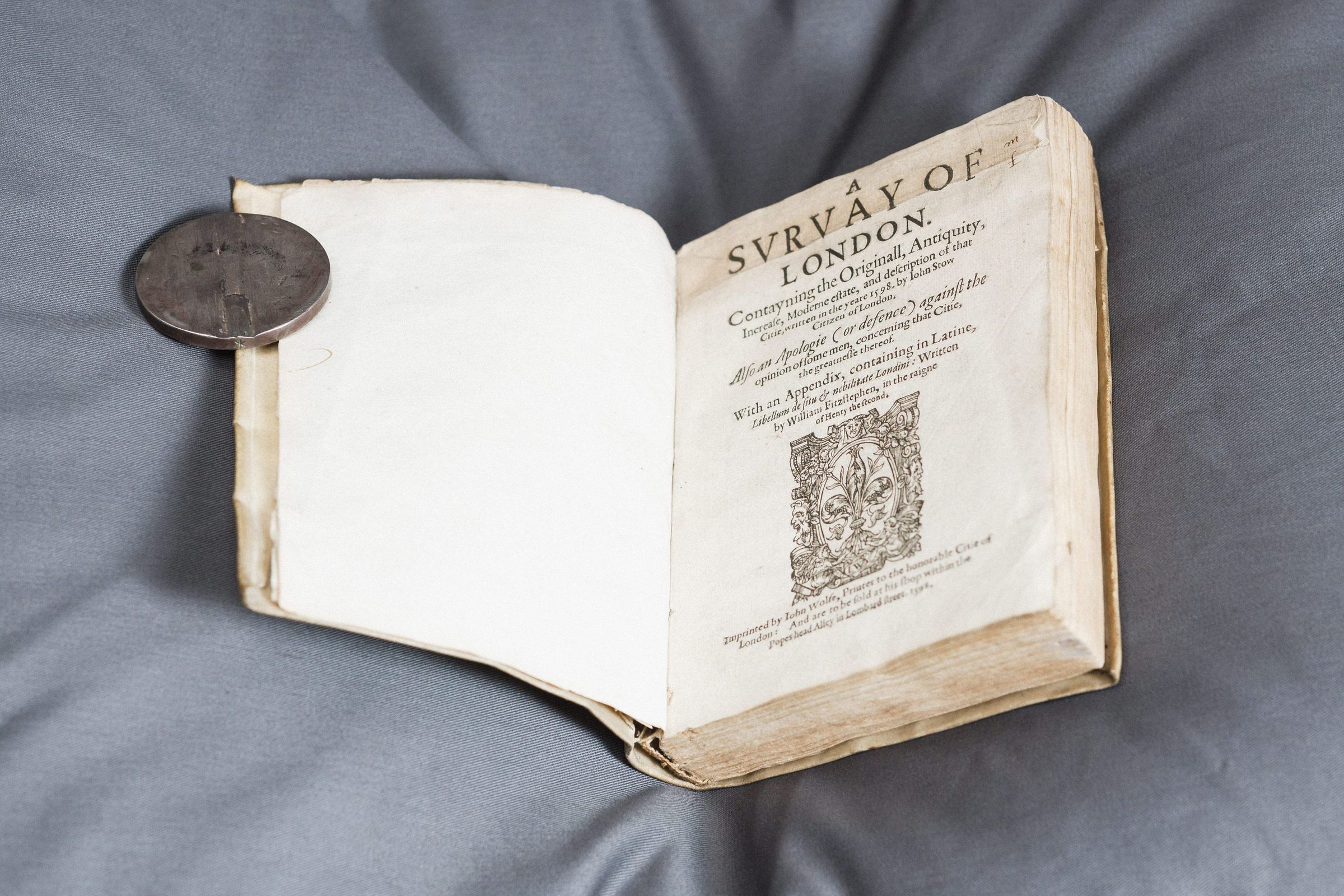
Supported by the Company, as old age advanced him, Stow began his masterpiece, A Survey of London. It was published in 1598, with a second edition following in 1603. It is an extraordinary work. Starting with some general chapters on the antiquity of London, on its water supply and geographical position, and on the ‘Honour of Citizens and worthiness of men in the same’, he goes on to describe it in detail, ward by ward and street by street, so that as we read it we are transported back to the sixteenth-century City.
Stow not only tells us about what he could see as he walked the streets in the 1590s; at the end of a long life, he packs in the contents of an unusually retentive memory, and adds tales and details that he was told by his grandparents’ generation.
Stow’s widow, Elizabeth, erected a monument to her husband in St Andrew Undershaft, their parish church. A full length marble figure of the antiquary sits at his desk in a stone niche, writing away, busy perhaps with his survey of the city he loved so well.