Label
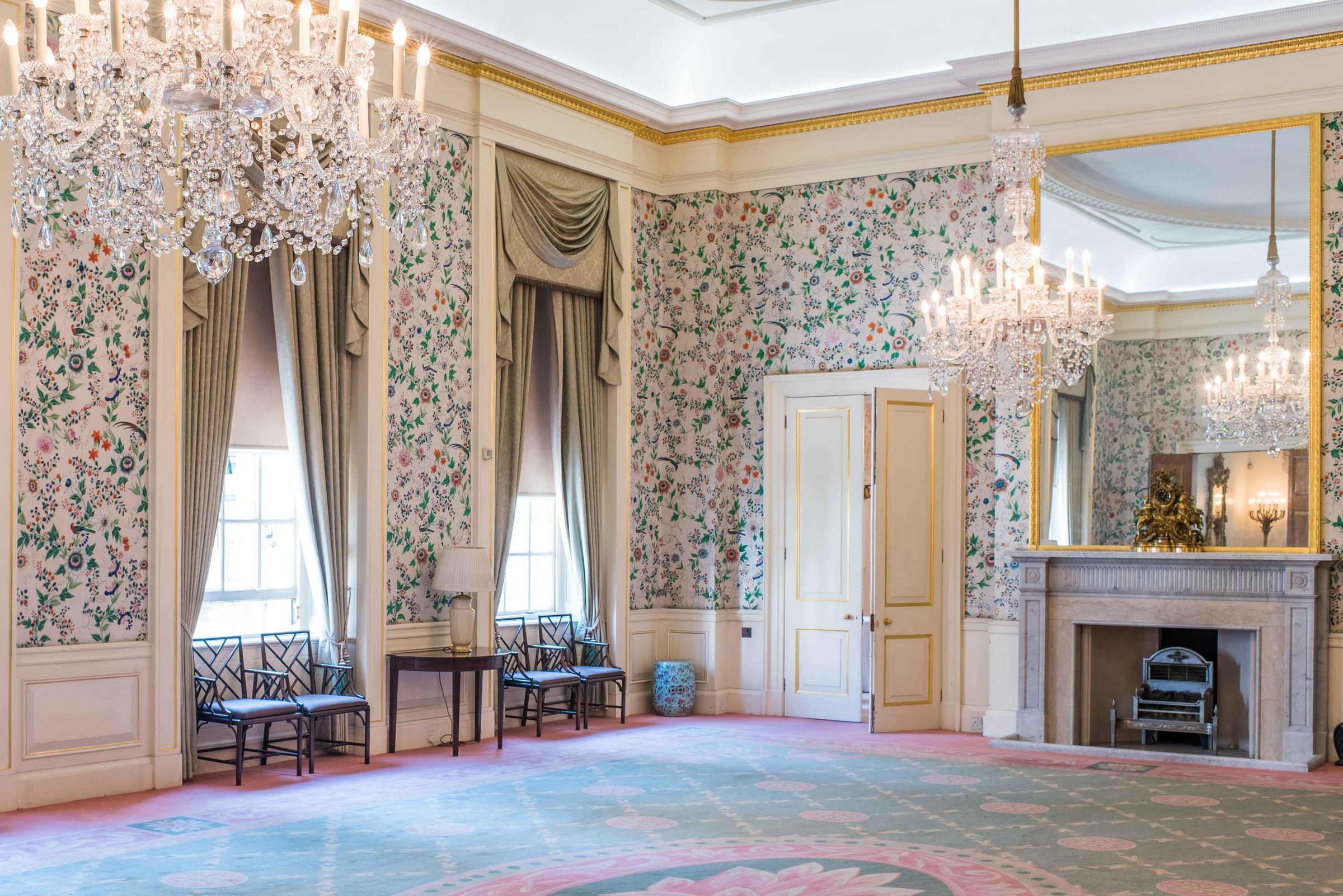
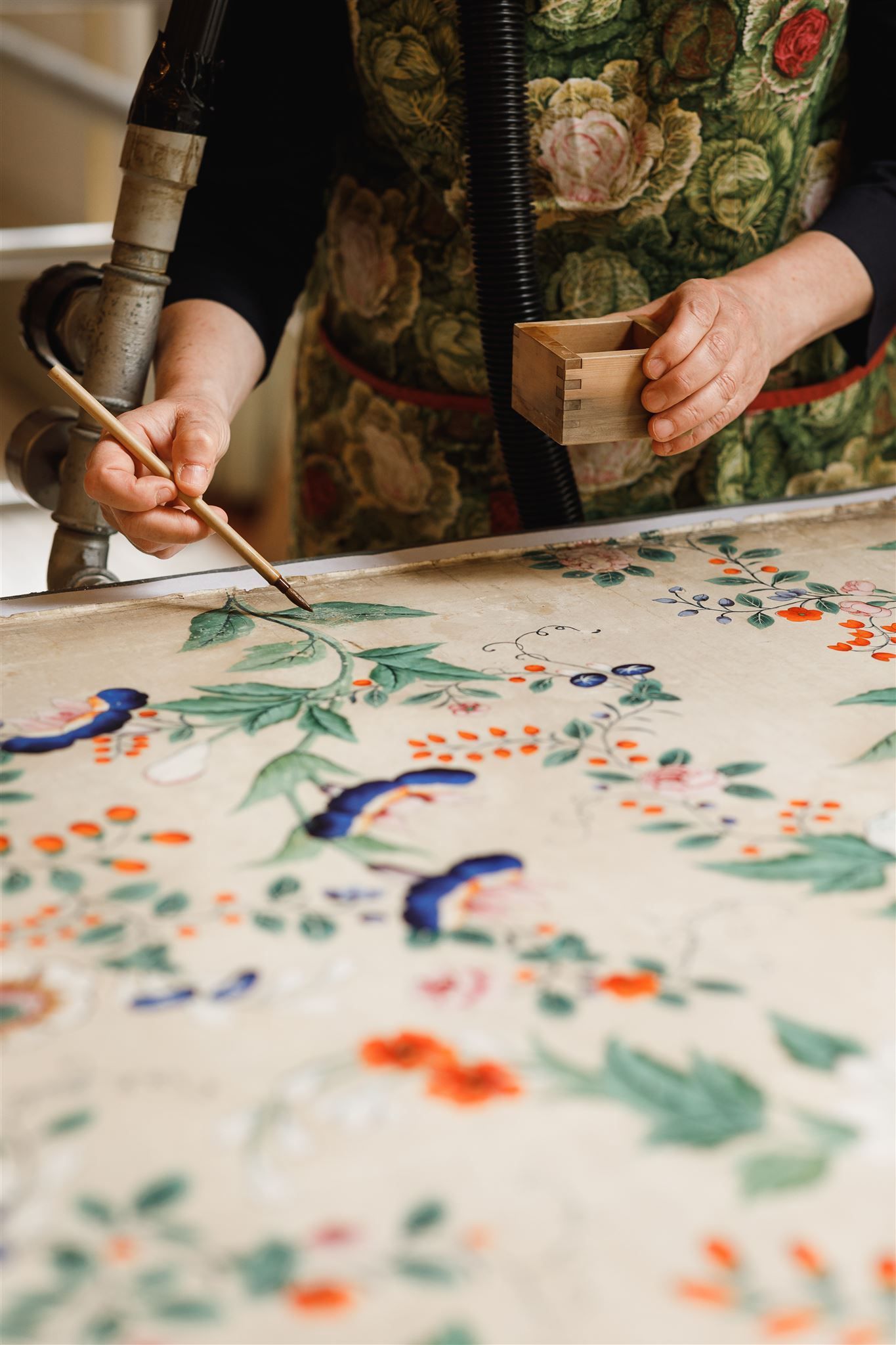
The hand-painted Chinese wallpaper in the Drawing Room is exquisitely preserved. It is not pasted directly onto the wall, but is stretched across wooden braces. The Company purchased the wallpaper at auction at Sotheby’s on the 31st May 1957, during the reconstruction of the Hall after the War.
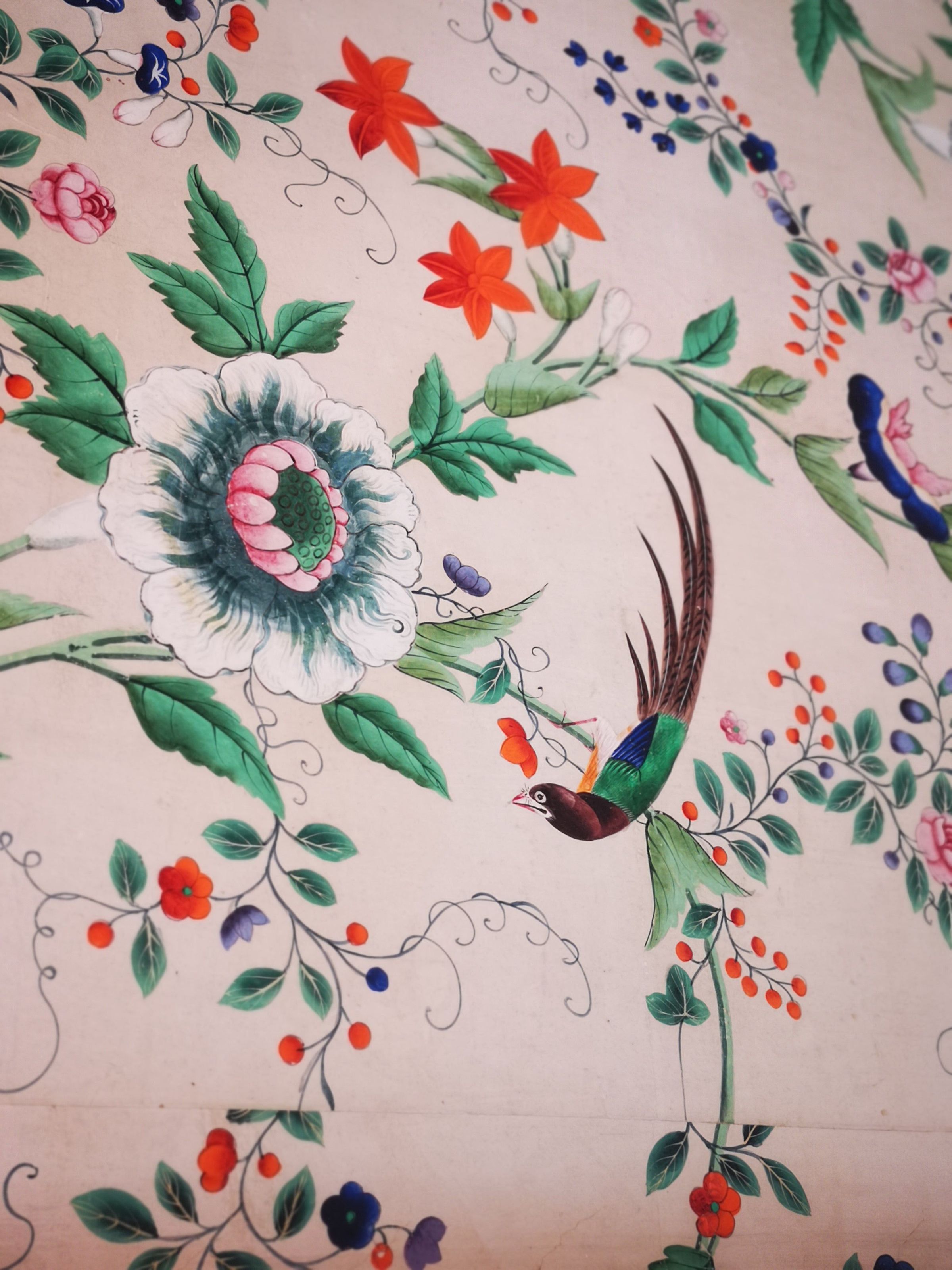
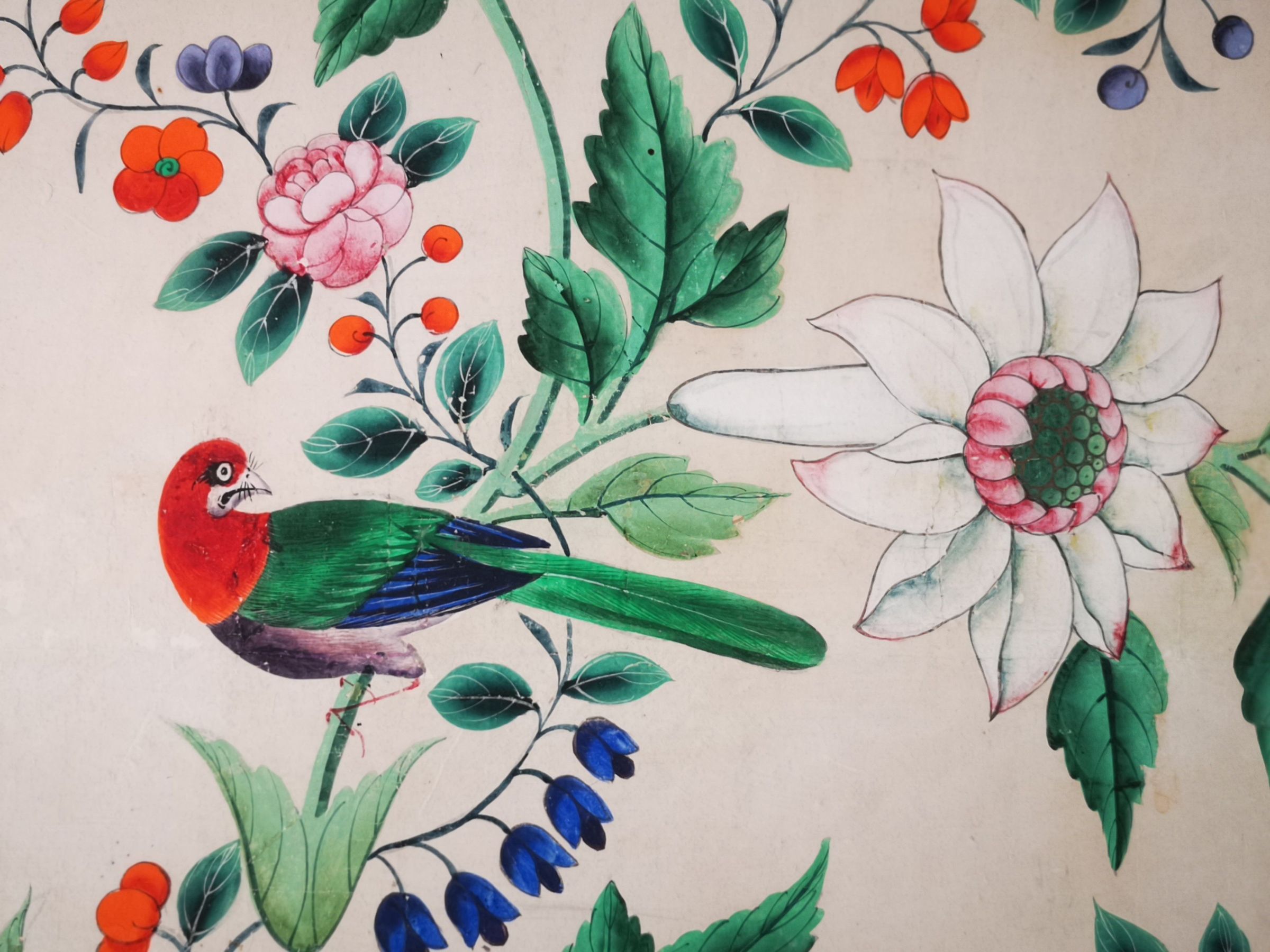
The Sotheby’s catalogue described it as: ‘A superb set of Chinese painted wall hangings, comprising forty-six panels of brilliant colouring on a white ground ; the design with brightly-plumaged birds perched on leafy stems bearing a great variety of large and small flowers, the leaves and some of the flowers with gilt veining. Each panel approximately 12 ft high by 3ft 10 inches wide. Chia Ch’ing [ie 1796-1820].’
WML (‘Mac’) Escombe had been Master in 1941, when the Hall was in ruins. In May 1957 he was a member of the Reconstruction Committee, and soon to be Master for the second time. He heard about the wallpaper, and persuaded the Company to bid. The hammer price was £2,500, a substantial sum but much less than expected. WML Escombe’s apprentice, Company Archivist Stephen Freeth, recalls the pride his Master felt for his involvement in the project.
Such wallpaper was made in China for export to Europe. This example was imported from the supplier, Wing Ts’un, based in Canton. Early designs showed birds and foliage. Later designs were much more complex, with detailed everyday scenes of people going about their business. It was hand-made, probably from flax pulp, with none of the harmful chemicals and microscopic metal fragments that quickly degrade modern machine-made paper.
Find Out More…
Other examples of Chinese hand-painted export wallpapers can be seen at Nostell Priory, Yorkshire (National Trust), where it was installed by Thomas Chippendale in the mid 18th century for Sir Roland Winn; and Brighton Pavilion, for the Prince Regent, completed in 1822.