Note Type
Techniques UsedNote
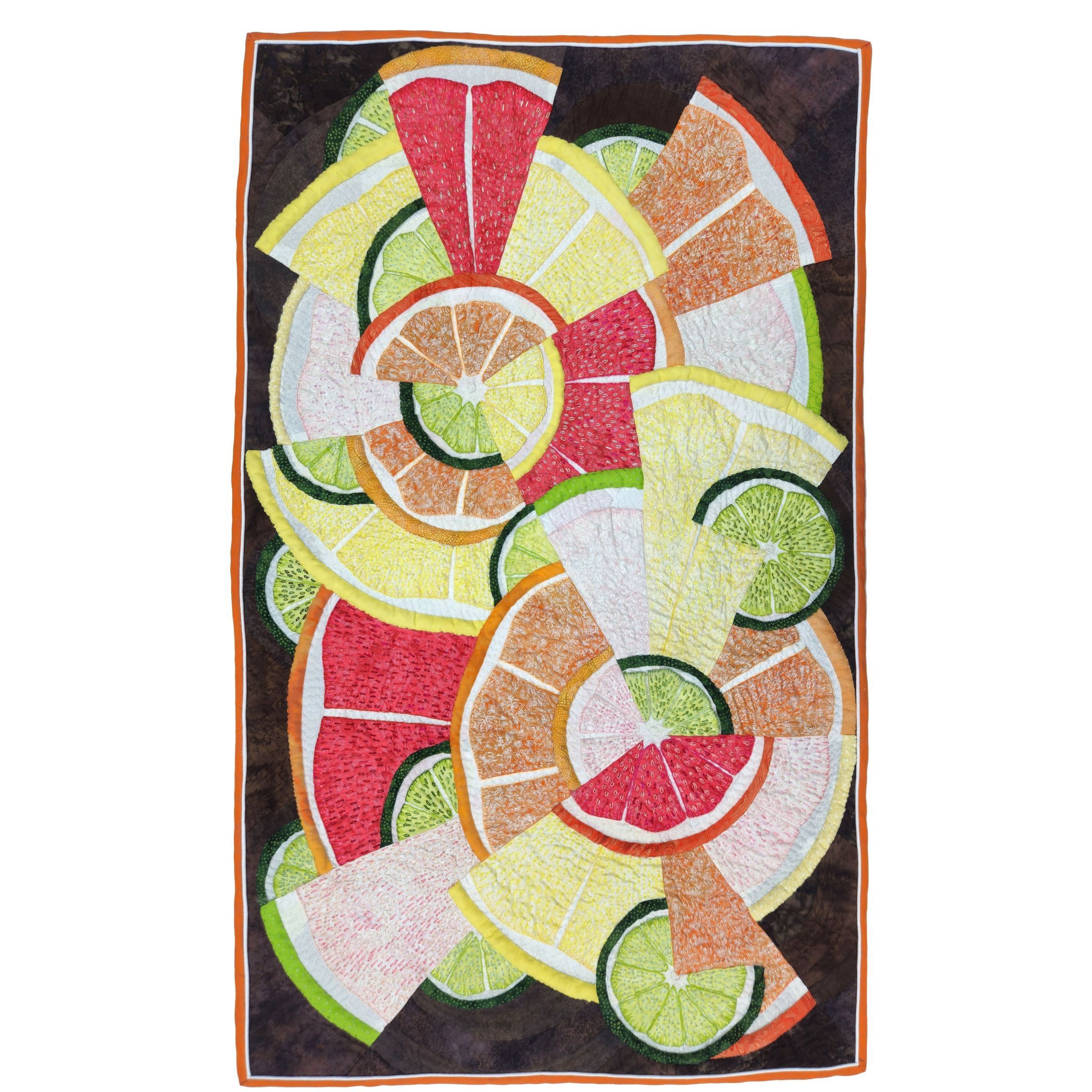
Custom Templates (making a template for each citrus segment using compass, protractor & rules from original design).
Machine piecing (connecting citrus segments together and assembling the rays & arcs that make up the brown background).
Hand applique (attaching citrus slices to white background, attaching slices to brown background, and assembling the "arcs" in the background).
Hand dying (re-coloring various brown patterned fabric scraps with brown RIT dye to give them more similar hues).
Salt-texturing (scattering Epsom salts on still-wet brown dyed fabric scraps to give them a subtle but interesting background design).
Trapunto (stuffing citrus rinds with wool roving to give them a raised appearance); Hand embroidery (quilting throughout the citrus segments using the single lazy daisy (detached chain) embroidery stitch -- note that the "traveling stitch" between single chains is hidden in the batting so as not to show in the back).
Hand quilting (sewing straight stitches to fill in citrus membranes & pith, as well as in brown background).
Piping (inserting cord into folded white fabric to make custom piping for the inside of the orange binding).Note Type
Materials UsedNote
Michael Moore's Fairy Frost collection of 100% cotton fabrics with pearlized metallic accents were selected for their “juicy” look and were used to make the Dresden plate/citrus segments representing limes, lemons, naval oranges, blood oranges and pink grapefruits.
White-on-white cotton fabric was used in between the Dresden plate segments to represent the rough, pithy citrus membranes and rinds.
Various brown cotton fabric scraps were hand dyed with brown RIT dye and textured with Epsom salts to be pieced into the scrappy background. This was done to make the background more uniform (so it truly recedes into the "background) but more interesting when examined more closely).
White pearl cotton was used to quilt the white membranes, pith, and central column of each citrus slice. This was selected because the stitching would help simulate the rough texture of these pithy membranes.
Ed Mar 100% rayon Brazilian custom-dyed embroidery thread was used to quilt the membrane segments with single lazy daisy (detached chain) stitches. This thread was selected for its sheen, which enhances the overall “juiciness” of the segments, and the stitch was selected to simulate the individual juice sacs in each segment.
Wool roving was used to stuff the citrus rinds and give them a raised appearance (trapunto).
Thin cotton cord was used to make custom white piping to add inside the binding, finishing the quilt with its own "rind."