Label Type
Artist CommentaryLabel
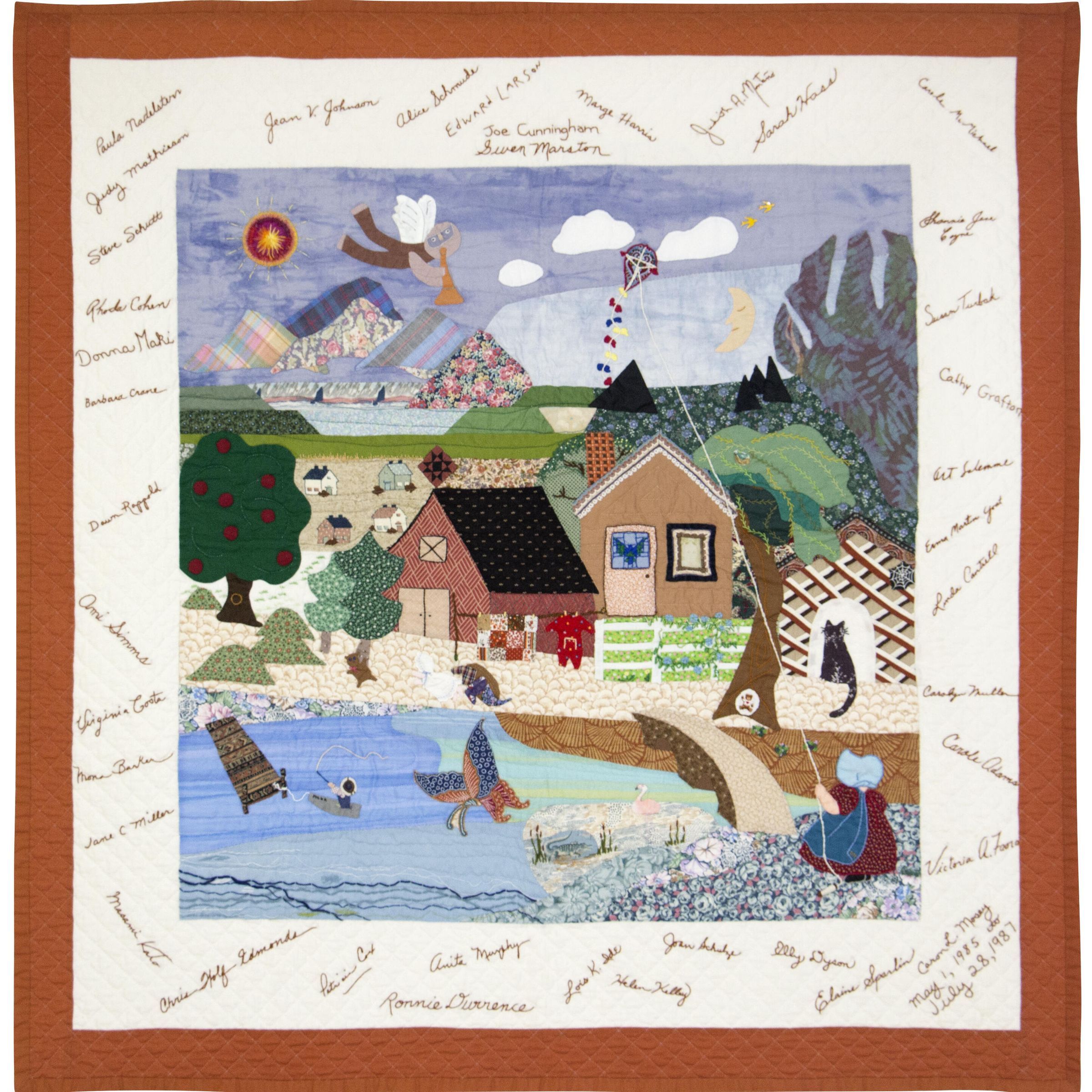
The making of this quilt was organized by Caron L. Mosey, author of America’s Pictorial Quilts. Caron asked the various quiltmakers whose work had appeared in her book to contribute their work to a progressive quilt. The top traveled from quilter to quilter, with each one adding some shapes and his/her signature in the border. Quilting was done by Caron L. Mosey, using a pattern designed by Ed Larson. Each quilter added shapes, working with what was suggested by the pieces already in place in the quilt. Often the next quilter interpreted those shapes in a different way, moving the design in a different direction. The result of this activity was an interesting project and an interesting quilt.
Carolyn Muller
Lois K. Ide
Helen Kelley
Pat Cox
Barbara Crane
Paula Nadelstern
Dawn Rappold
Rhonda Cohen
Victoria Faoro
Susan Turbak
Lee Farrington
Jean Johnson
Masami Kato
Linda Cantrell
Elly Dyson
Art Salemme
Emma Martin Yost
Carole Adams
Carole McMichael
Marge Harris
Anita Murphy
Alice Schmude
Jane Miller
Moneca Calvert
Virginia Costa
Joan Schulze
Judy Mathieson
Roberta Horton
Chris Wolf Edmonds
Elaine Sparlin
Ronnie Durrance
Mona Barker
Cathy Grafton
Ed Larson (with Sarah Hass)
Steve Schutt
Donna Maki
Gwen Marston
Joe Cunningham
Shannie J. (Jane) CoyneLabel
The Progressive Pictorial Quilt
In May 10,1985 I sent a 44-inch square of muslin through the mail to start a "chain quilt" amongst the quilters who appear in my book AMERICA'S PICTORIAL QUILTS. Each quilter was instructed to add something to the pictorial center portion of the quilt (which I had started with the solid-brown house on the right), and then sign their name in the border. When finished, each quilter would check their name off the list and forward the quilt top to the next name listed. So that I could keep track of the quilt's progress, I asked every fifth quilter to notify me by postcard when they received the quilt. As of August 7th, Carolyn Muller, Lois K. lde, Helen Kelley, Pat Cox, Barb Crane, Paula Nadelstern, Dawn Rappold, Rhoda Cohen, Victoria Faoro, and Susan Turbak had sewn something to the traveling quilt. The quilt was returned to me periodically so that I could mark its progress on film. Each time I had the quilt in my hands, I embroidered the penciled names, stretching out my least-favorite activity: embroidery.
By late September 1985 it had been some time since I had heard anything about the quilt, and I began to worry: something was delaying the quilt. Next in line were Lee Farrington, Jean Johnson, and Masami Kato, a Japanese quilter living in New Jersey. I was able to track the quilt to Jean, who gave me the date she shipped it off to Masami. Unfortunately. Masami moved back to Japan in mid-August, giving me a few short days' notice of her move. I didn't have enough time to contact Jean Johnson before she sent the package to Masami at her New Jersey address in mid-August. I frantically wrote to the Post- master in Cresskill, New Jersey, explaining how important it was that we locate the missing package. He then called Jean to tell her that he had no forwarding address for Masami. He was kind enough to write me with the same information, and hoped that somehow we could locate the package. What a nice man! On October 5th at 9:30 a.m. I received a phone call from Masami's husband in Japan (Masami speaks little English). She had received the quilt top, was working on and would send it to the next name on the list tomorrow! We are still not sure how the package managed to find its way to Japan without a forwarding address, but this happy event gives me a better feeling towards our postal system! Masami forwarded the quilt to Linda Cantrell, and it in turn visited Elly Dyson, Art Salemme, and Erma Martin Yost. Erma sent the quilt to Carole Adams, who was away on an extended Christmas holiday. Again, panic set in when I didn't hear anything for several weeks. After several phone calls I caught Carol at home, and she hurried the quilt off to Ami Simms. Other quilters in line were Carole McMichael, Marge Harris, Anita Murphy, Alice Schmude, Jane Miller, and Monica Calvert. The timing for the quilt could not have been worse for Monica, as reached her as she was leaving to receive her award for the Statue of Liberty contest. With her busy schedule over the next few months, she opted to pass the quilt along to the next quilter on the list instead of delaying its progress. Virginia Costa was the lucky recipient of the quilt after Monica. It then went to Joan Schulze. Judy Mathieson, Roberta Horton, Chris Wolf Edmonds, Elaine Sparlin, Ronnie Durrance, Mona Barker, Cathy Grafton, and Ed Larson. Because Ed is a designer who does not sew, he sketched two patterns for his portion of the quilt and pinned them to the spot where they were to be sewn. He then sent the quilt to Sarah Hass. Steve Schutt's busy college life delayed the quilt for a while, but he added his part and passed it to Donna Maki in Michigan. I felt safe, as the quilt was now in my home state.
On its return trip home, it visited Beaver Island, home of quilters Gwen Marston and Joe Cunningham, and my friend Shannie Coyne in F;int, Michigan. Home to mamma! With all the little delays from the postal system and the hectic day to day life of all the quilters, it was close to two years before the quilt made its way to the end of the list of names. Only two quilters failed to add something to the quilt, and the United States Postal System came through without losing the quilt top. Using Ed Larson's patterns, I completed the quilt top and put it in my frame with cotton batting (I always wanted to try cotton batting. and chose this small quilt to experiment on). What a mistake!
As any quilter knows, quilting must be closer together when you use cotton batting. So, I could not "make do" with small amounts of quilting. Close rows of quilting stitches were made in the borders and open areas on the picture. Outline quilting followed the shapes of random appliqued pieces. In many areas, I quilted through roughly 6 layers of fabric PLUS batting and lining! Ouch!
The Progressive Pictorial Quilt is not a serious quilt, it is the result of a fun experiment between 43 quilters with similar interests. The design on the quilt is not meant to be scrutinized for any visual inaccuracies, as each quilter was limited by the previous artist's contributions. Consider what started out to be a church (left-hand building). Someone pieced a perfect patchwork steeple, following their tradition of placing a religious symbol on each of their quilts. But, then someone, not knowing the previous quilter's intent, turned the church into a barn! A gazebo was turned into a dog house, which now is home for the giant black cat. An alligator and a pink flamingo share the same waters, and we hope they don't distract the fisherman in the boat named Mona. Some little girl dropped her doll and spilled a laundry basket of clothes, and a teddy bear is hiding in the trunk of the tree. Maybe it is the girl who is peeking out of the window in the house! Or the sunbonnet girl who's flying her kite! And who's long underwear are hanging on the line?
Caron Mosey