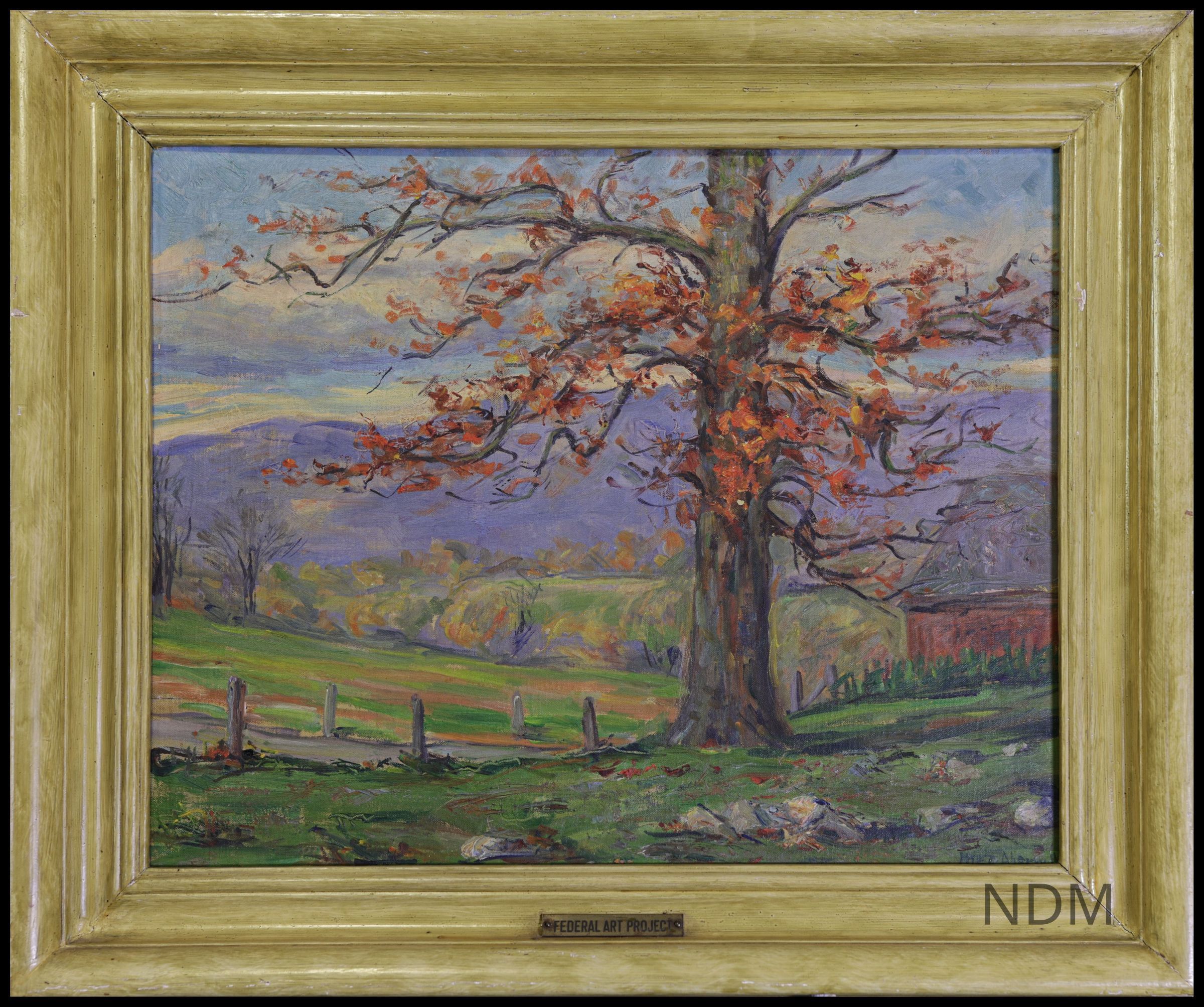
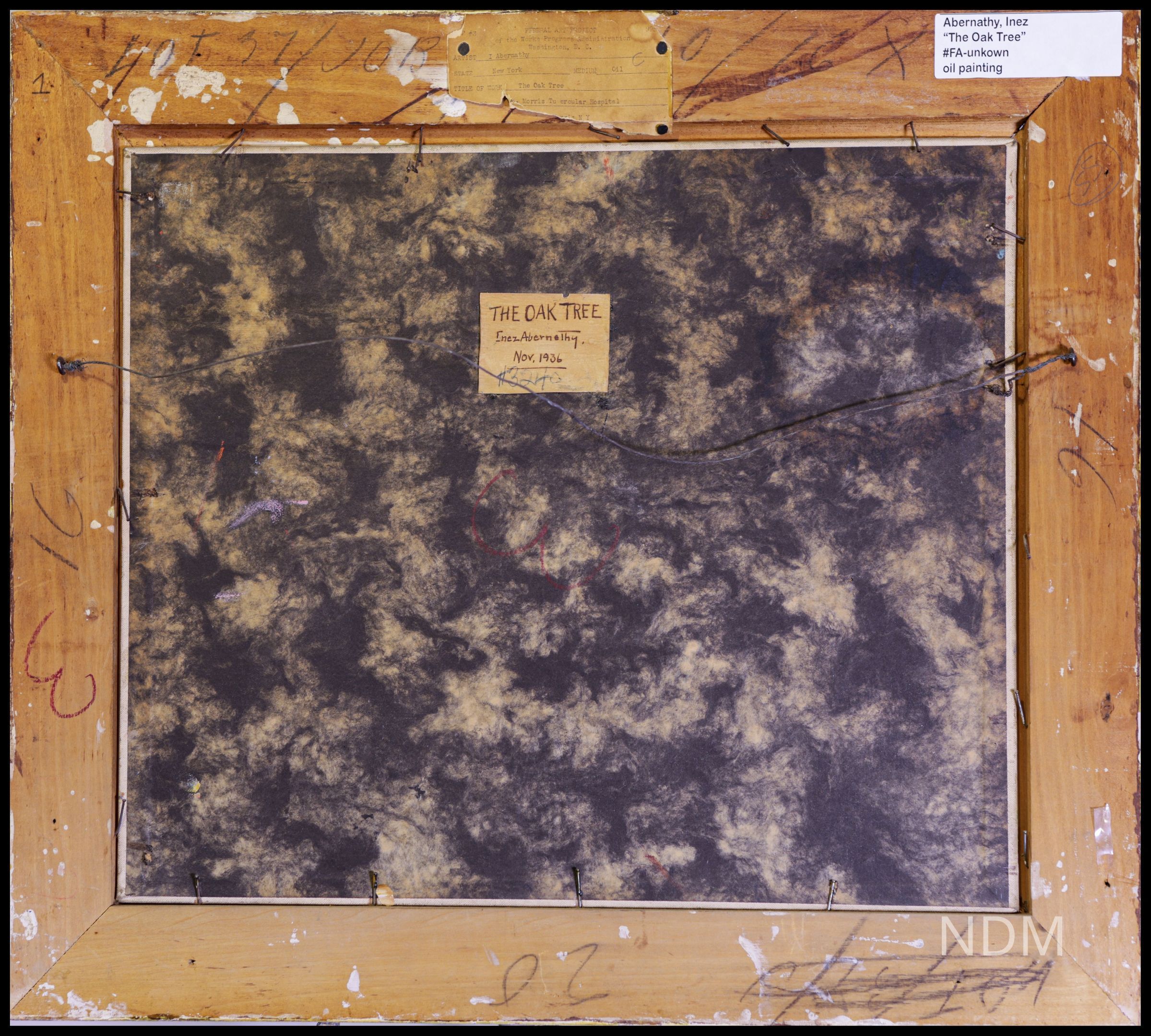
Abernathy, Inez (1873-1956) The Oak Tree
Overview
Tags
Oil Painting, LandscapeDescription
On a purely aesthetic level, this portrayal of rural farm life in autumn is quite clearly done in a painterly matter: quick brushstrokes with a specific choice to omit most detail. It can be assumed that the light-handed application of paint was a specific technique chosen to represent the image’s literal depiction of a calm day in autumn. In the context of its allocation to a tuberculosis sanatorium, the oak tree itself can be analyzed as a symbol of strength--a diagnosis of the disease in the 1930’s meant a slow death.Collection
Mt. Morris TB Hospital FAP CollectionArtwork Details
Medium
OilMade/Created
Artist
Abernathy, InezDate made
Nov 1936Dimensions
Height
20-1/2 inWidth
16 inCondition
Overall Condition
FairNotes
2 chips, 5+ scratches middle right, fading and wear throughoutRecommendations
requires repairs for minor paint chippingProvenance
Provenance Detail
Created under the Works Progress Administration’s Federal Art Project (1930s–1940s), this collection of easel paintings was originally installed at the Mount Morris Tuberculosis Sanitorium in Livingston County, New York. Following the sanitorium’s closure in 1970, the artworks were abandoned and remained in storage until their rediscovery decades later. Now preserved and exhibited by the Genesee Valley Council on the Arts (GVCA), the collection is housed at the New Deal Museum in Mount Morris. Current efforts include digitization, high-resolution photography, and the creation of an online archive to ensure long-term public access and research availability.Exhibitions
Winter '23