Kadowaki, Motoichi (Roy) (1885-1981) Japanese Plant
Overview
Tags
Oil PaintingDescription
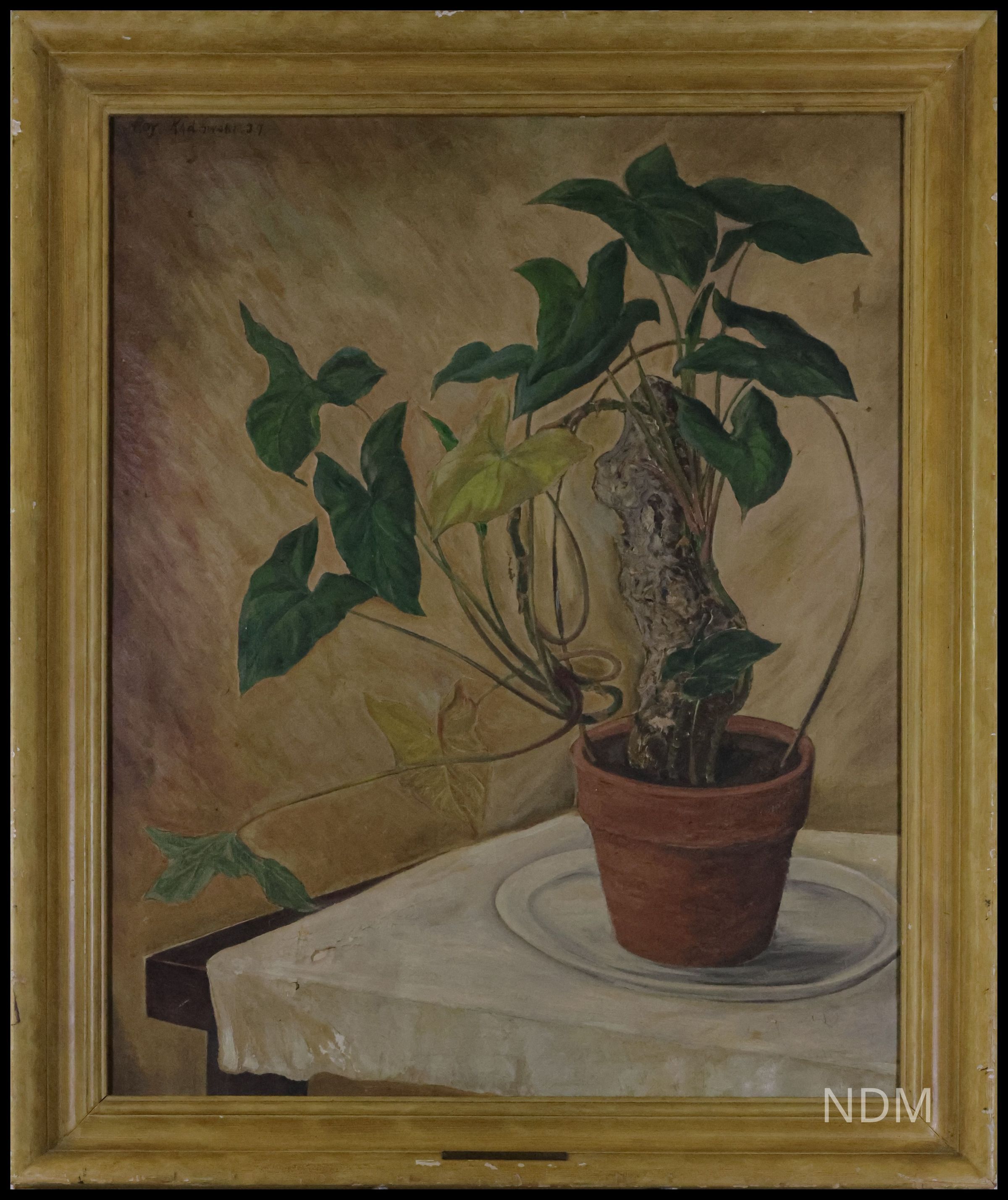
The plant depicted here probably is a Japanese arrowhead (Saggitaria japonica), which is native to marshes and due to its edible tuber occasionally called a “duck potato.” Kadowaki’s interest certainly is aesthetic—due to its distinctive leaves and graceful stems—and possibly symbolic, given the arrowhead’s remarkable adaptability. Far from wetlands and indoors, this one still is growing vigorously despite a couple of yellow leaves.Collection
Mt. Morris TB Hospital FAP CollectionArtwork Details
Medium
OilMade/Created
Artist
Kadowaki, MotoichiDate made
1937Dimensions
Height
30 inWidth
23-1/2 inCondition
Overall Condition
Very PoorNotes
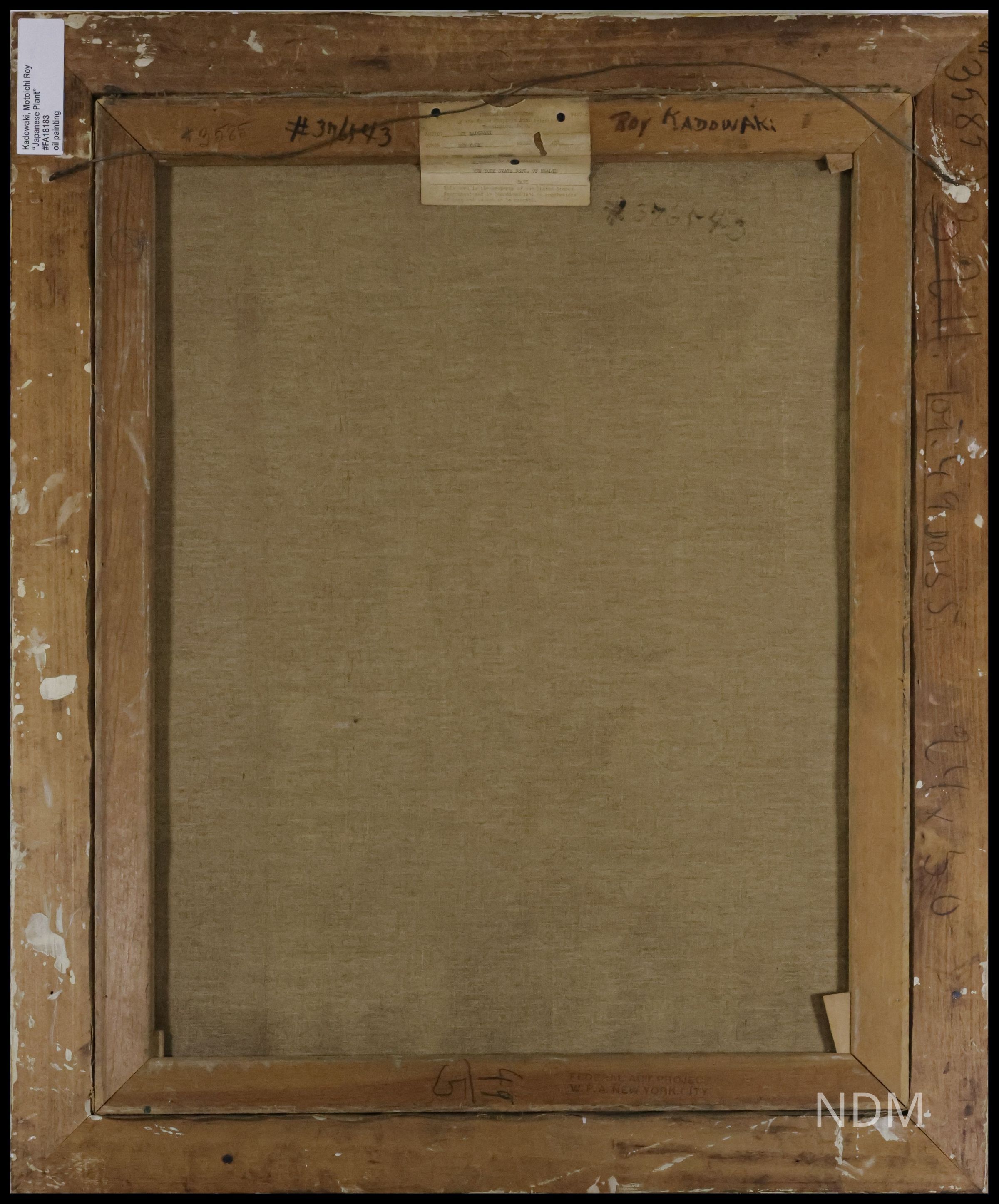
5+ cracks corners bottom/top edges, 2+ upper left corner/lower right corner/lower left corner/upper middle right/lower middle, 1 lower left corner, 2 holes center right, warping peeling bubbling edges/corners/bottomRecommendations
chipped paint, chipped frame, canvas bubbling, holesProvenance
Provenance Detail
Created under the Works Progress Administration’s Federal Art Project (1930s–1940s), this collection of easel paintings was originally installed at the Mount Morris Tuberculosis Sanitorium in Livingston County, New York. Following the sanitorium’s closure in 1970, the artworks were abandoned and remained in storage until their rediscovery decades later. Now preserved and exhibited by the Genesee Valley Council on the Arts (GVCA), the collection is housed at the New Deal Museum in Mount Morris. Current efforts include digitization, high-resolution photography, and the creation of an online archive to ensure long-term public access and research availability.Exhibitions
Winter '23