Name/Title
12th Century - القرن الثاني عشرEntry/Object ID
0003.01.0077Description
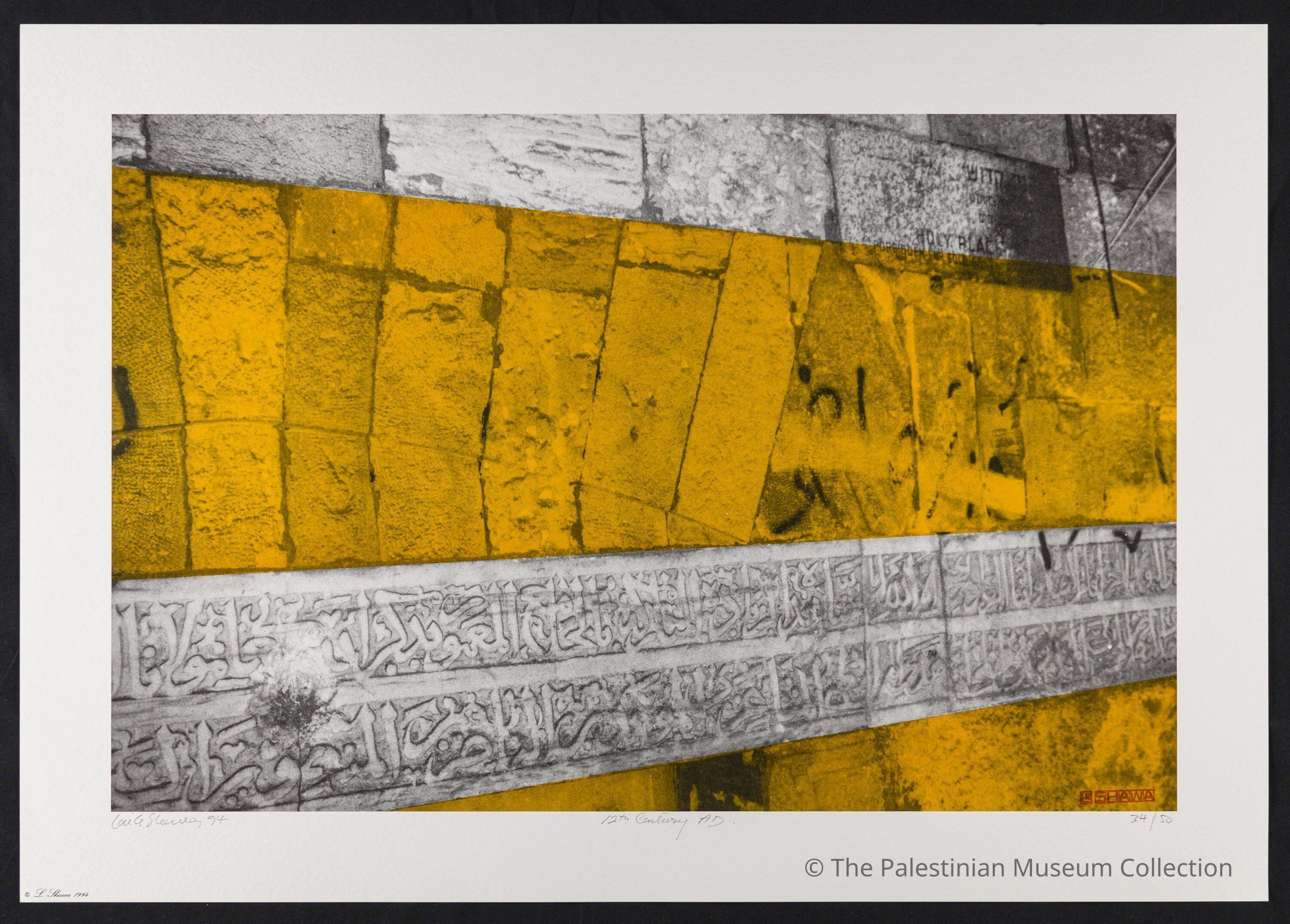
لوحات ليلى الشوّا الفوتوغرافيّة، التي استوحيت منها مجموعة الطباعة الحجريّة هذه، هي شهادة على جدران غزّة في أواخر الانتفاضة الأولى. تعبّر مجموعة "جدران غزّة" عن حميميّة المكان، والتحوّلات في البيئة المشيّدة التي جرت على نحو يومي في تلك الفترة. أصبحت الجدران المساحة التي تُعلن من خلالها التوجيهات، نظرًا إلى أنّ الزمن العادي توقّف خلال الانتفاضة، وتمحور كلّ يوم حول الإضرابات والمواجهات وإحياء الذكرى.
أصبحت الجدران شاهدة على محاولات الفلسطينيّين في ترسيخ هويّتهم، إلّا أنّه من المهم أيضًا أن ندرك، خارج تلك الأُطر، أنّ قوّات الاحتلال الإسرائيلي فرضت محو الغرافيتي عن الجدران بشكل منتظم، وبذلك لم يحظَ فلسطينيّو قطاع غزّة بفرصة تأمّل الغرافيتي طويلًا، لأنهم عاشوا فترات مطوّلة من حظر التجوّل، وهكذا، فإنّ الصور توقف الزمن عند لحظة من الصراع السياسي.
إلّا أنّ هذه الصور تظلّ مجموعة من شظايا اللّحظات السياسيّة، معارضة الفكرة القائلة إنّ بوسع الفوتوغرافيا أن تختزل صورة الواقع الاجتماعي برمّتها، فالغرافيتي شكل من أشكال التعبير الذي تبنّاه من ليس لديهم نفاذ إلى أنماط التواصل الجماهيري المُمأسسة. بالنسبة للفلسطينيّين الذين تمّ تجاهل هويّتهم الوطنيّة وأرضهم، يصبح الغرافيتي أحد أهمّ أشكال التعبير، تصاحبه المنشورات والأغاني، وكلّها أشكال ساهمت إلى حدّ كبير في تنظيم الجماعات وإلهامها خلال الانتفاضة الأولى.
ليلى الشوّا، القرن الثاني عشر، من سلسلة جدران غزّة، 1994. طباعة على ورق، 50 x 38 سم.
Laila Shawa's photographic canvases, from which the lithograph series is inspired, are a testimony to the walls of Gaza during the last phase of the First Intifada. The series Walls of Gaza expresses the intimacy of the place and the transformation of the built environment that changed on a daily basis during that period. The walls became the surface on which the directions were announced because, during the Intifada, normal time was suspended, and each day was structured around strikes, confrontations, and commemorations. The walls become a testimony to Palestinians’ attempts to reaffirm their identity. However, it is also necessary to realise that, outside the canvas, the Israeli Occupation Forces regularly enforced the erasure of graffiti from the walls. Palestinians in the Gaza Strip would not have had the opportunity to linger in front of the graffiti because they were subject to prolonged curfews; thus, the images preserve a moment in time of the political struggle. They remain a series of fragments of political instants, thus countering the idea that photography is able to encompass all the images of social reality, for graffiti is a form of expression adopted by those who cannot access the institutionalised modes of mass communication. For Palestinians whose national identity and territory have been disregarded, graffiti becomes one of the main forms of expression, accompanied by leaflets and songs, all forms that contributed significantly to organising and inspiring communities during the First Intifada.
Laila Shawa, 12th Century, The series Walls of Gaza,1994, print on paper,50 cm *38 cm