Name/Title
20 - 1.13.24 – Correspondence from “Hope” (“Doodle”) to Mr. Jesse Redyard (Arkansas)Entry/Object ID
RE-LE-COLLHE-0054Description
A playful and structured early letter from a young woman signing as “Hope” (later “Doodle”), sent from Haleyville, Alabama to Jesse Redyard in Arkansas, expressing affection, humor, and early courtship sentiments—including a humorous leap-year marriage proposal.Subject
Courtship correspondence; romantic expression; student or young adult writing cultureSubject Place
State/Province
ArkansasContinent
North AmericaLetter Details
Letter Date
Jan 8, 1924Time Period
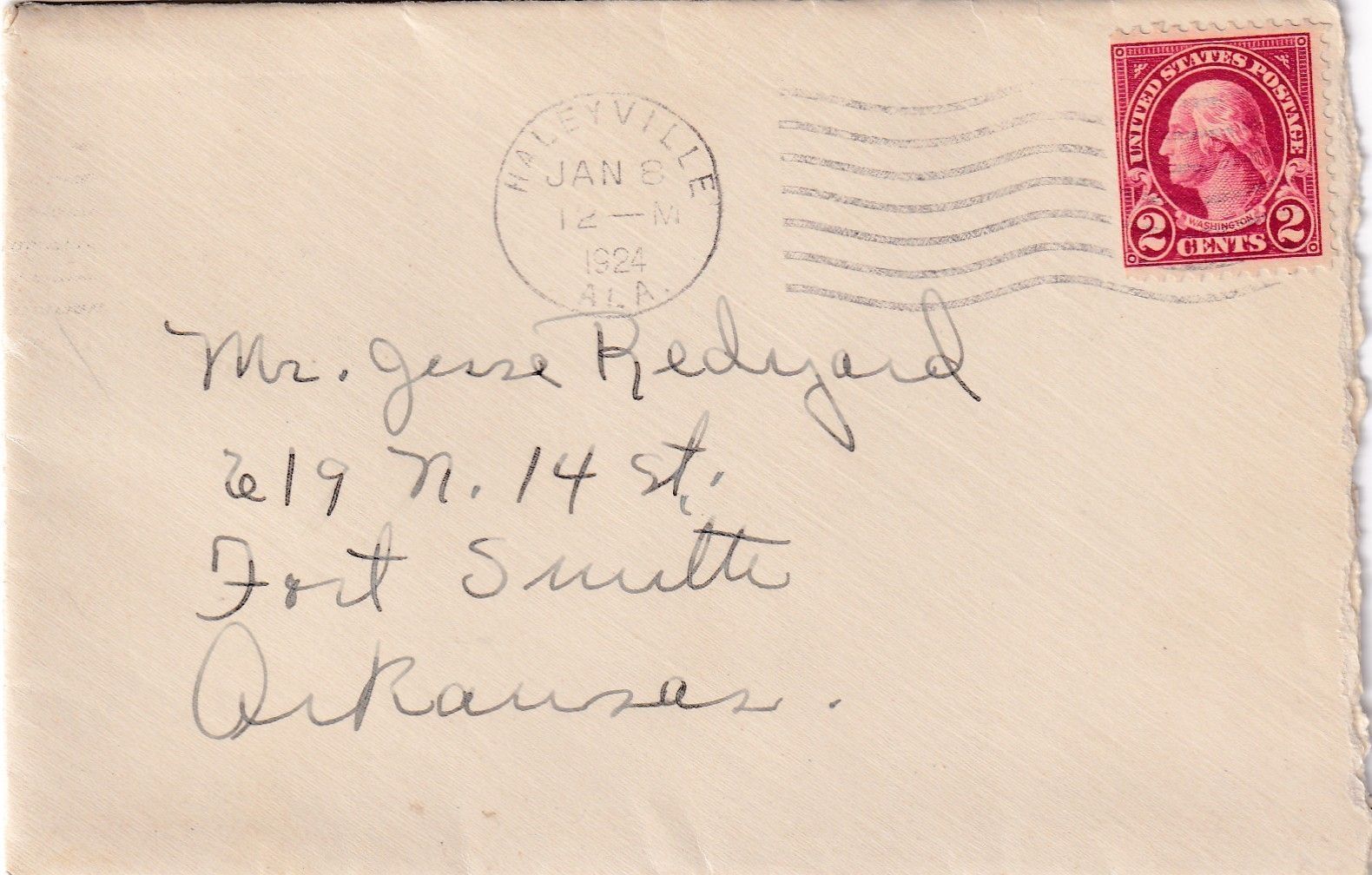
20th CenturyPostmark
Date and Time of Postmark
Haleyville, Alabama January 8, 1924 (likely partial or earlier marking—slight inconsistency between written and postal date; common in reused envelopes or delayed posting) Time: 12 M (noon)Transcription
Transcription
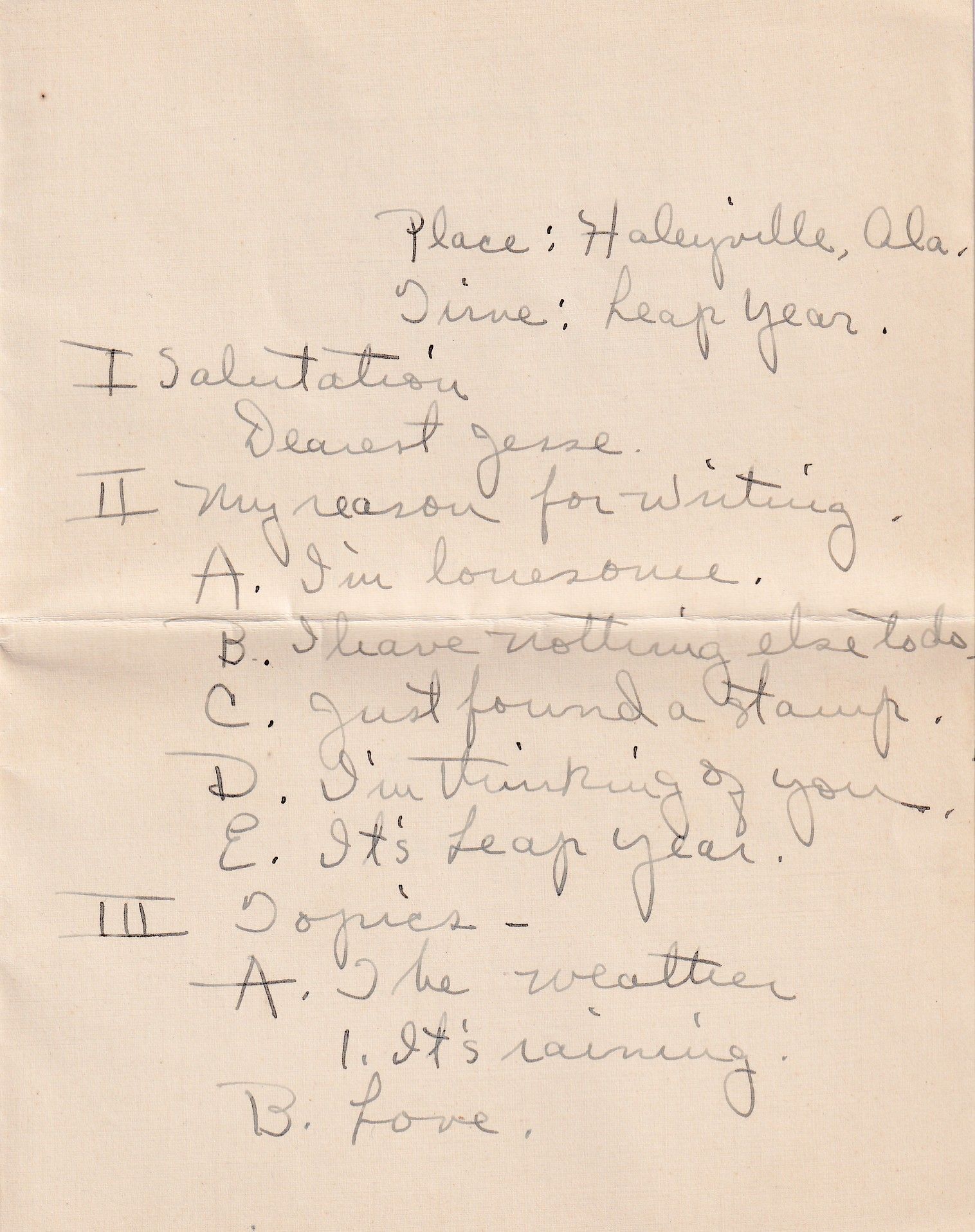
[Page 1]
Place: Haleyville, Ala.
Time: Leap Year
I Salutation
Dearest Jesse.
II My reason for writing:
A. I’m lonesome.
B. I have nothing else to do.
C. Just found a stamp.
D. I’m thinking of you.
E. It’s leap year.
III Topics –
A. The weather
It’s raining.
Love.
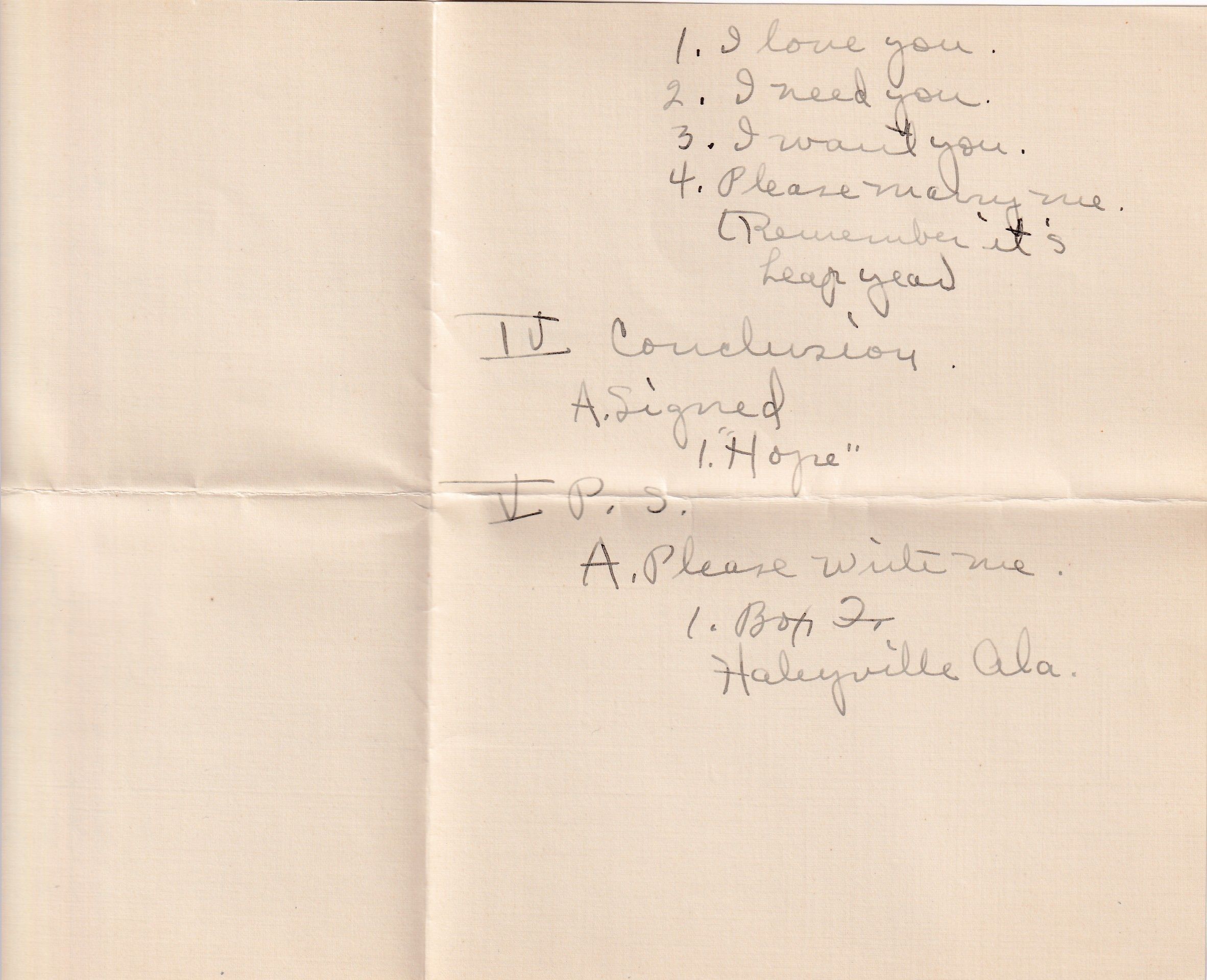
[Page 2]
I love you.
I need you.
I want you.
Please marry me.
(Remember it’s leap year)
IV Conclusion
A. Signed
“Hope”
V P.S.
A. Please write me.
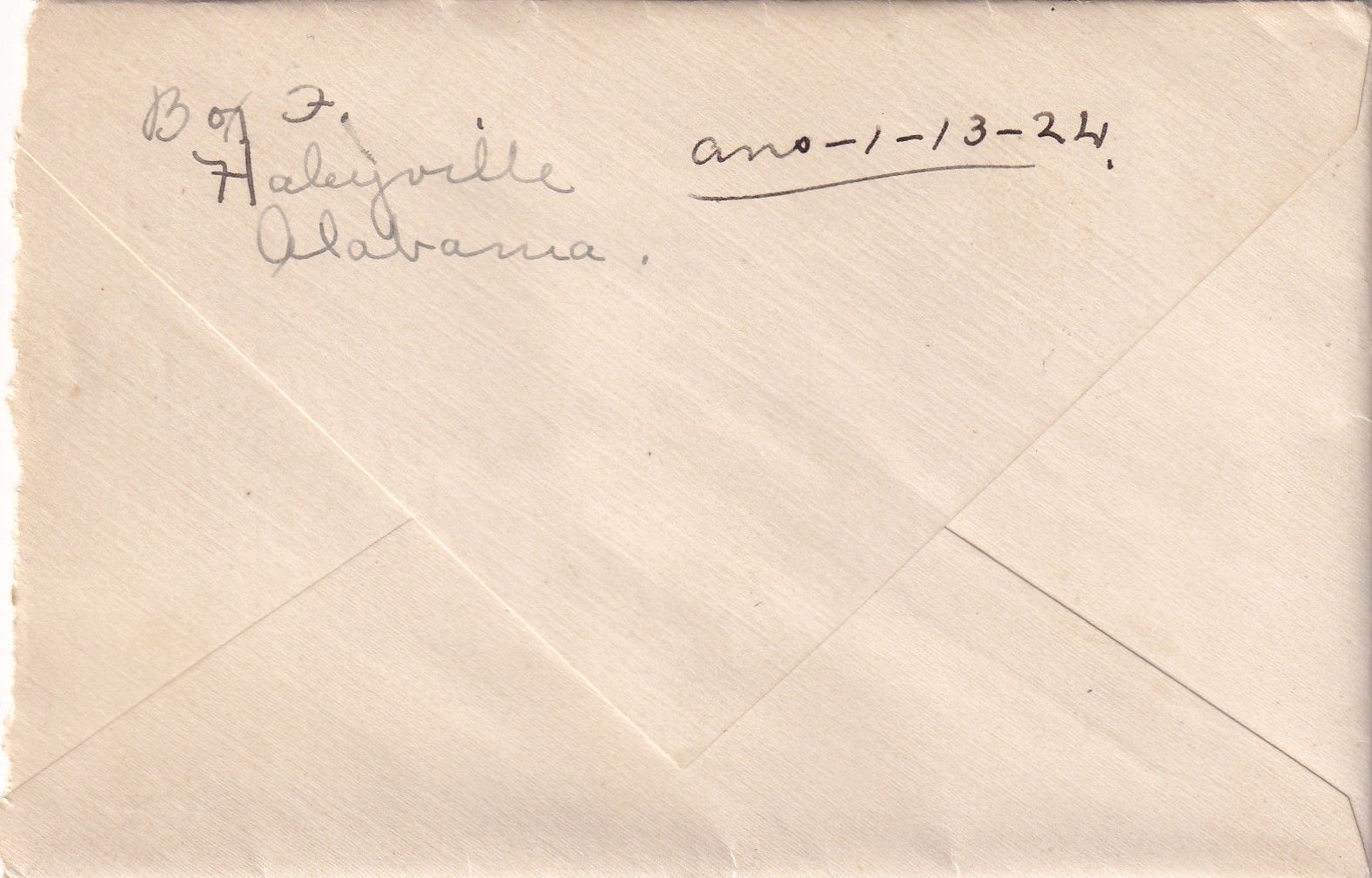
Box 7
Haleyville Ala.Language
EnglishEthnography
Notes
This letter is a wonderful example of playful, semi-formal romantic correspondence among young adults in the early 20th century, with several notable features:
Structured composition: The outline format (Roman numerals, bullet points) reflects school-based writing conventions, suggesting the writer is likely educated, possibly a student or teacher.
Leap Year tradition: The reference to leap year is culturally significant—women were socially permitted (even encouraged humorously) to propose marriage during leap years.
Tone: The letter blends humor with genuine affection, signaling an early-stage but emotionally engaged courtship.
Self-awareness: The writer openly acknowledges her reasons (“lonesome,” “found a stamp”), showing a conversational, modern voice uncommon in more formal earlier correspondence.General Notes
Note Type
Historical NoteNote
Leap Year Proposal Tradition:
In Anglo-American culture, leap years (like 1924) carried the tradition that women could propose marriage—often referenced jokingly in letters and social exchanges.
Women’s Literacy & Education:
The structured format suggests exposure to formal schooling, reflecting increased educational opportunities for women in the early 20th century.
Postal Culture:
The casual tone combined with quick mailing reflects frequent, informal letter writing, typical of young couples separated by distance
Use of a simple return address (“Box 7”) indicates a small-town or rural postal systemCreate Date
March 21, 2026