Name/Title
01 - 8.8.22 – Y.W.C.A. Camp Letter to Jesse Redyard (Van Buren, Arkansas)Entry/Object ID
RE-LE-COLLHE-0054Description
A brief, informal note written from a Y.W.C.A. summer camp, inviting Jesse Redyard to visit. The tone is light and social, reflecting an early stage of acquaintance or budding courtship, with emphasis on leisure, group activity, and accessibility.Subject
Early acquaintance; social invitation; summer camp lifeSubject Place
State/Province
ArkansasContinent
North AmericaLetter Details
Letter Date
Aug 8, 1922Time Period
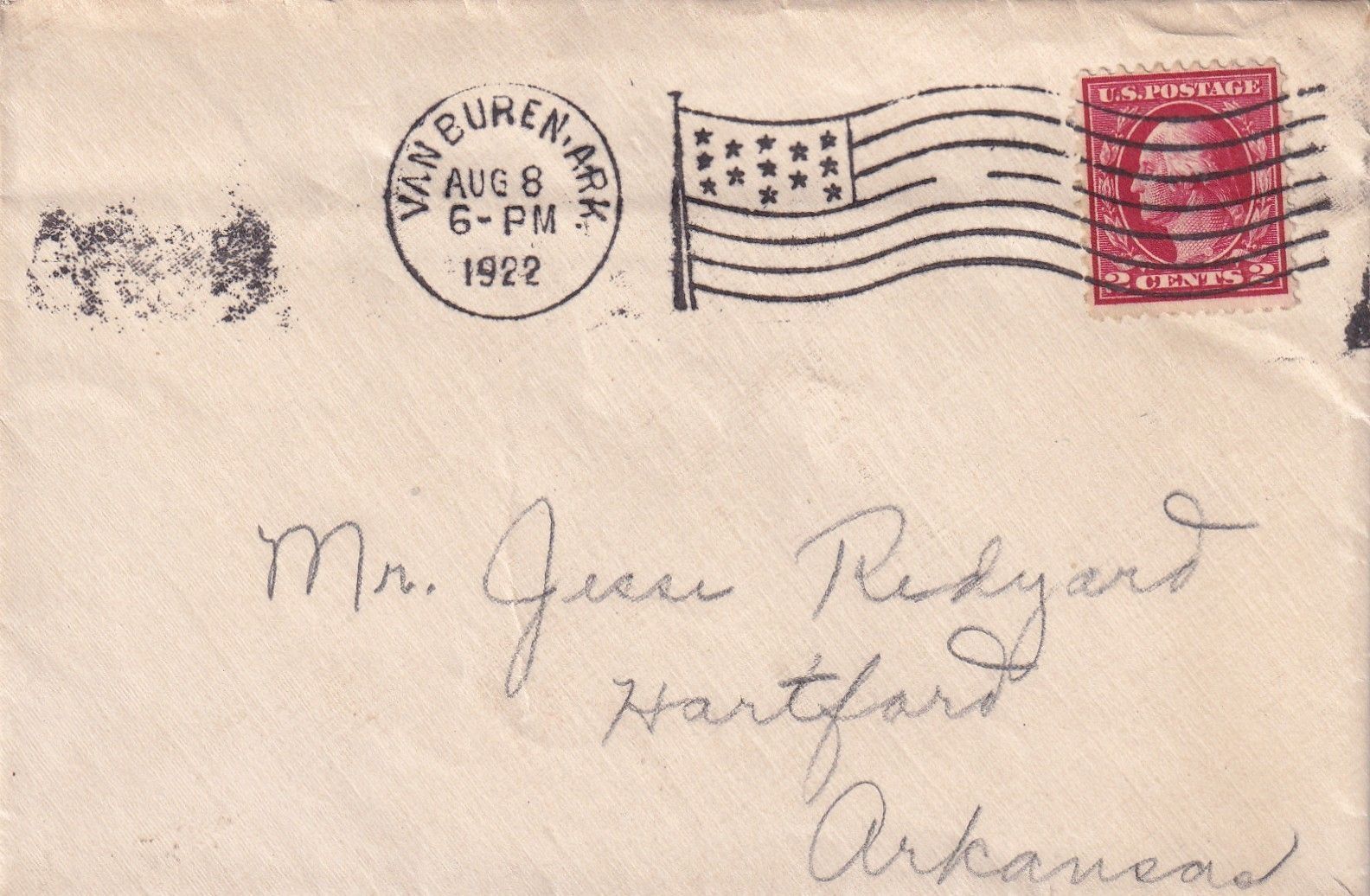
20th CenturyPostmark
Notes
Postmark:
Van Buren, Arkansas – August 8, 1922 (6 PM)
Stamp:
2¢ George Washington, red
Postal Marking:
Decorative American flag cancellation
Recipient:
Mr. Jesse Redyard
Hartford, ArkansasTranscription
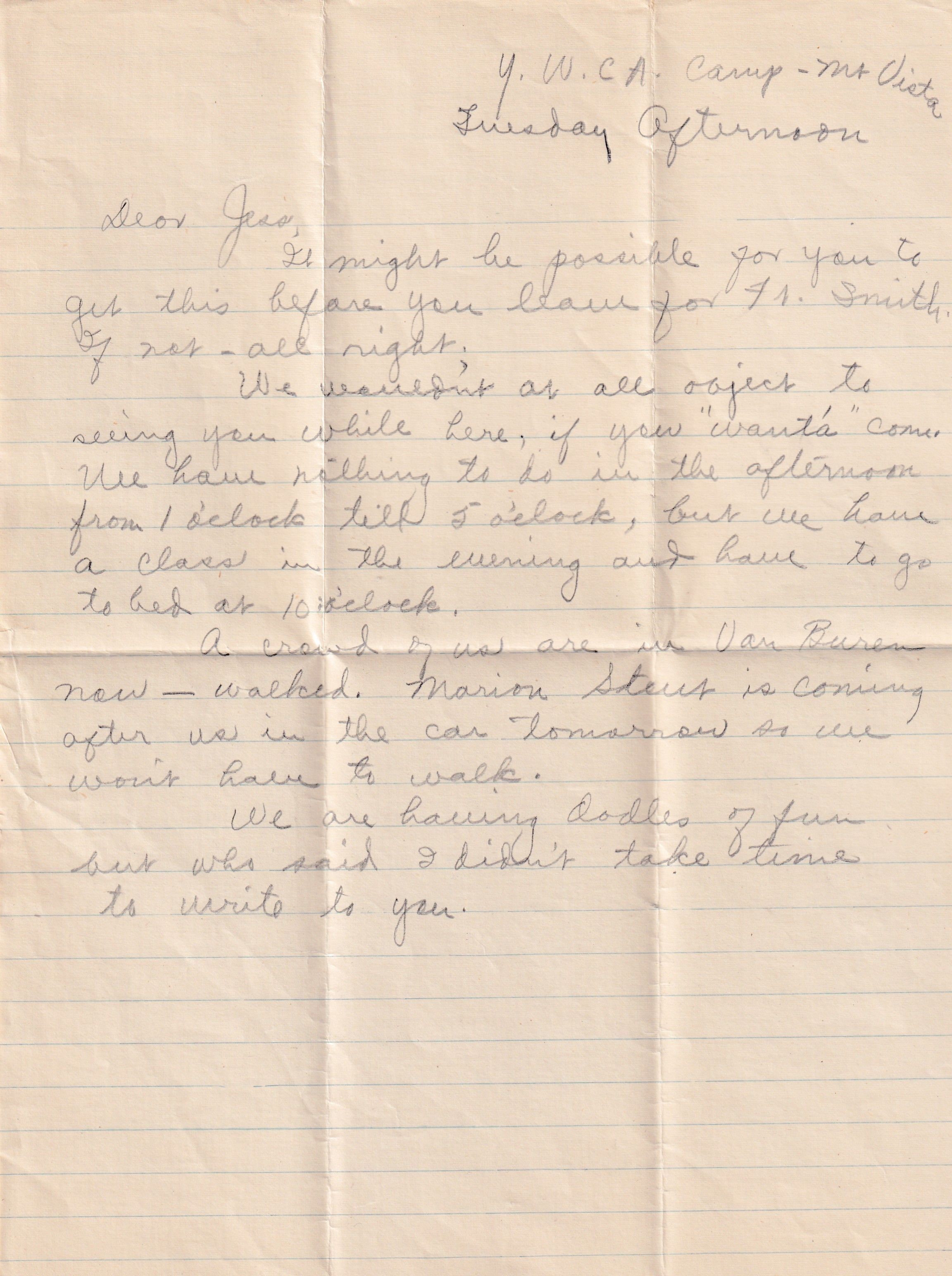
Transcription
Y.W.C.A. Camp – Mt. Vista (partially unclear)
Tuesday Afternoon
Dear Jess,
It might be possible for you to get this before you leave for Ft. Smith. If so, all right;
We wouldn’t at all object to seeing you while here, if you “wanta” come. We have nothing to do in the afternoon from 1 o’clock till 5 o’clock, but we have a class in the evening and have to go to bed at 10 o’clock.
A crowd of us are in Van Buren now — walked. Marion Stewart is coming after us in the car tomorrow so we won’t have to walk.
We are having oodles of fun but who said I didn’t take time to write to you.
(No signature visible, but consistent with later “Dooley” letters)Language
EnglishEthnography
Notes
🌱 1. Pre-Romantic / Social Phase
Tone is:
casual
inviting
slightly playful
NOT emotionally invested
Key line:
“We wouldn’t at all object to seeing you…”
➡️ This is not intimate language
➡️ It suggests:
group-based interaction
optional visit
low pressure
👥 2. Group Courtship Culture
This is classic early 1920s behavior:
“A crowd of us…”
group walking
shared outings
➡️ Courtship is:
public
socially mediated
not yet one-on-one intense
🚗 3. Transitional Mobility Moment
Important detail:
“walked” → “car tomorrow”
This shows:
transition from walking culture → automobile culture
early reliance on rides, not ownership
🏕️ 4. Y.W.C.A. Camp Structure
Key schedule:
free time: 1–5 PM
class in evening
bed at 10 PM
➡️ Reflects:
structured female environments
moral/social oversight
early 20th-century expectations of propriety
😄 5. Personality Snapshot (Earliest Evidence)
This line is very telling:
“who said I didn’t take time to write to you”
➡️ Even in 1922:
playful defensiveness
awareness of communication expectations
This becomes a major theme laterGeneral Notes
Note Type
DescriptionNote
🏛️ Museum-Style Description
An early social letter written from a Y.W.C.A. summer camp, inviting Jesse Redyard to visit during leisure hours. The informal tone and group-oriented context reflect early 1920s courtship practices, where relationships developed gradually through shared social environments. This document represents the earliest known stage of a correspondence that would later evolve into a more emotionally complex exchange.Create Date
March 23, 2026