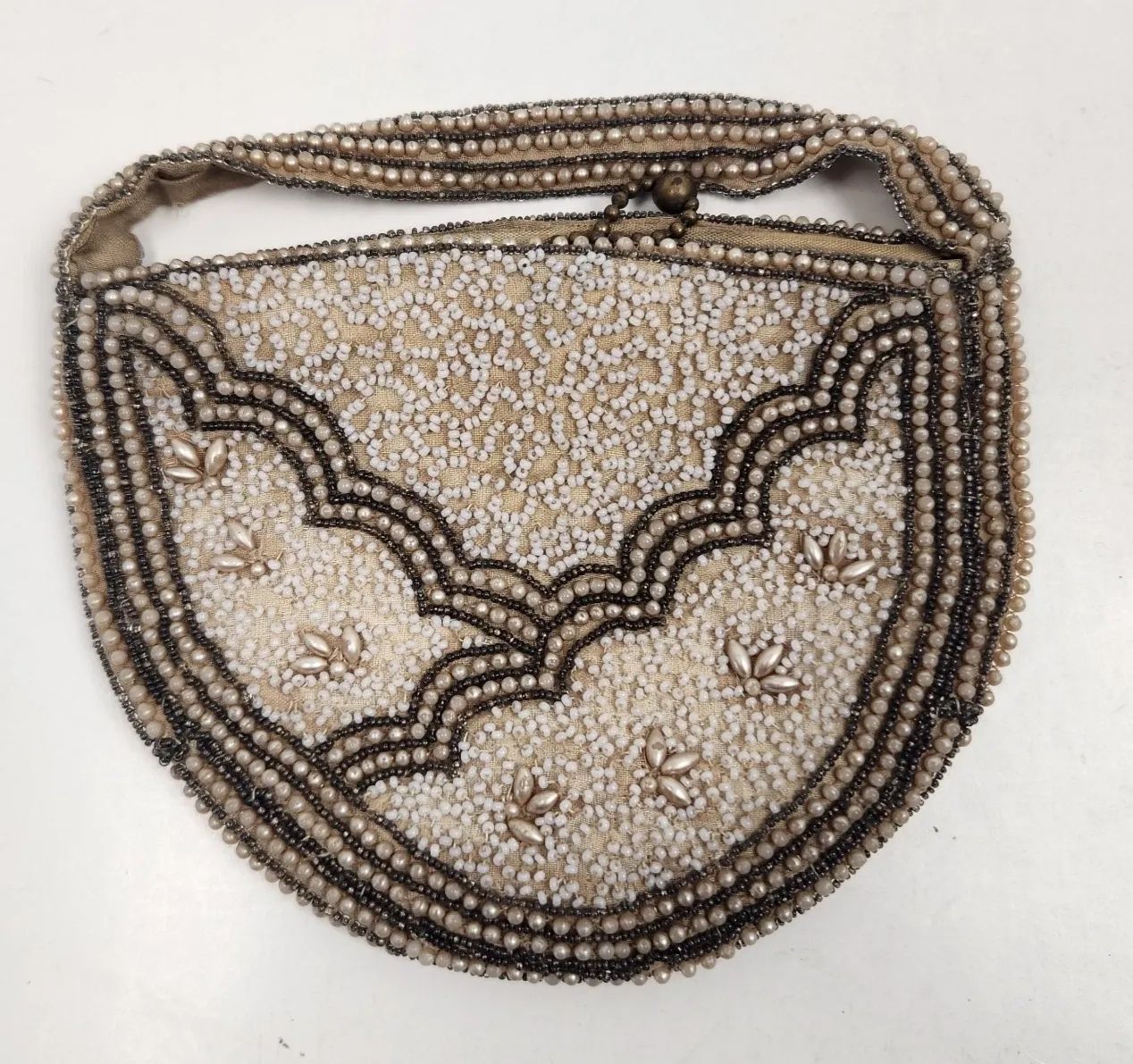
Beaded evening handbag / clutch with shoulder strap
Use
Purse
Category
Art Decco, Late Edwardian
Clothing/Dress/Costume Details
Article of Clothing/Dress/Costume
Purse
Textile Details
Fabric
Cotton, Silk
Material
Beads
Lining
Cotton
Color
White, Black
Notes
Materials:
Glass seed beads (white, champagne, gunmetal tones)
Faux pearls and elongated “rice” beads
Silk or cotton fabric ground
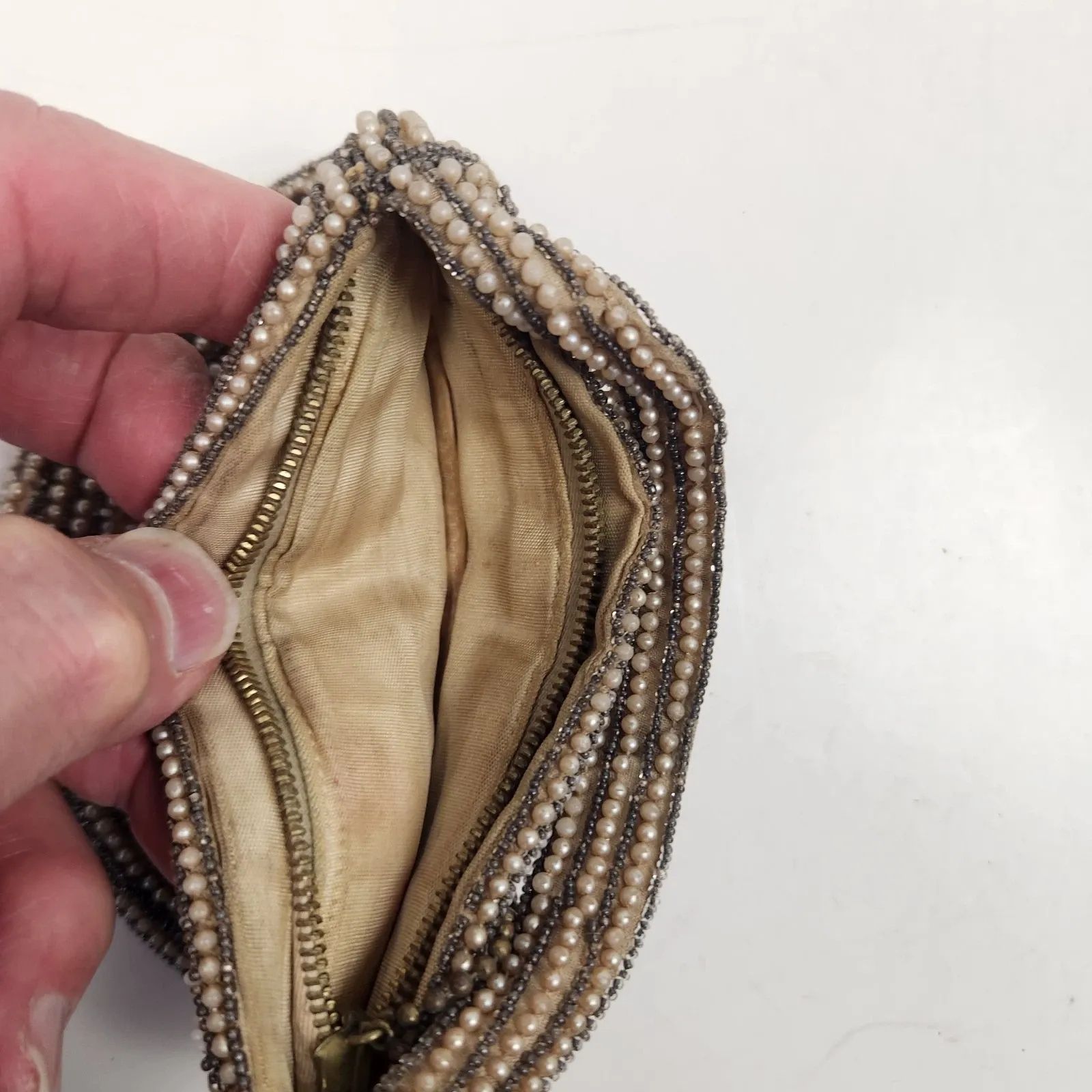
Metal zipper closure
Fabric-lined interior
Beaded shoulder strap
Design & construction details
✨ Beadwork
Tiny white seed beads form dense fields
Champagne-toned faux pearls outline shapes
Darker beads (gunmetal/steel tone) create contrast lines
Elongated rice beads form floral or starburst accents
This level of bead density was labor-intensive and usually done in workshops, often in:
France
Germany
Czechoslovakia (major bead producers)
👜 Shape & layout
The curved fan-like paneling is classic early Deco—structured but still soft, bridging Edwardian elegance and modern geometry.
🔒 Zipper
Early metal zipper with visible teeth
Fabric tape shows age toning consistent with original installation
Not a replacement
Zippers did not become common in women’s handbags until the mid–late 1910s, and they really took off in the 1920s. Victorian purses almost always used drawstrings or metal frames—not zippers.
Made/Created
Date made
circa 1915 - circa 1925
Time Period
Art Deco
Condition
Overall Condition
Good
Date Examined
Feb 6, 2026
Notes
Strengths
Beadwork largely intact
Strap present and original
Zipper functional
Design remains crisp and readable
Wear
Interior lining shows staining and age darkening (normal)
Some bead patina and slight dulling
Minor thread fatigue at stress points (expected)
Overall: Very good antique condition for a heavily beaded bag.
General Notes
Note Type
Description
Note
Evening handbag with dense glass bead embroidery and early metal zipper closure, c. 1915–1925. The geometric composition and compact form reflect the transition from Edwardian decorative traditions to early Art Deco aesthetics, coinciding with new social freedoms and technological advancements in fashion.