Note Type
Historical NoteNote
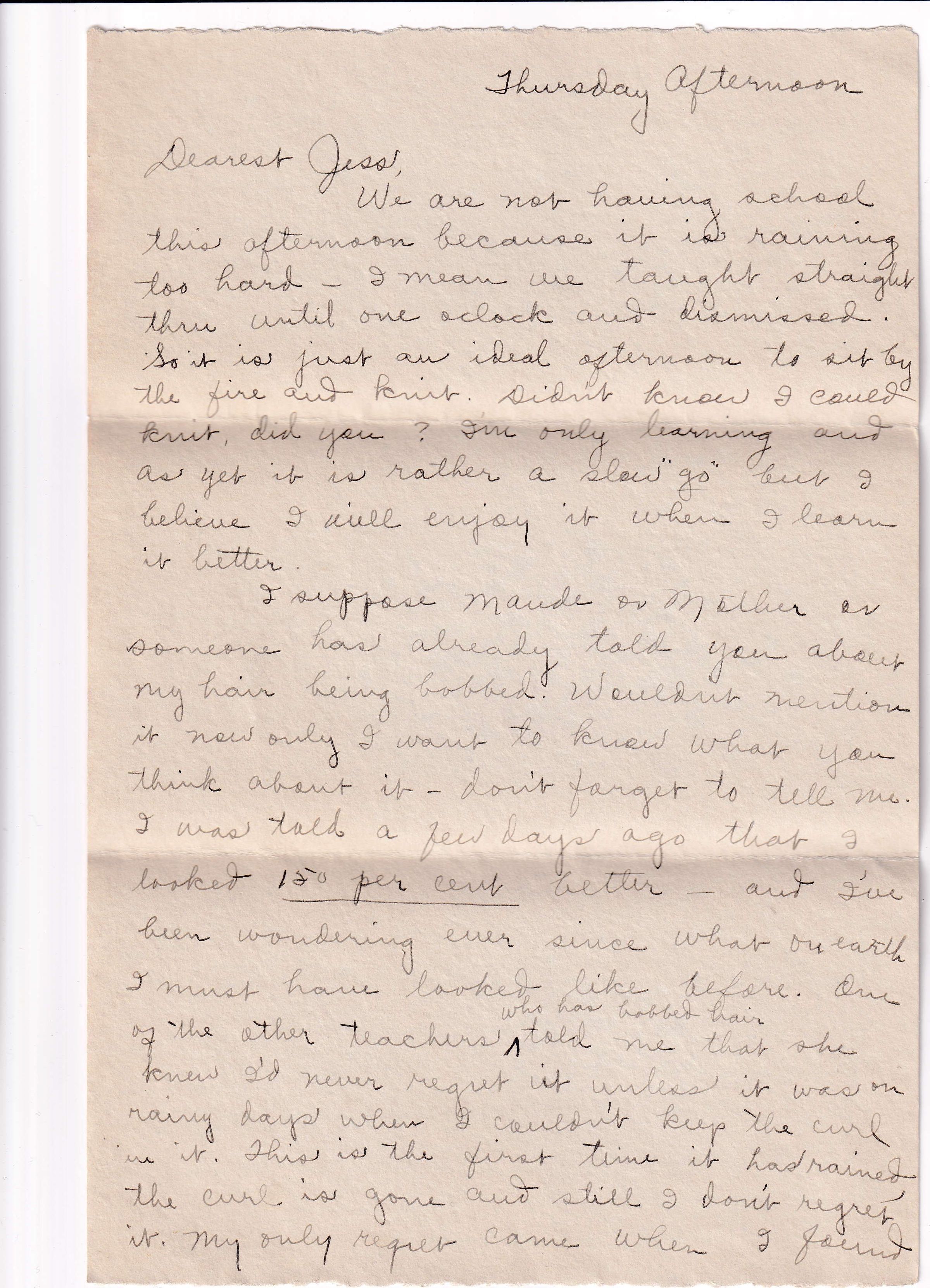
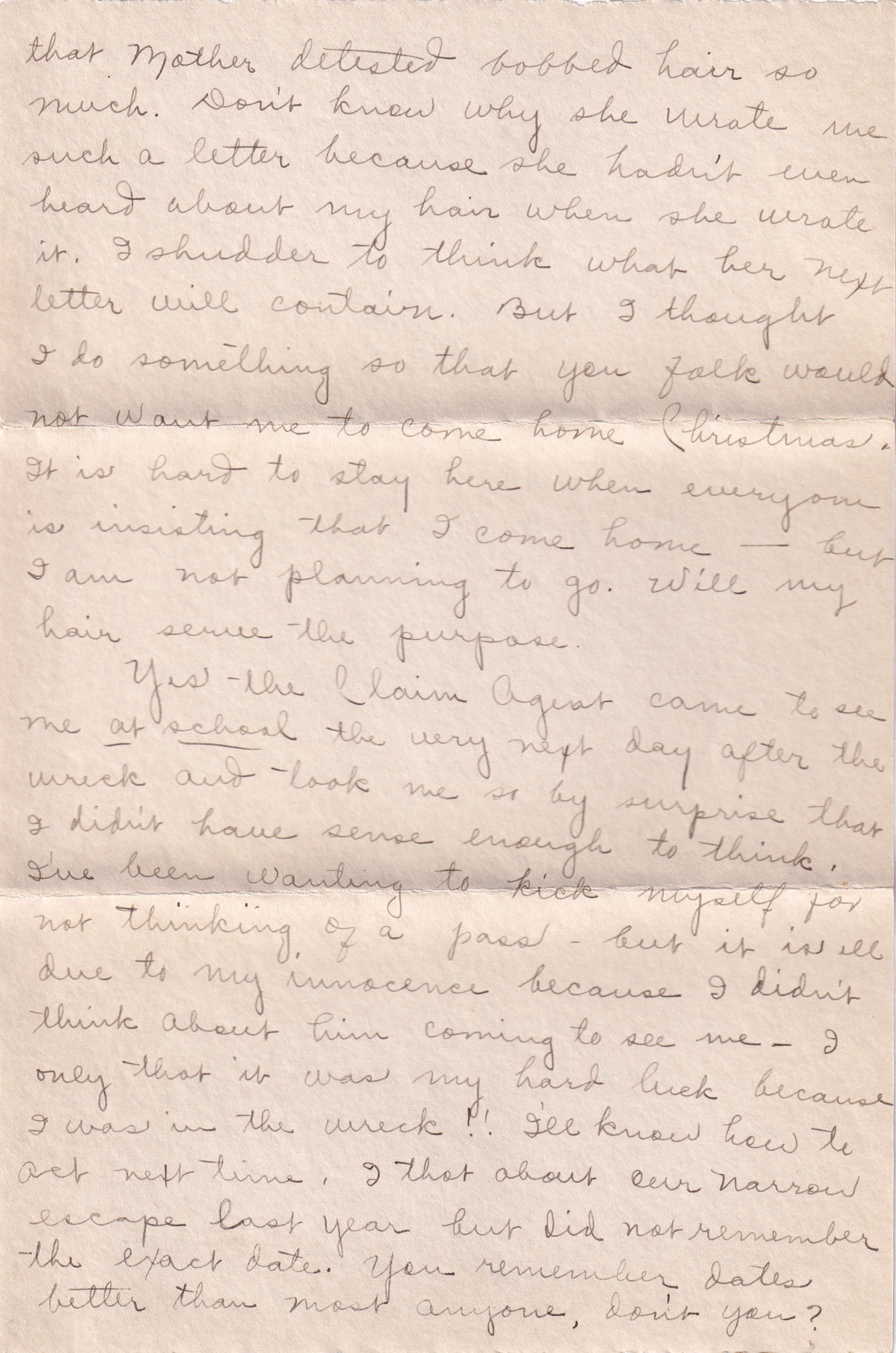
Bobbed Hair as Social Signal: The writer’s haircut is one of the most historically significant elements. Bobbed hair became a defining symbol of the 1920s “flapper” era, often associated with independence, modernity, and rebellion against Victorian norms. Her mother’s strong disapproval reflects the generational divide common at the time.
Women and Teaching Careers: Teaching was one of the few respectable professions available to unmarried women. Many, like the writer, lived away from home, contributing to increased autonomy and shifting social roles.
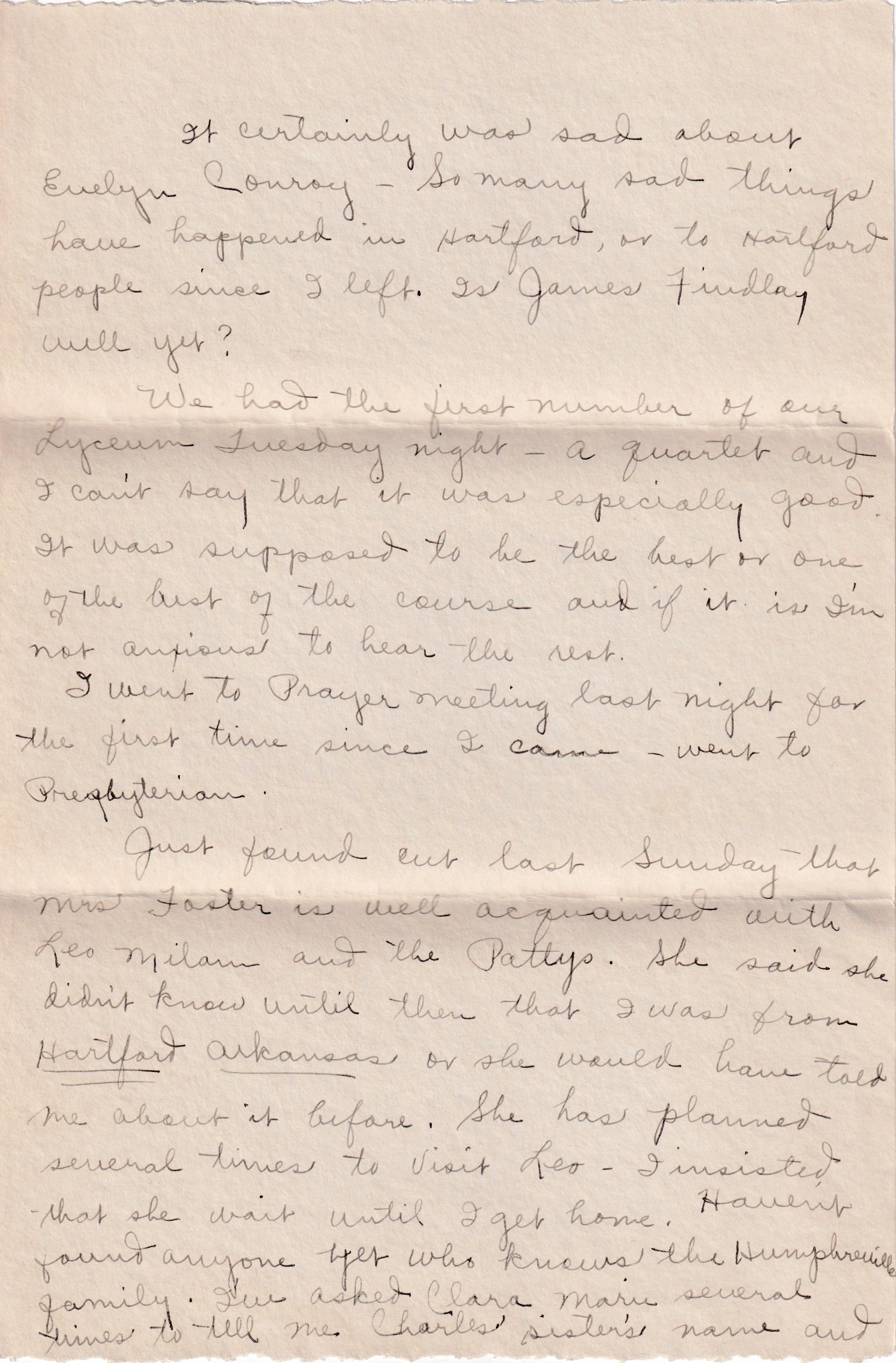
Lyceum Circuits: The mention of a “Lyceum” refers to a popular system of traveling educational and entertainment programs (lectures, music, performances) common in small-town America in the late 19th and early 20th centuries.
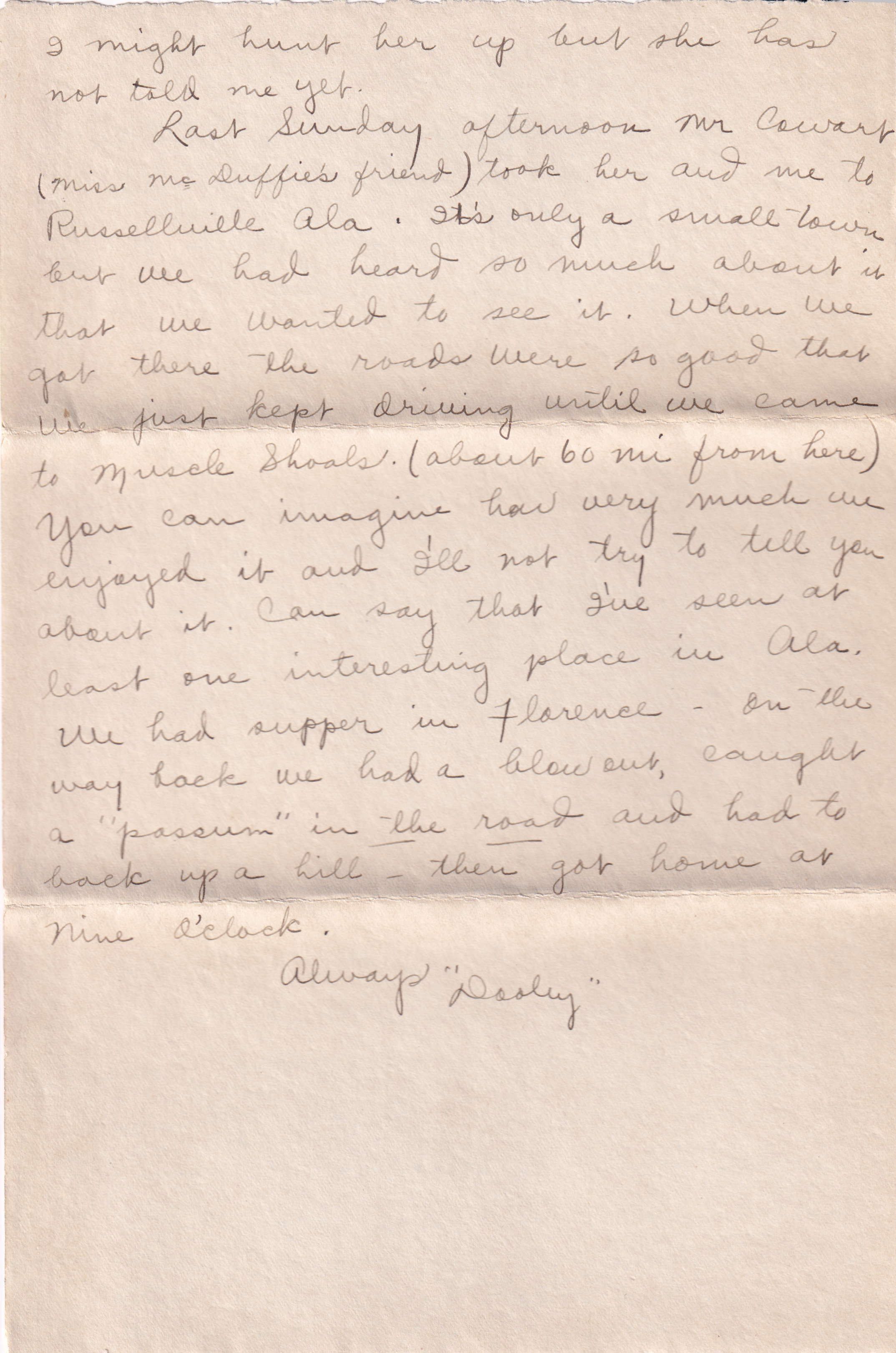
Automobile Culture: The casual road trip to Russellville, Florence, and Muscle Shoals reflects the growing accessibility of automobiles in the 1920s, which began to reshape social life and mobility, even in rural areas.
Muscle Shoals Significance: Muscle Shoals, Alabama, was becoming nationally significant in the 1920s due to government projects and hydroelectric development along the Tennessee River.
Rail Accidents & Claims: The mention of a “wreck” and a claim agent suggests involvement in a train accident—rail travel was still the dominant long-distance transportation, and accidents were not uncommon. Claim agents were often sent to settle liability issues quickly.
Religious Diversity: The writer attends both Presbyterian and references Methodist/Baptist circles in other letters, reflecting the strong but varied Protestant culture of the American South.
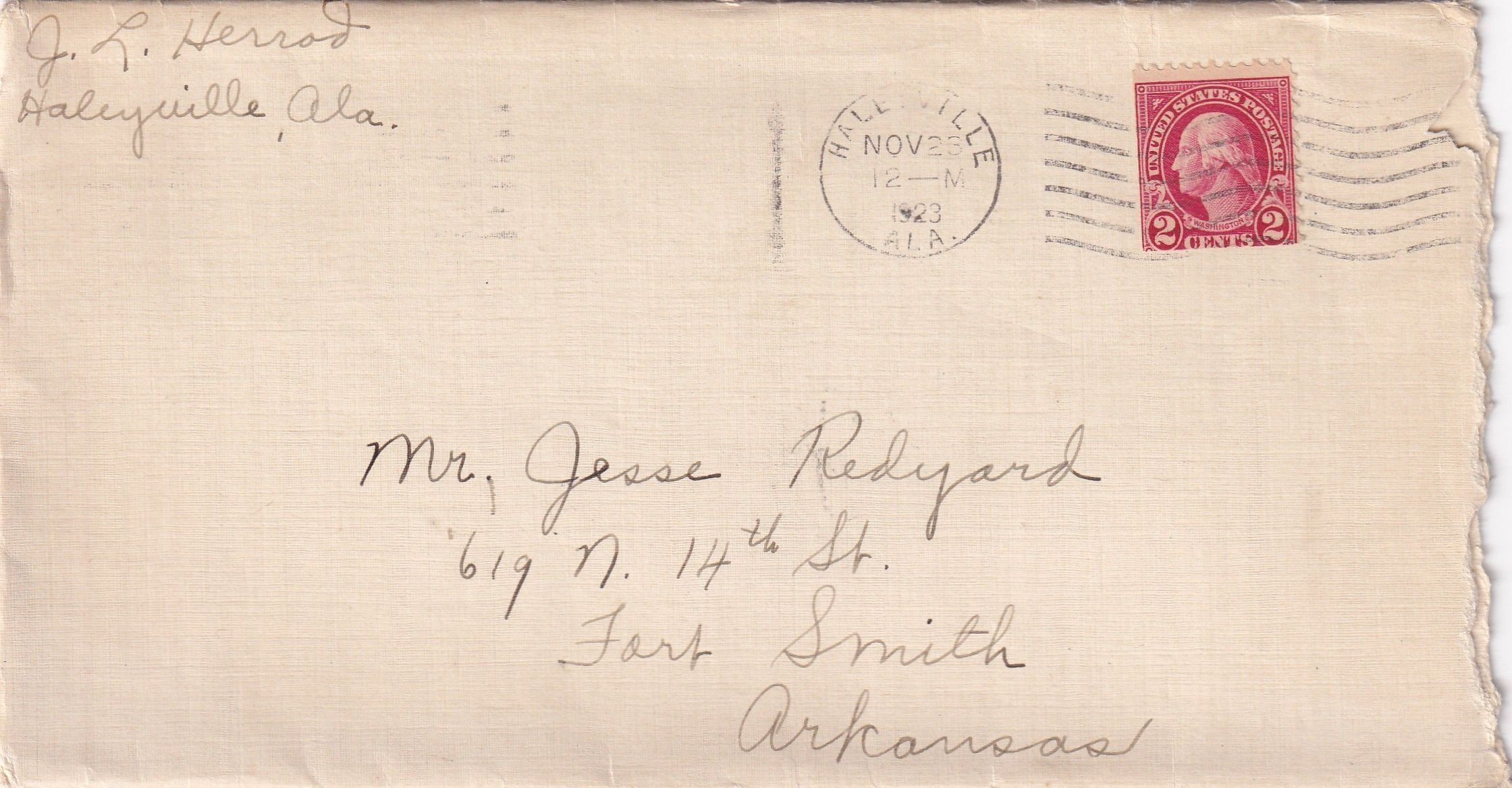
Social Networks & Migration: Frequent references to Arkansas connections (Hartford, Leo Milam, Pattys, Humphreys family) show how migration for work did not sever social ties—letters maintained tightly woven regional networks.