Note Type
Historical NoteNote
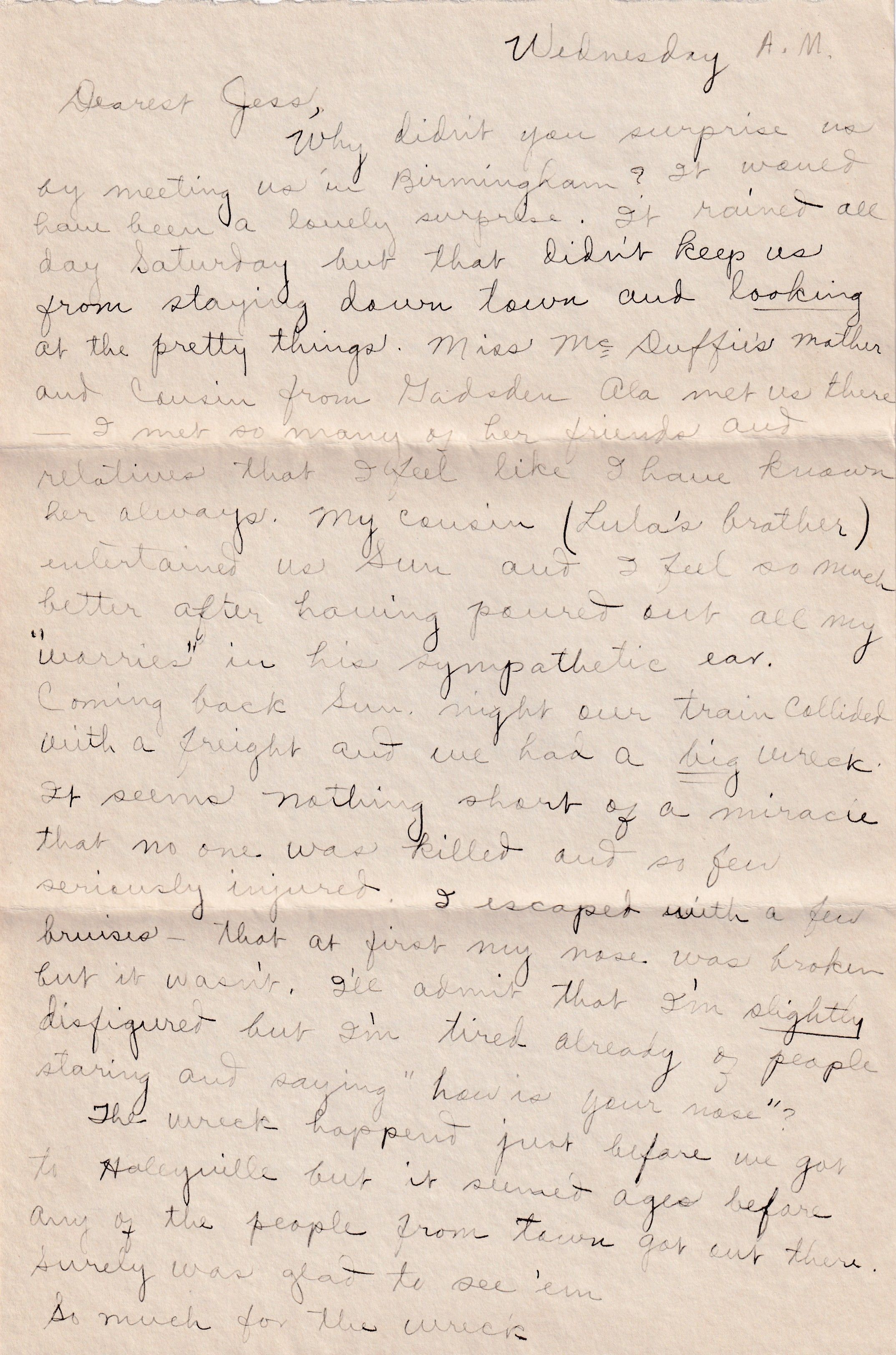
Railroad Accidents in the 1920s: Train travel was still the primary long-distance transportation method, and collisions with freight trains were not uncommon due to signaling limitations and human error. Her description of a “big wreck” with minimal fatalities reflects both the danger and increasing improvements in rail safety by the 1920s.
Claim Culture & Liability: As seen in other letters, accidents often involved claim agents quickly approaching survivors—this was part of a growing legal culture around corporate liability in transportation industries.
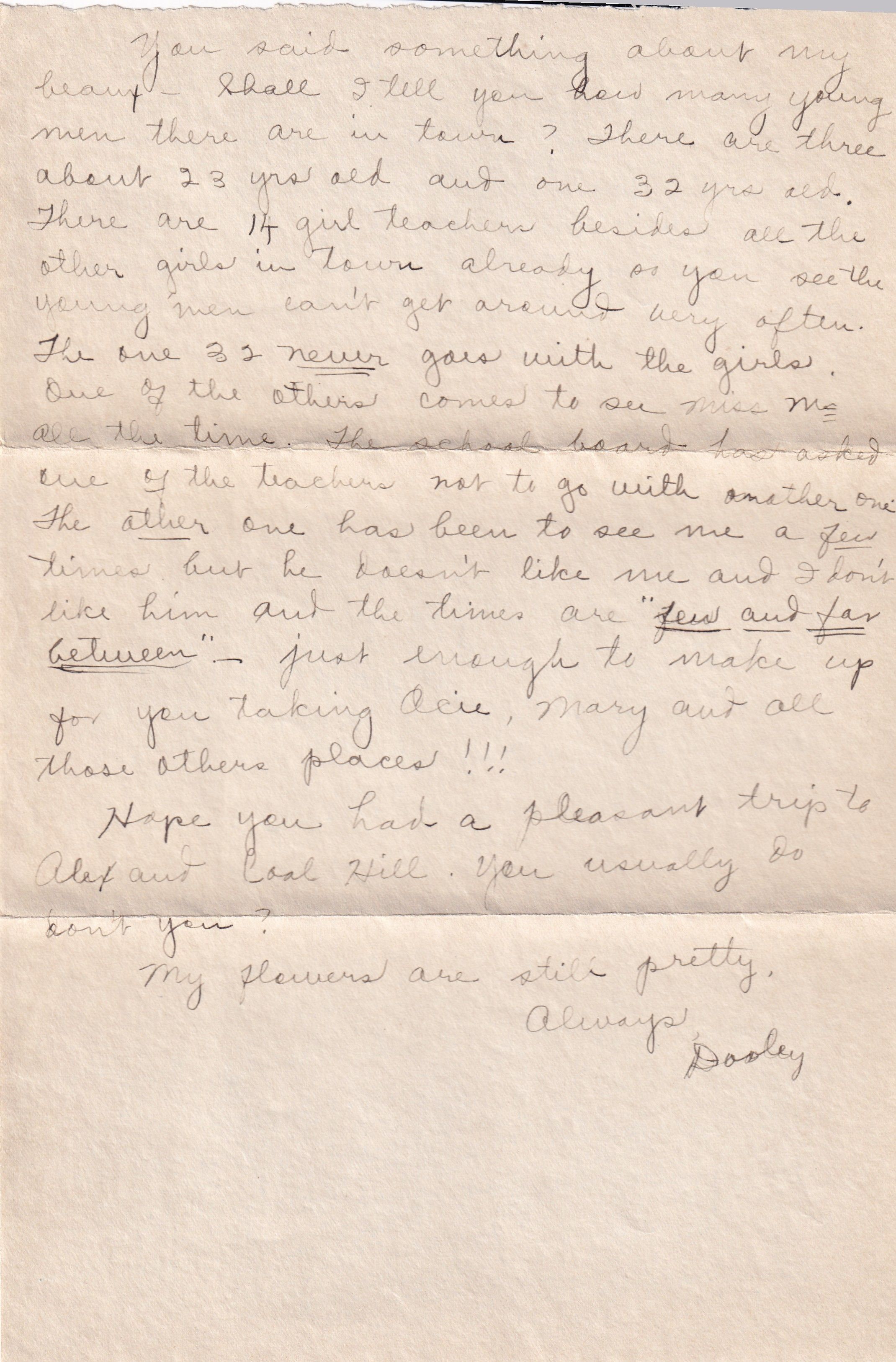
Women Teachers & Social Restrictions: The mention of the school board discouraging relationships is historically significant. Female teachers were often subject to strict moral codes, including restrictions on dating, marriage, and even social outings.
Gender Imbalance & Courtship: Her observation of “17 girl teachers” and only a few men illustrates a common social dynamic—teaching was feminized, while eligible men were fewer, shaping courtship competition and expectations.
Urban vs. Small-Town Life: Birmingham appears as a place of excitement, shopping, and social connection, contrasting with the quieter, more regulated life in Haleyville.
Physical Appearance & Social Identity: Her humorous but pointed reference to her nose injury reflects the importance of appearance in courtship culture, particularly for women.
Regional Travel Networks: The casual movement between towns (Birmingham, Gadsden, Haleyville) shows how rail lines connected Southern communities, facilitating both social and professional mobility.
Flirtation & Emotional Tone: The teasing jealousy (“make up for you taking Cie, Mary…”) provides strong evidence that this is an active romantic or courtship relationship rather than purely platonic correspondence.