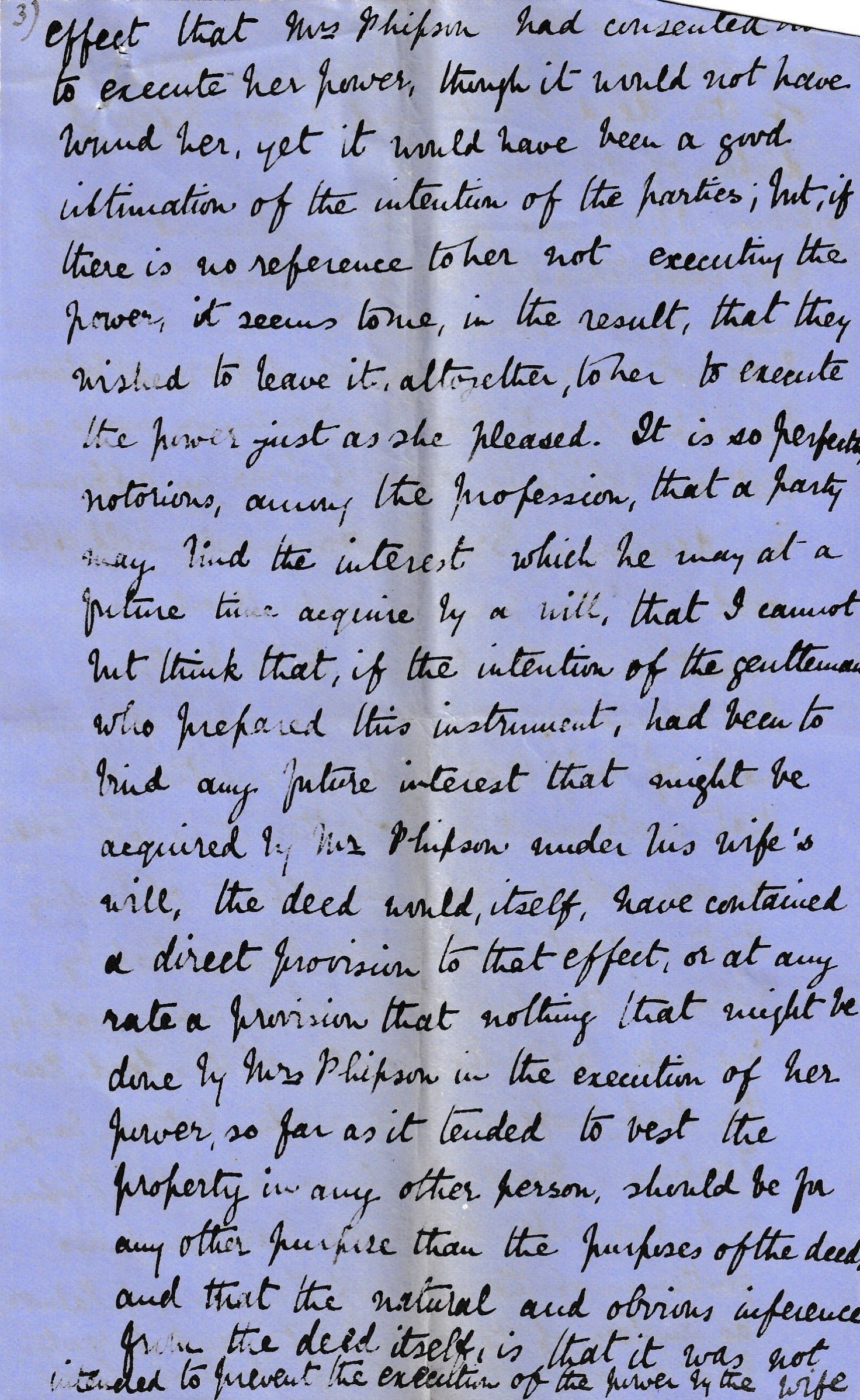
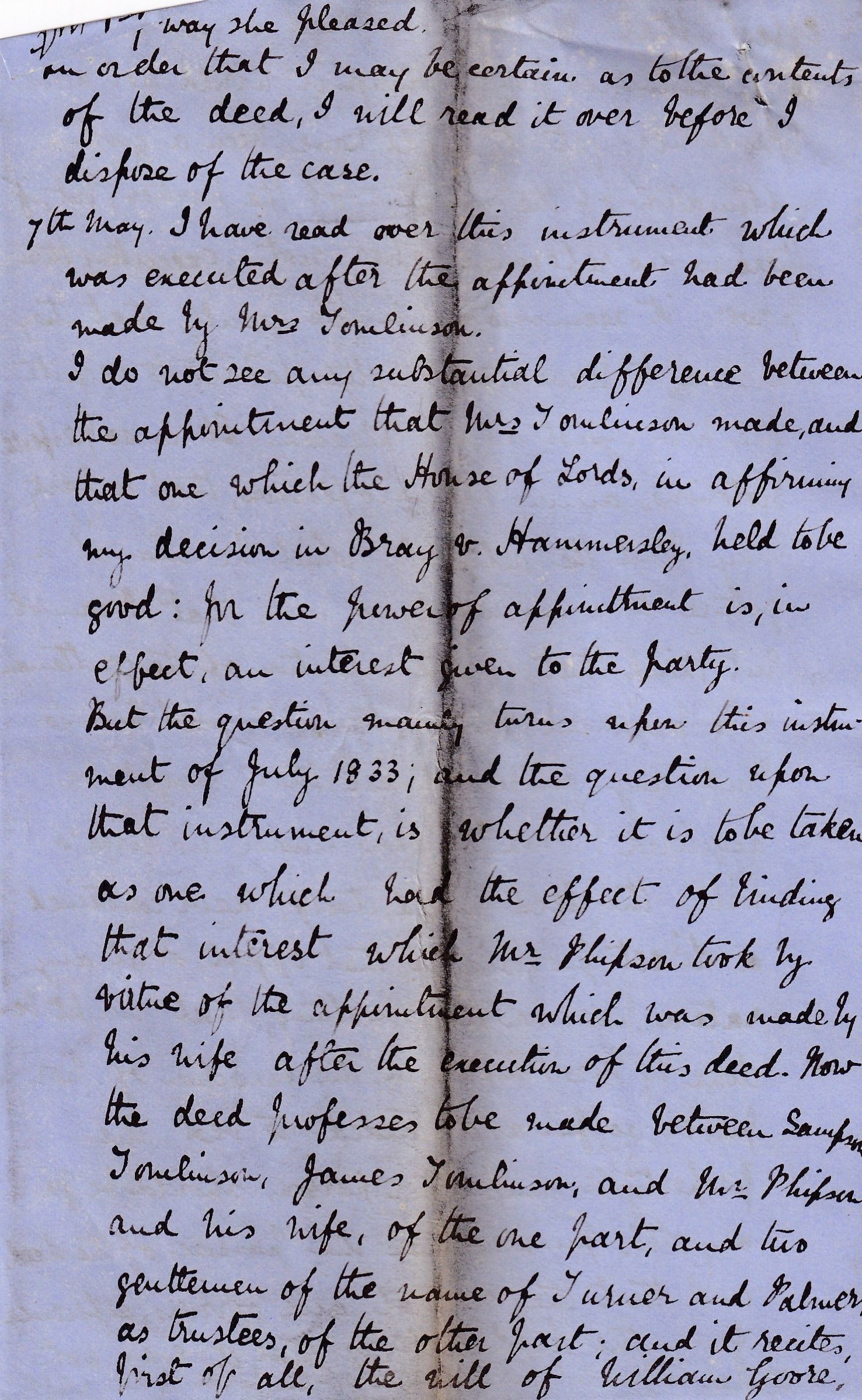
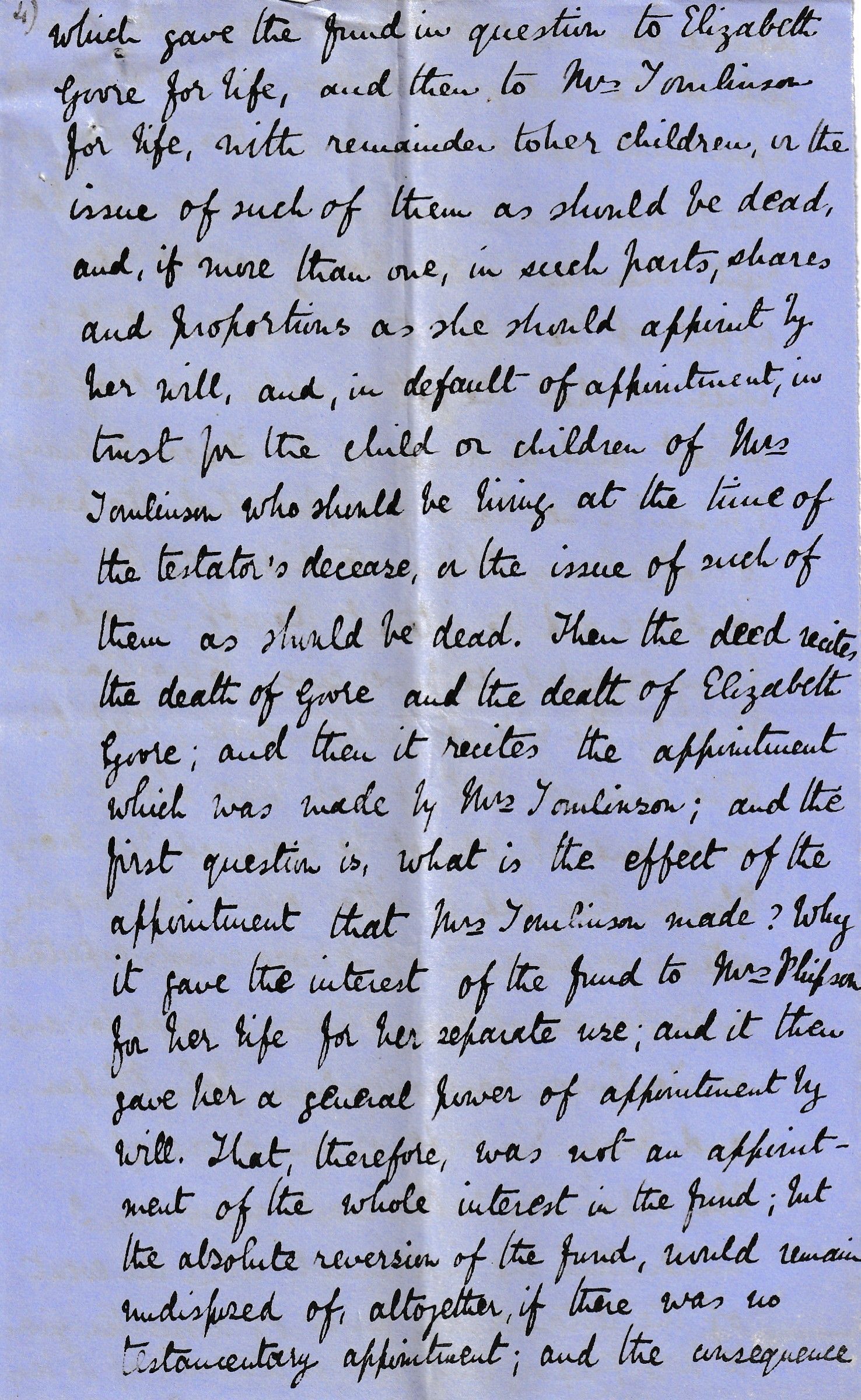
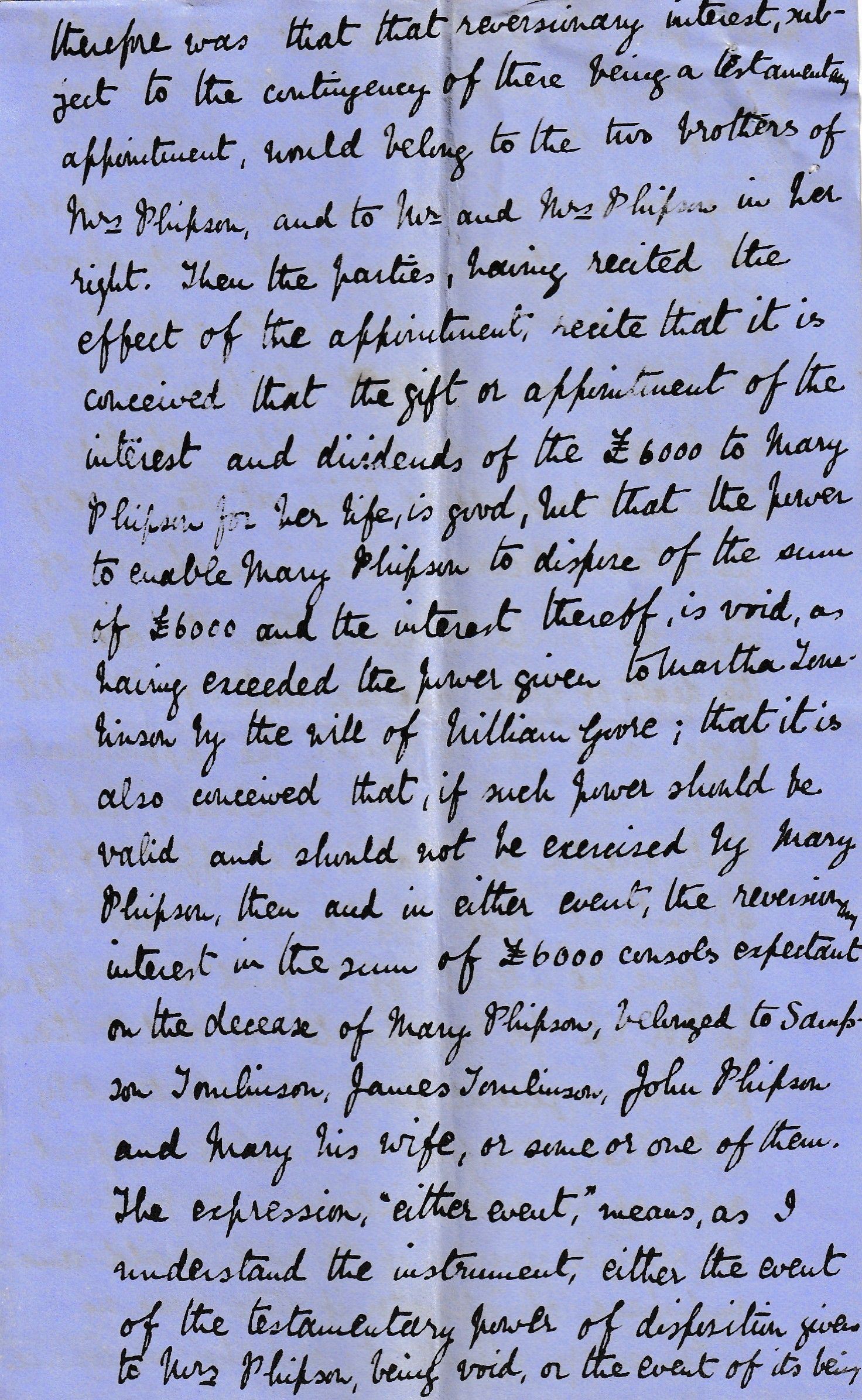
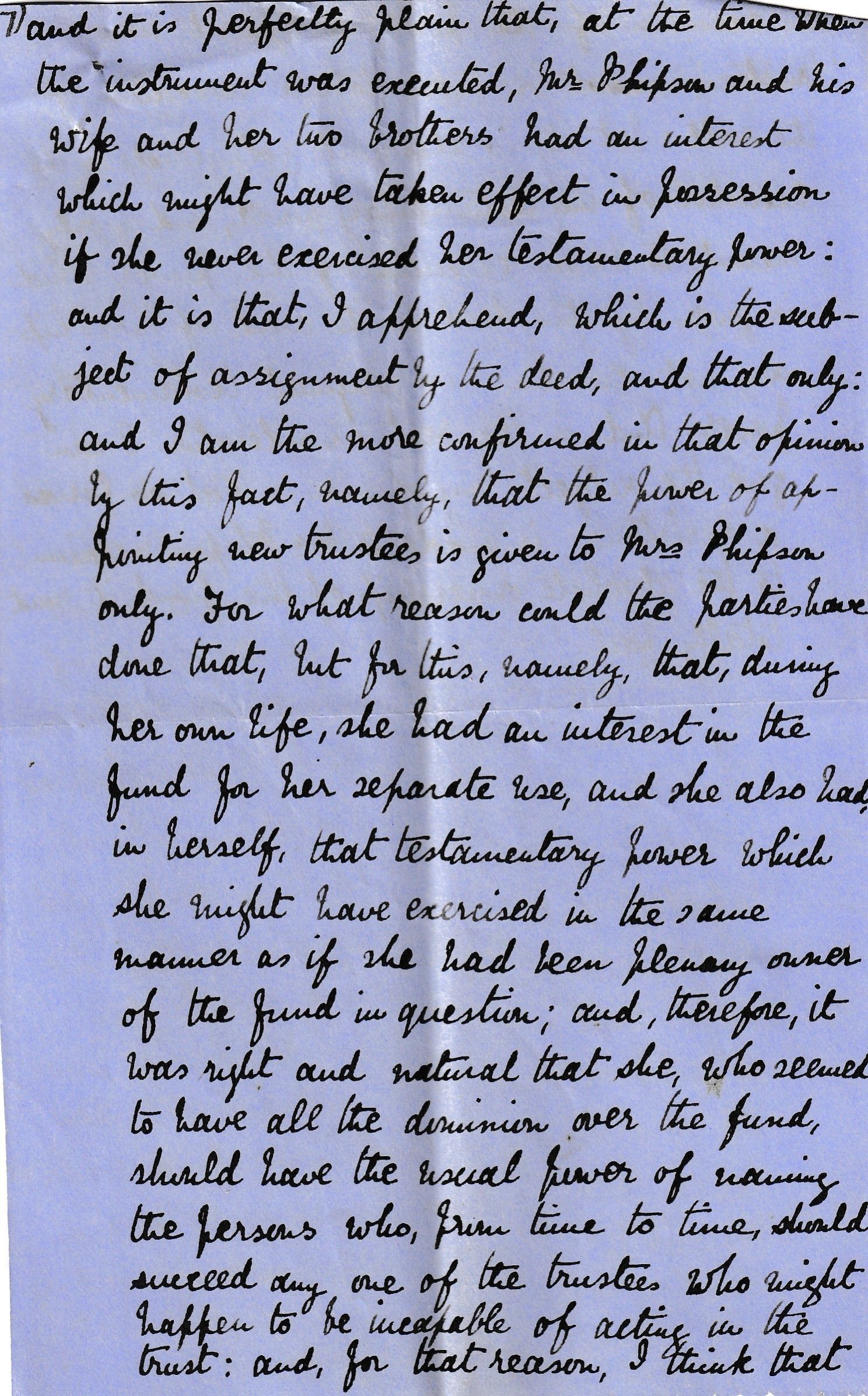
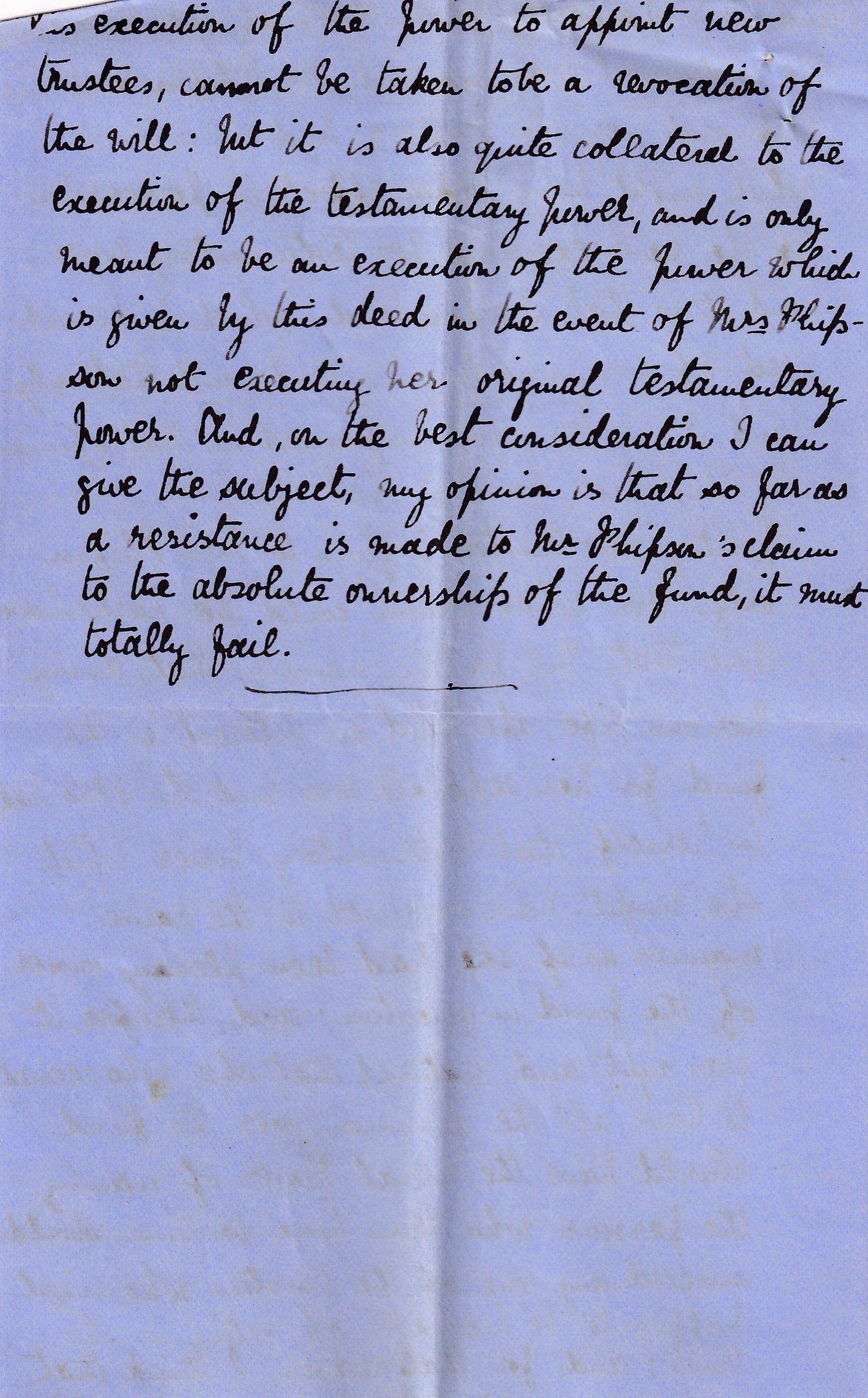
Transcription
Full Modern English Translation
Opening Case Summary
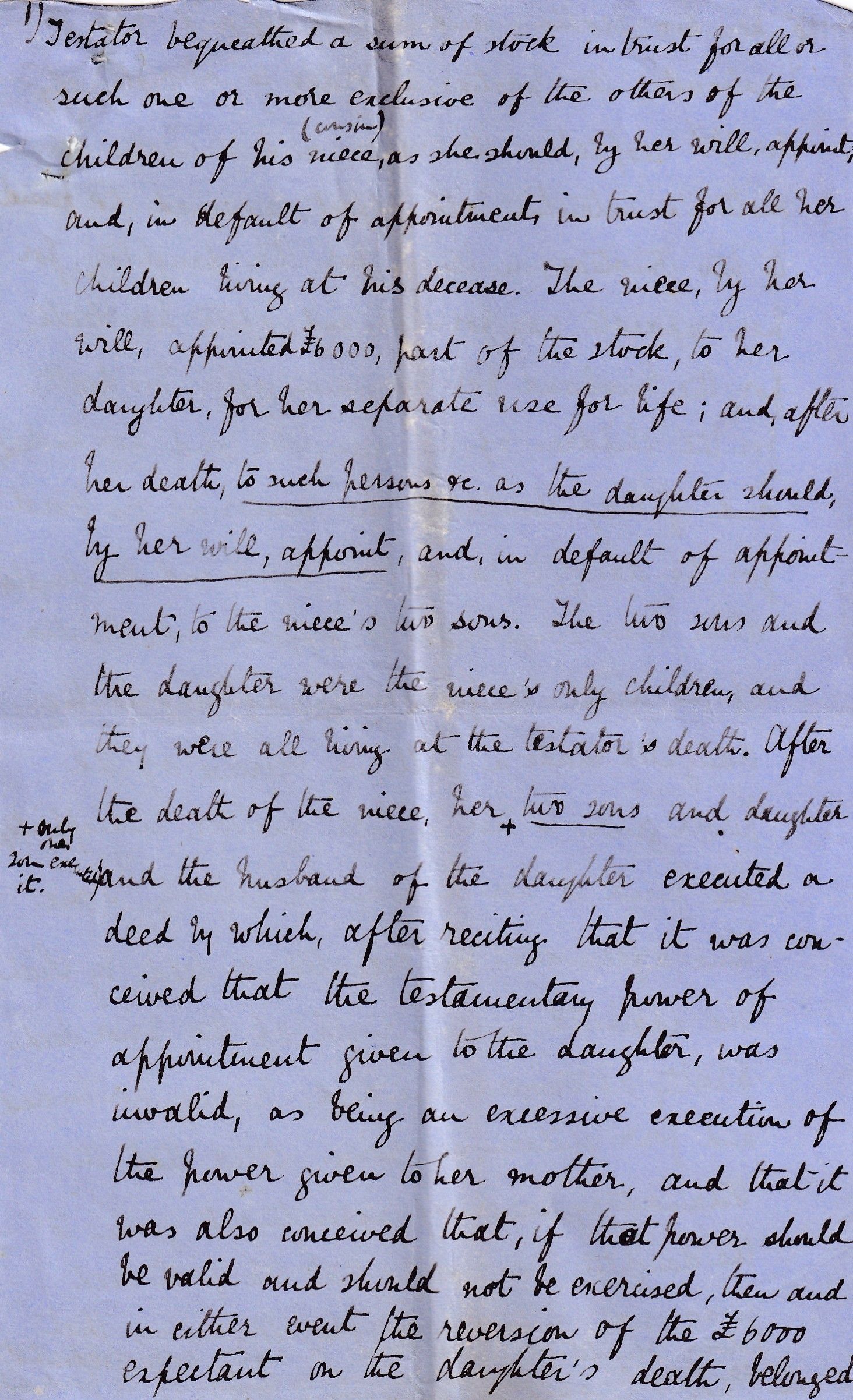
A testator left a sum of stock in trust for all or any one or more of the children of his niece, to be chosen by her through her will. If she failed to appoint it, the trust was to be for all her children living at the time of his death.
The niece, by her will, appointed £6000 (part of the stock) to her daughter for her separate use during her lifetime. After the daughter’s death, it was to go to such persons as the daughter might appoint by her own will. If she did not appoint anyone, it was to go to the niece’s two sons.
The two sons and the daughter were the niece’s only children, and all were alive when the testator died.
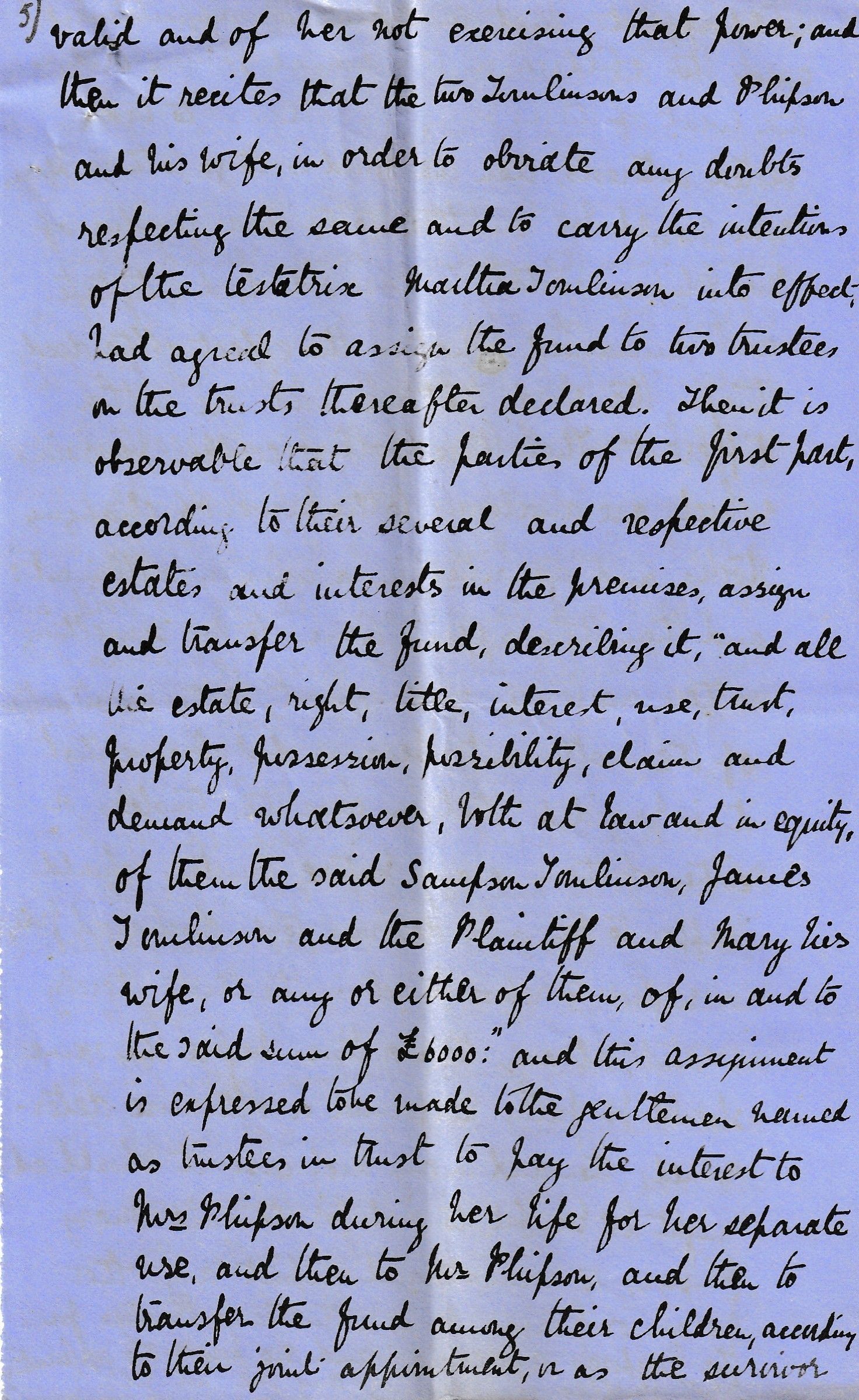
After the niece died, her two sons and daughter, along with the daughter’s husband, executed a deed. In that deed they stated:
They believed that the testamentary power of appointment given to the daughter was invalid, because it was an excessive exercise of the power given to her mother.
They also believed that if that power should be valid but not exercised, then the reversion of the £6000 after the daughter’s death would belong to the two brothers and to the daughter and her husband.
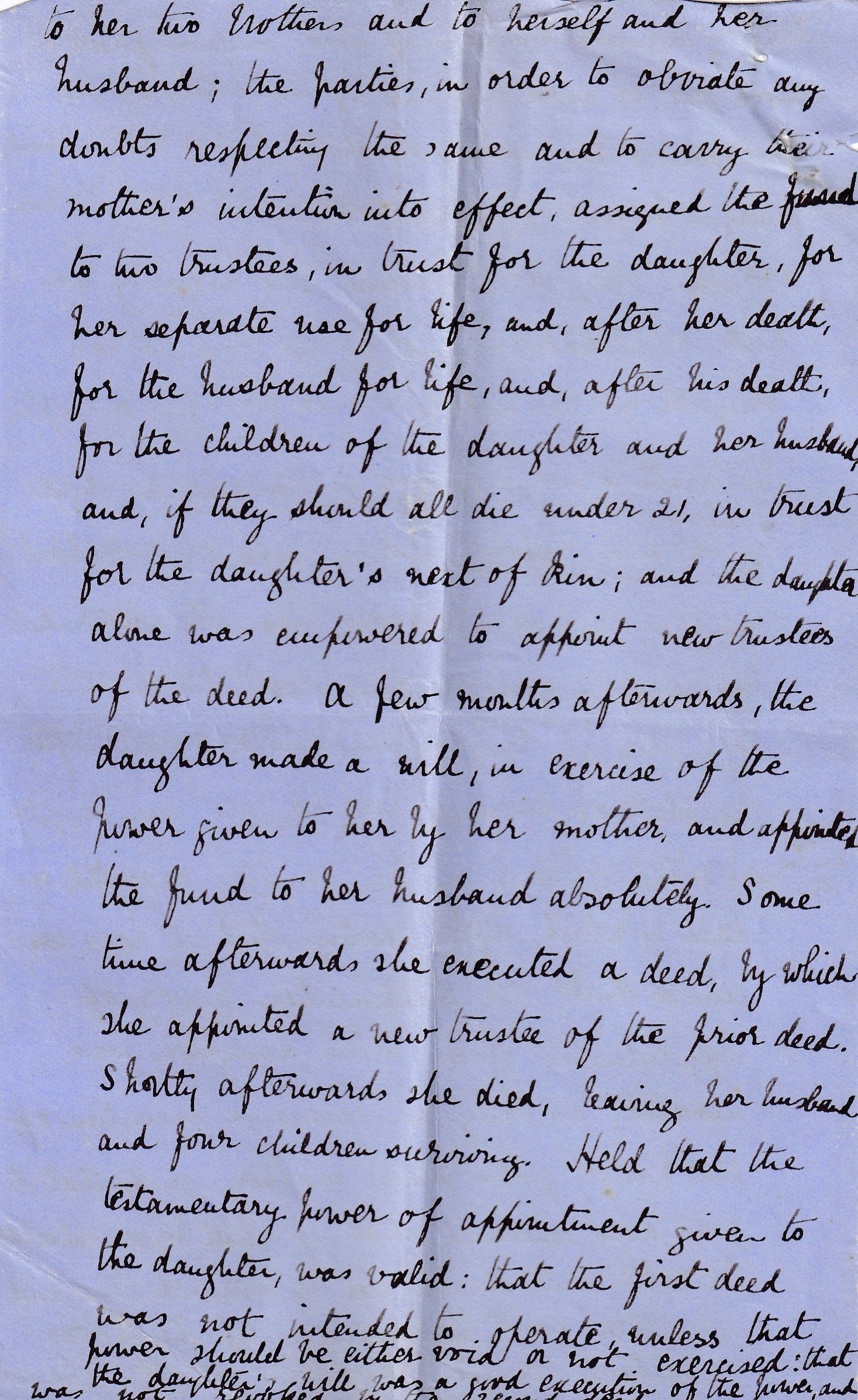
In order to remove doubts about the matter and to carry out their mother’s intentions, they assigned the fund to two trustees.
The trust arrangement provided:
The daughter would receive the income for her separate use during her life.
After her death, the husband would receive the income during his life.
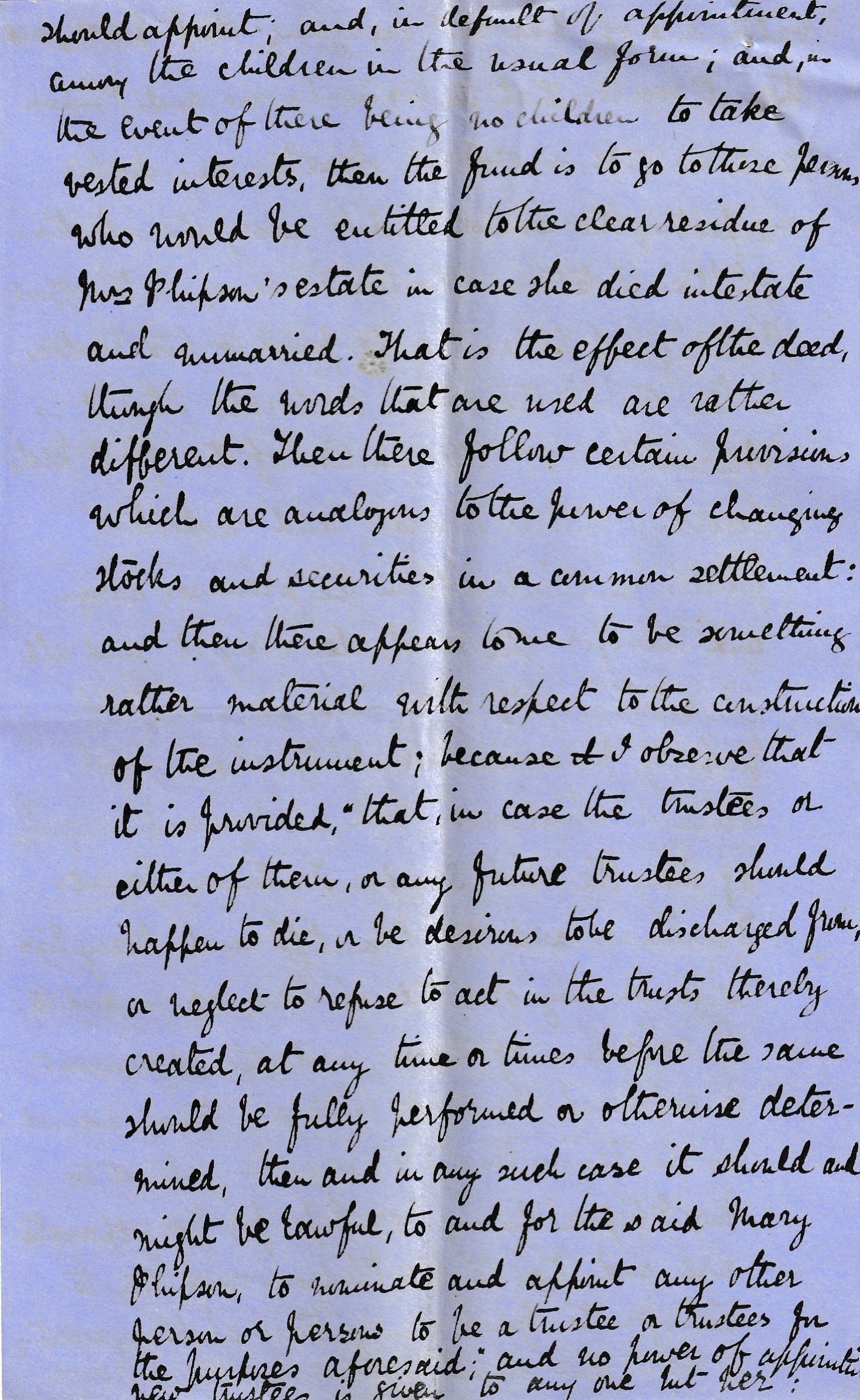
After the husband’s death, the fund would go to the children of the daughter and her husband.
If those children all died under the age of 21, the fund would go to the daughter’s next of kin.
The daughter was also given the power to appoint new trustees.
Subsequent Events
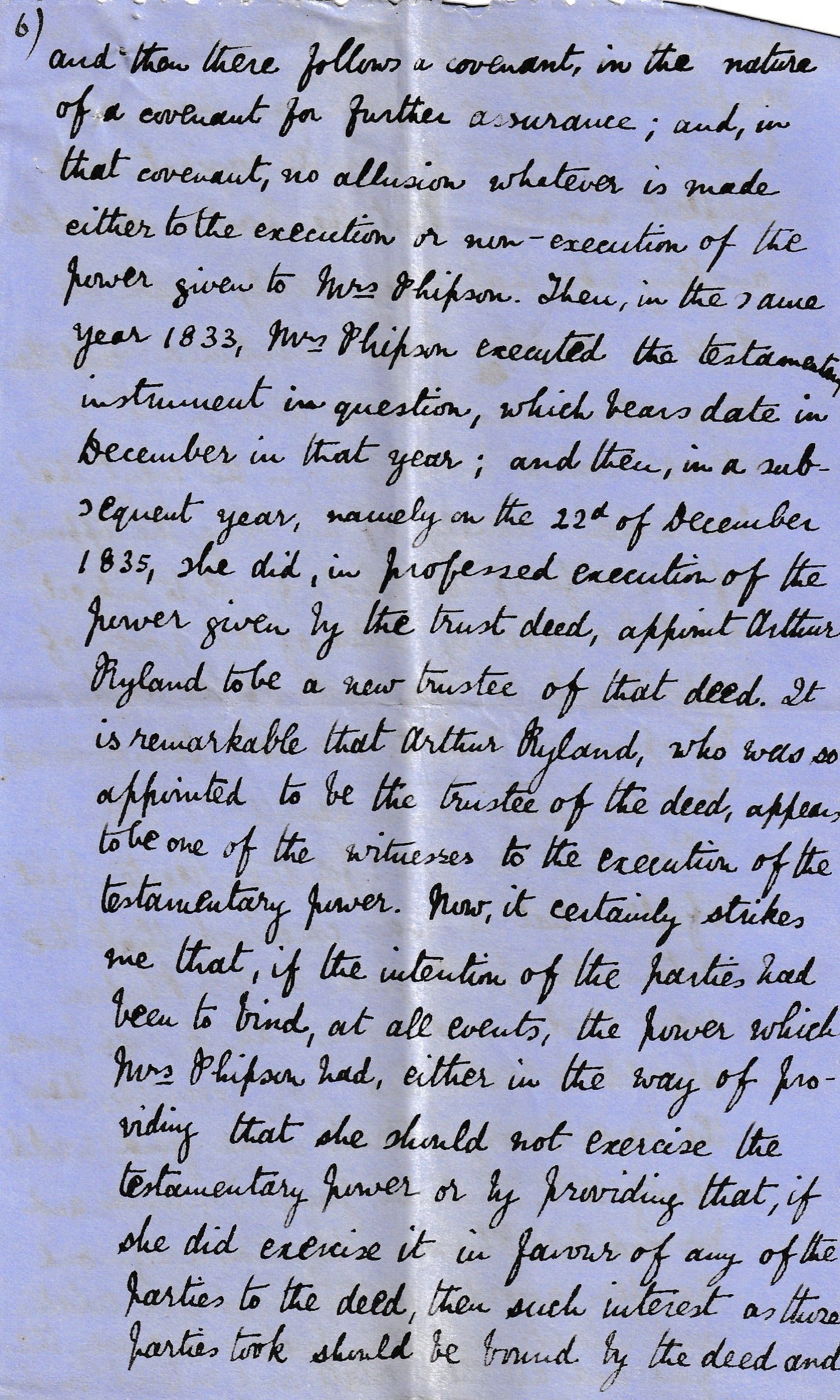
A few months later the daughter made a will exercising the power given to her by her mother and appointed the fund absolutely to her husband.
Later she executed another deed appointing a new trustee of the earlier trust deed.
Shortly afterward she died, leaving her husband and four children surviving.
Court Holding
The court held that:
The testamentary power of appointment given to the daughter was valid.
The first deed was not intended to operate if the power of appointment were exercised.
The daughter’s will was a valid execution of the power of appointment.
Reference to Legal Authority
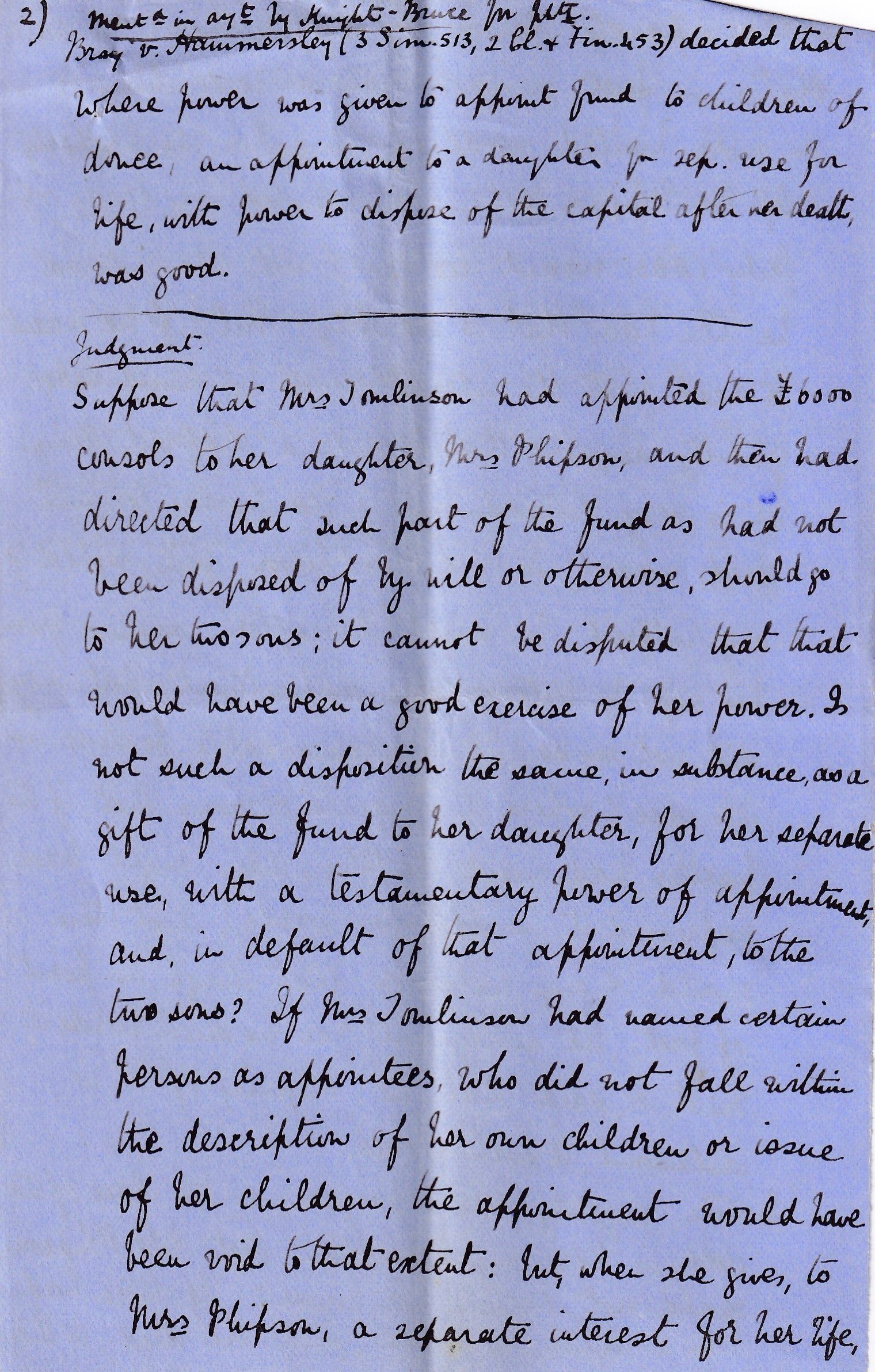
The case of Bray v. Hammersley (3 Sim. 513; 2 Cl. & Fin. 453) established that where a power is given to appoint a fund to the children of a niece, an appointment to a daughter for her separate use for life, with power to dispose of the capital after her death, is valid.
Judicial Reasoning
The judge explained that if Mrs. Tomlinson had simply appointed the £6000 consols to her daughter Mrs. Phipson and directed that whatever portion of the fund remained undisposed of should go to her two sons, that would clearly have been a proper exercise of her power.
Giving the daughter the fund for her separate use with a power of appointment by will is essentially the same arrangement.
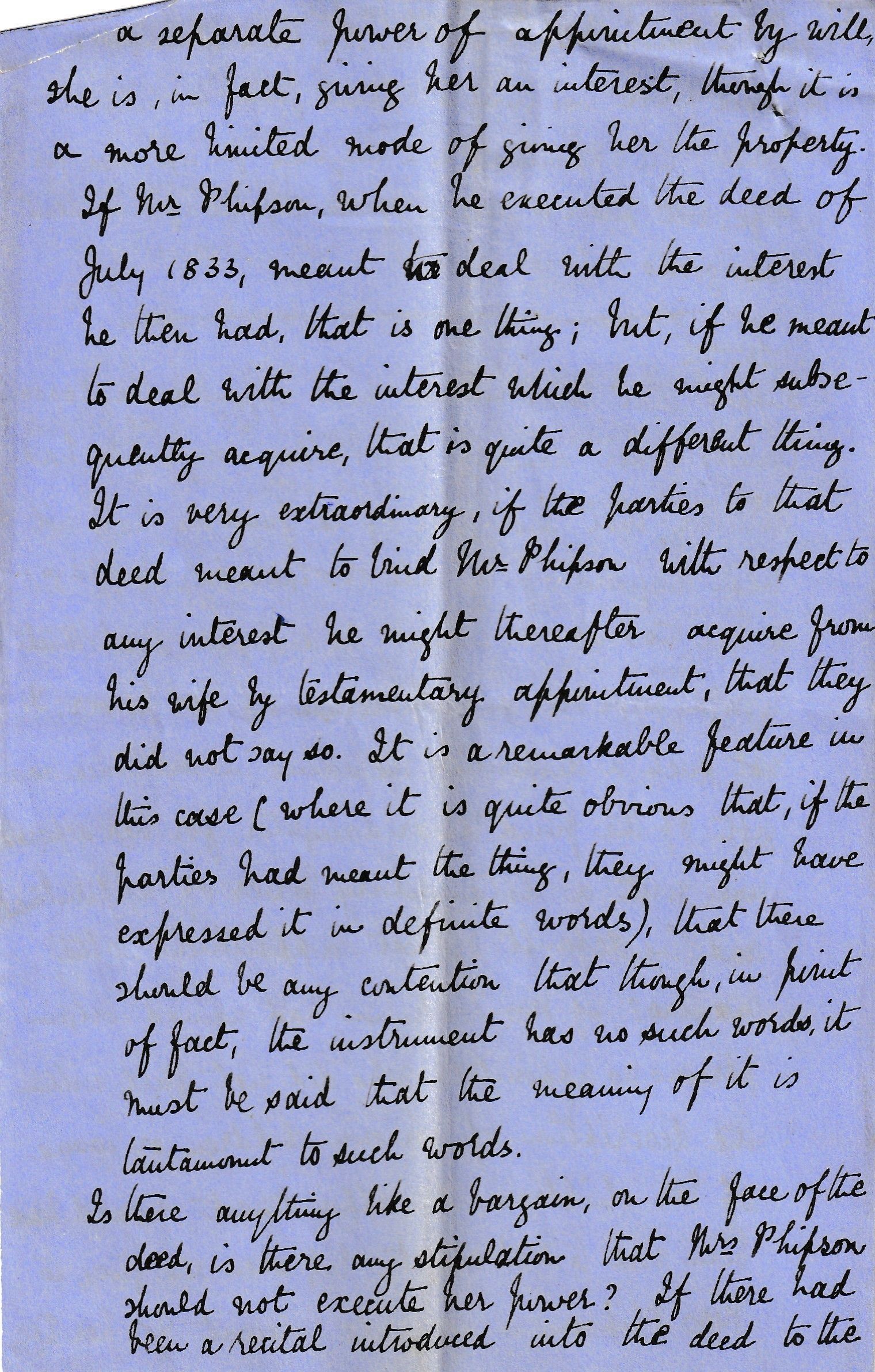
In other words, she gave her daughter an interest in the property, although in a somewhat limited form.
Discussion of the 1833 Deed
When Mr. Phipson executed the deed in July 1833, it may have dealt with the interest he then possessed.
However, if he intended the deed to control any future interest he might later acquire through his wife’s exercise of her testamentary power, that would be a completely different matter.
The document contains no words clearly stating such an intention.
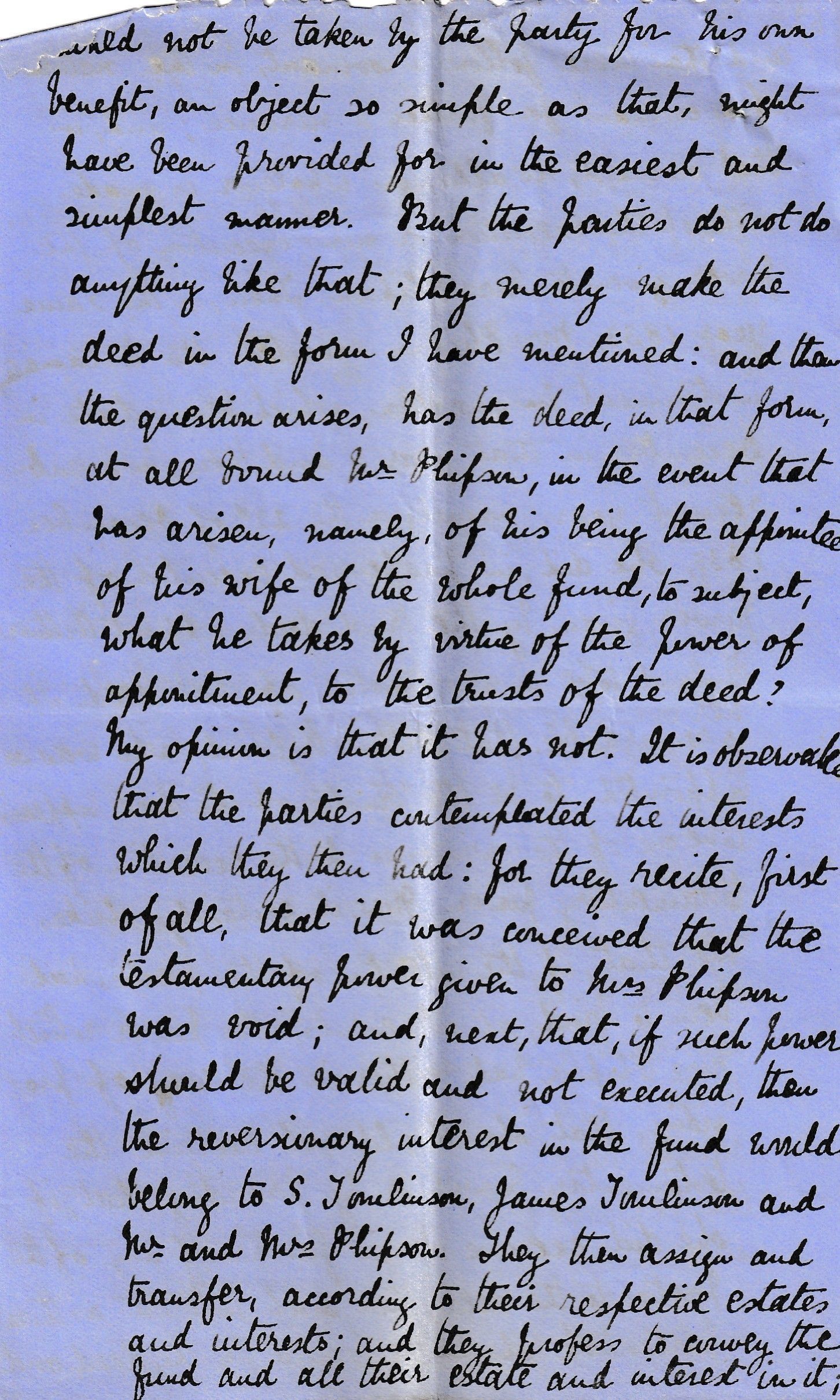
If the parties had intended to bind him regarding future interests that might arise through his wife’s will, they could easily have said so explicitly.
Because the instrument contains no such language, it cannot reasonably be interpreted as doing that.
Observations About the Deed
The deed does not contain any provision stating that Mrs. Phipson should not exercise her testamentary power.
Even if such a provision had existed, it might not have been legally binding, but it would have indicated the intention of the parties.
Instead, the deed appears to leave the power entirely in her hands to exercise as she pleased.
It is well known in legal practice that a person may bind an interest that he may acquire in the future through a will.
However, nothing in this document indicates that this was intended.
Examination of the Earlier Trust
The original will of William Gore had left the fund in question to Elizabeth Gore for life, then to Mrs. Tomlinson for life, and afterward to her children or their descendants.
Mrs. Tomlinson later exercised her power of appointment, giving the fund to her daughter Mrs. Phipson for life with a testamentary power of appointment.
Thus, the absolute ownership of the fund depended on whether Mrs. Phipson exercised that power.
Interpretation of the Deed
The deed states that the parties believed:
The daughter’s testamentary power might be invalid.
If it was valid but not exercised, the reversionary interest would belong to the brothers and to Mr. and Mrs. Phipson.
Therefore, they assigned their present interests to trustees in order to implement what they believed to be the proper arrangement.
But the deed only dealt with the interests they then possessed, not with any interest that might later arise through the daughter’s exercise of her testamentary power.
Final Opinion of the Court
At the time the deed was executed:
Mrs. Phipson
her husband
and her two brothers
each had a potential interest that would arise only if she failed to exercise her power of appointment.
That possible interest was what they assigned to the trustees.
But once Mrs. Phipson later exercised her power of appointment in favor of her husband, the entire fund passed to him.
The earlier deed did not prevent that result.
Final Conclusion
The judge concluded that the deed did not bind or restrict Mr. Phipson with respect to the interest he later received through his wife’s will.
Therefore, any challenge to Mr. Phipson’s claim to full ownership of the fund must fail.
The husband's title to the entire fund is valid.Language
English