Transcription
(Modernized, fully readable transcription)
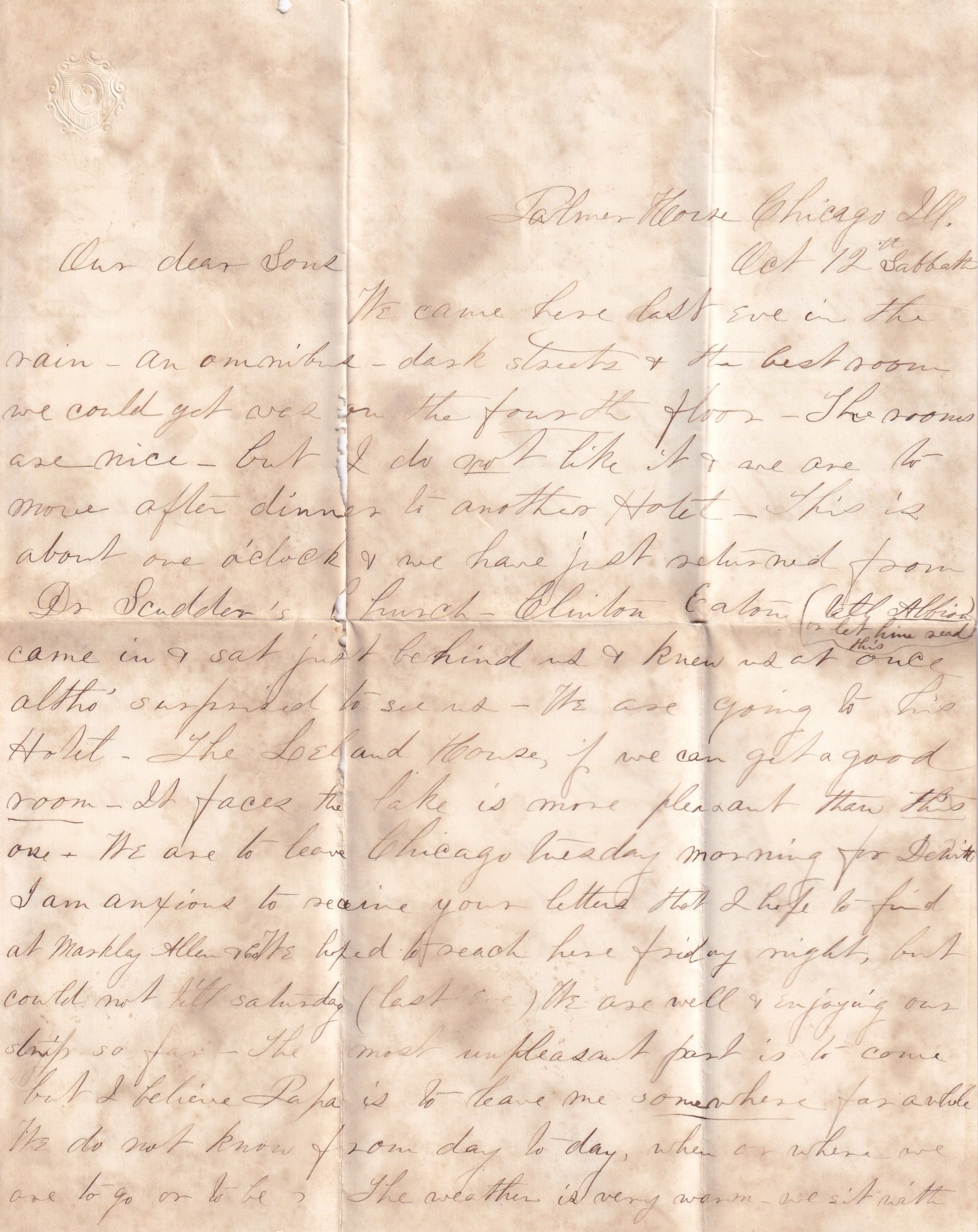
Our dear son,
We came here last eve in the rain — an omnibus — dark streets and the best room we could get was on the fourth floor. The rooms are nice, but I do not like to be one to move after dinner to another hotel. This is about one o’clock and we have just returned from Dr. Scudder’s lunch. Clinton Eaton (left Albion) came in and sat just behind us. I knew him at once, although surprised to see him. We are going to this hotel — the ______ House, where we can get a good room. It faces the lake and is more pleasant than this one.
We are to leave Chicago Tuesday morning for Detroit.
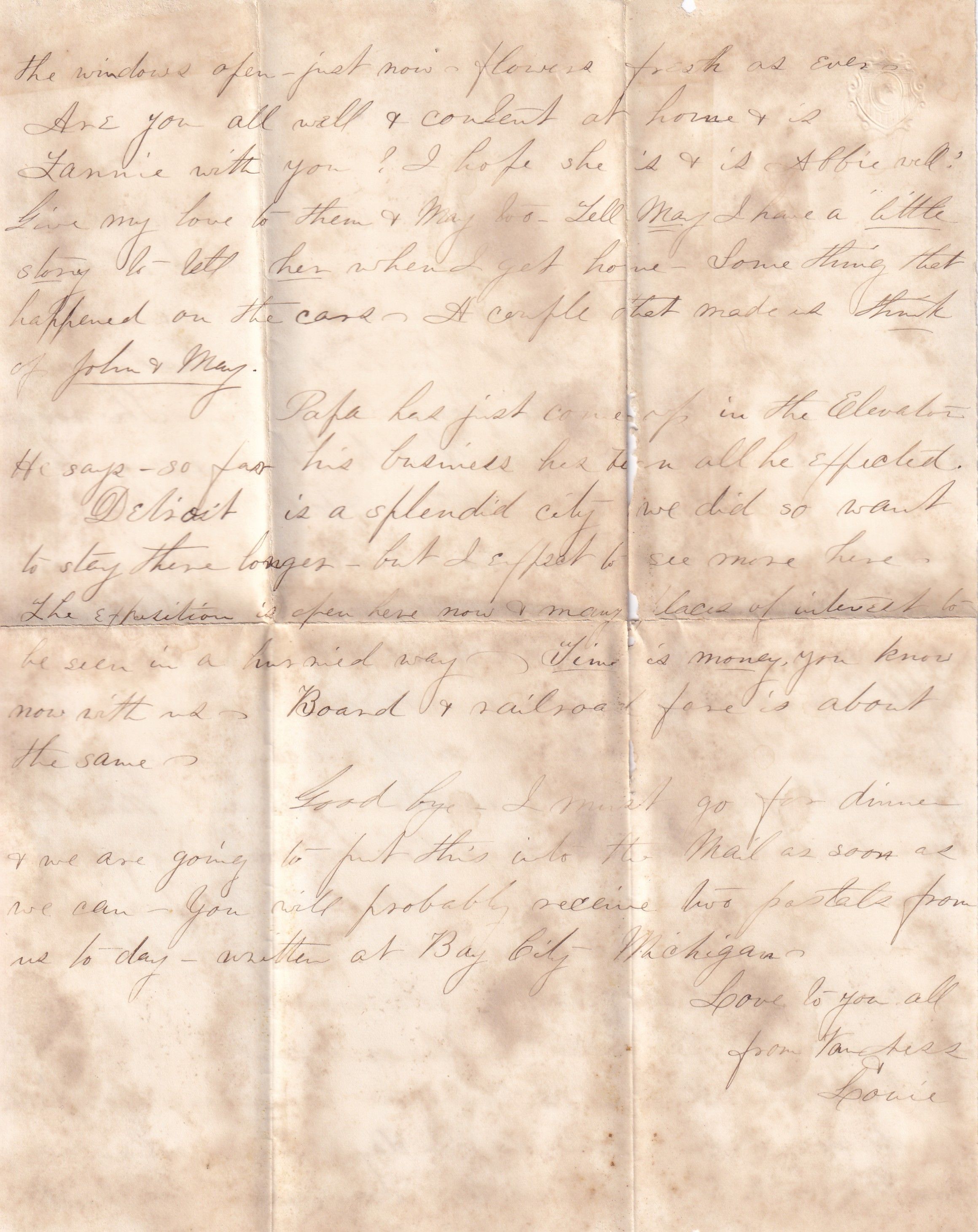
I am anxious to receive your letter that I hope to find at Marshall. Allen — wrote — hoped to reach here Friday night, but could not till Saturday (last eve). We are well and enjoying our trip so far. The most unpleasant part is to come, but I believe Papa is to leave me somewhere for a while. We do not know from day to day when or where we are to go or to be. The weather is very warm — we sit with the windows open — fresh now and flowers fresh as ever.
Are you all well and content at home? Is Fannie with you? I hope she is — and is Abbie well? Give my love to them and May too. Tell May I have a little story to tell her when I get home — something that happened on the cars. It was a trifle that made us think of John and May.
Papa has just come up in the elevator. He says so far his business has been all he expected. Detroit is a splendid city. We did so want to stay there longer, but I expect to see more here. The exposition is open here now and many places of interest are to be seen in a hurried way. Times are money, you know now with us — Board & railroad fare is about the same.
Good bye. I must go for dinner. We are going to put this into the mail as soon as we can. You will probably receive two postals from us today — written at Bay City, Michigan.
Love to you all,
from Mamma LouieLanguage
EnglishNotes
Handwriting Style / Script Type
Victorian cursive (influenced by Copperplate / Spencerian transitional hand)
— flowing, right-slanted script with moderate flourishes and consistent line weight typical of educated 19th-century writers
Document Material
Laid rag paper with visible aging and fold creases; likely mid-19th century handmade or early machine-assisted paper.
Embossed decorative seal present in upper corner, indicating personal or stationer’s mark.