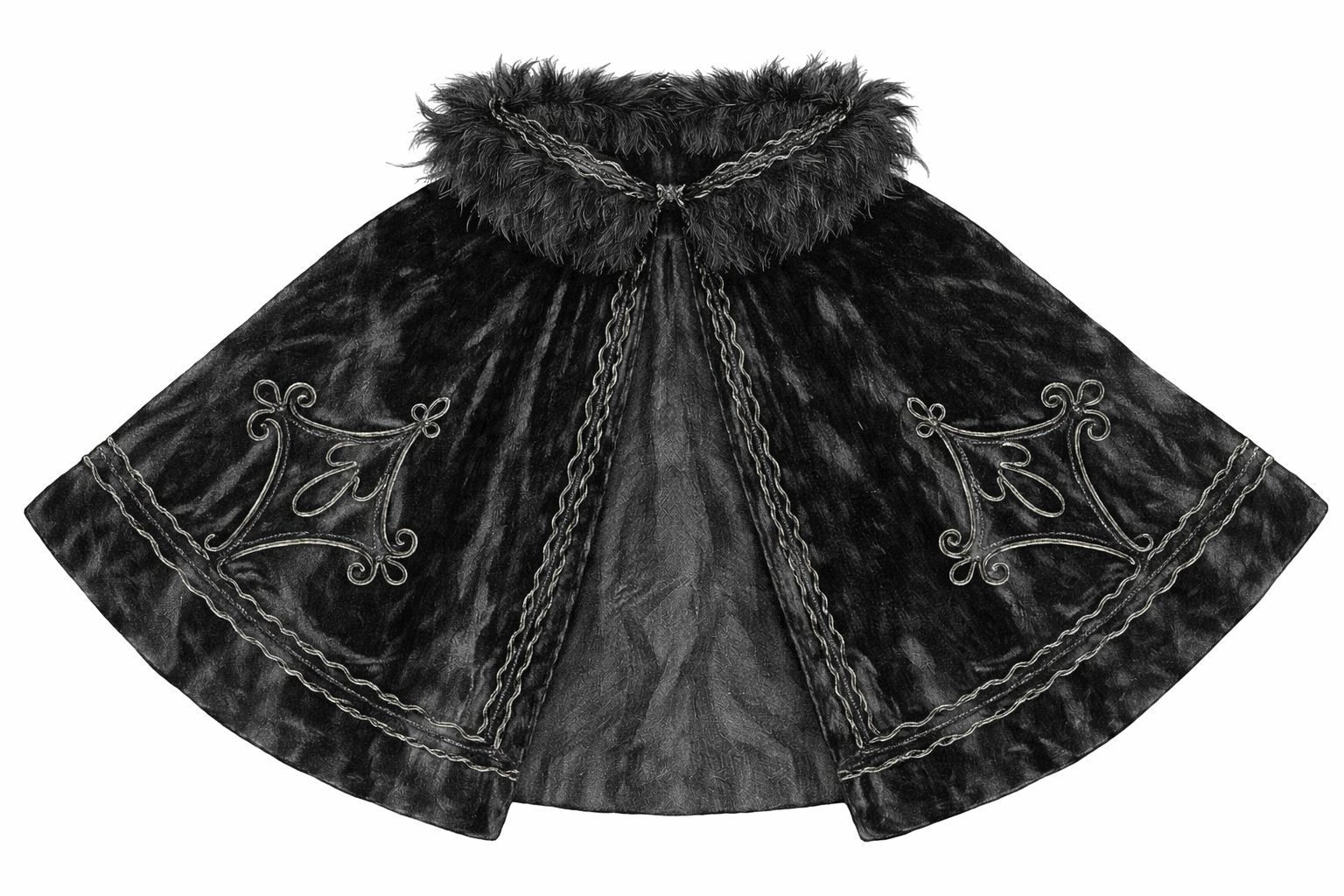
Article of Clothing/Dress/Costume
Cape, MantleClothing Sex
FemaleTextile Details
Material
Velvet, BeadsColor
BlackSewing Stitch Type
Corded passementerie embroideryNotes
Pattern & Cut:
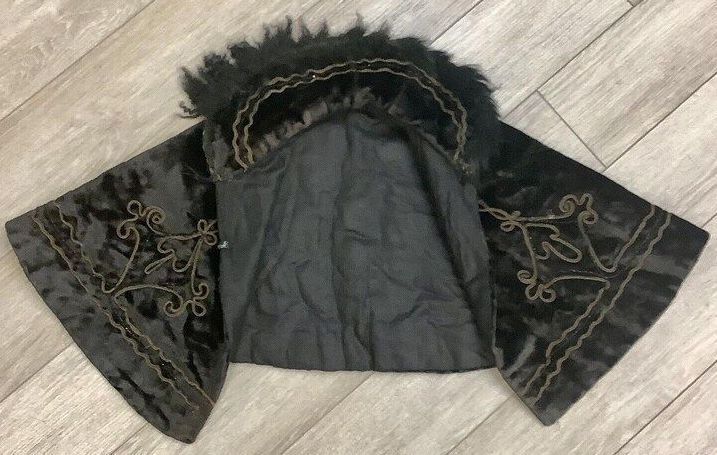
The mantle is cut in a shallow circular or semi-circular pattern, creating a flared silhouette that drapes evenly over the shoulders. The body appears to be composed of multiple shaped panels joined with vertical seams, allowing the fabric to accommodate curvature without excessive bulk.
Outer Fabric Assembly:
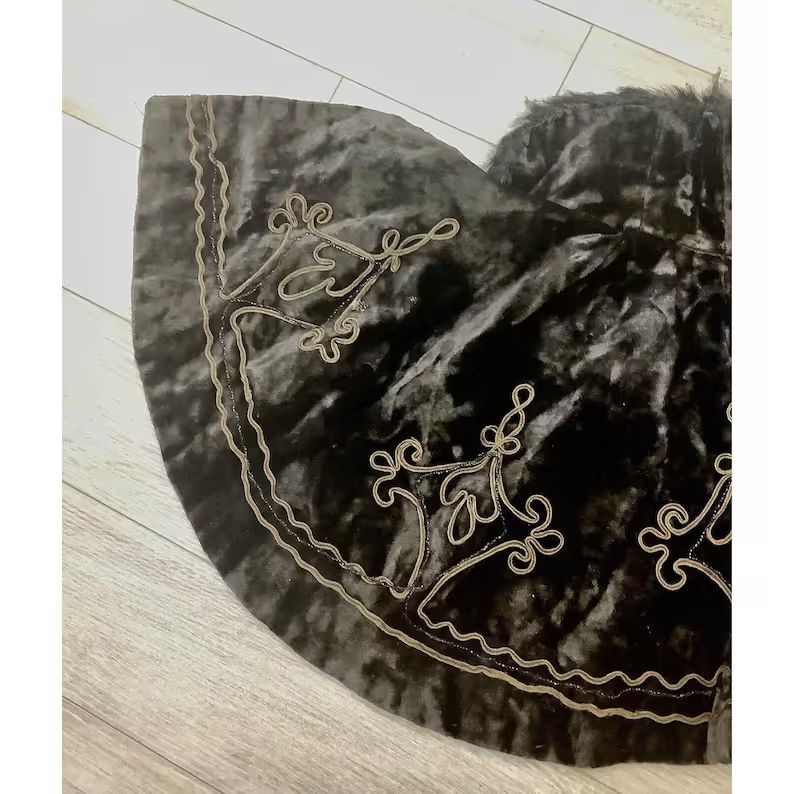
The exterior silk velvet is cut with careful attention to nap direction to ensure uniform sheen across the surface. Seams are narrowly turned and hand-stitched, minimizing disruption to the velvet pile.
Embellishment Application:
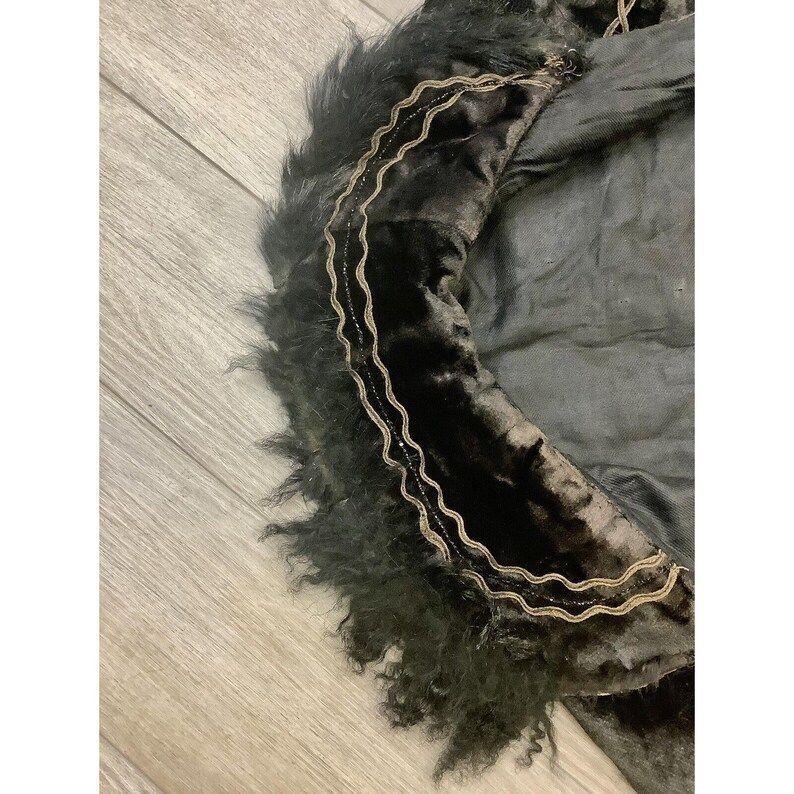
Decorative metallic cord is applied to the velvet surface using couching stitches, likely worked by hand. The cord follows pre-marked symmetrical designs, indicating planned ornament rather than freehand decoration. Parallel rows of metallic trim are applied along the hem, reinforcing the circular outline of the garment.
Neckline Construction:
The neckline is shaped with controlled gathering and reinforced with a narrow facing or neckband. Feather trim is hand-applied along the neckline edge, likely stitched through a tape or binding to distribute stress and reduce strain on the velvet.
Closure System:
The mantle fastens at the center front beneath the feather trim, likely using hooks and eyes or narrow ties. The placement allows the closure to remain visually discreet while maintaining stability when worn.
Lining:
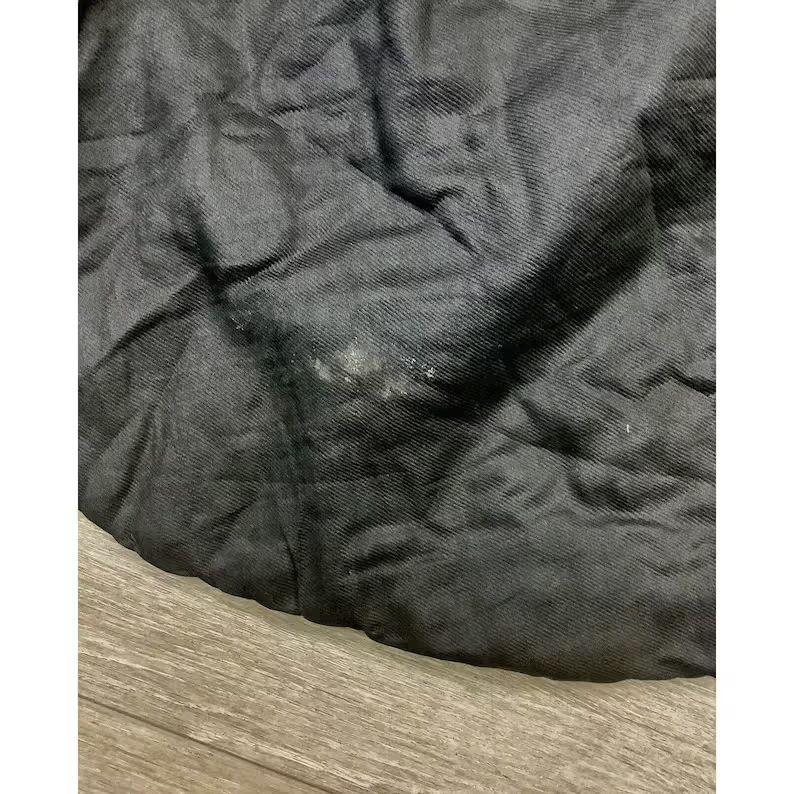
The interior is fully lined with silk, cut to mirror the outer shape. The lining is hand-set into the garment, with seams offset from the exterior seams to reduce bulk. Minor wear and discoloration suggest prolonged contact with the wearer’s clothing.
Edge Finishing:
The hem is finished with a narrow turned edge, stabilized by the applied metallic trim. This method provides both decorative emphasis and structural support, helping prevent distortion over time.
Stitching & Techniques:
Stitching throughout appears to be predominantly hand-worked, with small, even stitches visible along seams, trims, and lining attachment points. No evidence of modern machine stitching is present.