Article of Clothing/Dress/Costume
HatClothing Sex
FemaleNotes
Primary Materials
Black silk (likely taffeta and/or faille)
Black silk net as an overlay
Extensive black glass bead embroidery
Black silk ribbon (ties and decorative bows)
Internal silk lining
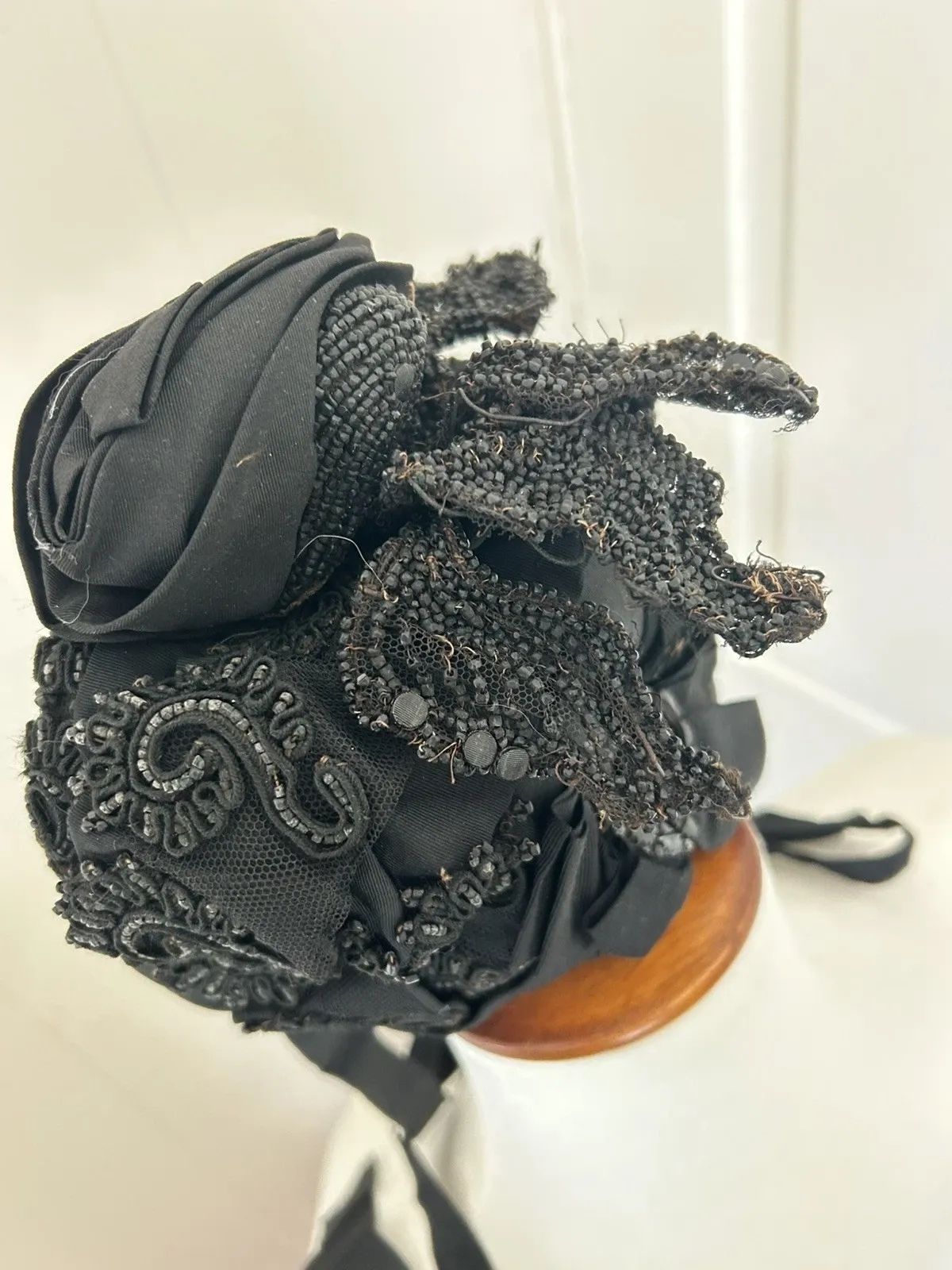
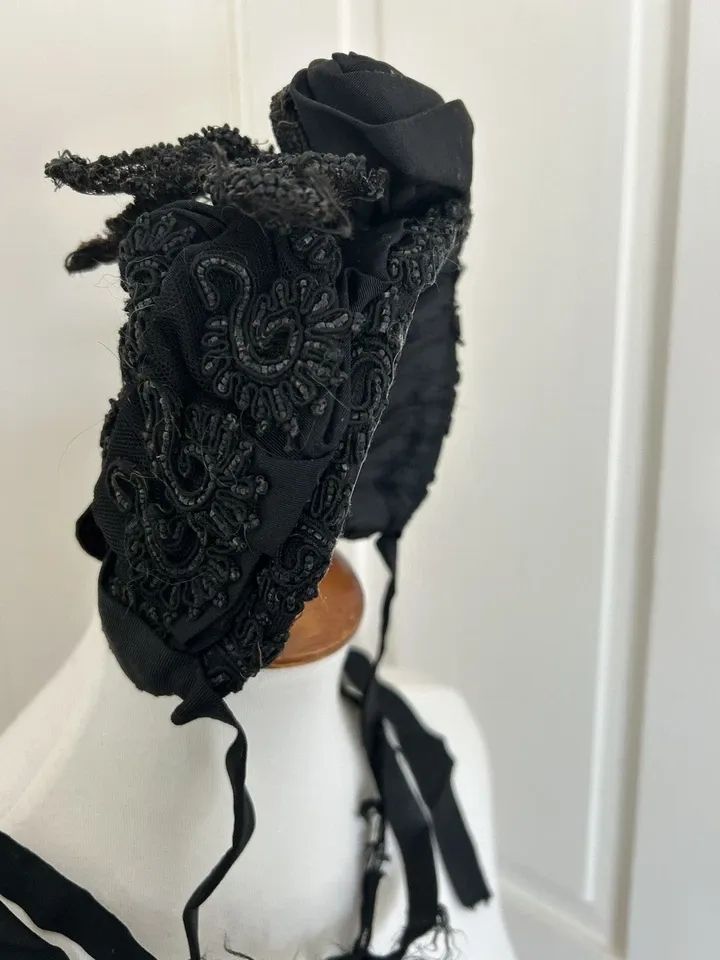
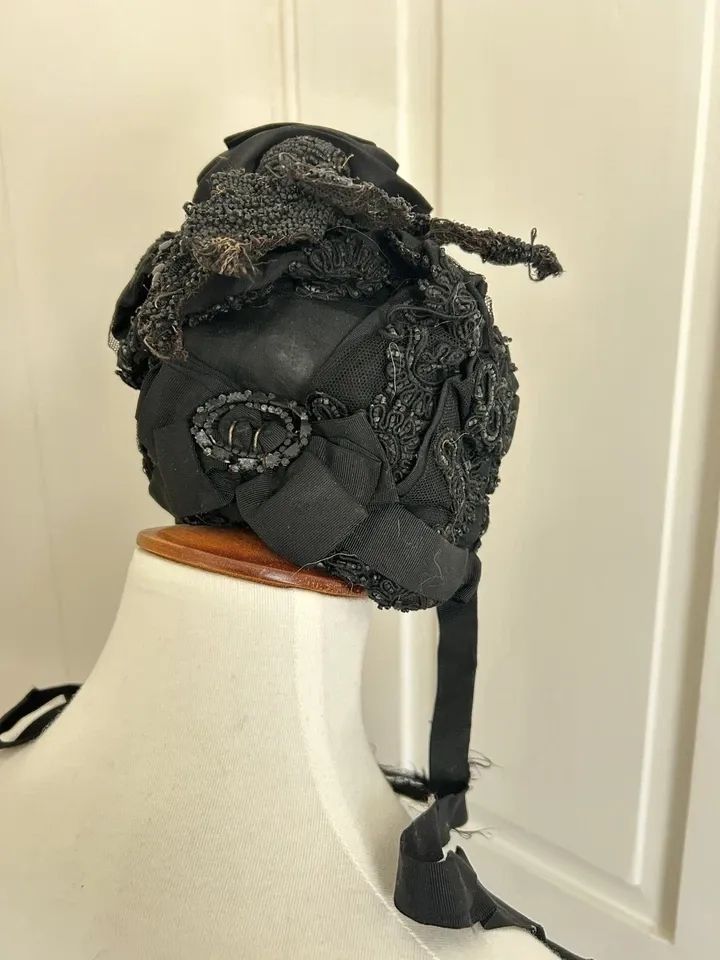
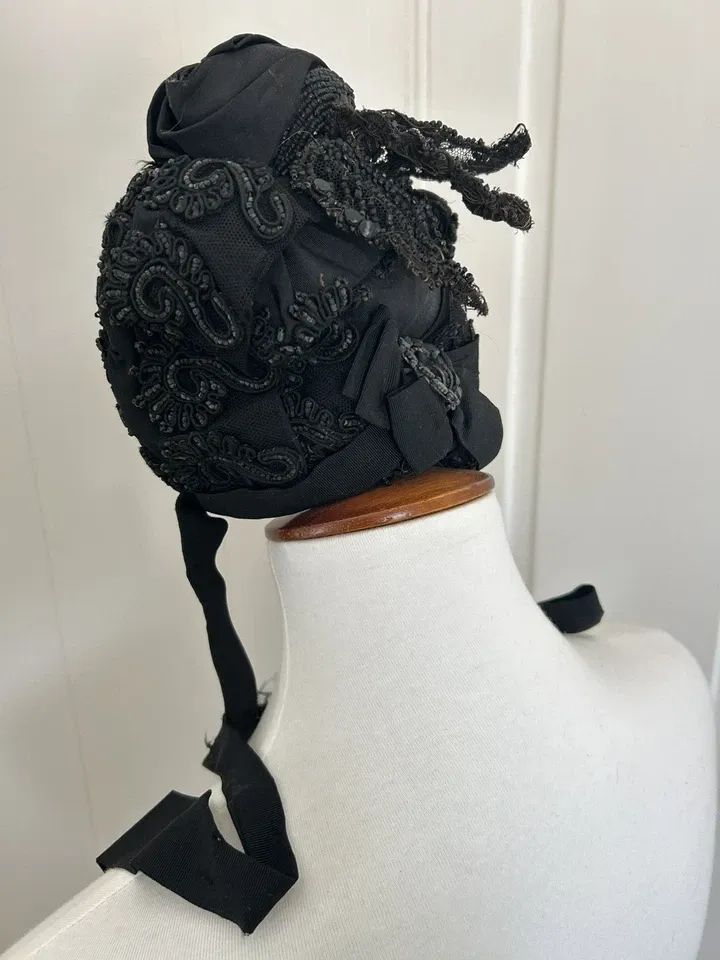
The surface is densely worked with applied bead embroidery arranged in scrolling floral and foliate motifs. These are executed on a net or gauze ground, then applied to the bonnet body — a common couture technique that allowed elaborate decoration without cutting into the structural fabric beneath.
The beads are small, matte-to-slightly-gloss black glass, consistent with mourning beadwork rather than jet jewelry (which would be faceted and heavier).
Shape
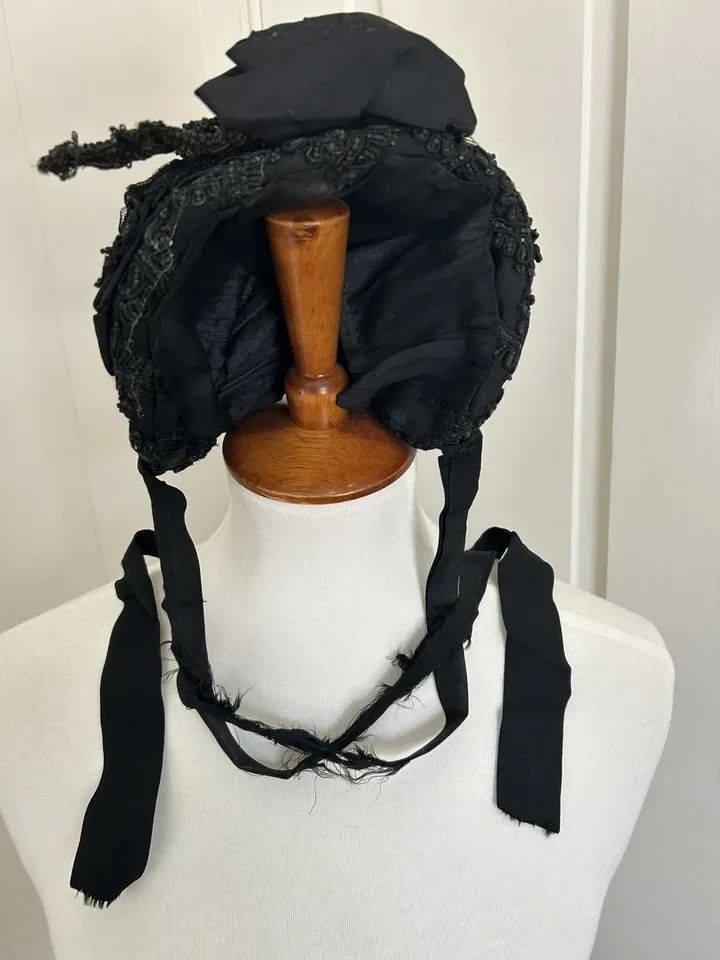
Rounded crown closely fitted to the head
Shallow depth at the back
No projecting brim (a key late-Victorian feature)
Designed to sit high and tight at the back of the head
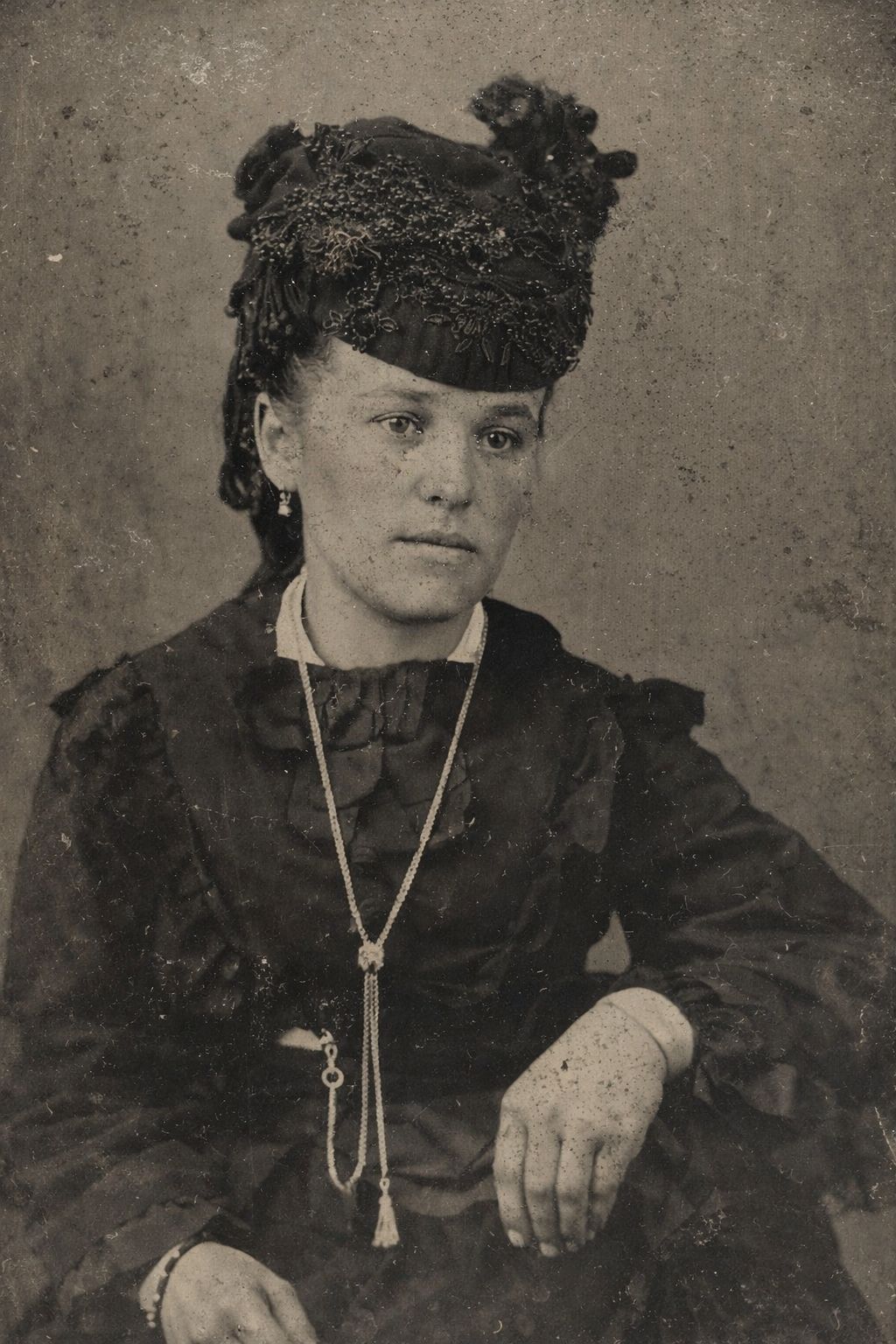
This silhouette reflects late Victorian fashion, when hairstyles were worn up and back, and bonnets served as decorative frames rather than shields.
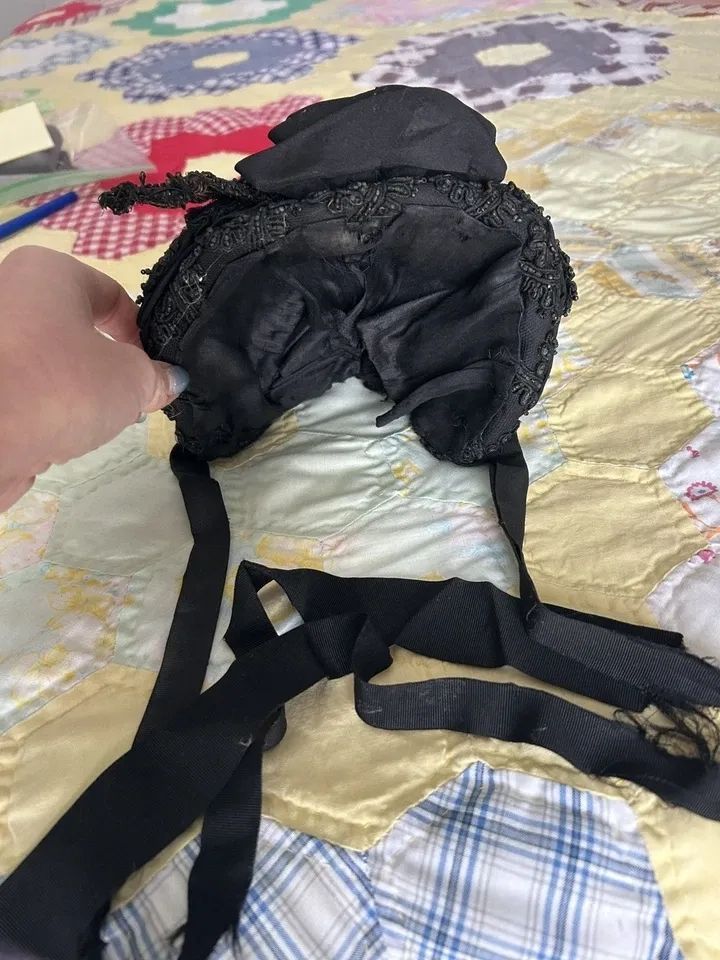
Interior
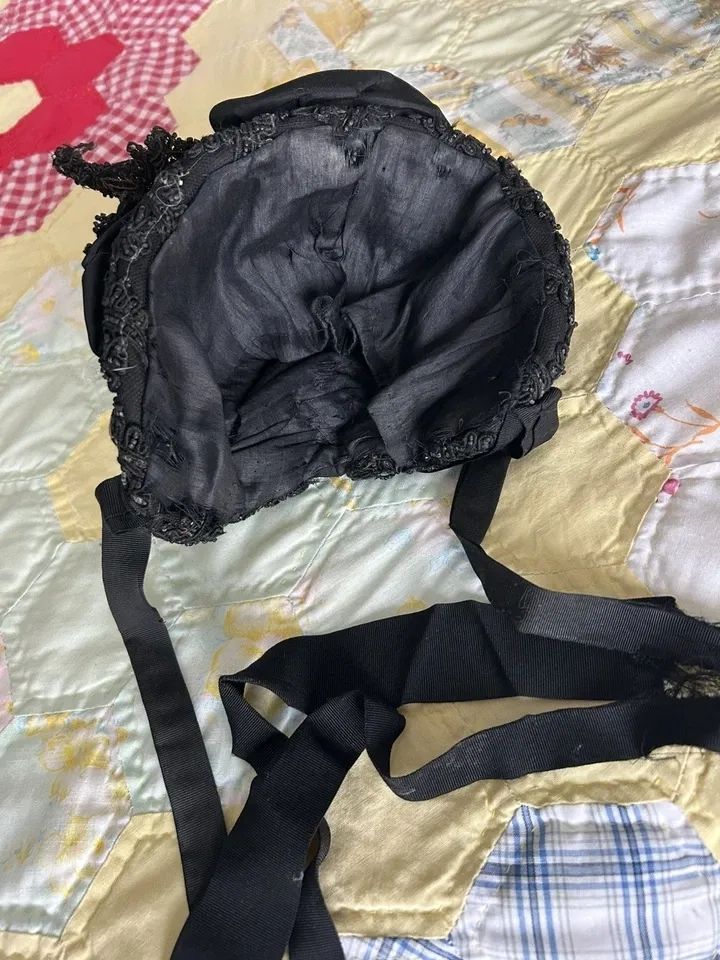
Fully silk-lined
Lining shows wear, thinning, and discoloration, consistent with contact from hair and pins
Interior shaping achieved through gathered silk and stitched folds rather than rigid buckram
Trim & Applied Elements
Beaded net panels layered and stitched over the bonnet exterior
Silk ribbon bows placed asymmetrically for visual balance
Additional small beaded tabs or extensions at the sides, possibly once more pronounced
Fastening
Long silk ribbon ties designed to secure under the chin or at the nape
Ties are wide and soft, suggesting decorative intent rather than structural tension