Note Type
DescriptionNote
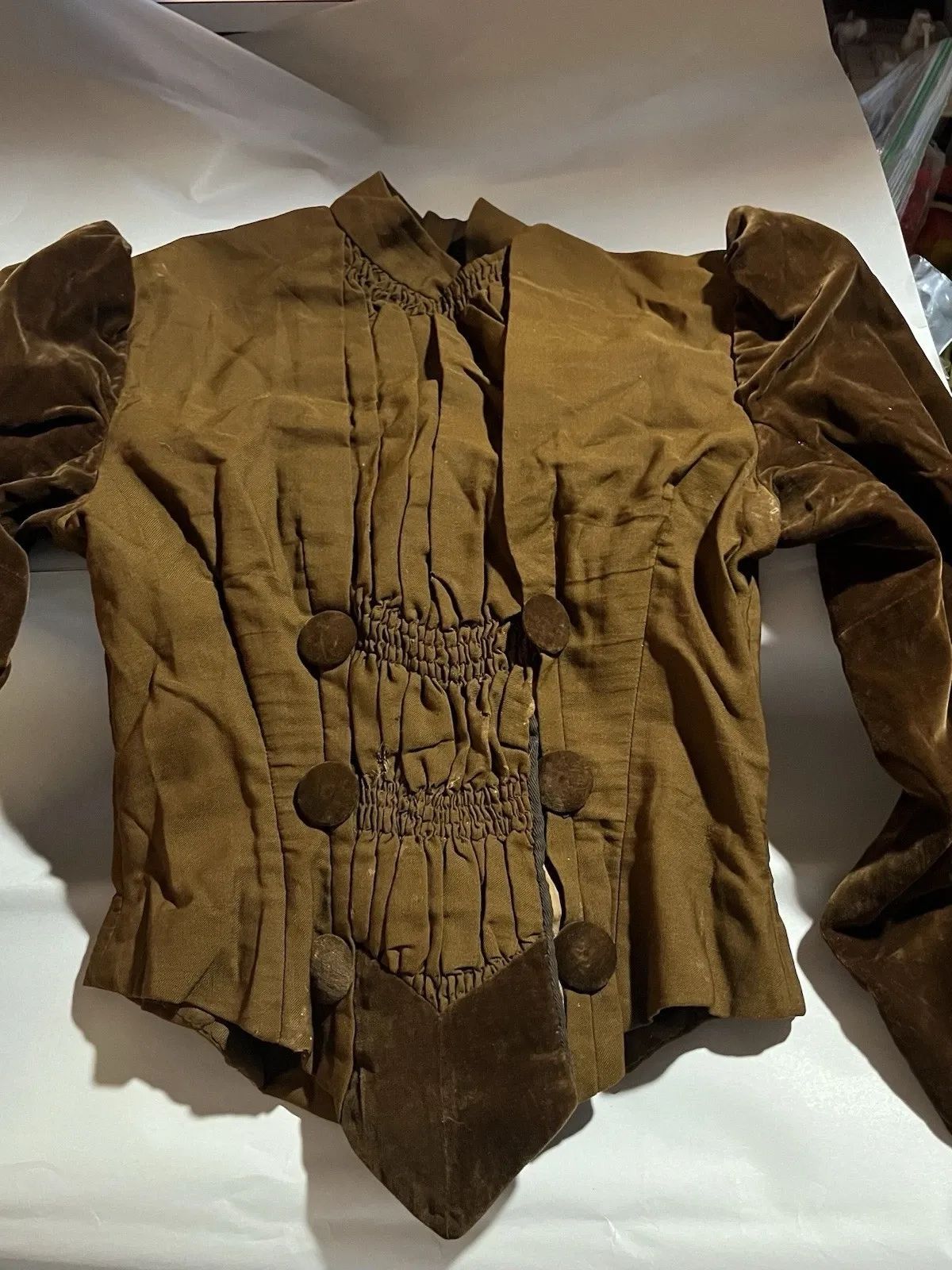
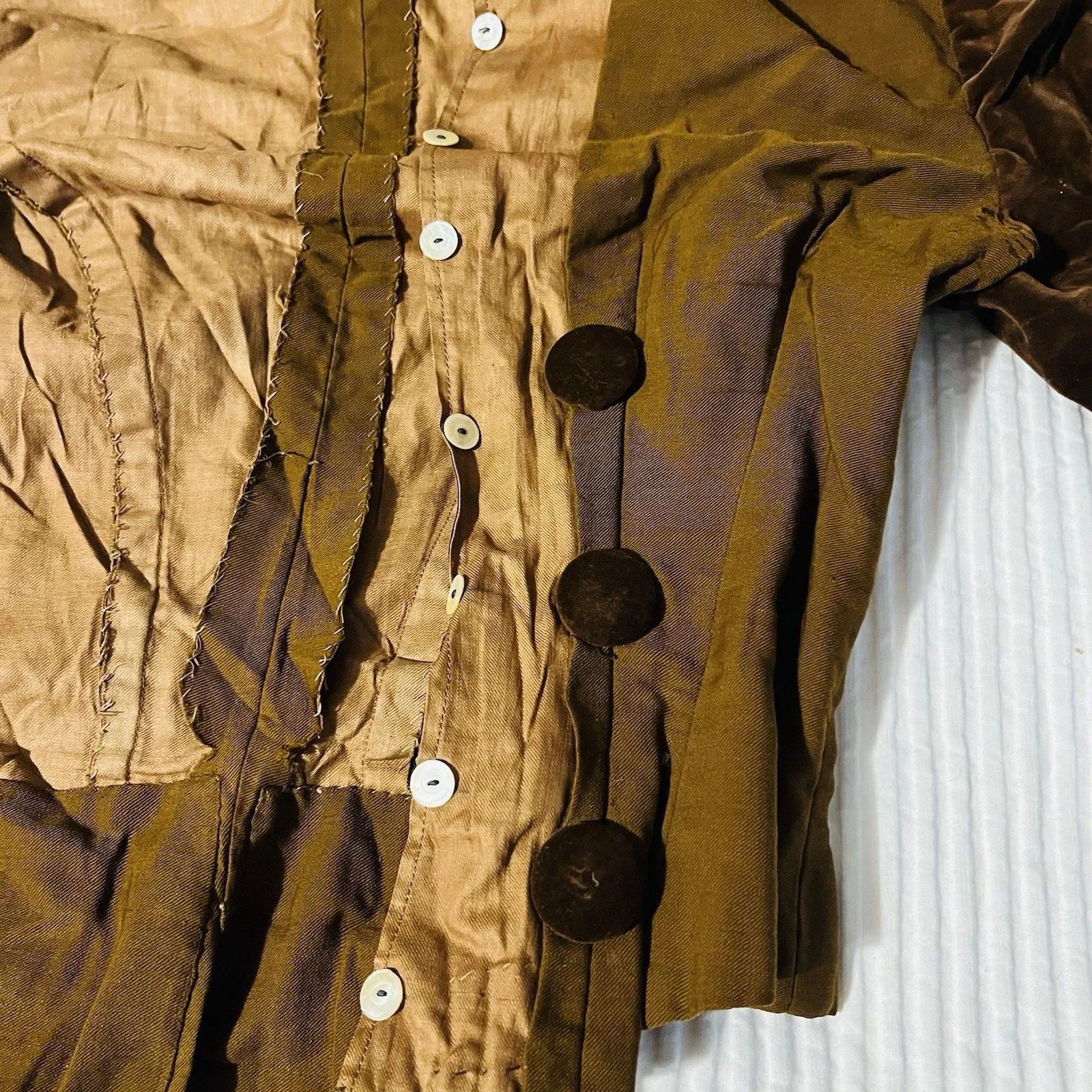
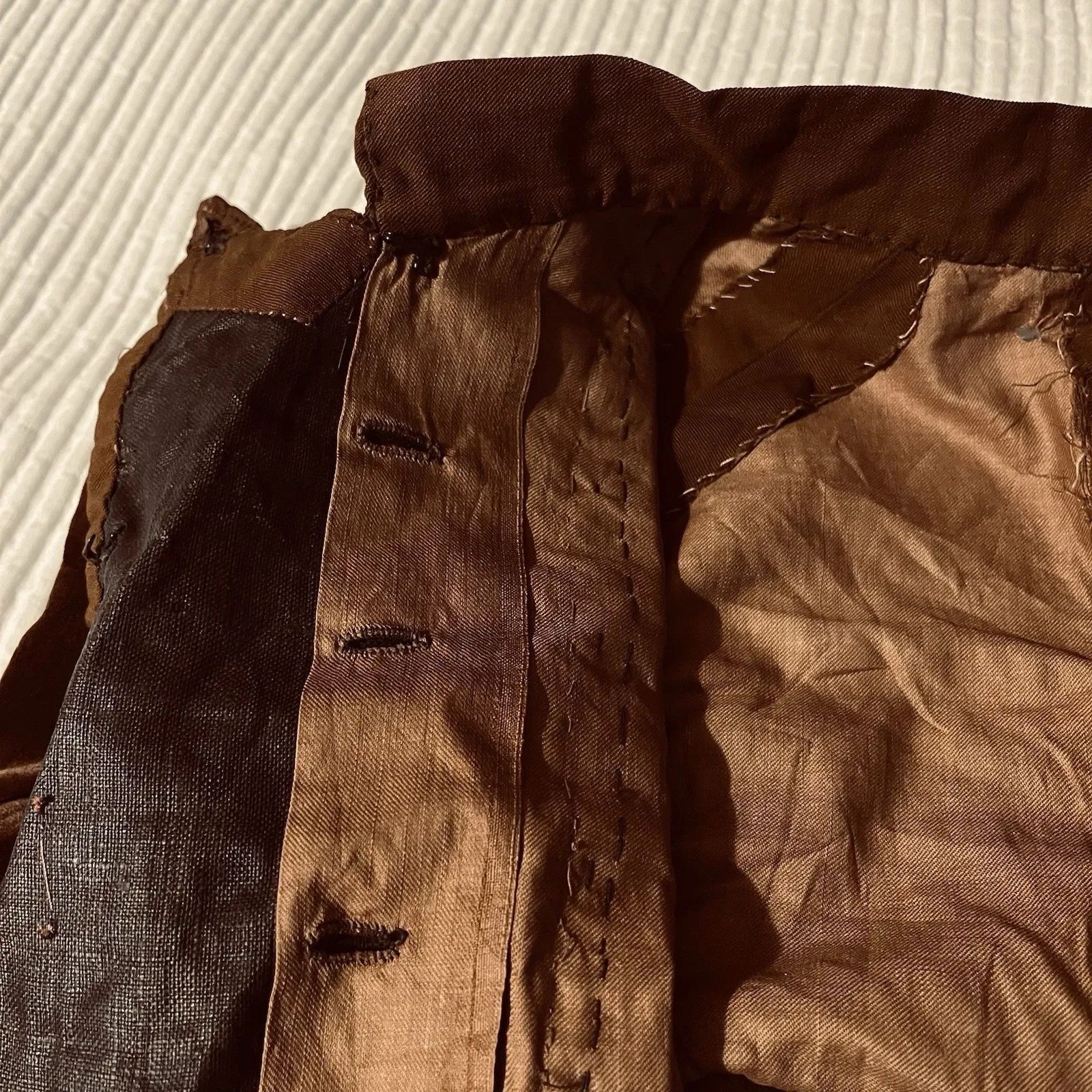
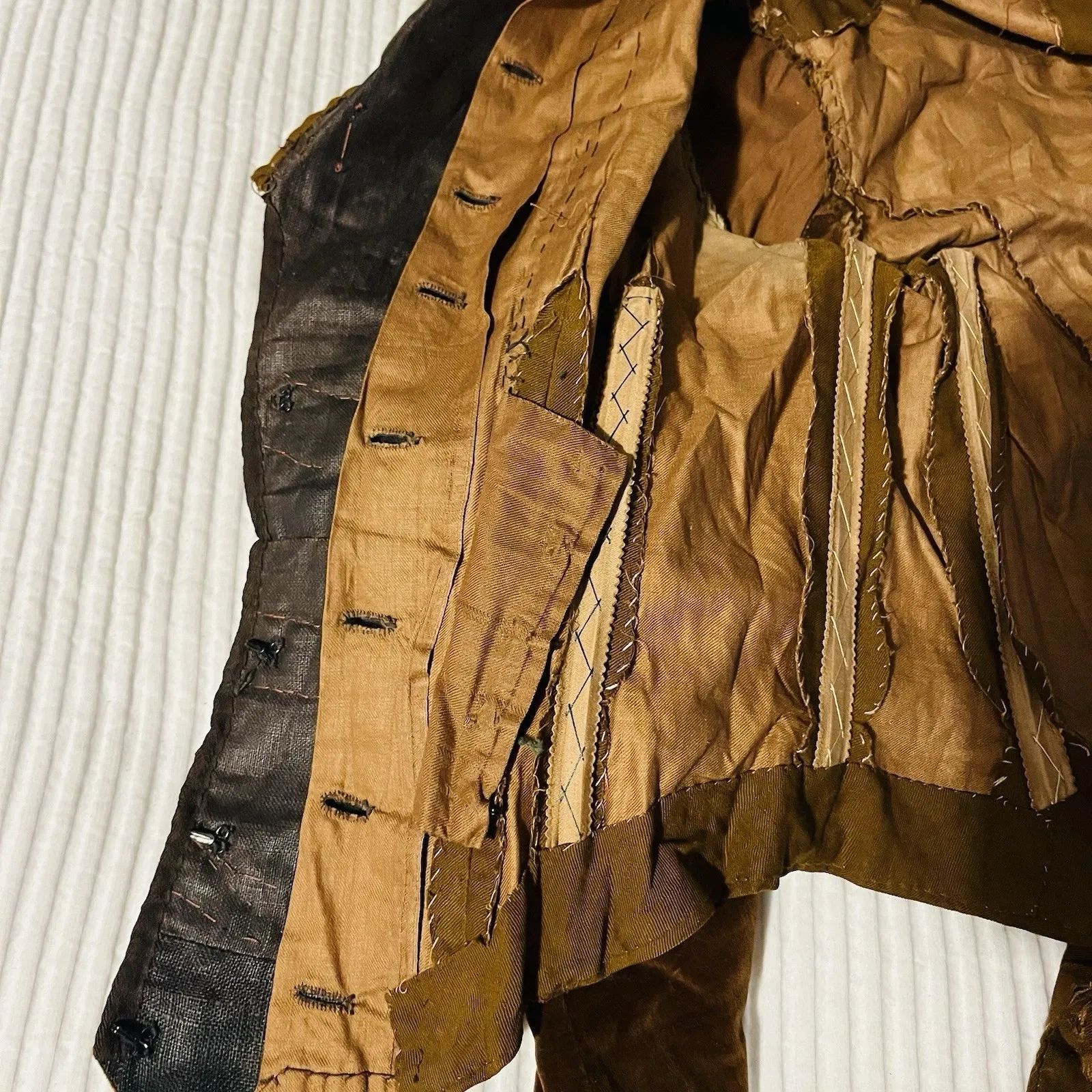
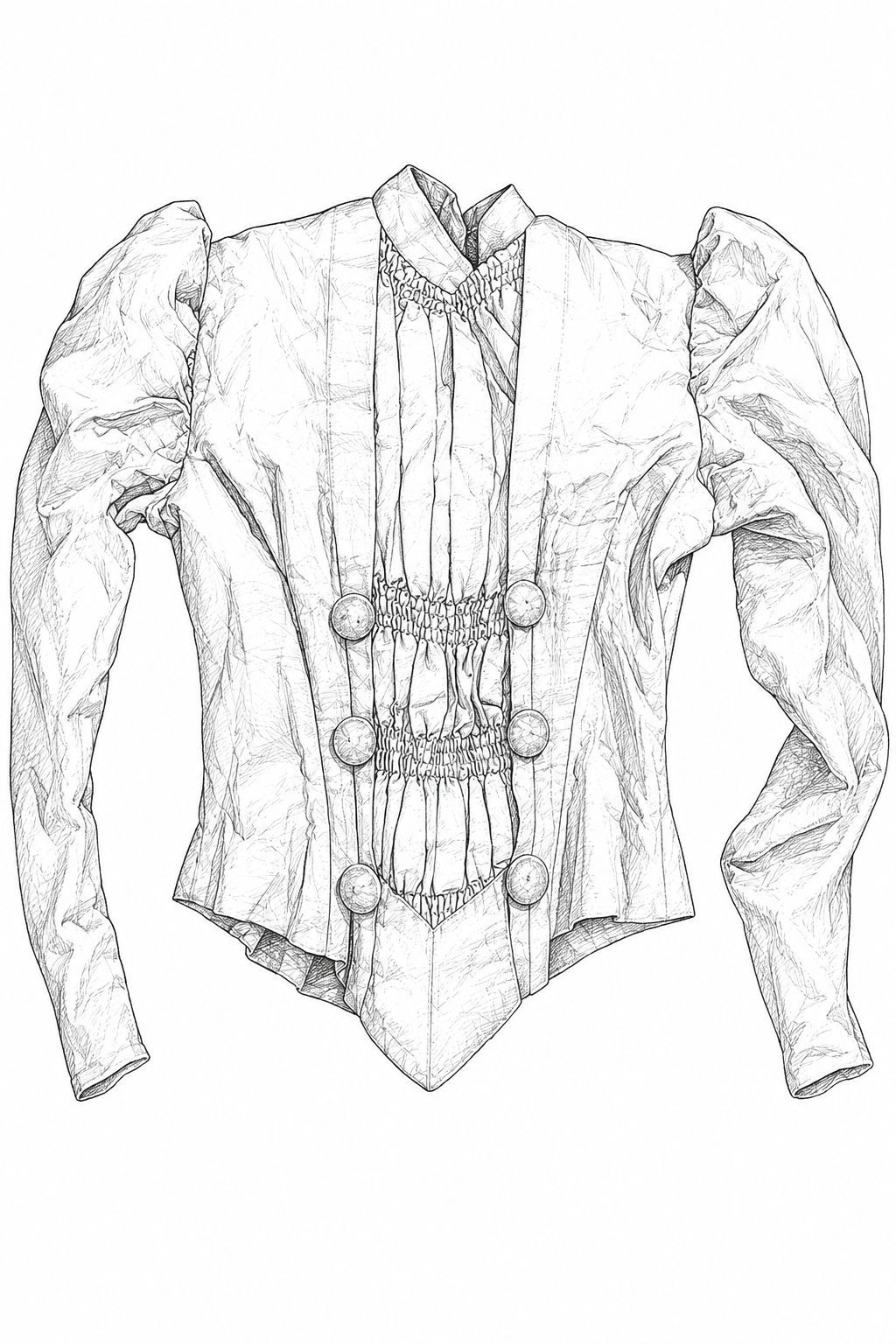
This bodice is an excellent example of the highly engineered tailoring of the late Victorian era. The extensive interior structure demonstrates how fashionable women's clothing relied on hidden supports—including boning, waist stays, reinforced facings, and corsetry—to achieve the desired silhouette.
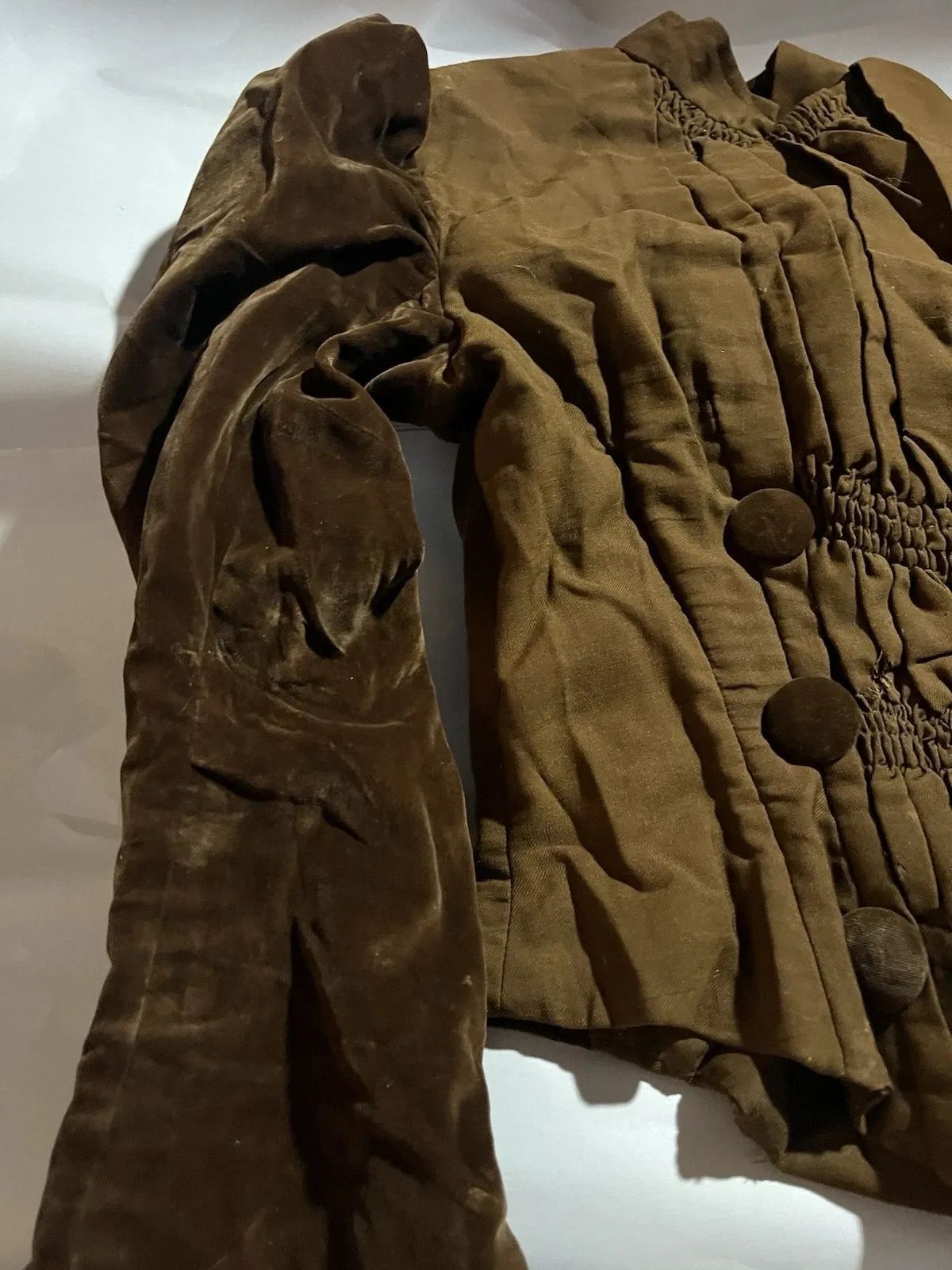
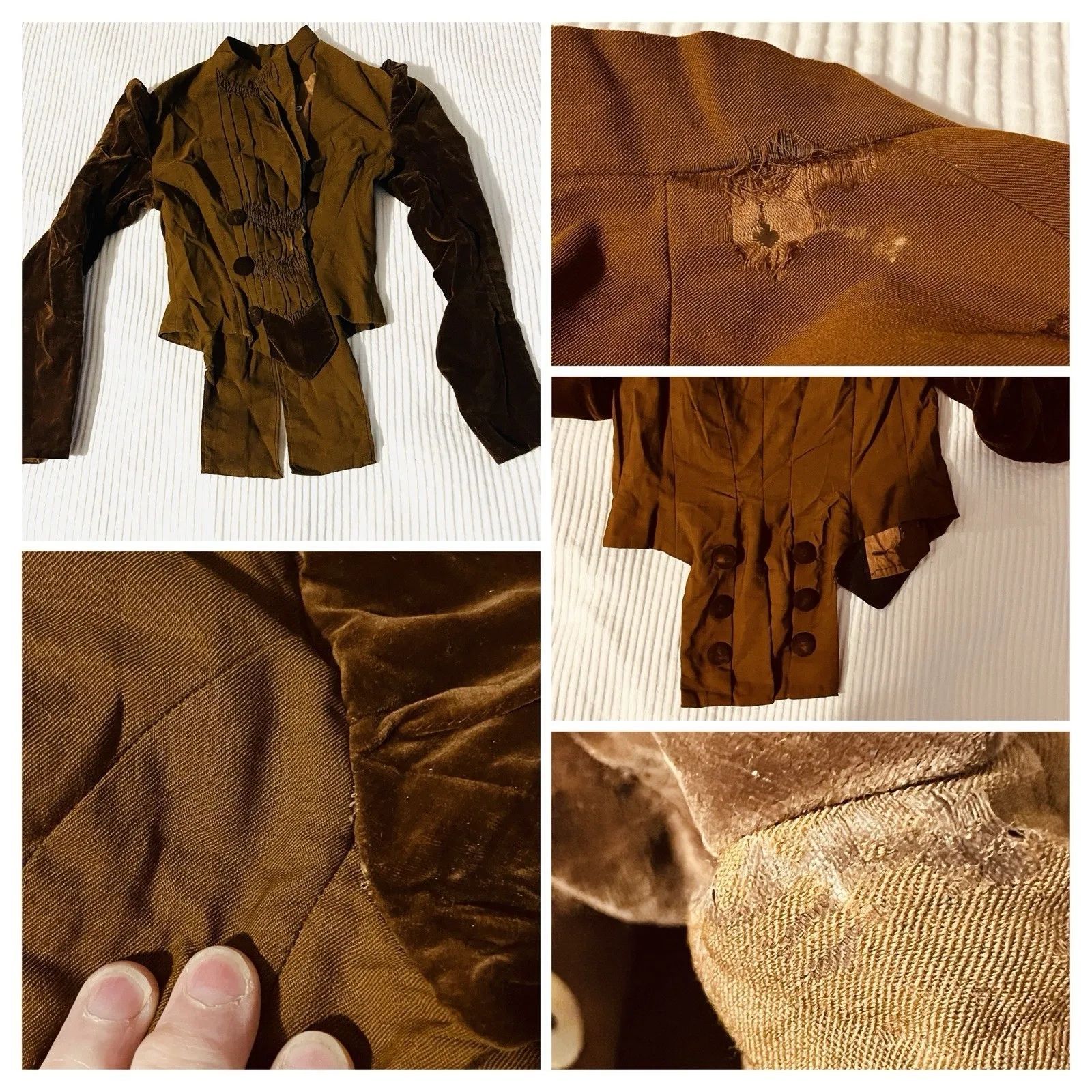
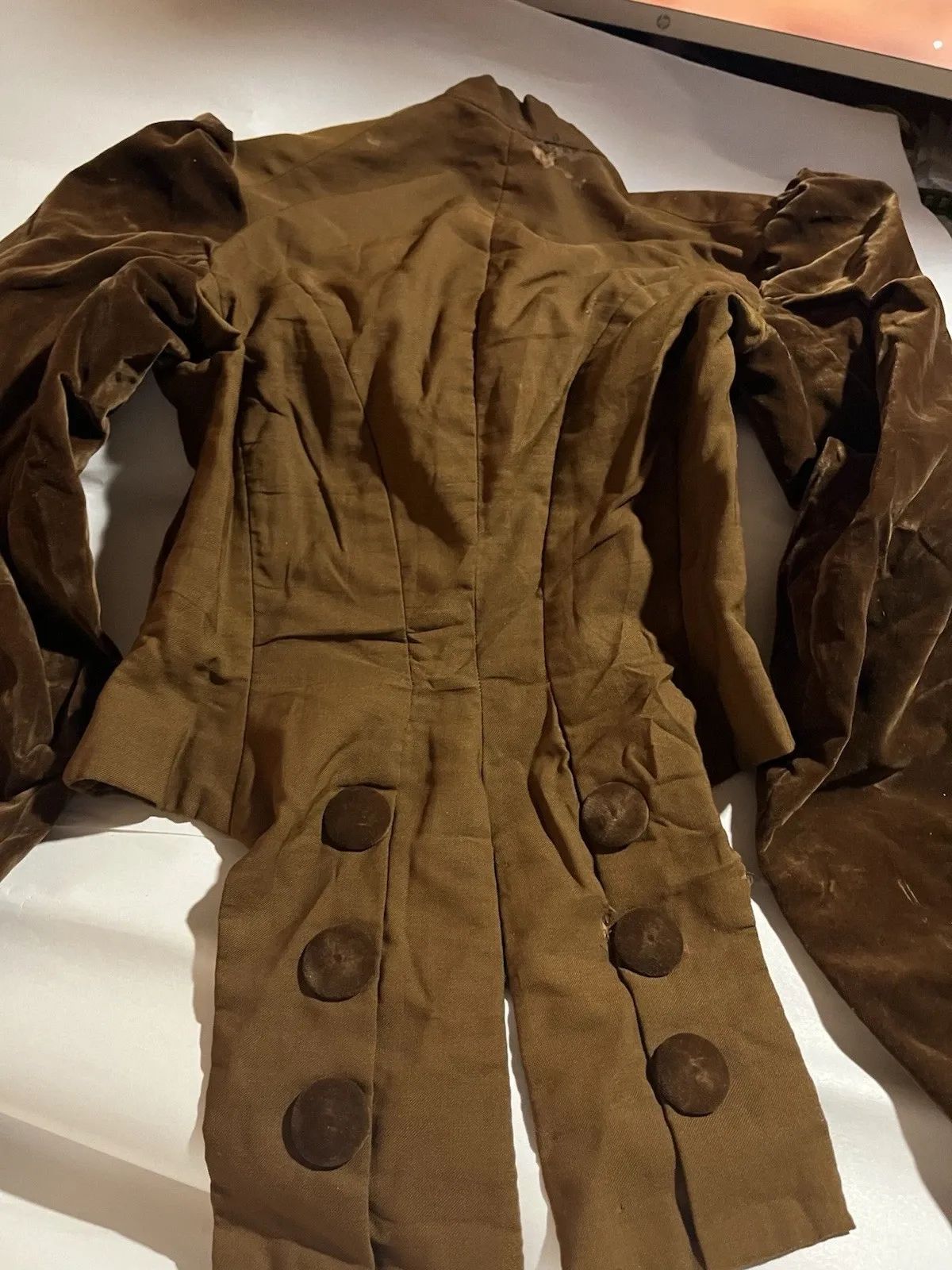
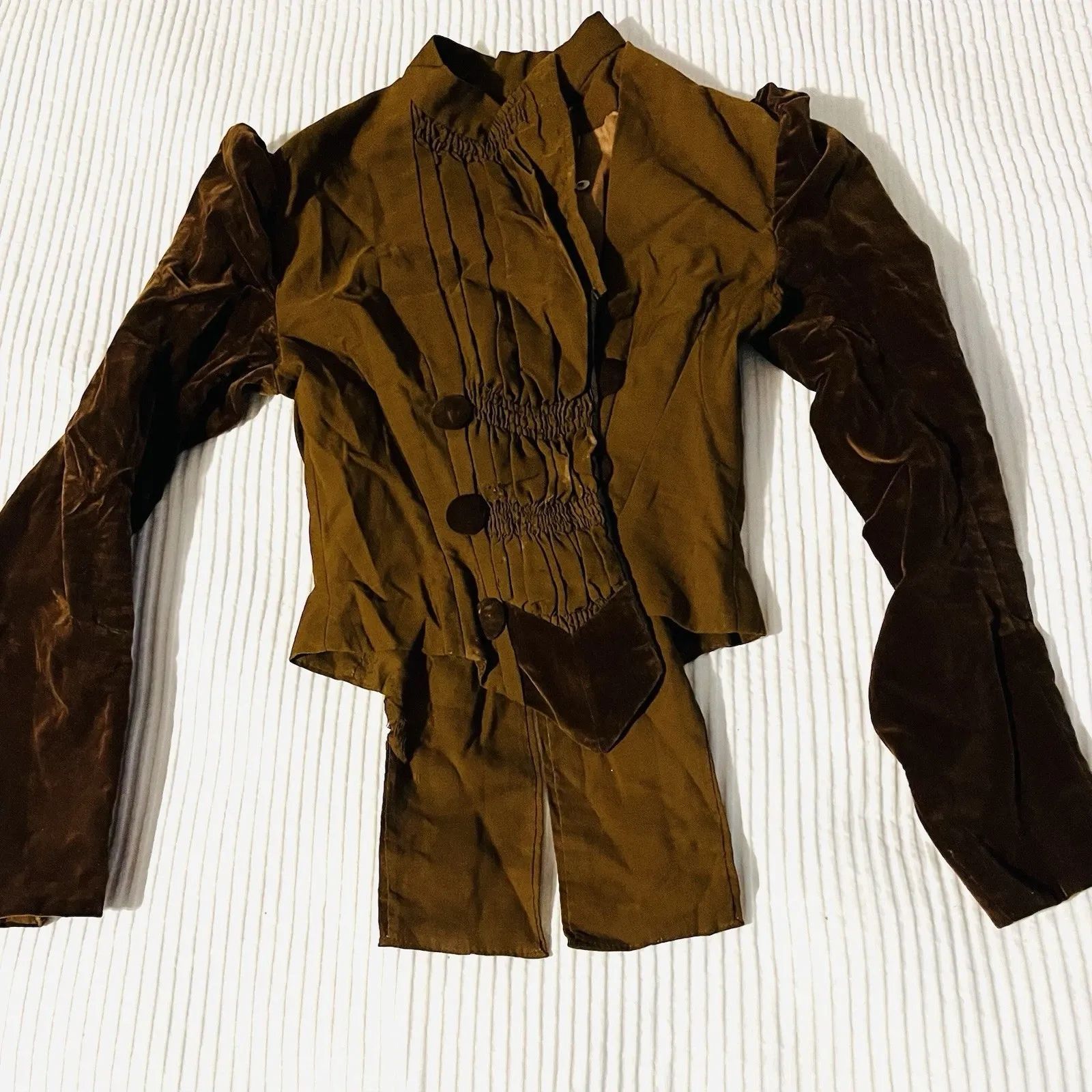
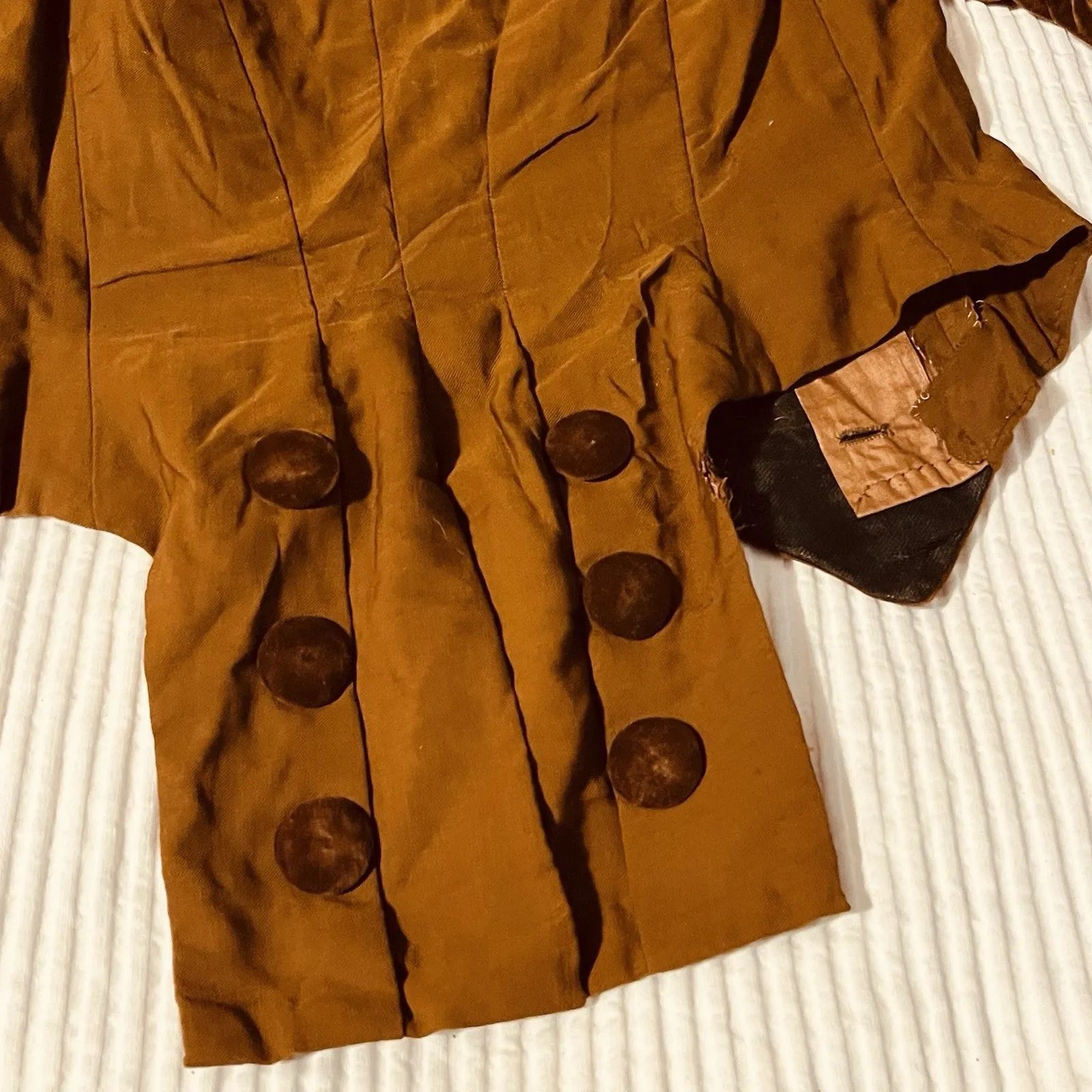
Unlike many surviving Victorian bodices, this example retains all six original velvet-covered buttons, the decorative velvet waist extension, and much of its internal tailoring, making it especially valuable for the study of nineteenth-century dress construction.
The contrast between the durable wool exterior and the deteriorated silk lining also illustrates one of the most common conservation challenges faced by museums. During the late nineteenth century, silk was frequently "weighted" with metallic salts to increase its weight and improve drape. While fashionable at the time, this process accelerated the long-term degradation of silk fibers, leading to the characteristic shattering visible today.
Although the matching skirt has not survived (or has not yet been identified), this bodice would originally have formed part of an elegant daytime ensemble worn over a corset with a coordinating trained skirt, gloves, and a fashionable hat. Its combination of knife pleating, shirring, velvet trim, and oversized covered buttons places it firmly among the refined tailored fashions of the mid-1890s.