Honeywell Pentax Spotmatic (SP)



Name/Title
Honeywell Pentax Spotmatic (SP)Entry/Object ID
281Tags
IconicDescription
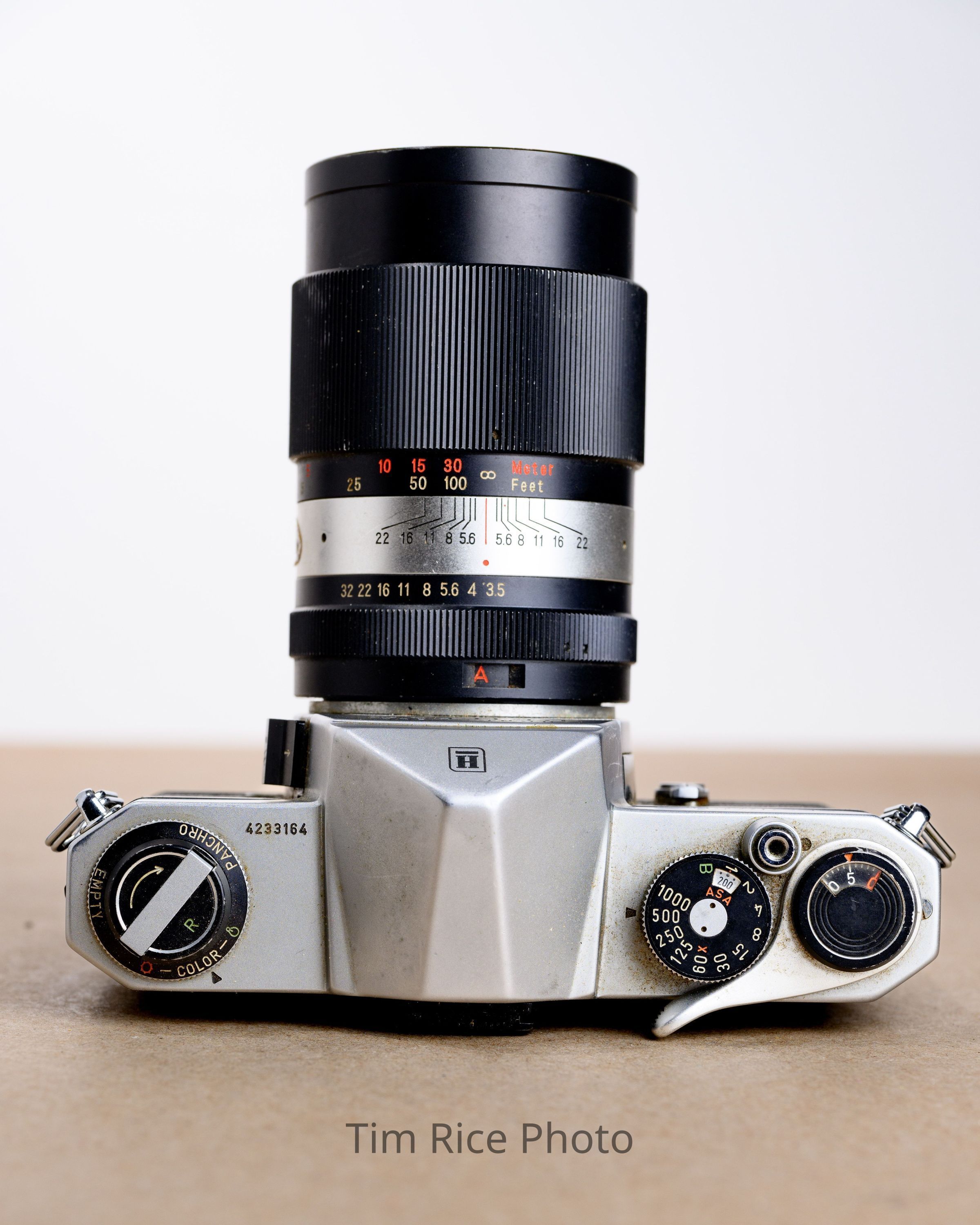
The Honeywell Pentax Spotmatic is one of the most significant cameras in photographic history, as it was one of the first SLRs to successfully integrate through-the-lens (TTL) light metering. This specific unit bears the "Honeywell" branding, indicating it was distributed in the United States, whereas international models were branded simply as "Asahi Pentax." The camera is renowned for its exceptional build quality, elegant mechanical feel, and the use of the universal M42 screw mount, which allowed photographers to use a vast array of high-quality lenses from various manufacturers. The "Spotmatic" name is somewhat of a misnomer; while the prototype featured a spot meter, the production models actually used an average-reading CdS (Cadmium Sulfide) meter. To use the meter, the photographer pushes up the switch on the side of the lens mount, which stops the lens down to its current aperture (Stop-Down Metering). You then adjust the shutter speed or aperture until the needle in the viewfinder is centered. This unit is paired with an Auto Vivitar 135mm f/3.5 telephoto lens, a popular focal length for portraiture and sports during the late 60s. The lens features a manual/auto switch, allowing the aperture to stay open for focusing and only close to the set f-stop at the moment of exposure. Because the Spotmatic relies on a now-discontinued 1.35V mercury battery for the light meter, modern users often use a 1.5V silver oxide battery with a specialized adapter or recalibrate the meter to handle the slight voltage difference.Category
Camera, SLR, 35mm Film
Media Type