Kodak 122 Roll Film Antique (Exposed)
Name/Title
Kodak 122 Roll Film Antique (Exposed)Entry/Object ID
508Tags
RelicDescription
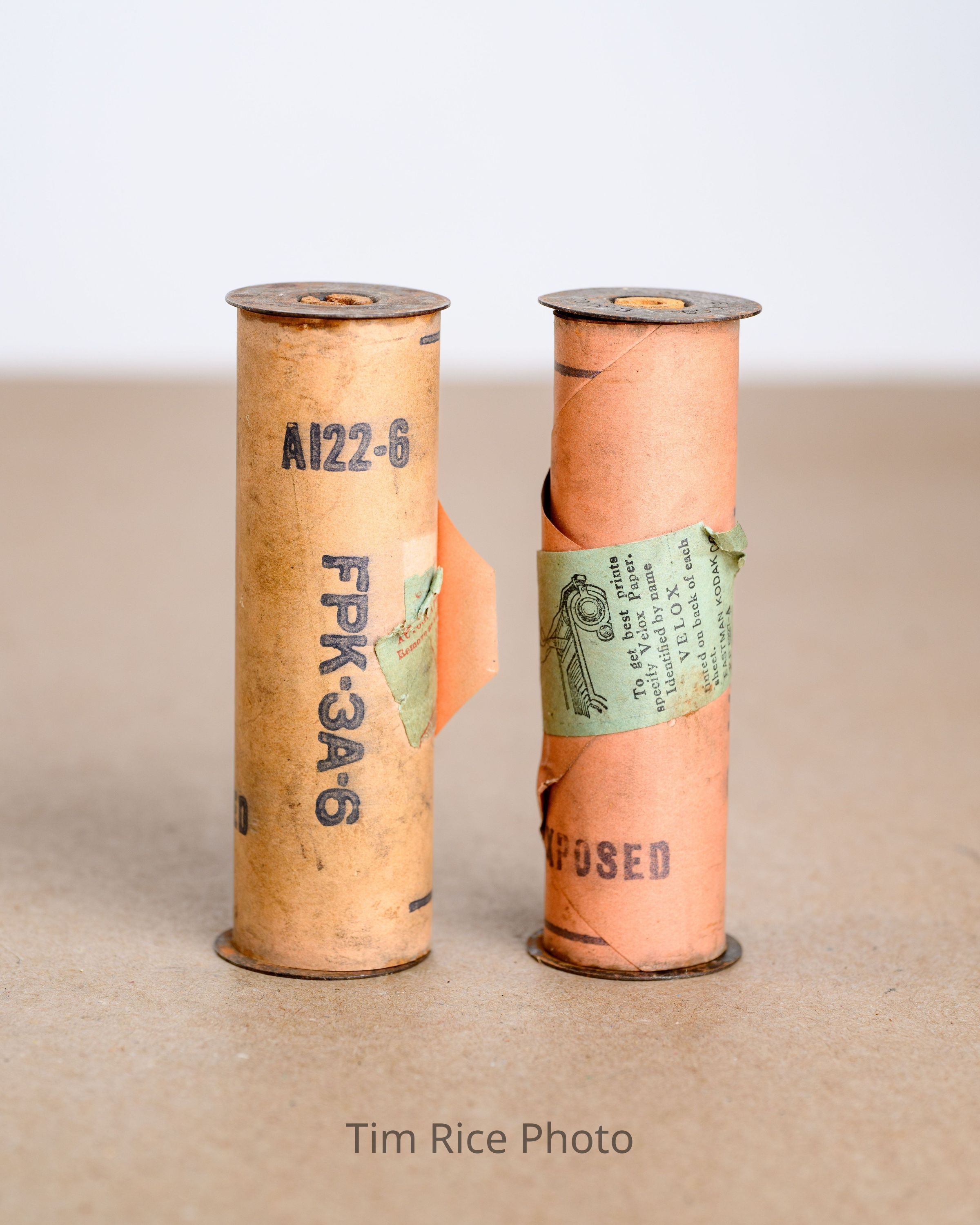
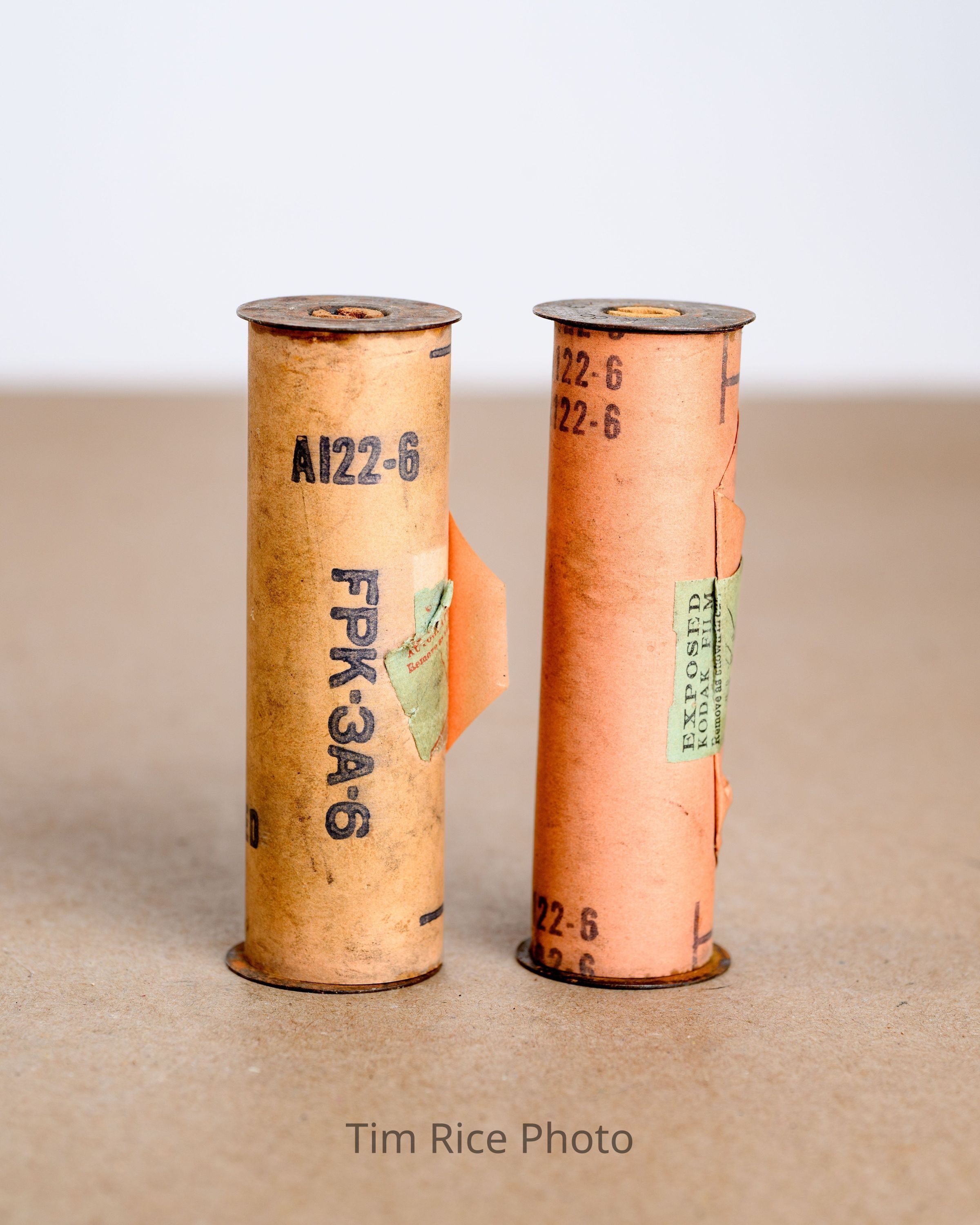
These are two exceptional examples of early 20th-century roll film. The marking "FPK-3A-6" stands for "Folding Pocket Kodak No. 3A," which was the most famous camera to use this massive postcard-sized film format. "A122-6" indicates it is Autographic film (the "A" prefix) with 6 exposures per roll. Autographic film featured a specialized carbon paper backing that allowed photographers to use a small stylus to "write" notes directly onto the negative through a door on the back of the camera. Both rolls are marked "EXPOSED," meaning they were shot nearly a century ago but never developed. The "Lost" Images: These rolls are "time capsules." Because they are marked EXPOSED, they theoretically contain six latent images from the early 1900s. However, the probability of successful development today is extremely low due to "base fog" and the degradation of the silver over 100 years. Historical Marketing: The green sticker on the right roll is a cross-promotion for Velox Paper, which was Kodak’s premier gaslight paper for making prints. The slogan "To get best prints specify Velox Paper" was a staple of Kodak's early vertical integration strategy. The Postcard Era: 122 film was specifically designed to match the dimensions of a standard US Postcard. People would take a photo, develop it on sensitized postcard paper, and mail it—long before Instagram or digital sharing.Category
Expired Film/Canister