Kodak Six-20 Brownie Junior
Name/Title
Kodak Six-20 Brownie JuniorEntry/Object ID
498Tags
IconicDescription
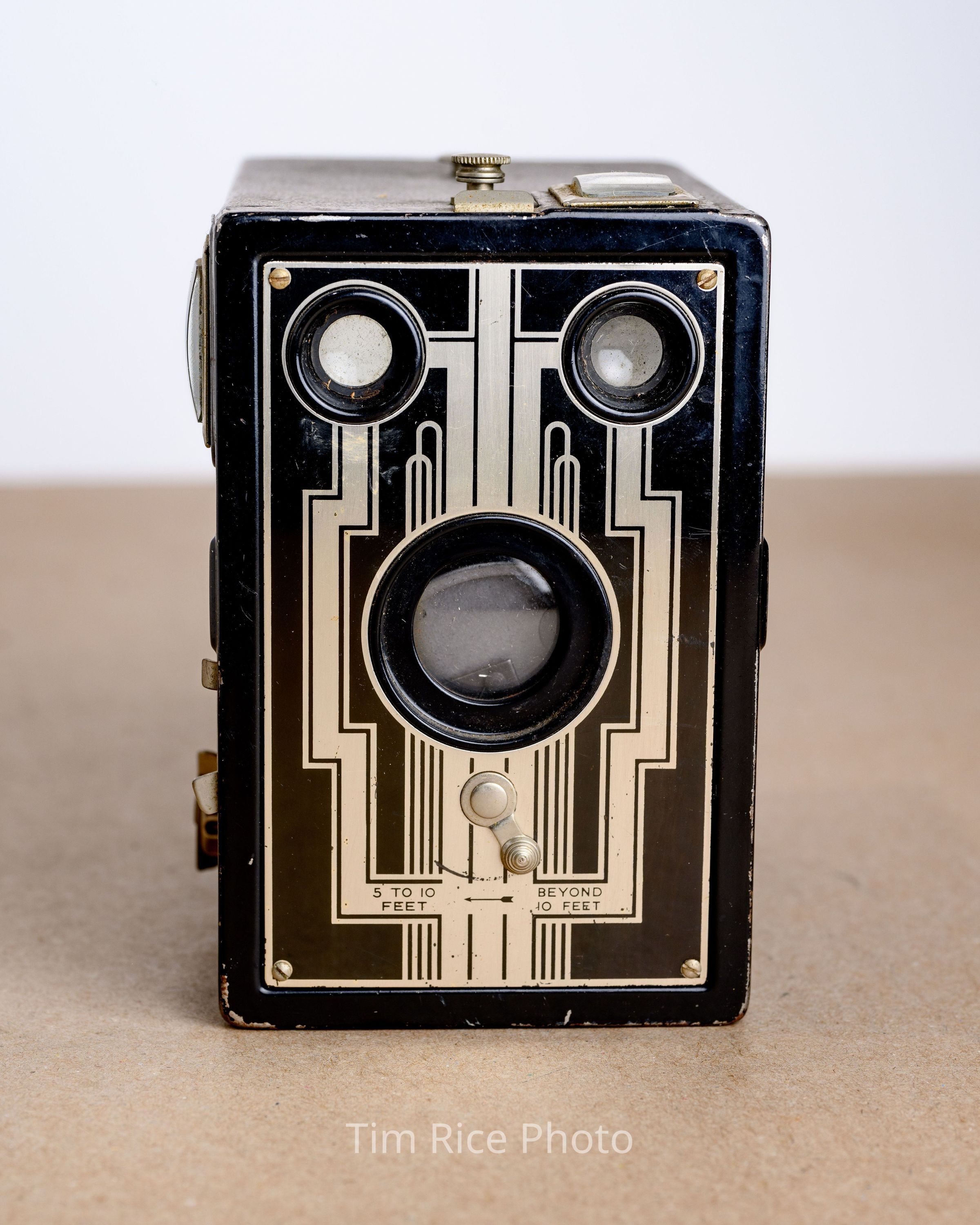
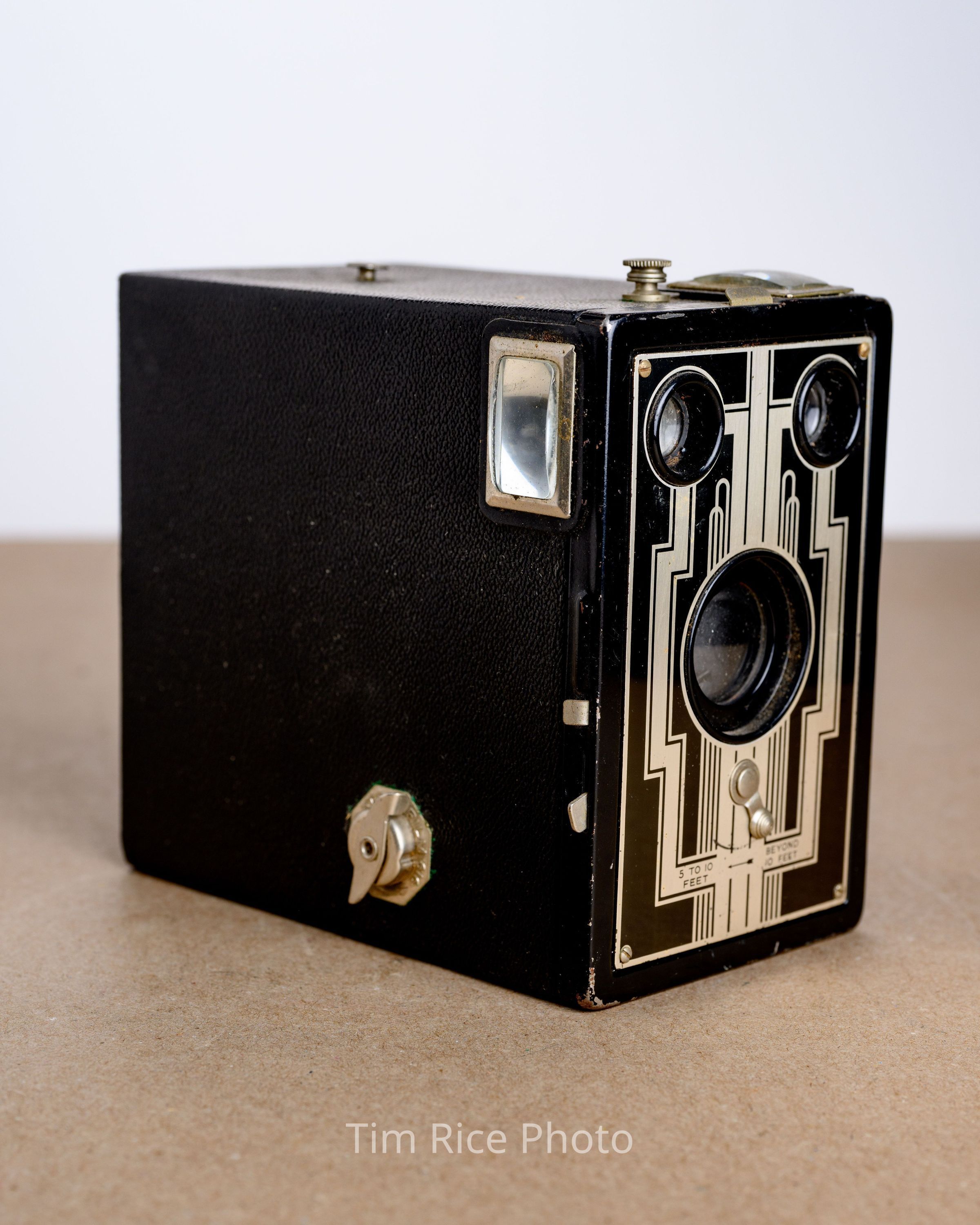
While this looks very similar to the Target Brownie we just logged, this "Junior" model is a slightly more sophisticated relative. The most notable feature is the small metal lever at the bottom of the faceplate. This is a "portrait attachment" lever—sliding it to the left allows the camera to focus on subjects from 5 to 10 feet away, while the right setting is for everything "Beyond 10 Feet." It features a gorgeous Art Deco faceplate with geometric patterns and two brilliant viewfinders for landscape and portrait orientations. The body is covered in a black leatherette-grained paper over a metal box. The "Junior" Upgrade: Most box cameras of this era were purely "point and shoot" with no adjustments. Having the ability to switch between "Portrait" and "Landscape" focus modes made the Junior a premium entry-level choice during the Great Depression. Film Compatibility: Unlike the Six-16 model, this uses 620 film. While Kodak stopped making 620 film in the 90s, the spools are the same width as modern 120 film—they just have thinner flanges. You can easily buy "re-spooled" 120 film today to get this camera running.Category
Camera, Box, 620 Fim, Project Analog
Media Type