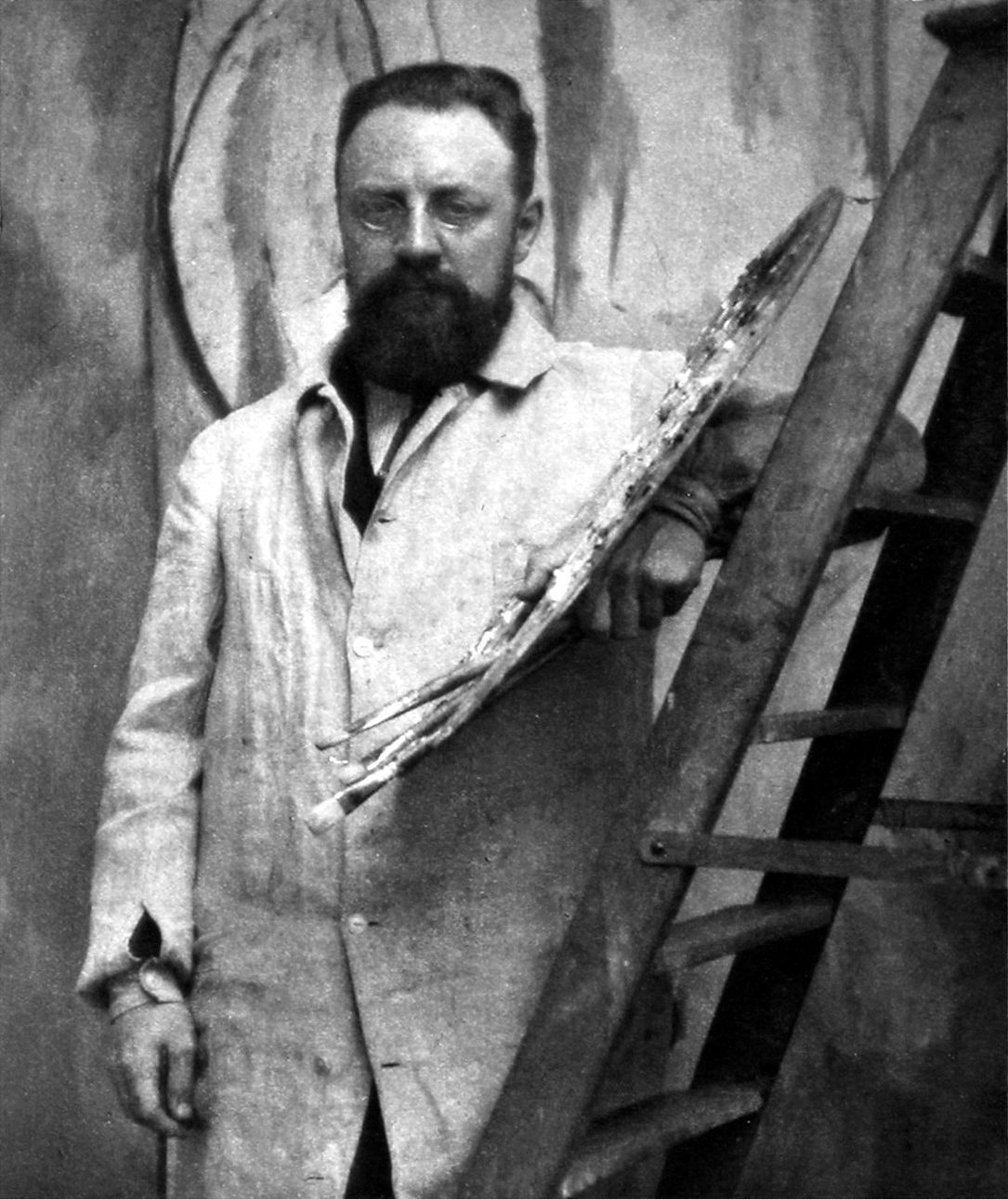
Biography
Draftsman, sculptor, printmaker and painter Henri Matisse was a master of color. Although classically trained at the Academie Julian in Paris, he quickly abandoned traditional techniques and genres to pioneer a style all his own, marked by quick, gestural strokes and fluid contours.
Along with fellow painter Andre Derain, Matisse was the leading proponent of Fauvism, a movement whose name is derived from the French word for "wild beast." Marked by vibrant hues, Fauvist paintings like Matisse’s famous 1906 composition Le Bonheur de vivre, use wild, active brushstrokes and a palette unconstrained by nature, resulting in women with purple skin and trees with orange leaves. Often, these compositions unite pure color with the white of exposed canvas to create a sense of transparency and light.
In addition to masterful landscapes and still life, Matisse loved to depict the human figure. Rejecting strict realism, he distilled the form into its essential parts and then translated these into rounded contours. In the lithograph Tristesse du Roi (The Sorrows of the King), which is considered Matisse’s final self portrait, he refers to one of Rembrandt’s canvases, David Playing the Harp before Saul, in which the young biblical hero plays to distract the king from his melancholy. Matisse explored the expressive power of a body in motion by placing his figures in twisted or contorted poses, transforming their limbs into tangles of color and shape that push the figure toward abstraction.