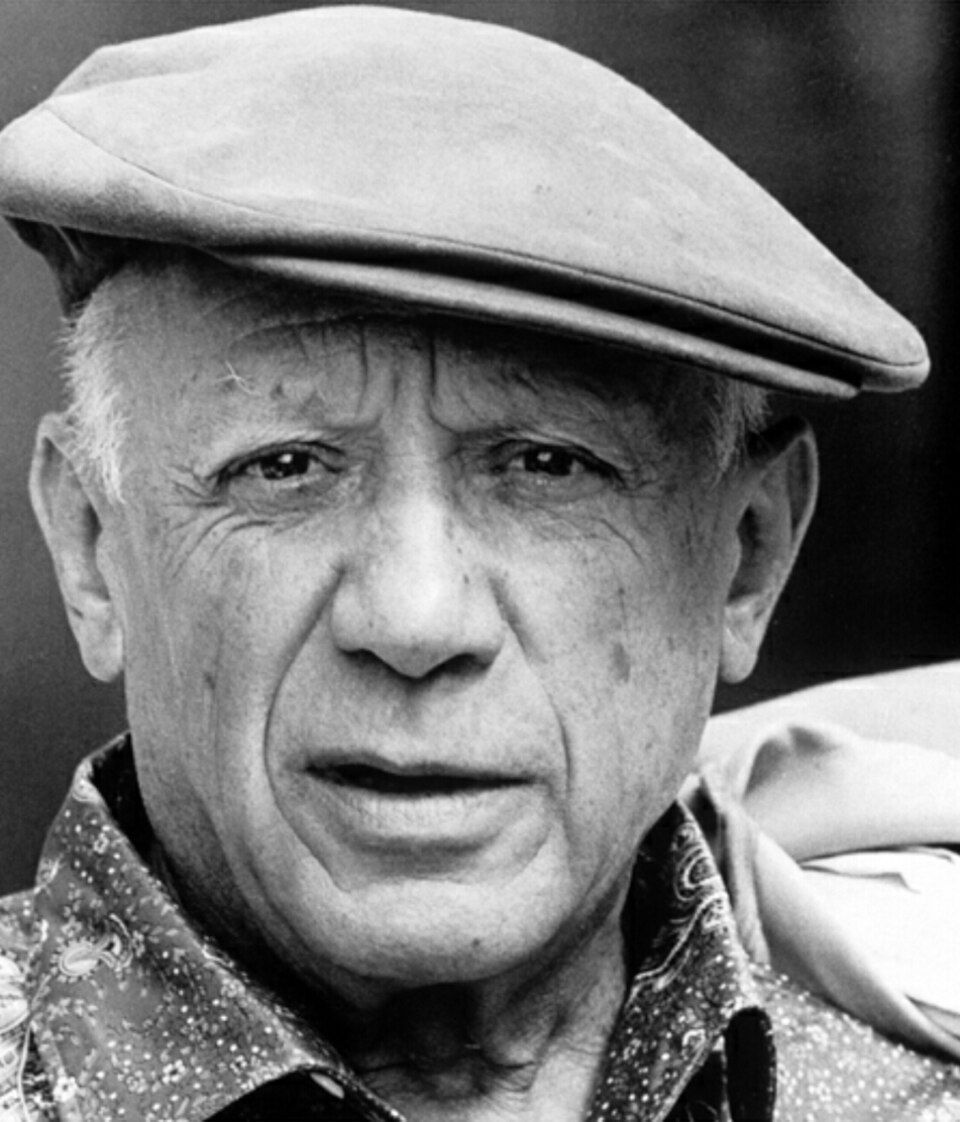
Biography
Considered one of the greatest and most influential artists of the 20th century, Pablo Picasso was born in Spain to a professor of drawing who raised his son for a career in academic art. Picasso had his first exhibit at age 13 and later quit art school to experiment full-time with modern art styles. At the age of 15, Picasso's famous oil painting The First Communion went on display in an exhibition in Barcelona.
The work of Picasso, which comprises more than 50,000 paintings, drawings, engravings, sculptures, and ceramics produced over the course of 80 years, is described in a series of overlapping periods. His first notable period–the “blue period”–seen in works such as The Old Guitarist (1903), Picasso painted in blue tones to evoke the melancholy world of the poor. The “rose period” followed, in which he often depicted circus scenes, then came Picasso's early work in sculpture.
In 1907, Picasso painted the groundbreaking work Les Demoiselles d’Avignon. With its fragmented and distorted representation of the human form, this work broke from previous European art-and is seen as
a forerunner of the Cubist movement, founded by Picasso and the French painter Georges Braque in 1909, establishing the modern principle that artwork need not represent reality to have artistic value. Their Cubist
experiments also resulted in the invention of several new techniques, including collage.
After Cubism, Picasso explored classical and Mediterranean themes, and images of violence and anguish increasingly appeared in his work. In 1937, this trend culminated in the masterpiece Guernica, a monumental work that evoked the horror and suffering endured by the Basque town of Guernica, destroyed by German war planes during the Spanish Civil War.
After World War II, Picasso continued to work feverishly and enjoyed commercial and critical success. He continued to produce art with undiminished force until his death in 1973 at the age of 91.