Name/Title
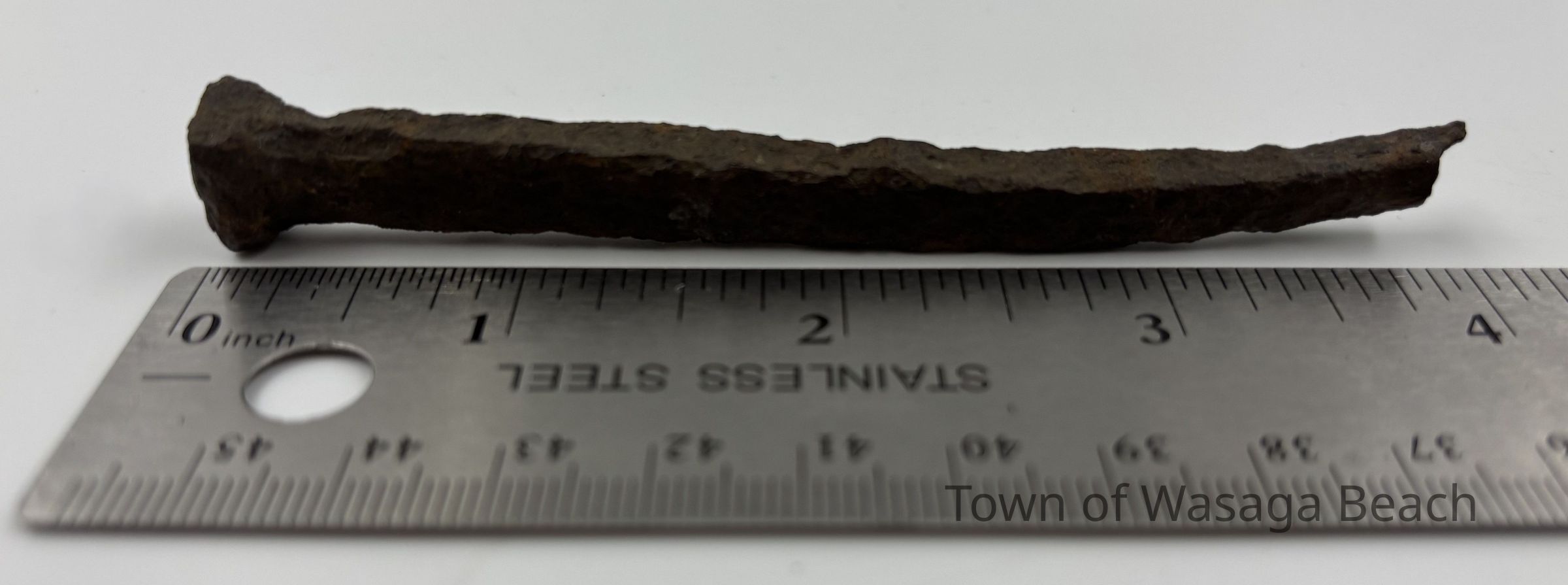
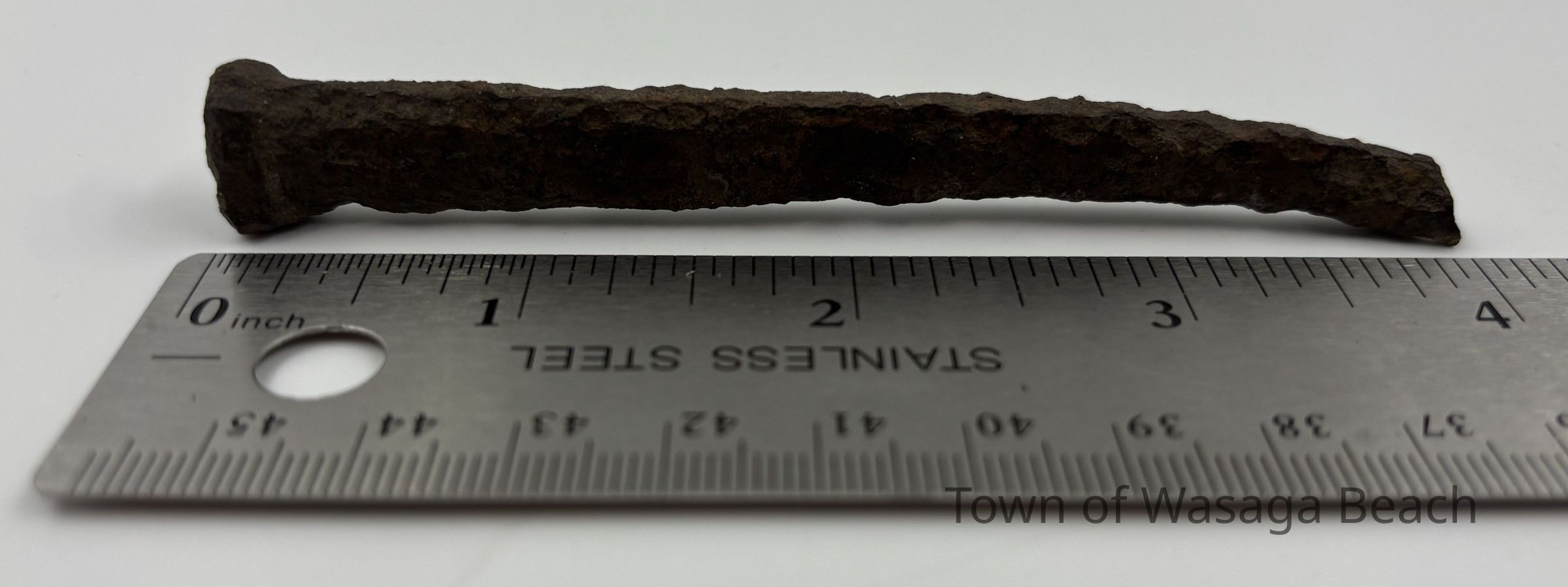
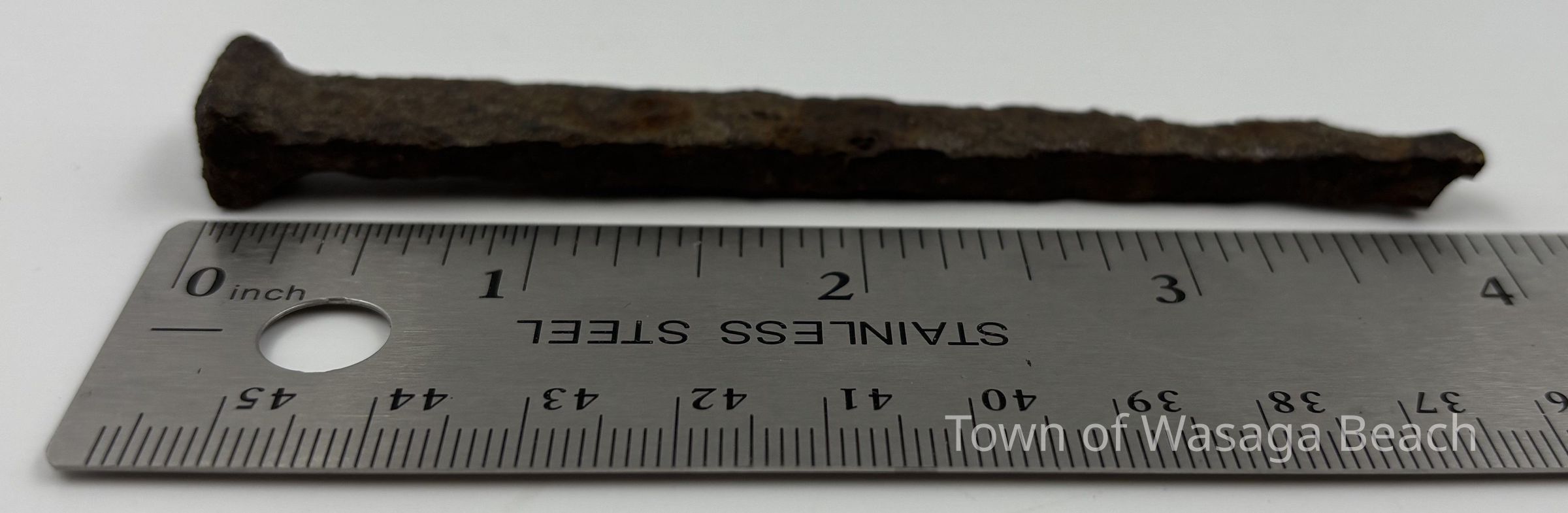
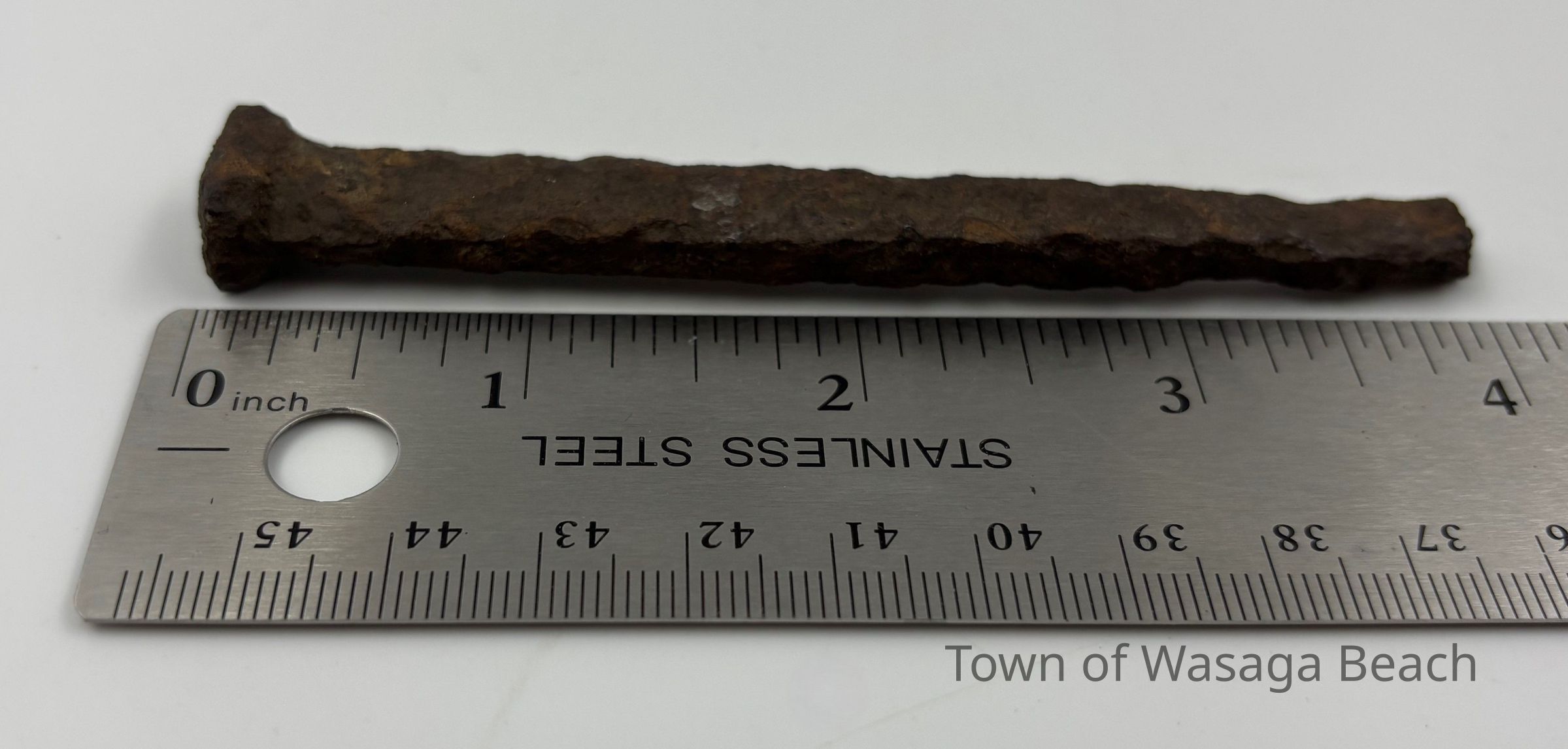
Hand Wrought Rectangular Nail, Circa 1800'sEntry/Object ID
2025.2.1Description
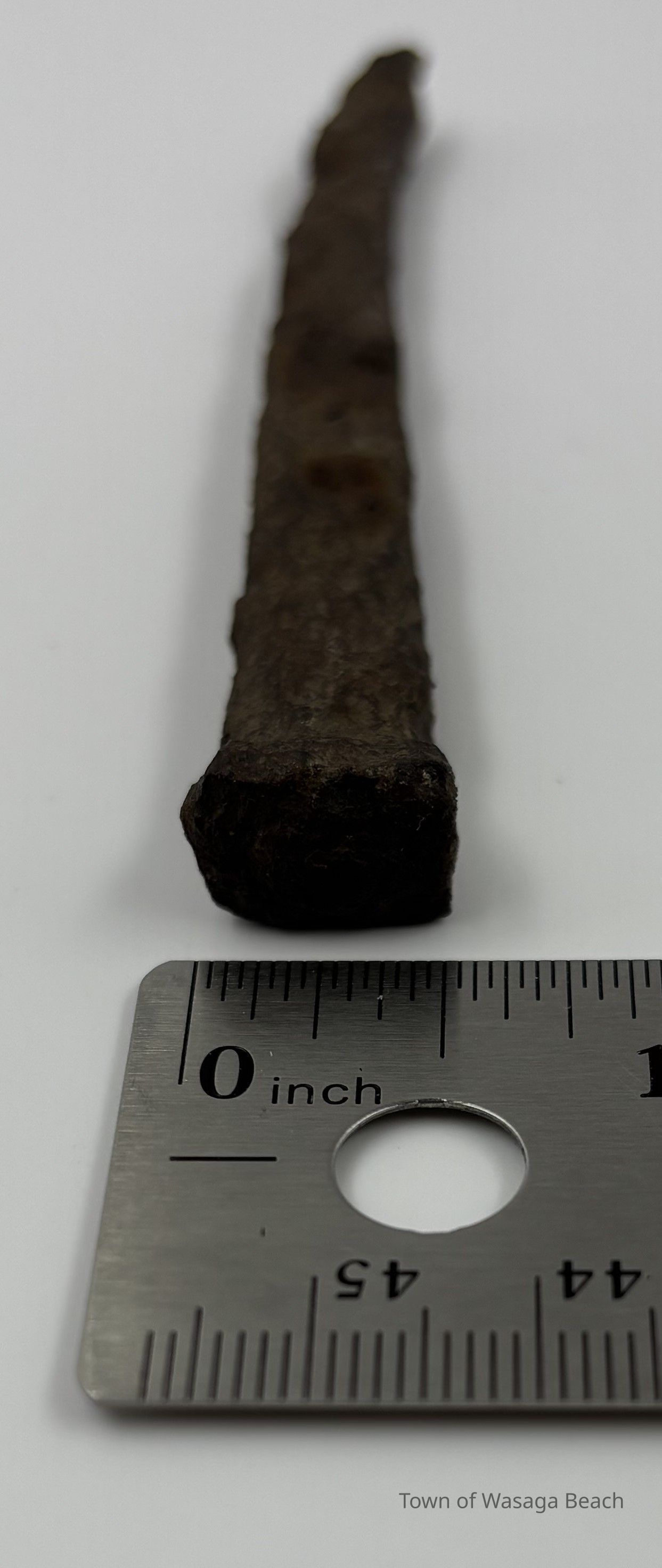
Hand wrought rectangular nail, circa 1800-1890, found at Beach Area 5, Wasaga Beach, OntarioContext
Until 1790, most nails were made entirely by hand at a forge where metal is heated by fire and then hammered to a desired shape. Hand wrought nails or nails made entirely by hand or headed by hand, were made by metal workers and blacksmiths. Most nails were forged from a nail rod which is a bar of iron close to the approximate size of the nail. A nail cutting machine invented in the 1790s cut the nails shank with the head of the nail later added by hand, resulting in a reduction of hand labor required. The machine/handmade nails were used up to the end of the 19th century. The entire nail was completely machined by the 1890s when rounded shanks or wire nails that are still used today began to be produced. The earliest forged nails can be identified by irregular shanks and hammer marks on both shanks and heads. Early nails have either a round head that remains above the surface of the wood and is used for general purpose fastening or a T-head whose head is driven below the surface and is used for finish work such as cabinetry. A variation of the T-head, the L-head, is the same as a T-head but with half the head cut off. Cross sections of pre-1800 nails are generally square, shanks from 1800-1890 are rectangular and modern shanks are round.
The featured nail with rectangle head and shank is from the 1800-1890 era. The history of the nail and how it came to be in the area is unknown.Acquisition
Accession
2025.2Source or Donor
Nick MiccoliAcquisition Method
GiftDimensions
Dimension Description
Width and depth are dimensions of the head of the nailHeight
4 inWidth
1/2 inDepth
3/8 in